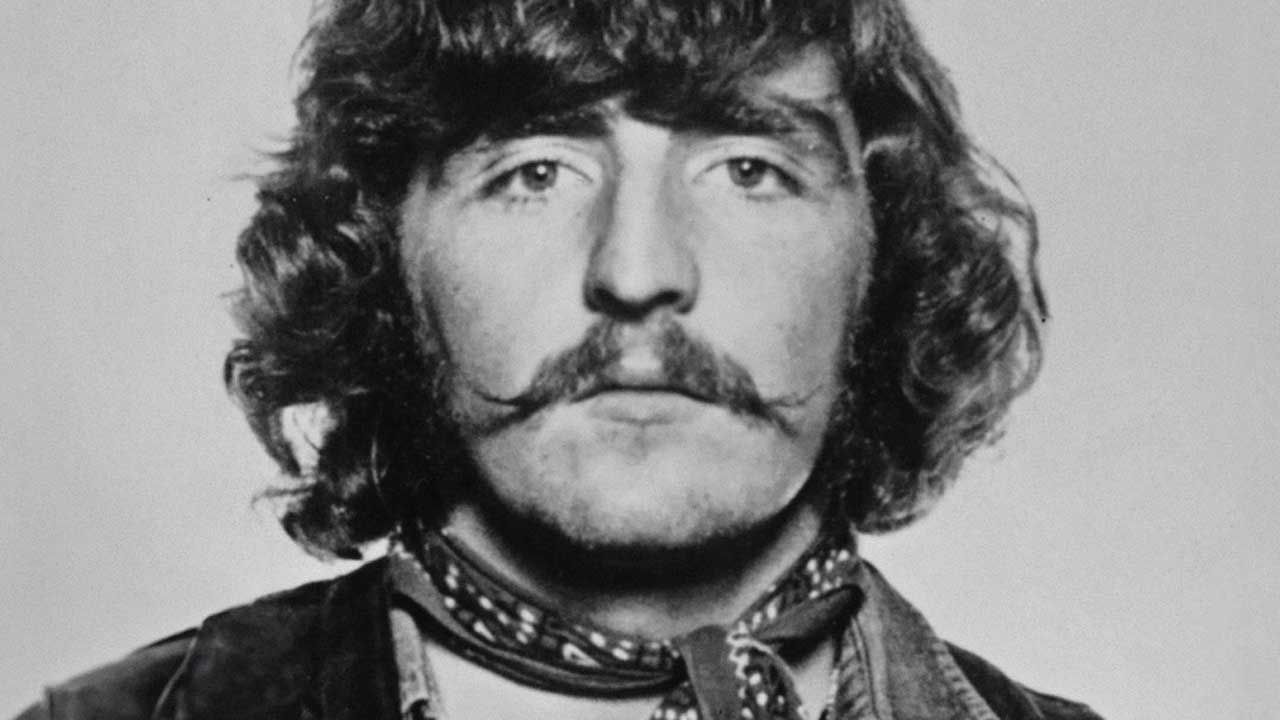
You could listen to Leo Lyons all day. Firstly, there’s his playing: as co-founder of Ten Years After, the now 81-year-old-bassist has driven a thousand heavy-blues anthems since ’66, his fingers hammering like typewriter bars, neck-and-neck with the high-speed guitar playing of frontman Alvin Lee.
For evidence of the old pub argument that the Nottingham-formed band could even outgun Cream, track down the new Deluxe Edition of 1969’s career-high album Ssssh, its live disc featuring the four-piece jamming so hard in Helsinki that you feel the sweat and blisters vicariously.
But it’s Lyons’s war stories we have come to hear from him today. Over the next hour – and without ever seeming boastful – this natural-born raconteur unpacks a career of remarkable serendipity, dropping names like anvils as he recalls his role in some of rock’n’roll’s all-time flashpoints.
Article continues below
You may like
“Sometimes I feel like Forrest Gump,” he says, smiling.

You turned professional when you were sixteen. Didn’t everybody tell you you were mad?
Yeah, they did. But my father had been killed in the war, and my mother told me: “I was always stopped from doing what I wanted to do, so you have my blessing.” I was probably twenty-five before we started making any money. But I never looked back. Being in a band, it’s ninety-nine per cent rejection. You don’t have to be arrogant. You can listen to criticism. But you can’t let it phase you. When we started out, nobody wanted to hear what we were doing. You just have to keep going until the world changes to the way you are.
Do you remember the first time you saw Alvin Lee play guitar?
I’d joined a band called The Atomites. But the guitar player’s dad said he couldn’t turn professional. So the manager turned up at my house with a guitar and amp, and said: “You’re playing on the next gig.” Which I did – terribly. So we put out an advert, and fifteen-year-old Alvin Lee answered it. We had the same idols – he was into Chuck Berry, Sun Records, Elvis… I think we often thought that I was Bill Black and he was Scotty Moore.
Alvin was fast, even then. And as my mum said: “Well you must be fast too, because you’re keeping up with him!” When we played together it was like a duel. I remember our manager saying: “I always thought you’d start fighting in the middle of it.”
We were like brothers. And like brothers, we fought a lot. Alvin could be difficult. I remember him saying: “It’s only a pub gig, why bother?” And I’d say: “Well if you’re not going to bother for a pub, you’re always going to be playing in a pub.” On the way to gigs we’d often stop the van, get out, have a fight, get back in, go on and play the gig. But we shared so much. All the tough times. No food. All living in one room in a doss house.
What to read next
Your pre-Ten Years After band The Jaybirds, were briefly a project for troubled producer Joe Meek in the early sixties.
Joe was fine with us. But I know a lot of guys who had real problems. Like [Tornados drummer] Clem Cattini. Joe decided he didn’t need him for one session and threw his drums down the stairs. Joe also had this big spiritual thing. He’d have séances and thought he was channelling Buddy Holly. Homosexuality was a prisonable offence, and there was some ‘body in a suitcase’ murder around that time. Joe was always worried about being outed [in relation to that]. And then of course he shot himself.
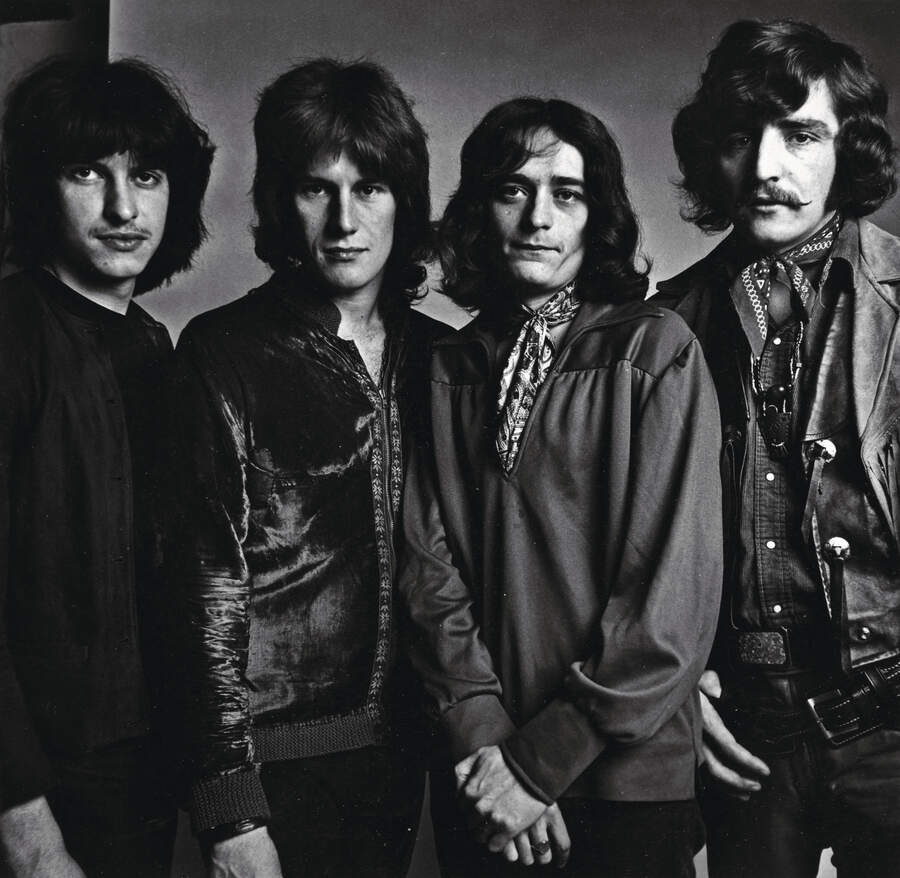
Ten Years After circa 1967: (L-R) Rick Lee, Alvin Lee, Chick Churchill, Leo Lyons (Image credit: Pictorial Press Ltd / Alamy Stock Photo)
The Jaybirds played Hamburg’s now legendary Star Club.
It was 1962, the first time we’d gone to Europe. The Star Club was at the bottom of the Reeperbahn, by all the strip clubs and brothels. I was eighteen. Alvin was seventeen – he shouldn’t even have been there. Our digs were over a ladies’ mud wrestling club, five to a room, in bunk beds. The Beatles had stayed there too, and on the wall there was a drawing of Jesus on the cross wearing hobnail boots. Apparently Lennon had drawn it.
What did your Star Club residency involve?
We played an hour on, an hour off, all through the night, seven days a week. The lady in the toilet was selling Preludin, tablets to keep you awake. But it got our chops together. George Harrison once said: “I went to Hamburg a boy and came back a man”. I can relate to that.
Before ten p.m. it was young people. After that you got the drunks, sailors, gangsters, hookers, transvestites. The gangsters would send four whiskys over to the band on a tray and we’d be told: “Play My Bonnie Lies Over The Ocean.” You’d drink it, play the song, then four more whiskys would come over – “Play My Bonnie again.”
Fights would break out. Manfred Weissleder was the boss, but Horst Fascher, who’d been a boxing champion, until he killed someone and ended up in prison, was in charge of the bands and waiters. He’d suddenly appear in the Star Club, and all the waiters would follow him to sort out some trouble in another club.
How do you survive in that environment?
It was great at first. And if you’re drunk or taking drugs all the time, maybe you could get through it like that. But for me it got too much. I used to go to the seaman’s mission – where you could have a sausage sandwich, a cup of tea and play snooker – just to get away from it. Then I’d go back for the gig. There was also The Top Ten Club, where I first met [now well-travelled guitarist] Albert Lee. I’d go round and sit in with the band, give the bass player a chance to spend time with his girlfriend.
When you returned to London, The Jaybirds became Ten Years After.
The first record [1967] was trying to replicate our live set. Then we did Undead [1968], which was live, with the recording console in the Decca canteen and the cables going over the roof into [club] Klooks Kleek. The thing with Ten Years After was we didn’t rehearse. But maybe that’s why it worked. As Alvin admitted: “Oh, I wrote the lyrics in the taxi on the way to the studio”. But the songs were fairly basic, chord-wise. It was the energy and the playing, not so much the lyrics, that made it.
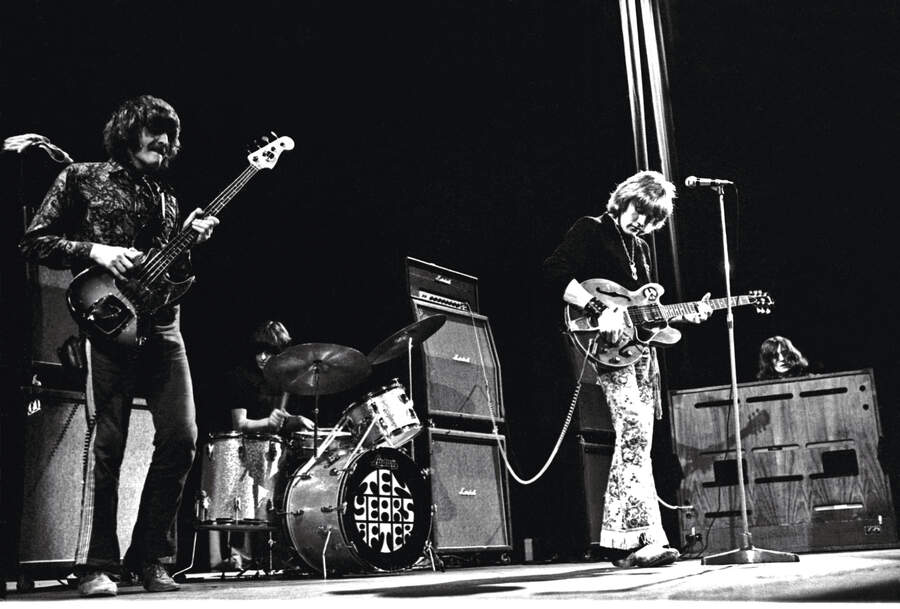
Ten Years After onstage in Denmark in 1969 (Image credit: Jan Persson/Redferns)
You’ve said TYA’s second album Stonedhenge was best with a spliff.
Yeah – played stoned and listened to stoned.
Is it true that album title gave Spinal Tap the idea?
I don’t know. But our tour manager from the late sixties was a guy called Derek Sutton, and he was technical advisor on that film. He probably told them a few tales.
It’s also said that 1969’s Ssssh album was so-titled because the band played so loud?
Well, I would say it was Alvin who was so loud. But he was always coming over to me, sticking his head in my speaker and saying: “All I can hear is bass!”
American promoter Bill Graham invited TYA across the Atlantic. What was America like then for a lad from Nottinghamshire?
Mind blowing. Particularly for Alvin and I, because we grew up on Chuck Berry, Little Richard and Elvis. The A&R guy met us at the airport in a limo. We stayed at the Sunset Marquis, with movie stars like Dennis Hopper sitting around the pool. The cars. The sunshine. The palm trees. The California girls – I think they make them all in some sort of factory, because they all come out looking gorgeous.
A friend had introduced me to hash, but while we were there it was all this California grass. And people actually listened at the gigs. At the time, if you played a UK blues club there’d be a guy sat there with his beer. He ain’t going to clap at the end of the show. Whereas the audiences there, they were really appreciative. After that first US tour, I was in tears walking off the plane back into the rainy UK.
In 1969 TYA also played some fabled US festivals. What are your memories of the Newport Jazz Festival and Woodstock?
It’s funny, my strongest memory of Newport is my amp blowing up. Before we played Woodstock, we were on tour with Nina Simone. We’d just come from Missouri, where she’d sung I’m Black And I’m Proud to an all-Black audience. Then these four English hippies come on. The other guys froze. But I said: “Play, play, play.” We started with Woodchoppers Ball and the audience were great.
Next day we flew to New York for Woodstock. We took a helicopter to the site. Then the storm came, it started raining and suddenly everything is running behind. The stage was sliding down the hill. It was getting dangerous. There were cables flooded with water all over the stage. Now, they would stop the concert. But Alvin said: “Well, if we get electrocuted our records will sell better.” So we did it. The foolishness of youth.
It was a buzz seeing that many people. Like something from Mad Max, with all the fires and steaming bodies. It was a difficult gig and not our best performance, because with all that humidity the guitars kept going out of tune. But we went down really well.
What was the scene like backstage?
It was chaos. I remember Pete Townshend coming up to me saying: “Don’t eat anything! It’s all spiked with acid!’ And I thought: “Oh great, there goes my breakfast, lunch and dinner.” I remember waving to Janis Joplin as she walked by with a bottle in her hand. We already knew Janis, because she’d played with us at the Fillmore, along with the Grateful Dead. Unfortunately, on that occasion she passed out on stage. Another time, I was standing in the wings when she came off stage. I asked: “How did that feel, Janis?” And she said: “I feel like I’ve been fucked by the entire audience!”
Later, we stayed at the Landmark Hotel, where Janis died, maybe a week after we’d left. The last time I ever saw her was when she came into my room, looking for a guy in another band that she fancied. You never know when it’s the last time.
Did you run into Hendrix at Woodstock?
Only in the hotel before. I wasn’t his best pal, but I knew him. When he first came to London, I was at a club seeing Rory Gallagher, when Chas Chandler introduced us and said: “We’re looking for a bass player, do you want the gig?” But I’d put in too much time working with Alvin. We hadn’t made it yet but we were on the way. So I passed on that.
Where did Ten Years After start going wrong?
We’d do two or three records a year. Tour America at least twenty-one weeks a year. German tours, English tours… It’s hard work. One of the problems was when the ‘guitar hero’ thing came in and the management and label decided it would now be Alvin Lee And Ten Years After. I told our manager: “I don’t think Alvin can handle it. It’s too much pressure for him.” And it was.
Woodstock made it even worse. He could have shared some of the pressure. He didn’t want to do all the interviews, but he wouldn’t share them. He didn’t want to eat the cake, but he didn’t want to share the cake either.
On the last record we made together, he said to me: “Why don’t you come up with any more riffs, like you used to do?” I said to him: “I don’t get any credit for the work I put in.” So there was tension. We were always breaking up and getting back together. We’d go out on tour, and for a few nights it’d be great. Then he’d find some excuse [to complain], like: “They’ve put blue lights on us”, or “The bass is too loud”.
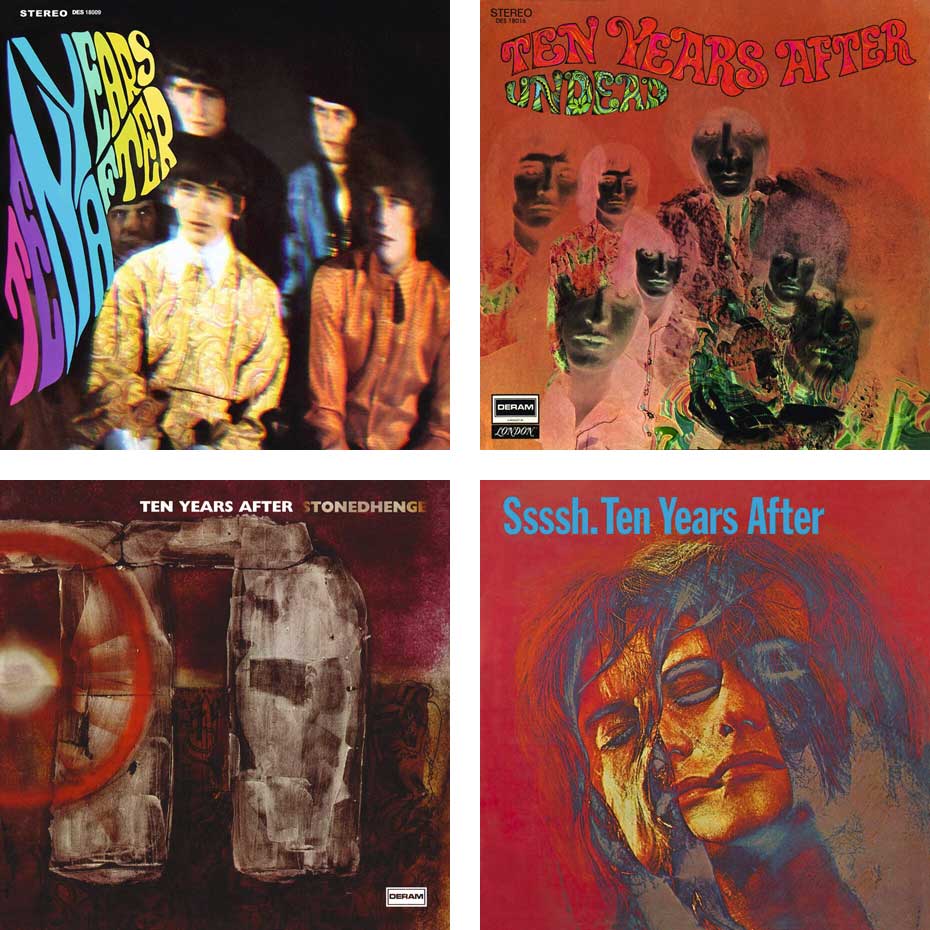
Ten Years After’s first four albums: Ten Years After, Undead, Stonedhenge and Ssssh (Image credit: Deram)
Did you have anyone to confide in during those difficult times?
When I was getting edgy with Ten Years After, Peter Grant would say to me: “Leo, if you want to start your own band, I’ll help you.” But I hadn’t got the guts to do it. I got on well with Peter. He used to be a wrestler called Count Bruno Alassio. When he was managing Zeppelin, their tour manager told me: “You know, you’re the only guy who can call him Count Bruno without getting beaten up.” So Peter had a softer side. What was it The Eagles said about their manager – “He’s an asshole – but he’s our asshole.”
Ten Years After split in 1975, but your career as a producer was already rolling. What do you remember about working with Motörhead?
Lemmy liked my bass playing, so he was fine with me. But he could be intimidating. I remember we got to the studio but there’s no Lemmy. I called him up and he said: “I’m really ill, man.” I said: “Okay, don’t worry, I’ll play bass, then you can dub yours on when you feel better.” He came down straight away. He wasn’t having that.
Then he spread a line of cocaine across the desk, by which time the engineer was shaking in fear. We start this song, and he’s doing the vocal when I say: “Hey, you could do a better take than that, Lemmy.” And he says: [gruff voice] “In whose opinion?” You know, he’d had some cocaine. And I said: “Well, in my opinion. You’ve asked me to produce the record. Now, I can walk away, or not.”
Anyway, the next day he called me up: “I can do a better vocal.” But we didn’t do any more recording, because the record company didn’t pay the bill and the studio kept the tapes. I honestly don’t even know which album it was for. I think we did Louie Louie and something else.
Ten Years After reunited in 1988. But you’ve said Alvin’s death, in 2013, was a decisive factor in you stepping away from the line-up.
Yeah. No disrespect to the other guys, but you can see historically that it was always Alvin’s and my band. I did go back with Ten Years After, without Alvin [in the post-millennium]. He said he didn’t want to do it. And it was great for a time. But… I don’t know. It wasn’t the same for me. Then when he died, that was the turning point. We weren’t working together at the time. But we always had a closeness, like estranged brothers. His death really hit me.
So what’s next for you?
Do you know, I’m not sure. Last year my drummer in Hundred-Seventy Split [Damon Sawyer] died. We’d been together eleven years. I’m still getting over the shock. I cancelled what work we had and haven’t done a show since. But I’ll probably play some shows in 2026. I haven’t given up.
The three-CD Deluxe Edition of Ssssh is out now via Chrysalis Records.
Ten Years After: Ssssh (Deluxe Edition) – Today’s Best Prices
![SSSSH [2025 Deluxe Edition]...](https://www.newsbeep.com/uk/wp-content/uploads/2026/03/g69upxyga16t4acm-17739728451719-100-80.jpg.webp.webp "SSSSH [2025 Deluxe Edition]...")