
The European Union body that monitors atmospheric conditions has warned that air quality across several European countries, including Ireland, will deteriorate over the next few days.
The Copernicus Atmosphere Monitoring Service (CAMS), said the deterioration is being driven by an increase in pollution from fine particulate matter, or PM 2.5, across the continent.
PM2.5 particles of pollution are tiny nano-sized organic compounds, one thirtieth the width of a human hair.
They are so small they can pass through the air-blood barrier in our lungs, travel to various organs in the body and, over time, increase the risk of heart disease and stroke.
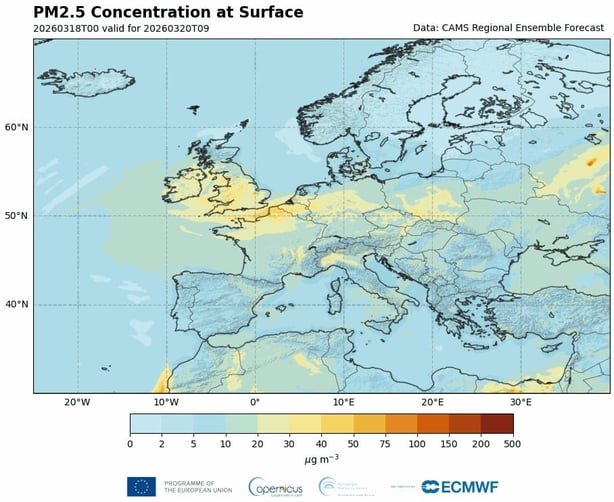
The air pollution forecast from Copernicus Atmosphere Monitoring Service
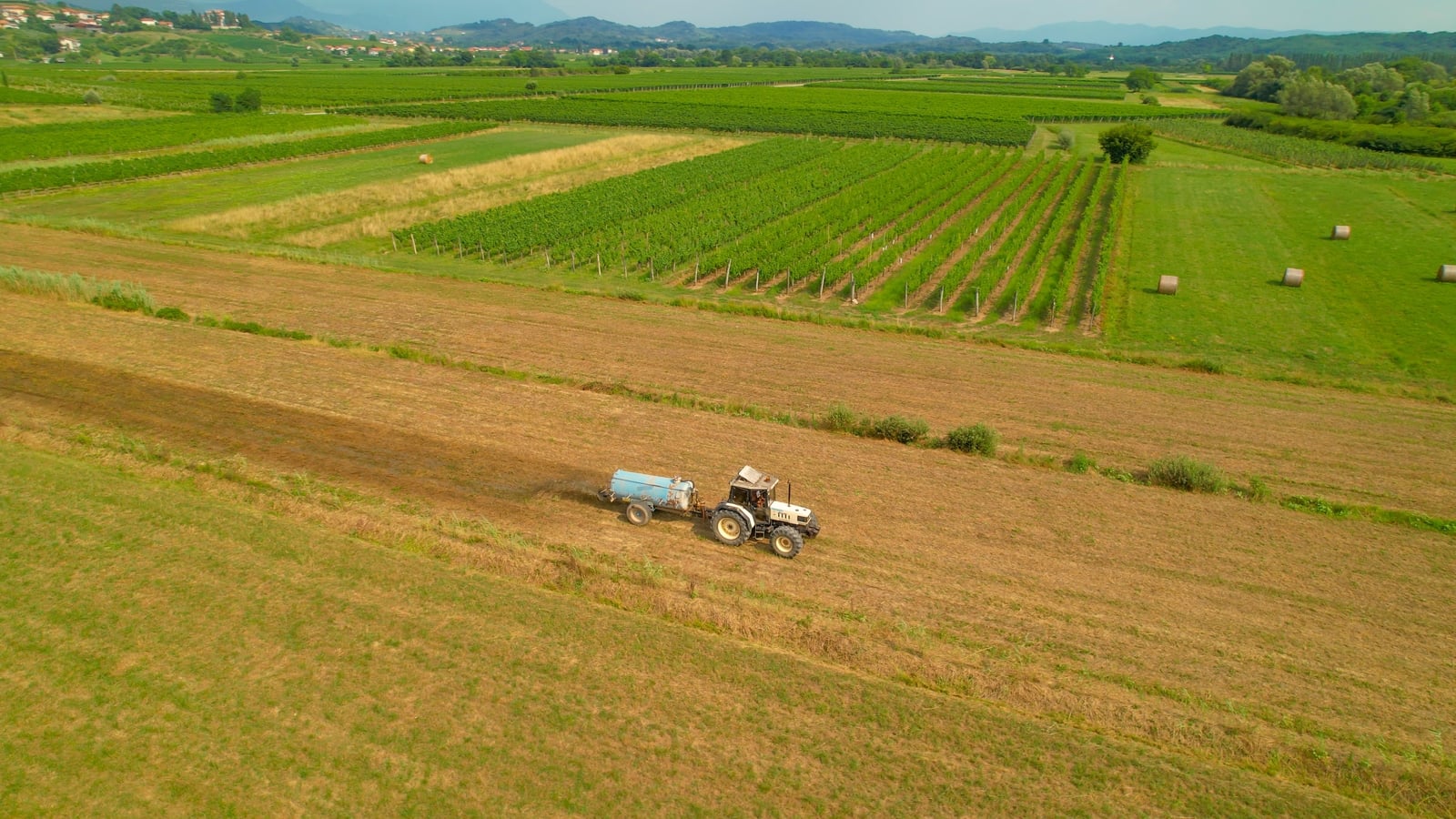
CAMS says the higher level of these dangerous particulates is being driven by increased ammonia emissions caused by spreading agricultural fertilisers during stagnant weather conditions.
The chemical process that causes ammonia to form into aerosols and fine particulate pollution is intensified in stable meteorological conditions when temperatures are cold in the morning and warmer later in the day – a familiar springtime pattern.
Increased concentration of tree pollen from birch and alder trees also plays a part.
The CAMS forecast warns that Germany, France, the Netherlands, Belgium, the UK, and Ireland will be impacted by reduced air quality because of this phenomenon over the coming days.
In addition, typical background pollution levels linked to fossil fuel combustion – especially across parts of Eastern Europe and the Balkans – also remains a consistent contributor to regional air quality.
Laurence Rouil, Director of CAMS said: “Forecasts show that ground level fine particulate concentrations are likely to increase over the coming days.
“Agricultural ammonia emissions combined with nitrogen oxide emissions from other sectors like road transport, are expected to be a major contributor to PM2.5 formation, causing increased concentrations of fine particles in the atmosphere of the affected areas.
“Whilst this situation is not unusual in spring, it is notable and can be intensified by stable and mild meteorological conditions and atmospheric inversions.”