
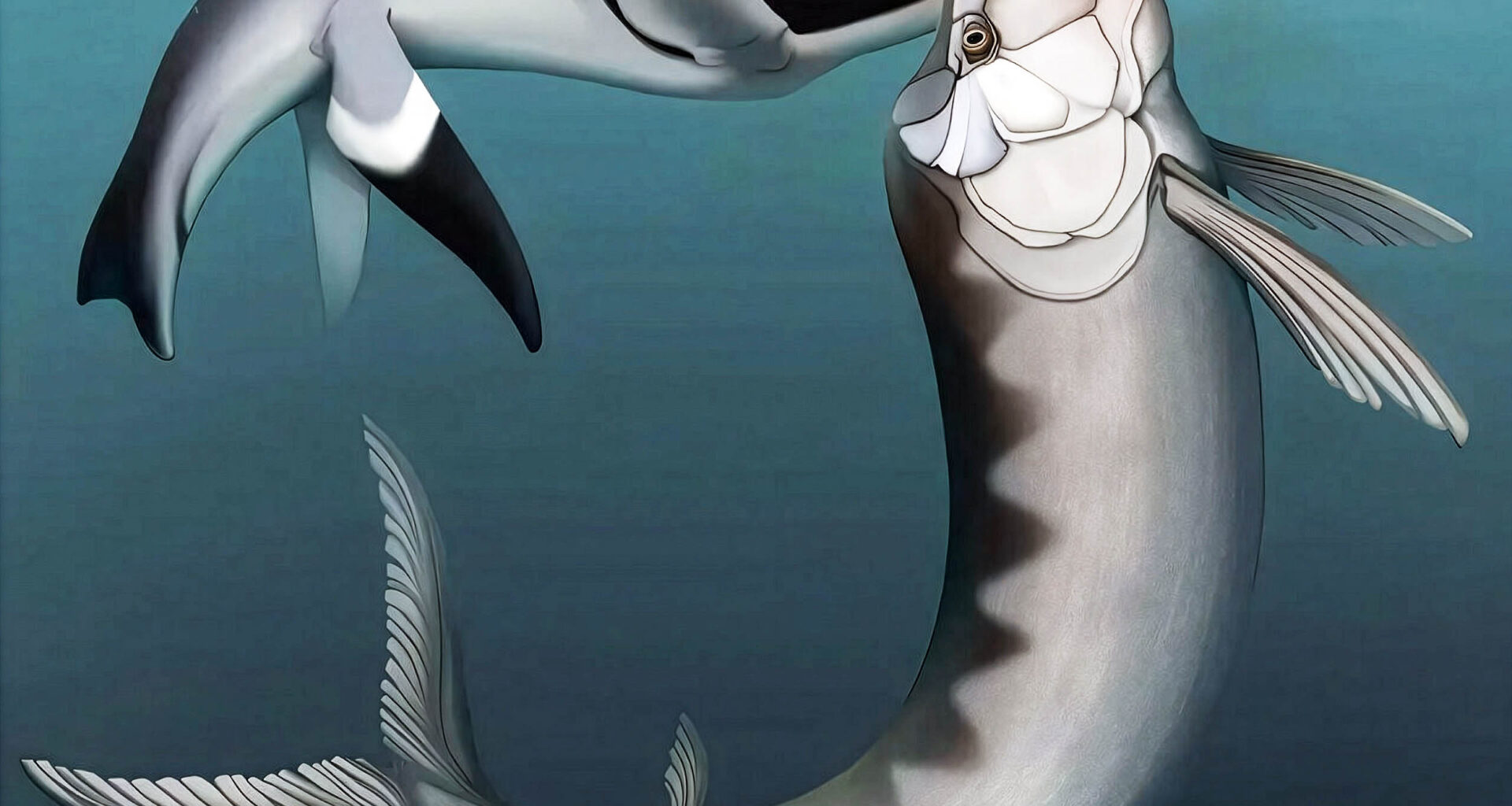
Researchers have identified the giant fish, Xiphactinus, behind a fatal bite preserved in a Polycotylus plesiosaur fossil. The discovery comes from a broken tooth embedded in the throat of a 13-foot (4.0-meter) marine reptile from ancient Alabama.
That single injury preserves direct evidence that top predators in Cretaceous seas could deliver fatal blows to each other.
Xiphactinus vs. Polycotylus

A four-meter-long marine reptile preserved in Alabama’s Mooreville Chalk carries the embedded tooth driven through one of its neck vertebrae.
By examining that bone, Stephanie Drumheller at the University of Tennessee, Knoxville (UT Knoxville) identified the tooth as belonging to the giant predatory fish Xiphactinus.
The tooth remains lodged deep within the vertebra, broken at both ends and preserved without any sign of healing, showing the injury occurred at or near death.
That clear physical link between attacker and victim leaves little ambiguity about the source of the bite, but it raises new questions about how the attack happened.
Scans solve the bite
Because the tooth was crushed at both ends, the outside alone could not reveal who bit the animal.
The team used computed tomography – a scan that shows hidden interior structures – to inspect the bone without cutting it apart.
Two UT Knoxville undergraduates, Miles Mayhall and Emma Stalker, separated the tooth digitally and built a three-dimensional model that exposed its curve.
Once the hidden shape came into view, the case narrowed to one giant bony fish living in those waters.
Polycotylus‘ long neck
Necks gave these swimmers reach, but they also exposed the soft parts that kept the animal breathing and circulating blood.
Reading the wound, F. Robin O’Keefe at Marshall University linked the injury to the neck’s exposed soft tissues.
“Plesiosaurs are famous for their long necks, but those necks come at a price,” said Professor F. Robin O’Keefe, professor of biological sciences at Marshall University.
A blow there could tear the airway and major vessels, leaving the animal little chance to survive.
Fight or feeding
Yet the bite does not settle the motive, because a dead animal and a hunted one can look disturbingly similar after burial.
Xiphactinus usually seems to have swallowed smaller prey whole, not sliced pieces from a large neck like this one.
“This fossil is a good reminder that nature is rarely that cut and dry,” said Drumheller.
That leaves three serious options, a hunt, a violent clash, or a bite delivered soon after death.
Low oxygen slowed decay
Preservation suggests the animal stayed near the surface only briefly before sinking out of easy reach.
A neck wound that cut the airway could also reduce lung pressure and buoyancy, sending the carcass downward sooner.
Below the surface waited anoxic water, water with almost no oxygen, where decay and scavenging slowed enough to keep the skeleton together.
That quick descent helps explain why this animal survived as a nearly complete body instead of scattered bones.
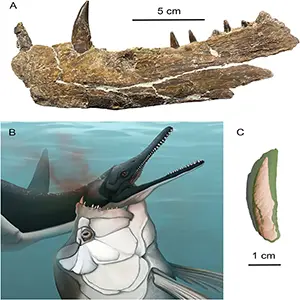 Scientists discovered a huge tooth from Xiphactinus embedded in the neck of a fossil of a four-meter-long Polycotylus plesiosaur from the Mooreville Chalk of Alabama. Credit: University of Tennessee. Click image to enlarge.A violent ecosystem
Alabama’s Mooreville Chalk has already produced bite marks from sharks, marine reptiles, and other large fish.
Those wounds map an ecosystem where several predators fed on overlapping prey, carcasses, and sometimes each other.
Some bones from the same rocks even came from land animals that washed offshore and were chewed after arrival.
Against that backdrop, one tooth in one throat looks less like an odd fluke and more like part of a violent pattern.
Questions about Xiphactinus‘ diet
Another fossil helped frame the surprise: Xiphactinus is famous for turning up with another fish still packed inside its body.
A well-known specimen at the Sternberg Museum shows a smaller fish preserved within a larger Xiphactinus.
That feeding style made a long throat a strange target, because attacking the neck was risky and did not provide much food.
The mismatch pushes the scene toward combat or opportunistic biting rather than a clean attempt to swallow prey.
Digital model evidence
In the paper, the authors described a conical, slightly curved tooth with a large hollow center.
Those details fit a big bony fish and rule out the sharks and marine reptiles known from the same rocks.
The model also showed damage at base and tip, which explained why the tooth looked so confusing on the surface.
That careful read mattered because the fossil had already been battered by burial, decay, and preparation long before the scan.
Predator roles blur
For years, fossil food webs often sorted ancient hunters into neat roles, with one group chasing certain prey and avoiding others.
This bite challenged that tidy picture because a huge fish seems to have attacked another top hunter in a vulnerable place.
Even when species usually fed in different ways, competition, panic, or chance could still turn neighbors into deadly opponents.
That wider lesson gives the Alabama fossil more than shock value, showing how messy ancient ecosystems could become.
What the Xiphactinus bite means
One damaged neck bone now ties old museum collections and new imaging to a direct story of violence among ancient top predators.
More bite-mark fossils may show whether this was a rare accident or part of a larger pattern hidden in Alabama chalk.
The study is published in the Journal of Vertebrate Paleontology.
—–
Like what you read? Subscribe to our newsletter for engaging articles, exclusive content, and the latest updates.
Check us out on EarthSnap, a free app brought to you by Eric Ralls and Earth.com.
—–