
Your support helps us to tell the story
From reproductive rights to climate change to Big Tech, The Independent is on the ground when the story is developing. Whether it’s investigating the financials of Elon Musk’s pro-Trump PAC or producing our latest documentary, ‘The A Word’, which shines a light on the American women fighting for reproductive rights, we know how important it is to parse out the facts from the messaging.
At such a critical moment in US history, we need reporters on the ground. Your donation allows us to keep sending journalists to speak to both sides of the story.
The Independent is trusted by Americans across the entire political spectrum. And unlike many other quality news outlets, we choose not to lock Americans out of our reporting and analysis with paywalls. We believe quality journalism should be available to everyone, paid for by those who can afford it.
Your support makes all the difference.Read more
Hundreds of mortgage deals have been pulled in the past week and rates continue to soar as conflict in the Middle East hits the UK economy.
Some City traders have forecast that interest rates could be raised three times in 2026, following the Bank of England’s decision to hold its rate at 3.75 per cent.
The Bank’s Monetary Policy committee (MPC) voted unanimously to hold the base rate on Thursday, citing concerns that the war between US and Iran will push up inflation by raising energy costs.
More than 500 mortgage deals have been pulled from the market over the past week, the highest number since the aftermath of the ‘mini-Budget’ presented by former prime minister Liz Truss. Meanwhile, the average rate on two-year fixed deals has risen above 5 per cent for the first time since August.
Experts had been anticipating the Bank to cut its base rate this month following a drop in the headline inflation rate from December to January. It is now expected that inflation will rise again as disruption to the global oil trade causes the cost of energy and fuel to spike.
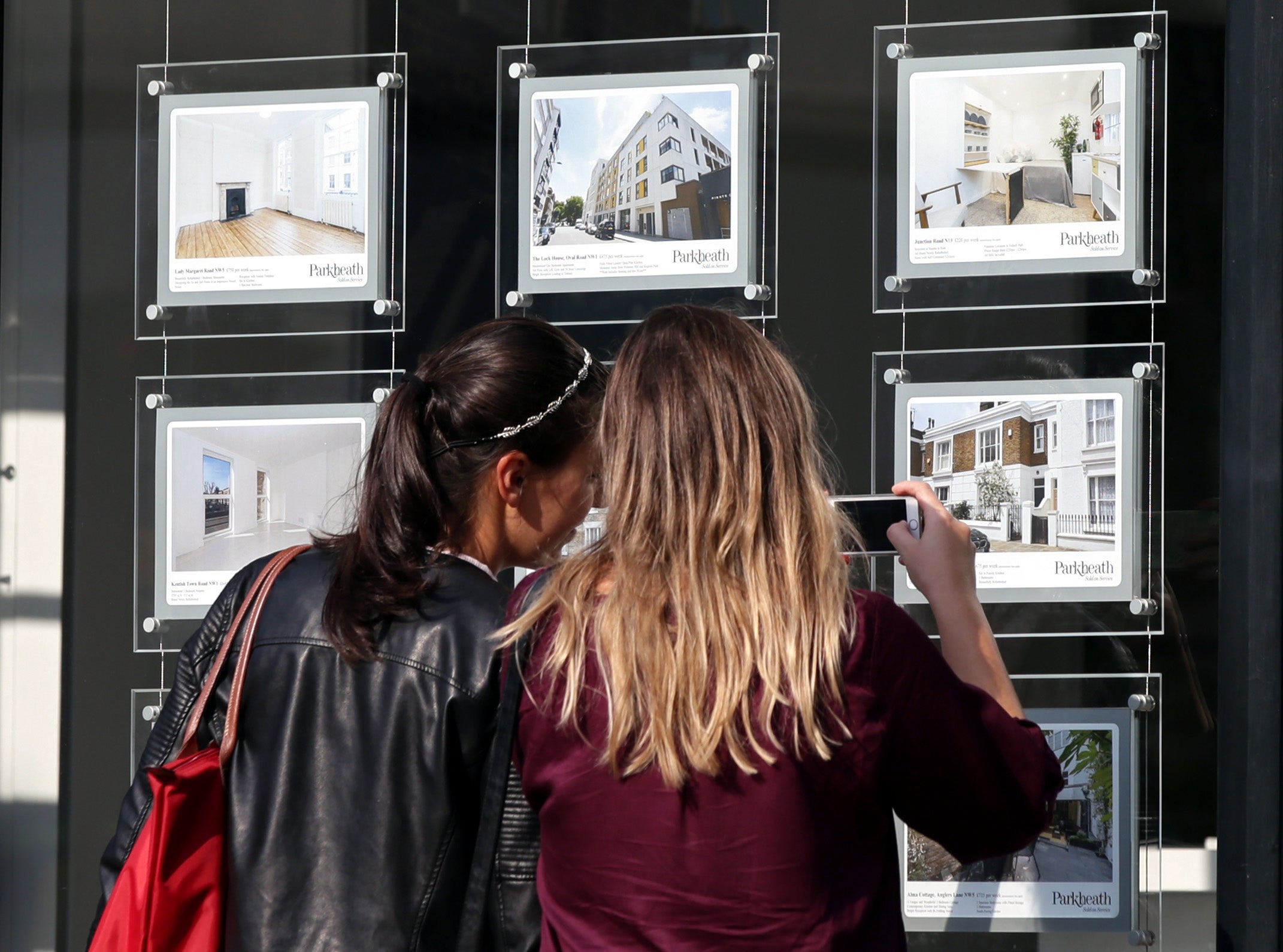 Britain’s biggest lenders have been removing mortgage deals in recent weeks (Yui Mok/PA) (PA Wire)
Swap rates, which are used by lenders to price mortgages, have also been increasing amid the conflict.
Rachel Springall, finance expert at Moneyfacts, said: “Borrowers looking for the lowest fixed rates will be disappointed to see the demise of sub-4% mortgages, but they are not sustainable with swap rates increasing. Lenders look at margins very carefully, so it would be unwise to price their deals too low, if the expectations are for interest rates to rise, even if over the short-term.
“In an unprecedented turn of events, the unrest in the Middle East has led to rising swap rates, which has inflated mortgage rates and caused deals to be pulled from sale, some temporarily … If such uncertainty is prolonged, and indeed if inflation spikes, we could even see an increase to [base rate] before the year is over.”
The situation will come as a blow to homeowners looking to renew their fixed-term mortgages, or prospective homeowners looking for a deal.
Two-year fixed rate mortgages are now averaging 5.28 per cent, analysis from Moneyfacts shows, with a typical five-year fixed rate at 5.32 per cent. These rates were at 4.84 per cent and 4.96 per cent at the beginning of March.
Major lenders like Nationwide, Barclays and HSBC all pulled their sub-4 per cent mortgage deals earlier this week, as these rates all but disappear from the market.