

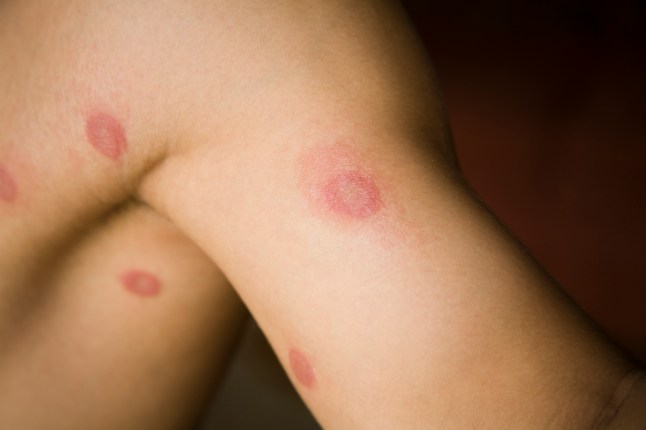
Up to two in 10 people will contract ringworm at some point (Picture: Getty Images)
Ringworm might sound like something out of a bygone era, but it’s making a modern comeback across the UK.
An estimated 10% to 20% of people will contract the fungal infection at some point in their lives, and rates have been rising further in recent years, in part due to the spread of highly contagious and treatment-resistant strains.
In particular, though, barbershops and gyms have emerged as key hotspots for transmission.
The rise in close-contact grooming and unhygienic hairdressing practices was blamed for a surge in cases in late 2024, with barber training academy owner Mike Taylor saying customers were increasingly turning up with ringworm.
Dorset-based Mike claimed young men had been catching ringworm in their droves from ‘cheap, dirty, unqualified barbershops littering the high streets’.
He also credited popular styles like the ‘skin fade’, which involves shaving hair down to the scalp and therefore allows the fungus to spread via unsanitised clippers, as a contributing factor in the spike.
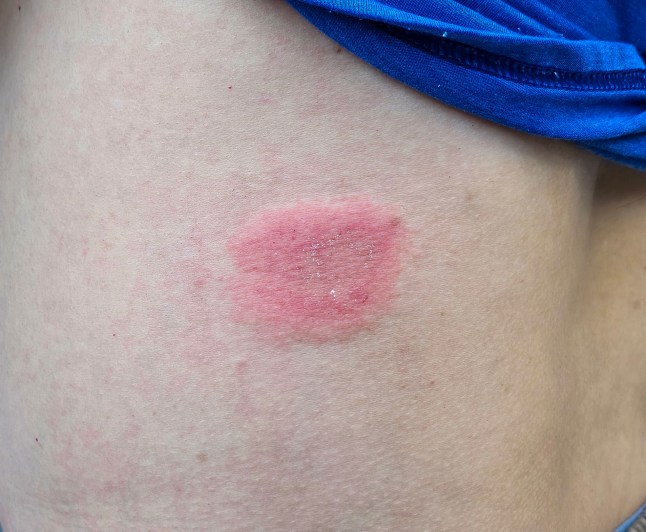
It typically appears as an itchy, red rash (Picture: Getty Images)
Meanwhile, in gyms, shared equipment combined with frequent skin exposure provides ideal conditions for ringworm to pass from person to person.
With more people prioritising health and fitness than ever before, gyms are busier — and sweatier — than usual. Unfortunately, that also means tinea (its medical name) can spread more quickly, especially when equipment isn’t properly cleaned between users.
What makes the situation worse, however, is how often ringworm goes unrecognised.
Is ringworm really a worm?
Dr Babak Ashrafi, from Superdrug Online Doctor, explains: ‘Despite the name, ringworm has nothing to do with worms. It’s a common fungal infection of the skin that can cause a red, circular, or scaly rash often appearing on the arms, legs, or torso.
‘Ringworm sounds worrying because of the name, but it’s actually one of the most straightforward skin conditions to treat. It’s caused by a type of fungus, not a parasite, and usually clears within a few weeks with antifungal treatment.’
According to Dr Clair Grainger at Superdrug Online Doctor, many people assume the telltale red, circular rash is something far less contagious, such as eczema, dermatitis, or even a simple allergic reaction.
Others may not notice symptoms at all in the early stages, allowing the infection to spread further across their body — or to other people — before they realise anything is wrong.
And because ringworm isn’t always correctly identified, cases are potentially far more common than official figures suggest.
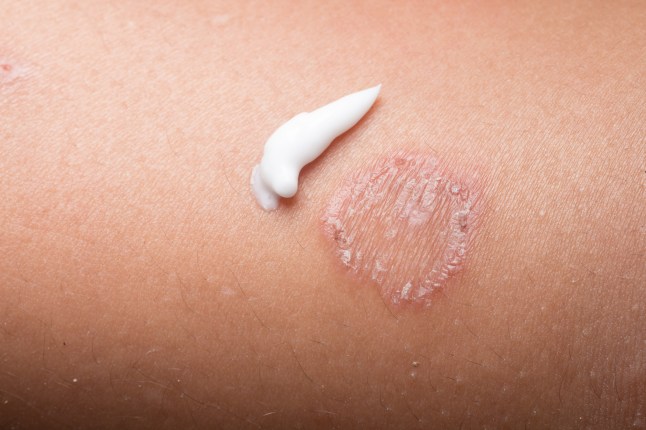
Eczema creams won’t treat the fungal infection (Picture: Getty Images/iStockphoto)
In gyms especially, where minor skin irritations are often brushed off as friction burns or sweat rashes, infections are able to circulate unnoticed for weeks.
‘Everyday infections like ringworm are extremely common and very treatable,’ Dr Grainger tells Metro. ‘But confusion can arise because the early symptoms can resemble eczema.’
Since tinea requires antifungal treatment rather than the moisturisers or steroid creams often used for eczema, he warns that misidentifying a rash can prolong symptoms.
‘One of the biggest clues is when a rash doesn’t improve with the treatment you’d normally use,’ adds Dr Grainger. ‘For example, steroid creams may temporarily reduce redness if a rash is fungal, but they won’t treat the infection itself and can sometimes allow it to persist underneath.’
How to prevent the spread of ringworm
Start treatment as soon as possible if you contract an infection
Wash towels and bedsheets regularly
Do not share towels, combs or bedsheets with someone who has ringworm
Do not scratch a ringworm rash because this could spread it to other parts of your body
Keep your skin clean and wash your hands after touching animals or soil
Regularly check your skin if you have been in contact with an infected person or animal
Via NHS.
Ringworm symptoms
Tinea, commonly known as ringworm, refers to dermatophyte infections affecting keratinised tissues such as skin, hair and nails, with various types depending on affected body parts: tinea corporis (body), tinea cruris (groin), tinea pedis (foot), tinea capitis (scalp) and tinea unguium (nail).
According to Dr Clair Grainger, ringworm — including so-called ‘jock itch’, which affects the groin area — typically appears as an itchy, red rash with a slightly raised, scaly edge that gradually spreads outward, sometimes forming a ring shape.
‘Warm, humid conditions can make fungal infections more likely to develop, particularly for people who sweat frequently, use public sports facilities or take part in contact sports,’ says Dr Grainger.
‘Although it can spread through close skin contact, including intimate contact, it’s far more commonly picked up through everyday exposure such as shared towels, gym equipment, clothing or damp communal areas like changing rooms.’
Have you ever had ringworm?
Yes, and I spotted it right awayCheck
Yes, but I mistook it for another condition at firstCheck
No, and I take measures to avoid itCheck
No, but I don’t think I’m vulnerableCheck
Sign up to Metro’s The Slice newsletter for your guide to what’s on in London, with trusted reviews, offers and giveaways.
How to tell ringworm apart from eczema
In contrast to ringworm, Dr Grainger explains eczema is a chronic inflammatory skin condition rather than an infection, and ‘usually presents as dry, irritated patches of skin that may crack, flake or become very itchy.’
‘It isn’t contagious and tends to flare up in response to triggers such as stress, allergens, harsh skincare products or changes in temperature,’ he adds.
‘The key difference is that eczema reflects a weakened skin barrier and underlying inflammation, whereas ringworm is caused by a fungal organism.’
His advice is to seek medical guidance if a rash is spreading, persistent or not improving after a week or two of treatment, adding: ‘The important thing is not to panic, but also not to ignore symptoms that aren’t settling.’
Do you have a story to share?
Get in touch by emailing MetroLifestyleTeam@Metro.co.uk.
Arrow
MORE: NHS ‘came close to collapse’ during Covid-19 pandemic
Arrow
MORE: I caught meningitis at uni – it cost me my fingers and legs
Arrow
MORE: The number of sit-ups you should be able to do, according to your age
Comments
Add Metro as a Preferred Source on Google
Add as preferred source
The Slice
Your free newsletter guide to the best London has on offer, from drinks deals to restaurant reviews.