
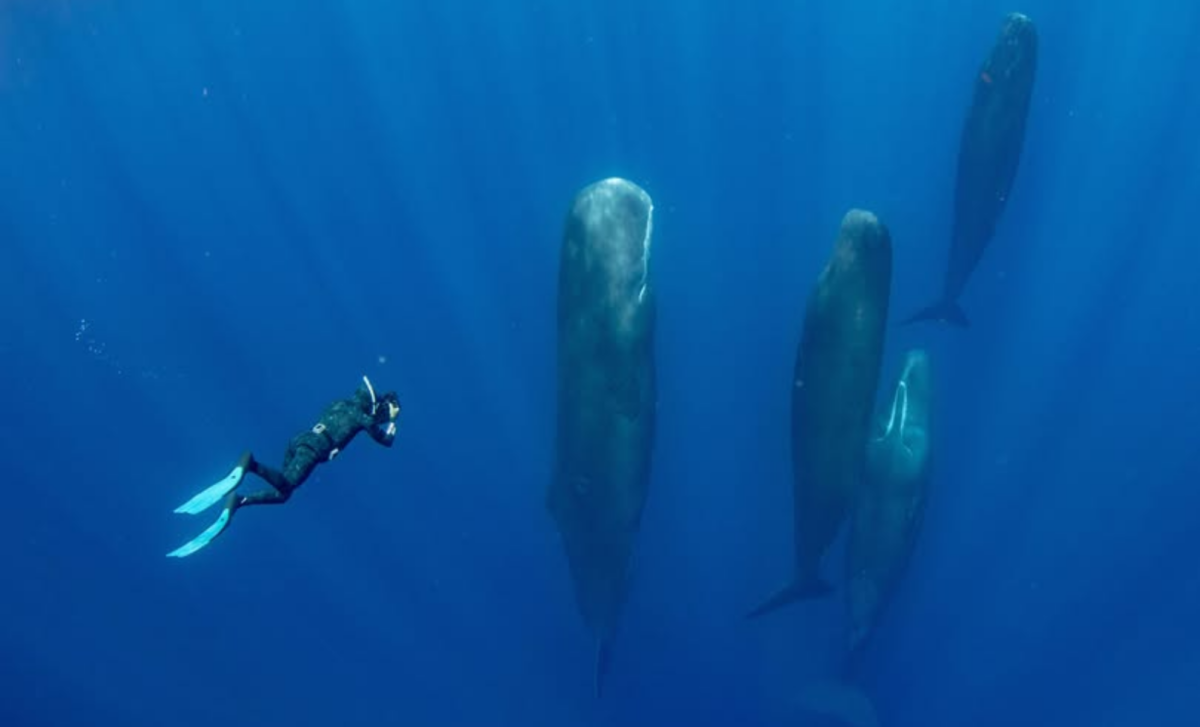
A team of marine researchers from National Geographic Pristine Seas stumbled upon a pod of giant mammals in a rare state: sleep. Found in the tranquil waters off Dominica, these ocean giants were seen floating upright, with their bodies aligned near the surface in brief, intermittent slumbers, a finding that raises important questions about their unique sleeping patterns and the conservation challenges these animals face in an ever-busy marine world.
The Majestic Sleep of Sperm Whales: A Rare Sight in the Caribbean
In 2022, the team from National Geographic Pristine Seas embarked on a routine expedition to explore the marine life of Dominica when they encountered something truly extraordinary. The researchers observed a family of sperm whales, some of the largest creatures on Earth, engaging in an unexpected behavior: sleeping vertically near the water’s surface. Unlike typical sleep behaviors seen in most marine species, sperm whales take brief naps, each lasting only 10-15 minutes, in a position that is both fascinating and precarious.
“These whales spend approximately 7 percent of their day sleeping vertically near the surface in short 10–15-minute periods,” says Kat Millage, a marine scientist at National Geographic Pristine Seas. This sleeping pattern stands in stark contrast to that of most animals, making this sighting particularly unique in the study of cetaceans.
According to Discover Wildlife, the sperm whale’s upright sleeping position allows them to remain alert to their surroundings, a critical adaptation in an environment filled with potential threats. “This behaviour allows them to stay alert to predators and easily breathe when they wake up (whales breathe air!),” Millage explains. It’s a strategy that showcases the whales’ need for constant vigilance while also allowing them to rest.
Why This Behavior Is Vital for Their Survival
Understanding how sperm whales sleep is crucial to understanding their complex behavioral patterns and survival strategies. These whales spend most of their time deep in the ocean, where they hunt for food and communicate with each other. But the sleep they take near the surface, especially in vertical alignment, can have profound implications on their well-being.
This behavior isn’t just about getting rest; it is an adaptation to a hostile environment where these whales are often vulnerable to predators and human activity. While it allows them to stay alert to predators, this sleeping method also comes with significant risks.
The Dangers of Sleeping Near the Surface
While the benefits of vertical sleep are clear, it also exposes sperm whales to considerable danger. Sleeping so close to the water’s surface leaves them vulnerable to accidental collisions with boats, a growing threat in busy marine regions. As Millage points out,
“Because sperm whales sleep so close to the surface, they are vulnerable to being hit by boat propellers. A key conservation challenge is minimizing potential interactions between ocean-going vessels and sperm whales.”
In places like Dominica, where marine traffic is high, such interactions are a real concern for the long-term survival of these majestic creatures. Accidents can lead to serious injuries or even death, posing an alarming threat to the health of the population. Conservation efforts, like the creation of the world’s first sperm whale reserve, are critical to ensuring that these giant marine mammals can continue to live in their natural habitats without facing the devastating impacts of human interference.
Sperm Whale Conservation in Dominica: New Protections on the Horizon
In response to the growing concerns over sperm whale safety, conservationists have taken steps to safeguard these animals. Dominica, which is home to over 200 resident sperm whales, has become a focal point for marine protection. In 2025, the country took a bold step by establishing the world’s first sperm whale reserve, a move aimed at regulating human activity in areas where sperm whales live, feed, and sleep.
The reserve will serve as a sanctuary for these majestic creatures, allowing them to move freely in their natural habitat without the looming threat of ship collisions or other human-induced dangers. This initiative is a critical part of the broader efforts to conserve sperm whale populations and preserve their fragile ecosystems.