
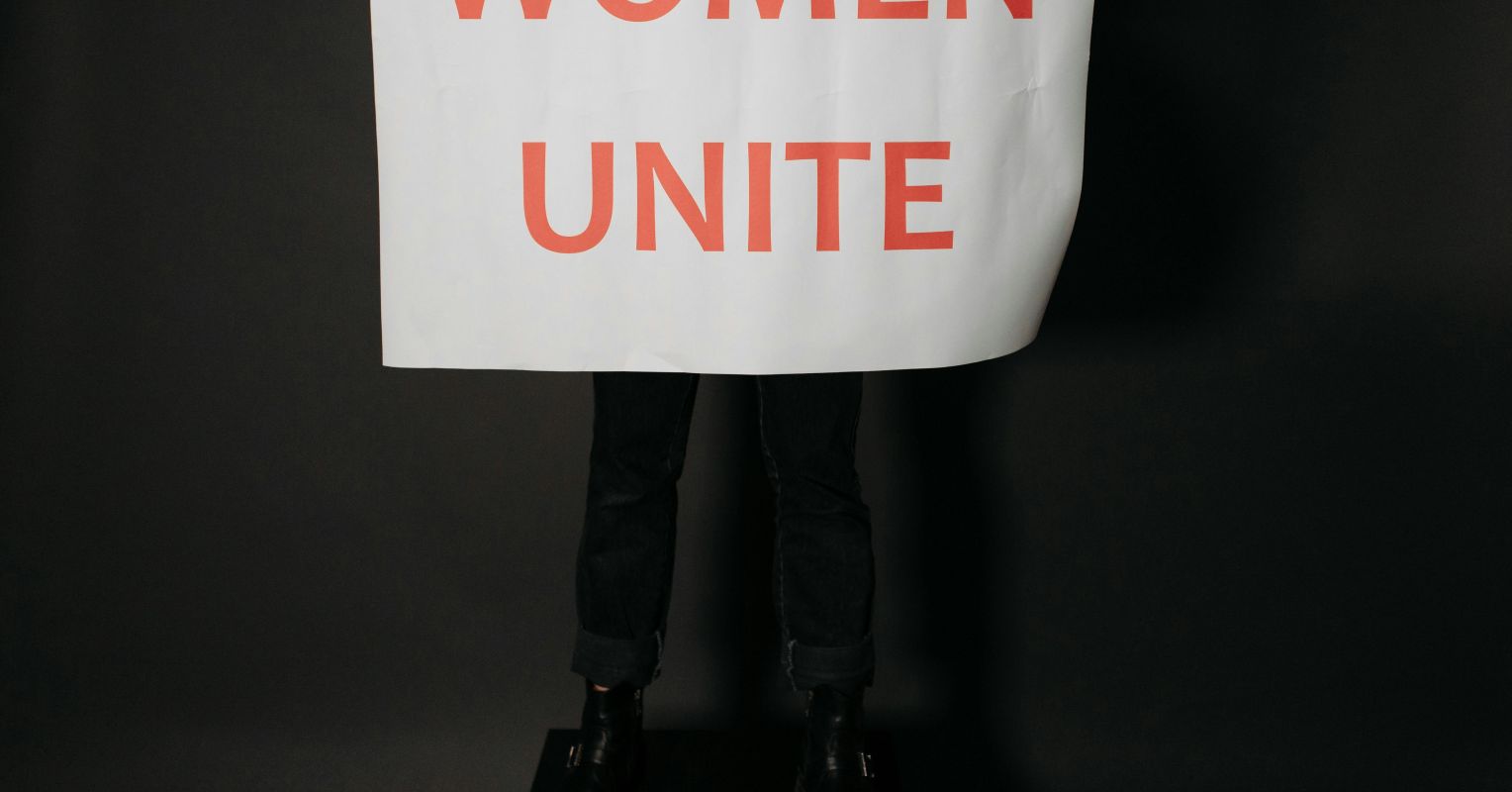
March is Women’s History Month. In this anti-DEI era, we need to re-assess whether we ought to have a month dedicated to women’s history. Let’s start with the history.
Women’s History month was conceived by an Education Task Force in Sonoma County, California in 1978. At the time, most history was the narrative of men’s political, military and economic decisions. Women were left out of the narrative. And then in 1973, Sheila Rowbotham wrote her “Hidden from History: 300 years of Women’s Oppression.” As women such as Rowbotham entered the social sciences, research on women—historical, sociological, and economic—began to be published. At first, the field focused on simply discovering the facts of women’s history that had never been recorded or told. But soon it became apparent that women’s history wasn’t just about women, but relations between the sexes, and patriarchy and oppression. In history, and in my field of sociology, it became clear that to understand the past, or the present, we needed to bring a “gender lens” to all of history and the study of society.
Toward the end of the 20th century, i and my colleagues Joey Sprague and Judith Howard created a book series to do just that, the Gender Lens. And while research using a gender lens has certainly progressed since those early years of feminist scholarship, much remains to be done. Without a gender lens, we cannot move past a patriarchal and misogynist understanding of history, or even of the present.
Unfortunately, at this moment in history, rather than pushing forward to more fully use a gender lens to understand our past, present, and future, our government is pushing us backward, trying to stop feminist progress and forbid using a gender lens to understand the world. Let me provide some examples: In early February, federal websites that included vital information for reproductive health were removed from the internet. Worse, ADVANCE, a decades-long effort to improve the status of women in higher education, especially in the Science, Technology, Engineering and Math disciplines, was ended, and now only an archived site is available to prove that the United States used once hoped to integrate women as equals into the scientific world. While the wage gap between women and men shrank during the 20th century, it is no longer shrinking. There is even some evidence the gender pay gap is getting worse.
Child care is increasingly expensive, prohibitively so, and the jobs women are most likely to find are in lower-paying careers. Worse yet, there are loud voices in our government that believe women should be pushed out of the public sphere entirely. According to the National Women’s Law Center, the Trump administration has taken aim at the very idea that gender equality is a shared, national value, recasting fairness as unmerited favoritism and discrimination as an acceptable norm. Through its implementation of Project 2025, the administration has worked quickly to undermine civil rights enforcement; overturn longstanding protections against workplace discrimination; gut diversity, equity, inclusion, and accessibility efforts; and weaken workplace protections in the jobs that women disproportionately hold. Many women have since lost jobs or been forced out of the workplace. The labor force participation rate of mothers with young children has declined particularly rapidly, especially Black mothers whose participation is now lower than before the pandemic.
To understand the present, we need to understand the past. In an era when women’s rights are being reversed, it is more important than ever to keep hope alive, and to do that, we must remember the past. We must unearth women’s history and bring it into contemporary conversation. And we must continue to fight for diversity, equity, and inclusion for women and all people. Gender matters—for understanding the past and the present, and creating a future where everyone has equal opportunity.