
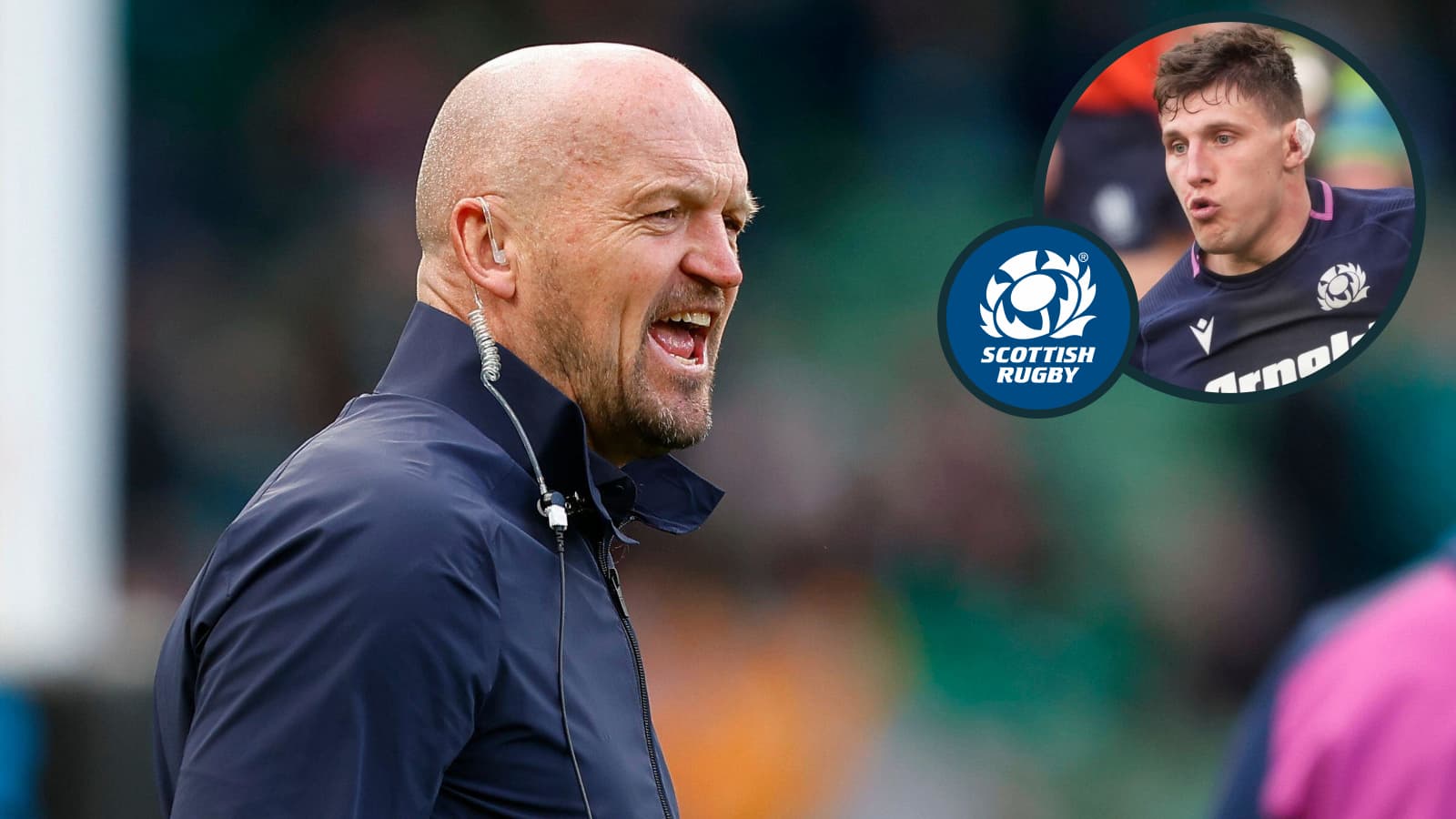
Following the conclusion of the 2026 Six Nations, we update you on the state of the participating nations. Next up, it’s Gregor Townsend’s Scotland.
There was hardly too much positivity emanating from the supporters heading into this championship after their implosion against Argentina in the November series. In fact, the head coach found himself under significant pressure, with a poor campaign surely making his position untenable.
Calls for Townsend’s sacking then grew louder after their Round One defeat to Italy, but most people were then forced, including us, to eat a slice of humble pie as they became title challengers, providing them with a realistic chance of winning the Six Nations for the first time ever. However, in typical Scottish fashion, it blew up in their face when hope was as its highest as another tournament ended with rather mixed emotions.
Six Nations summary
In many ways, it was the archetypical Scottish campaign but it just came through the unlikeliest of routes. While there was the standard Calcutta Cup triumph – something they have become accustomed to over the past few years – it came after a dreadful loss to Italy. That 18-15 reversal in the Rome monsoon increased the pressure on Townsend and at that point the head coach was on the brink.
With England coming to town – one of the pre-tournament favourites who had put almost 50 points on Wales a week prior – it felt an insurmountable task. As it turned out, Steve Borthwick’s men weren’t very good in this Six Nations, but Scotland had a lot to do with that. The tempo they played with, as well as the skills, physicality and intensity, laid the platform for the run of wins that would see them challenging France and Ireland in the standings.
Of course, as is the Scots’ way, they followed England up by almost crashing and burning against Wales, finding themselves 20-5 in arrears after 50 minutes before Finn Russell and the bench rescued them – and Townsend – in the final half-hour. Tries from the fly-half, Darcy Graham and George Turner took them to a bonus-point success but, after that fright, few gave them a chance against table-toppers France.
How wrong we all were as Scotland arguably produced their best performance under Townsend to dismantle that Shaun Edwards-led French defence. It was spellbinding rugby from the hosts, who at one stage found themselves 47-14 in front with 15 minutes remaining. Les Bleus did turn on the style late on, touching down four times to rescue a losing bonus-point, but the hosts brought up a half century to claim a remarkable 50-40 success.
They duly went into Super Saturday with a genuine chance of lifting the title. There was just one problem: Ireland, a team that had beaten Scotland in 11 successive games going into the clash and who themselves had the opportunity of winning silverware. Townsend’s outfit were gallant but the Irish were too strong and put an end to their chances. It resulted in a third place finish and another case of ‘what if’ for the Scots.
Standout players
After the Italian abomination, there were plenty of individuals who showed their class. Leading the way was of course Finn Russell, with everything good going through the gifted fly-half. Russell had been struggling for form going into the Six Nations but it was in that England win where he refound his mojo and the playmaker never looked back.
The pivot’s improvement no doubt helped the likes of captain Sione Tuipulotu and backline team-mate Kyle Steyn, who also had big tournaments. Tuipulotu is a genuine triple threat of run, pass or kick and that always kept defences guessing, while Steyn is the ideal modern day wing. Excellent in the air with enough pace, footwork and skill to make things happen, he proved to be one of the back three stars in the Six Nations.
That trio couldn’t have done it without a platform, however. There were concerns around the scrum but thanks to Zander Fagerson, the front-row did just enough to stop them from folding and become a real problem the area. The main stars were in the back-row, though, as Rory Darge and Jack Dempsey were consistently brilliant for the Scots. Darge was exceptional at the breakdown, both slowing the opposition down and providing quick ball for his side, while Dempsey was a carrying machine and constantly got over the gain line.
Stat leaders
Steyn’s excellence was very much shown in the statistical analysis, ranking sixth for metres made with 316, top for defenders beaten with 26 and second for metres per carry – just behind Italy’s world-class centre Tommaso Menoncello.
His opposite wing took the try-scoring honours, however, as Darcy Graham crossed the whitewash four times in comparison to Steyn’s three to move ahead of Duhan van der Merwe in Scotland’s all-time list, albeit their tally was well behind Louis Bielle-Biarrey’s nine.
Elsewhere, Ben White had a fine tournament at scrum-half. His ability to inject tempo was obvious but he was also accurate with his kicking, and possession was retained 14 times from his box-kicks.
Up front, the standouts were Darge and George Turner with the former showing up superbly in defence. The flanker had the fourth most successful tackles with 74 – a success rate of 97.4 per cent – and had the joint most turnovers alongside Tadhg Beirne, Stuart McCloskey and Maro Itoje with eight.
As for Turner, he rescued the lineout after Ewan Ashman suffered a disaster in Rome. The Harlequins hooker was the only player to have 100 per cent success rate in the set-piece having thrown in 33 times, which put him fifth on the list.
Success story
You cannot scoff at home victories over England and France. Not just that but the manner of them would have put smiles of every Scottish person’s face. They have always been renowned for their ability to move the ball but this was on another level as they ripped both teams apart at Murrayfield.
Townsend’s men have sometimes struggled against bigger packs but on both occasions they fronted up to edge the physical battle and provide front foot ball for Russell and co. to weave their magic. After the Italy debacle, it was a fine response and one which probably saved their head coach from the axe.
As Tuipulotu himself said, they were playing for their boss and that was shown in their performances against those two big nations. There was no doubt that the November campaign was a disappointment, which put Townsend’s job on the line, but the players rescued him here. Scotland once again hinted that they could be a consistent top five country, so can they finally fulfil that promise heading towards the 2027 Rugby World Cup?
Main regret
Granted, there were plenty of highs, but it was ultimately the same old Scotland – get some good results and then falter when it really matters. There was much more promise in this campaign than there has been in other years, but the end result was similar and that arguably makes it the most frustrating Six Nations yet for the Scots.
It was another season of glorious failure. They have not finished above third in the Six Nations and after final round wins for France and Ireland, that is where Townsend’s men ended up in 2026.
That in itself could be considered a regret, while a 12th loss in a row to Ireland will annoy the players, fans and coaches. There was also France’s late try bonus-point at Murrayfield that took the title out of their own hands, but the one that will particularly rankle is the opening round defeat to Italy.
They can accept a loss in Dublin, but a bonus-point success in Rome would have seen them seal four wins and be in the top two of the Six Nations table for the first time ever. It would have left most people satisfied at a positive tournament but, as a result of that loss, they will look back with sense of frustration.
Results
Scotland v Italy (lost 18-15)
Scotland v England (won 31-20)
Scotland v Wales (won 26-23)
Scotland v France (won 50-40)
Scotland v Ireland (lost 43-21)