
It’s 8pm on a Wednesday. I got home from work an hour ago, and I’m lying on the sofa mindlessly scrolling TikTok and contemplating getting into bed. It’s the millionth day in a row that I feel exhausted — like, to the bone.
As I swipe, swipe, swipe on my phone, barely registering what I’m watching, something catches my eye: ‘Signs of high cortisol in the body,’ reads the caption, overlaid on a video of a very zen-looking girl sitting outside on a summer’s day. My eyes scroll down the list — ‘Energy crash at 3pm’? Hard relate. ‘Bloated face and stomach’? Yep, that’s me. ‘Trouble falling and staying asleep’? Check, check. ‘Can’t stop doom scrolling?’ Uhh…
I type ‘high cortisol’ into the search bar and keep scrolling. ‘You’re not ugly, you just have cortisol face,’ declares one video. ‘POV you finally drop the cortisol belly,’ reads another. A third screams in caps lock, ‘HOW TO LOWER CORTISOL’. I’m sold. Cortisol is to blame for everything. But how do I fix it?
Related Story
I quickly learn that the answer is, apparently, a ‘cortisol detox’. This means reducing my cortisol through supplements such as ashwagandha, black pepper, or turmeric, a ‘cortisol cocktail’ consisting of orange juice, coconut water, and sea salt, or by rubbing lavender balm on to my temples. Sounds easy enough, I tell myself, adding the relevant ingredients into my Notes app.
Now, I’m not usually one to be sucked in by social media wellness advice, but this is the second time a TikTok diagnosis has caught my eye. A few months ago, I convinced myself I had an underactive thyroid — the symptoms of which, TikTok told me, include chronic tiredness, weight gain, puffy face, and anxiety — even going as far as to book a test with my doctor. Admittedly, these are among the symptoms of hypothyroidism and, for some, finding out about this on TikTok might help them get a genuine diagnosis. But I know, deep down, that neither this nor high cortisol is my problem.
You see, what these TikToks don’t factor in is the context — which, for me, is that I don’t always take the best care of myself. I go to bed late and get up early; I drink coffee on an empty stomach before doing a HIIT class; and I indulge more than I probably should in meals out, and booze to boot. I also have IBS and an anxiety disorder… Oh and my job (and life) can be pretty stressful at times. No amount of orange juice and coconut water is going to alleviate the consequences of all that. So why, despite knowing all of this, do I still jump at the opportunity for an easy-to-spot, out-of-my-hands issue to blame? And besides, how much truth is there to TikTok’s spiel about high cortisol anyway?
Everyone’s clicking on…A misunderstood hormone
“I feel really sorry for cortisol these days,” says Niamh Martin, a professor of endocrinology at Imperial College London. “It needs some rehabilitation or something because, actually, it’s such an important hormone.” While cortisol — a steroid hormone produced by our adrenal glands — does play a key role in managing your body’s stress response, including, yes, spiking when we’re stressed, it’s also vital in regulating our metabolism, mobilising energy, decreasing inflammation, controlling blood pressure, and influencing our sleep- wake cycle. For those who work traditional nine-to-five hours, it’s usually high in the morning and low in the evening, with spikes throughout the day. Essentially, says Martin, it keeps us in balance.
So, how accurate is it that permanently high cortisol can impact someone’s weight, mood, skin, sleep, vision, and brain function, as TikTok suggests? Well, there is something called Cushing’s syndrome, which is caused by long-term elevated levels of cortisol, and its symptoms do indeed include weight gain on your tummy (as well as neck, upper back, and chest), a round face, and changes in mood. But, Martin assures me, Cushing’s is a rare condition, and one usually caused by a non-cancerous tumour in the pituitary or adrenal glands or by taking high doses of steroid medicine for a long time. According to You And Your Hormones, an education resource from the Society for Endocrinology, 60 to 180 cases of Cushing’s are diagnosed in the UK each year, which is one to three new patients per million.
Cortisol needs some rehabilitation or something because, actually, it’s such an important hormone
Essentially, it’s unlikely that high cortisol is responsible for what it’s being accused of online. And those home remedies? They won’t do anything, sorry. “There is no evidence to suggest that people are having pathologically high [levels] of cortisol because of modern-day life,” says Martin. “We’re all looking for a reason why something happens, so we can fix it. It’s much easier to be like, ‘Oh, this one thing is to blame, rather than my lifestyle.’ You can just have your cortisol cocktail and everything will get better, whereas an overhaul of your life would take time — and often people are in short supply of that.”
Still, Martin says she has been seeing a rise in people seeking to have their cortisol levels tested — something they usually have to do privately. “People are looking for a solution, so they think they’ll pay £50 to have their blood tested and that’ll tell them what the problem is. But it doesn’t always work that way,” she explains. “What often ends up happening is that the more investigation someone has, the more it makes them feel that there’s something wrong with them. [That in itself unleashes] a whole torrent of anxiety, which doesn’t help anybody.”
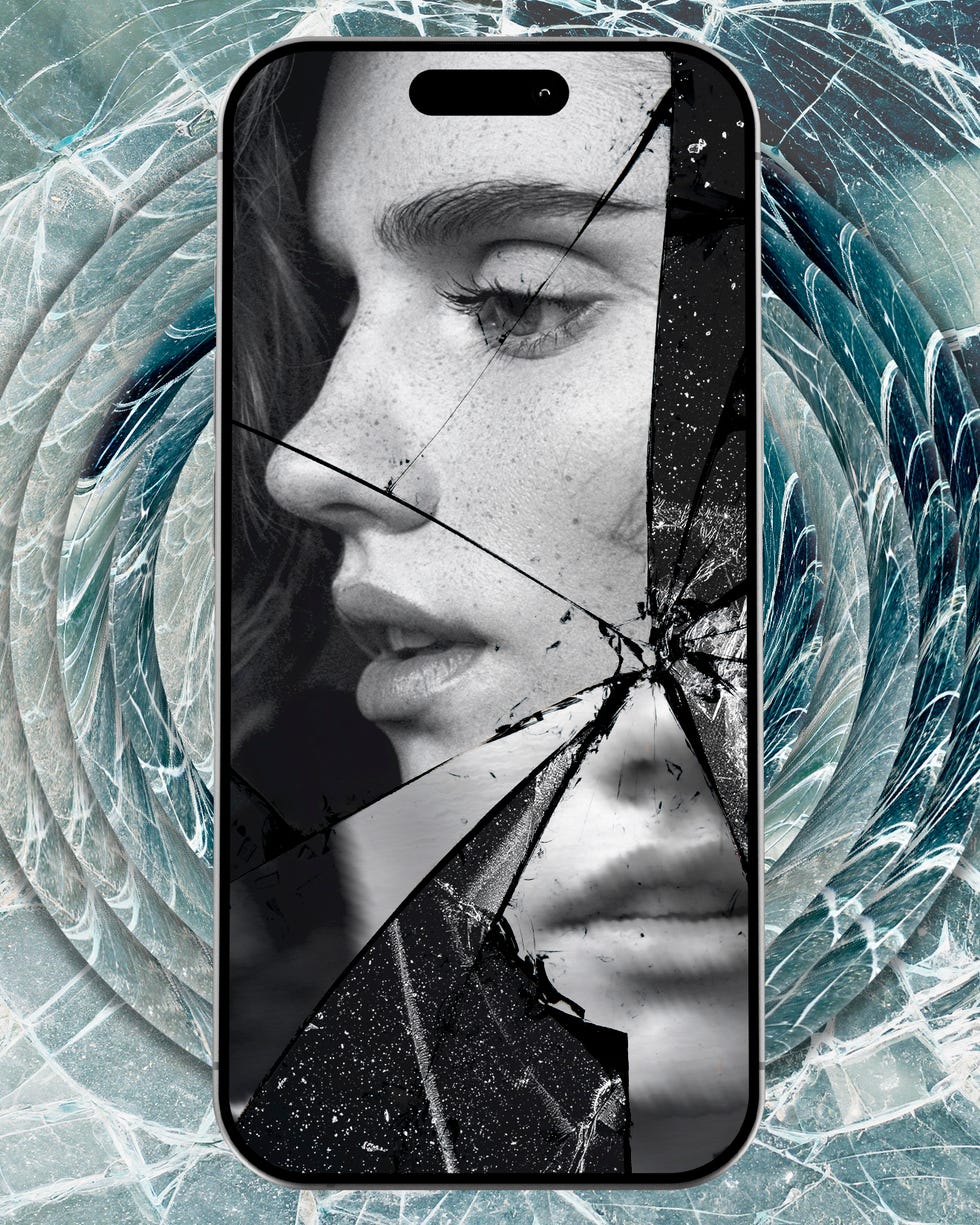

Artwork by Alex Hurst. Photography by Getty.
Reclaiming control
It’s no secret that we’re living in a particularly stressful and anxiety-inducing time. You know the culprits: the lingering, lonely effect of the pandemic; economic uncertainty and wage stagnation; climate, housing, and employment crises; global atrocities streamed live on our phones; and the phones themselves, which sap our energy by forcing us to constantly be connected to loved ones, colleagues, strangers, and the news, while simultaneously disconnected from each other. Against this backdrop, it’s easy to see why people turn to TikTok pseudoscientists for reassurance and explanation, because what’s really wrong is often out of our control.
We’re stressed out by the pace and demands of life, but we can’t just opt out of it. So instead we look for ways to manage the chaos: tracking our sleep, our steps, our glucose levels; drinking ‘cortisol cocktails’ between heavy weekends of partying; treating ourselves with home remedies while we wait months for the doctor to call. But what impact is this health tracking, pathologising, and self-diagnosis having on our mental and physical health (and, ironically, on our cortisol levels)?
It’s not cortisol that we should be focusing on, but the underlying drivers of stress
“The mix of clicking related content, Googling symptoms, and even asking AI can quickly escalate uncertainty,” says Nicholas Rose, a UKCP psychotherapist. Basically, what starts out as a bid to understand, control, and, ultimately, quick-fix our feelings of anxiety can, in fact, have the exact opposite effect. In reality, it’s not cortisol that we should be focusing on, says Rose, but the underlying drivers of stress.
“Often the anxiety sits atop something else — loneliness, lack of purpose, relationship difficulties, or a sense of being ungrounded,” he continues. “When these deeper needs go unaddressed, it’s easy for them to latch on to health as the focus. Understanding the real cause can be hugely relieving and is often where genuine wellbeing begins.”
So, how can you shut out the noise and begin to address the stress you believe is causing your ‘cortisol face’ or ‘cortisol belly’? Stepping away from our screens, resisting the urge to go down Reddit rabbit holes and taking a more holistic view of our health, is a start. Because, however much we may want to, no amount of tech, tracking, or TikTok advice can control our bodies — they’re a natural, changeable thing. “We expect ourselves to be like machines with infinite capacity,” says Suzy Reading, a psychologist specialising in wellbeing, stress management, and facilitation of a healthy lifestyle. “But to help mitigate the effects of stress and protect ourselves from burnout, we need to embrace our humanity — the things that distinguish us from our devices.”

Artwork by Alex Hurst. Photography by Getty.
She adds: “We need to listen to our needs and tend to our feelings; feed our brain; hydrate our mood; move for mental health; spend time in nature to feel part of something bigger than ourselves; [enjoy] social connection; sleep for sanity; rest for resilience; we also need fun, relaxation, and pleasure to resource us and help us to heal. Compassion is key, and it pays to take action at the whisper rather than waiting for the shout of illness, injury, conflict, or overwhelm.”
Although cortisol videos still crop up on my TL every so often, I’ve seen enough marked as ‘paid partnership’ to know that I shouldn’t be taking them seriously. What I’ve started to do instead is address why I keep getting sucked in by these supposedly easy fixes — and figure out what it is, exactly, that I’m trying to fix. And then — the complicated bit – how to fix it. For me, that’s looked like drinking less, if at all, during the week; making sure I get an early night when I’m up early the next day; exercising regularly; eating well; reading instead of scrolling; and spending more time with friends in person rather than online. I know these all sound like unsexy, obvious solutions to my problems, but sometimes the easiest fix is the one you’ve been avoiding the whole time.
Related Stories
Brit Dawson is Cosmopolitan UK’s Sex & Relationships Editor. Her work mostly delves into sexual subcultures, sex work, women’s rights, and sex and relationships, exploring how each intersects with technology, politics, and culture. Formerly a staff writer at Dazed and MEL Magazine, she’s written for British GQ, The Face, Slate, and more. She’s also interested in drugs, youth and pop culture, and books — so all the good stuff. Find Brit on Instagram, X, and LinkedIn.