

Summary and Key Points: Defense analyst Brent M. Eastwood explores the strategic ambiguity surrounding the U.S. Space Force’s X-37B. Following the OTV-7 mission’s landing at Vandenberg Space Force Base in March 2025, the 29-foot autonomous spacecraft remains a focal point for space domain awareness.
-Originally developed by NASA and DARPA, the craft utilizes Falcon 9 or Atlas V rockets to reach orbit, where it tests advanced heat shields and solar power systems.
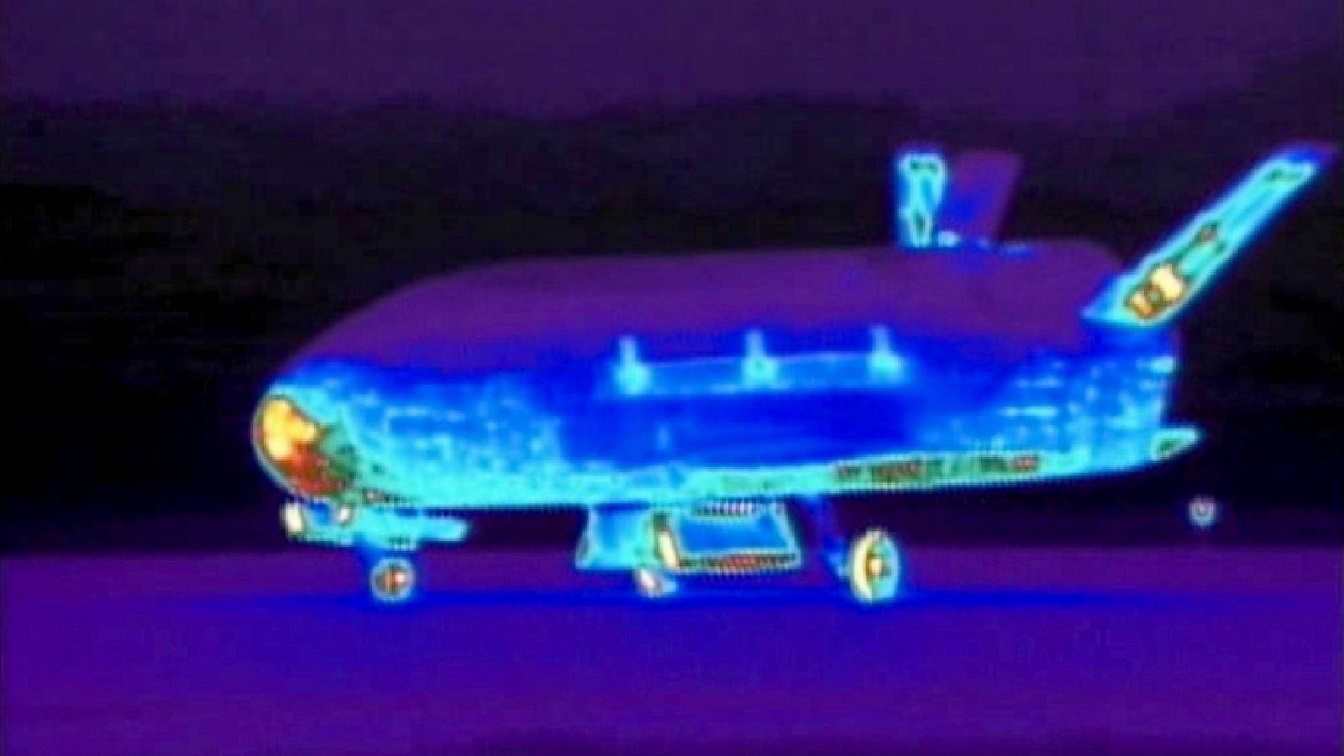
X-37B. Image Credit: NASA YouTube/Screenshot.
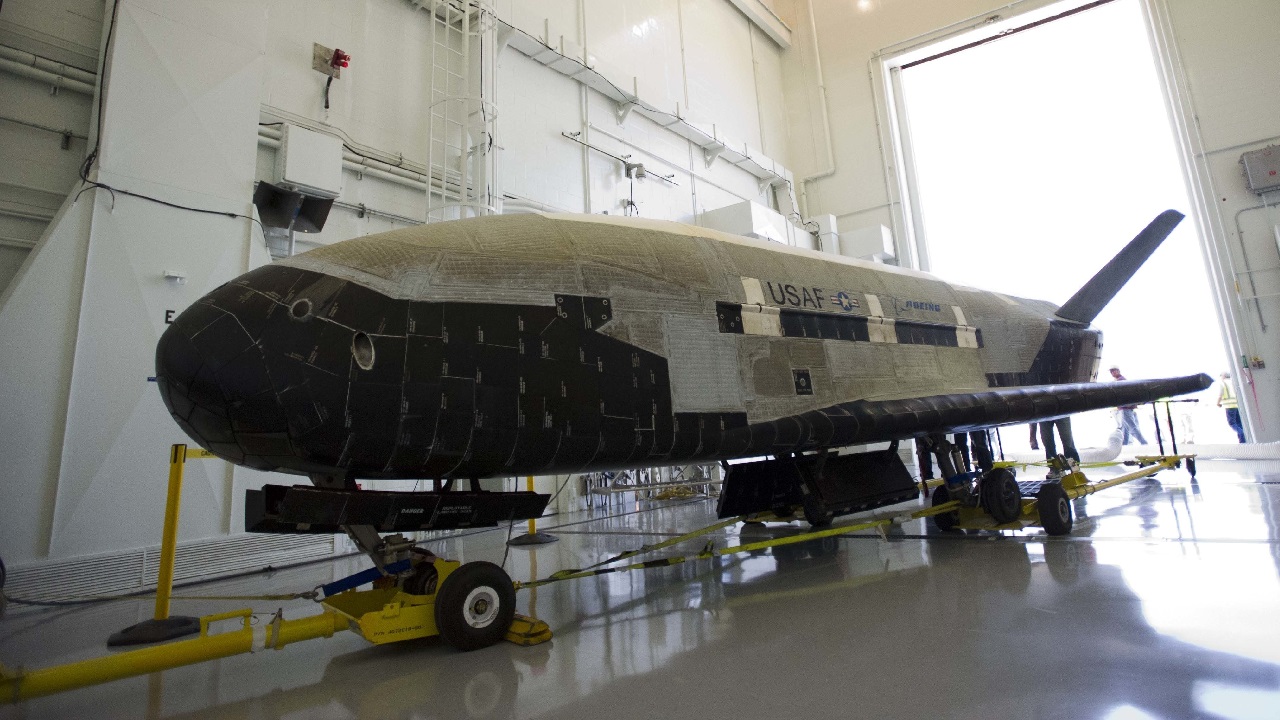
The X-37B Orbital Test Vehicle (OTV), the Air Force’s unmanned, reusable space plane, landed at Vandenberg Air Force Base at 5:48 a.m. (PDT) June 16. OTV-2, which launched from Cape Canaveral Air Force Station, Fla., March 5, 2011, conducted on-orbit experiments for 469 days during its mission. The X-37B is the newest and most advanced re-entry spacecraft. Managed by the Air Force Rapid Capabilities Office, the X-37B program performs risk reduction, experimentation and concept of operations development for reusable space vehicle technologies. (photo credit: Boeing)
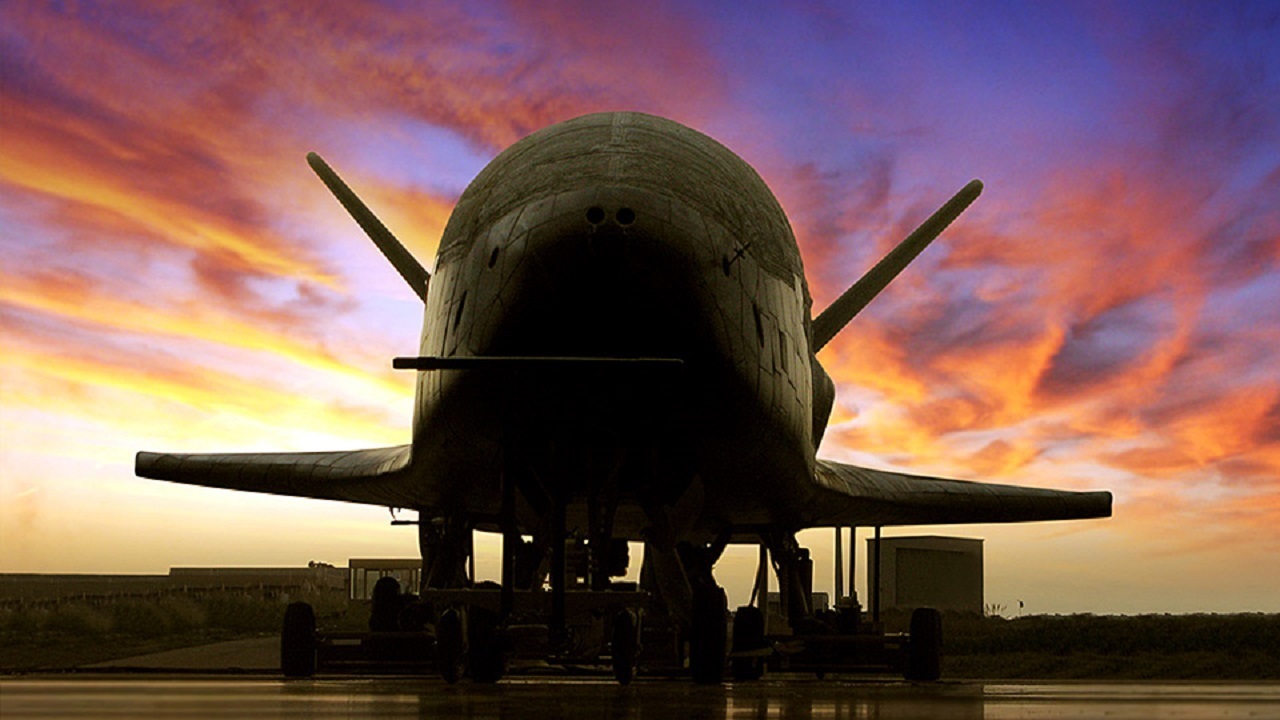
X-37B. Image Credit: Boeing.
-While officially a civilian research platform for radiation and Artemis lunar support, adversaries fear its potential for anti-satellite missions and the deployment of directed-energy weapons.
The Orbital Enigma: Why the X-37B Space Plane Keeps Adversaries Guessing
When I write the words “nuclear” and “space,” you probably do not associate them with a strategic bomber.
But that might be what the United States eventually has in mind with the X-37B space plane. This program has China and Russia worried that a spacecraft could do the unthinkable – drop a nuclear bomb. The X-37B resembles a mini-space shuttle and could be a space weapon like no other.
The craft is flown by the U.S. Space Force, which is becoming increasingly relevant as time goes on. The Americans are only admitting now that the space plane is used for civilian scientific testing.
The Space Force announced the X-37B Orbital Test Vehicle-7 de-orbited and landed at Vandenberg Space Force Base in California in March 2025. “While on orbit, Mission 7 accomplished a range of test and experimentation objectives intended to demonstrate the X-37B’s robust maneuver capability while helping characterize the space domain through the testing of space domain awareness technology experiments,” according to the Secretary of the Air Force office of public affairs.
That’s a vague statement that doesn’t give us a real sense of what is happening with the X-37B in space. We can believe that whatever it did, it was likely successful with the latest mission. Let’s take a deeper dive into the OTV’s potential mission sets.
We Are Just Testing Peaceful Technologies
The Americans only admit that the X-37B is a technology testbed for new innovations and research in space. But it could deliver a powerful array of weapons that would resist conventional anti-aircraft measures. The X-37B is uncrewed and reusable.
NASA deserves much of the credit for developing the program. Then the eggheads at the secretive DARPA think tank and design bureau took over and added their innovations. The U.S. Air Force played a role, and then it was finally transferred to the Space Force.
This Reminds Many of the Space Shuttle

Shuttle Discovery at National Air and Space Museum on October 1, 2022. Image Credit: 19FortyFive.com
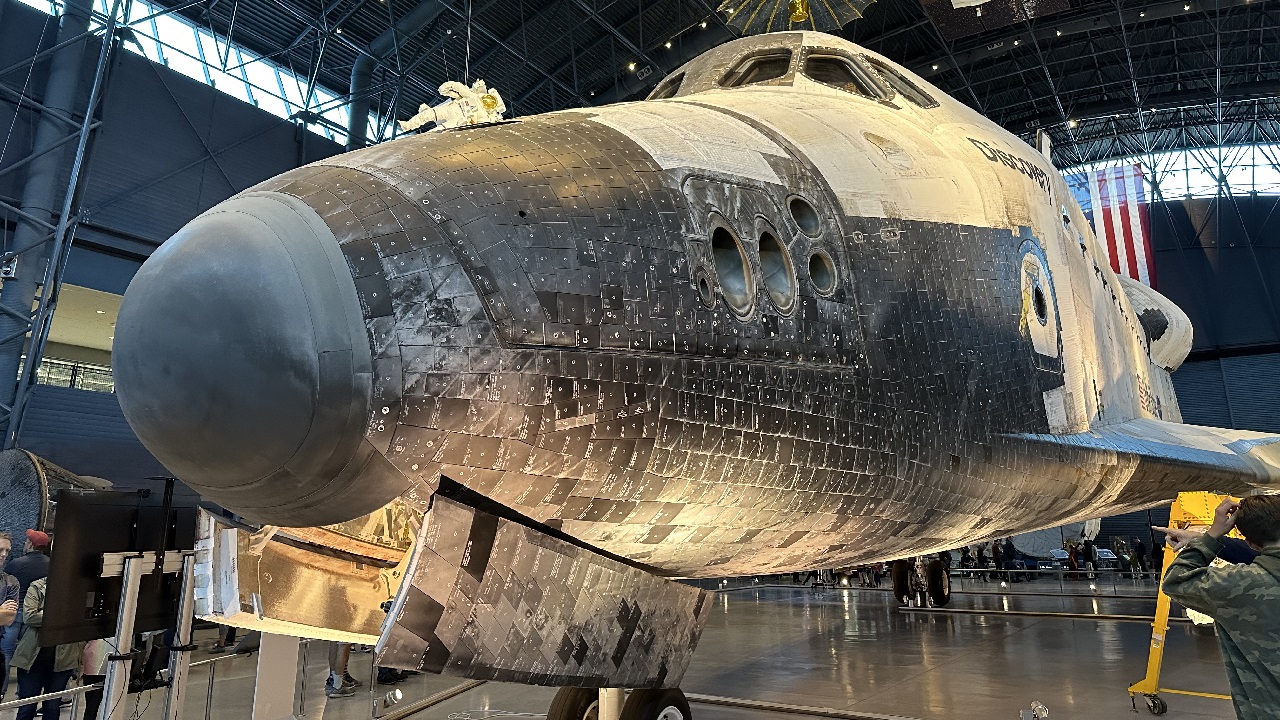
NASA’s Space Shuttle Discovery. Image Taken by 19FortyFive.com on October 1, 2022.
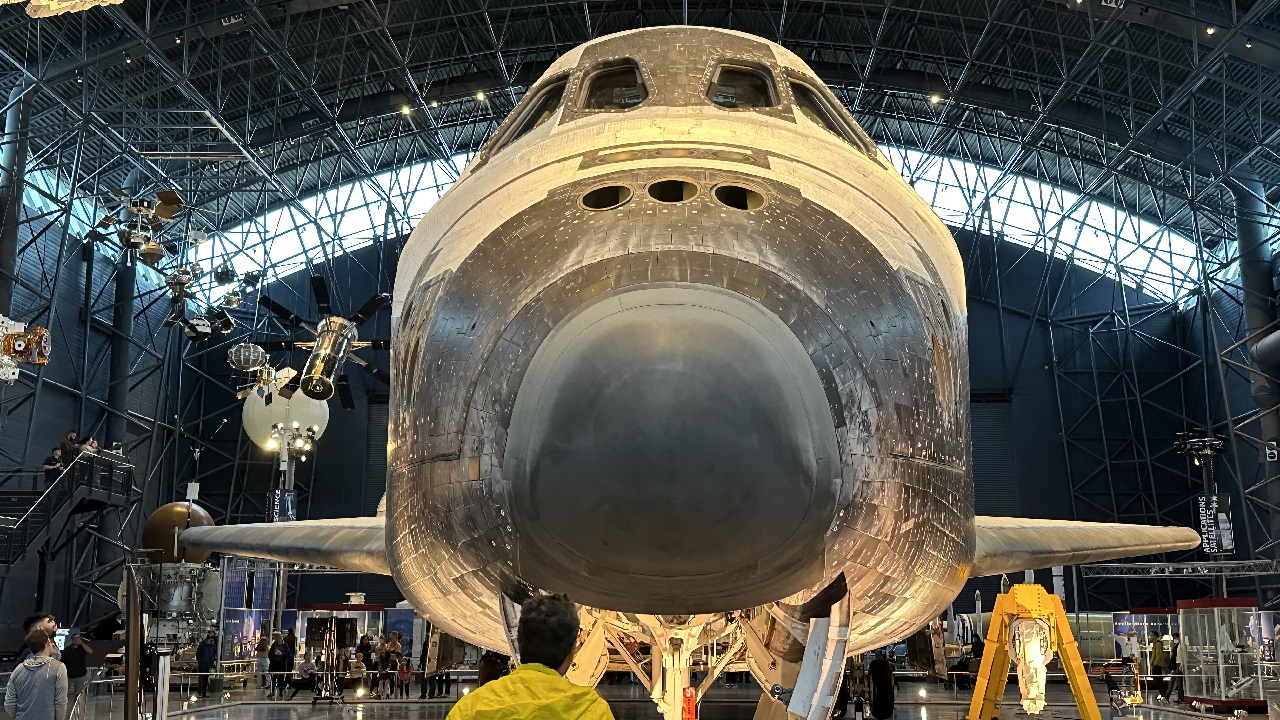
NASA Space Shuttle Discovery. Image Credit: 19FortyFive.com taken on October 1, 2022.
The X-37B can be sent into space via an Atlas V or Falcon 9 rocket. It can return to Earth by landing on a runway. However, we are not completely sure what the X-37B’s main mission is or what it exactly does in space. It is somewhere between a satellite and a spacecraft. It can stay in orbit for a significant amount of time.
The X-37B is only 29 feet long with a wingspan of 15 feet. The space drone weighs 11,000 pounds, and the payload bay is a mere seven feet long. What it carries into space is classified. When it is in orbit, it is powered by a solar array. The heat shields are made of advanced materials. The guidance and landing systems are autonomously driven.
The Secretive Nature of the Program
It could likely keep track of satellites and analyze their telemetry data. It could also test sensors. There may be many different types of scientific experiments that it could perform. The X-37B could be used to validate the flight of satellite orbits. The X-37B’s payload also could serve as an orbiting artificial intelligence data center for missions to the moon and beyond.
Space War Is Possible
The missions may be this innocuous, or there could be something sinister at the heart of the spacecraft. Could this have military use with the potential for launching a rocket with a nuclear warhead headed to earth? This would have to be a small weapon, but there would be little that an adversary could do to stop it.
Improving Civilian Space Flight
However, the X-37B would first have to be used to demonstrate new space sensors, assess the development of advanced propulsion systems, and conduct further research into thermal signatures. The X-37B could be checking out ways to put people on the surface of the moon, too, for the coming Artemis missions.
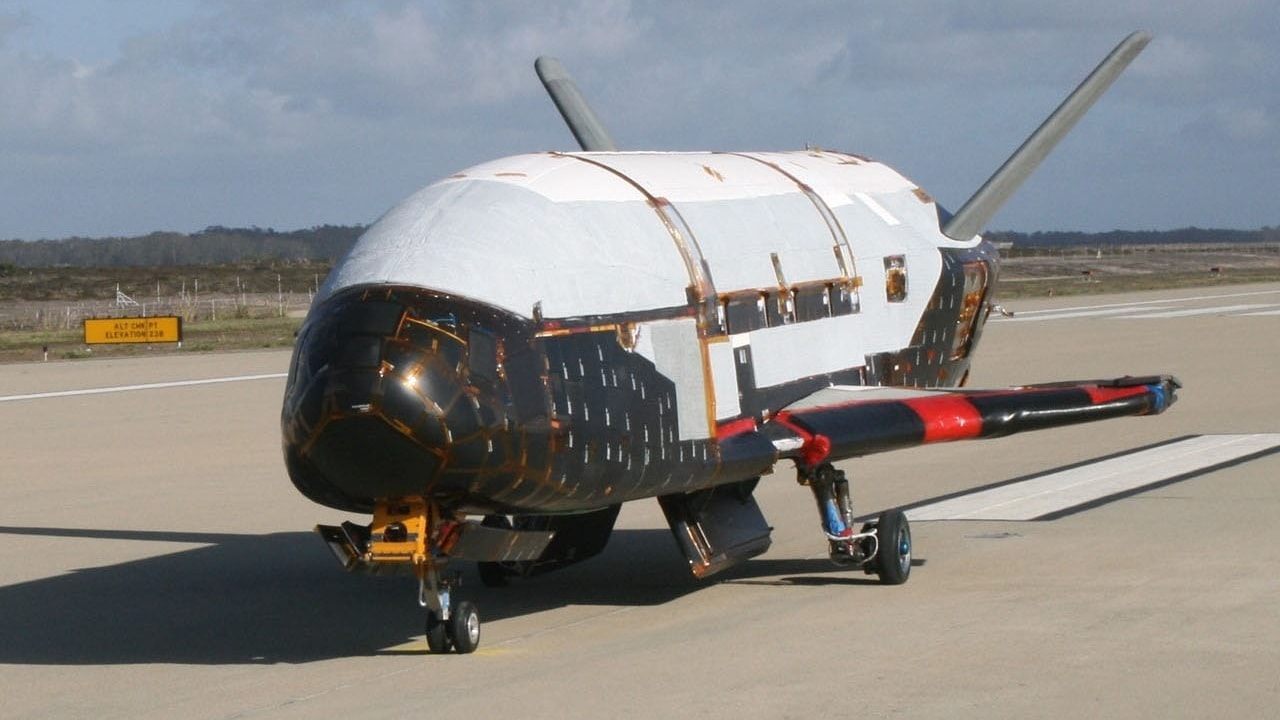
In a testing procedure, the X-37B Orbital Test Vehicle taxis on the flightline March 30, 2010, at the Astrotech facility in Titusville, FLa. (Courtesy photo)
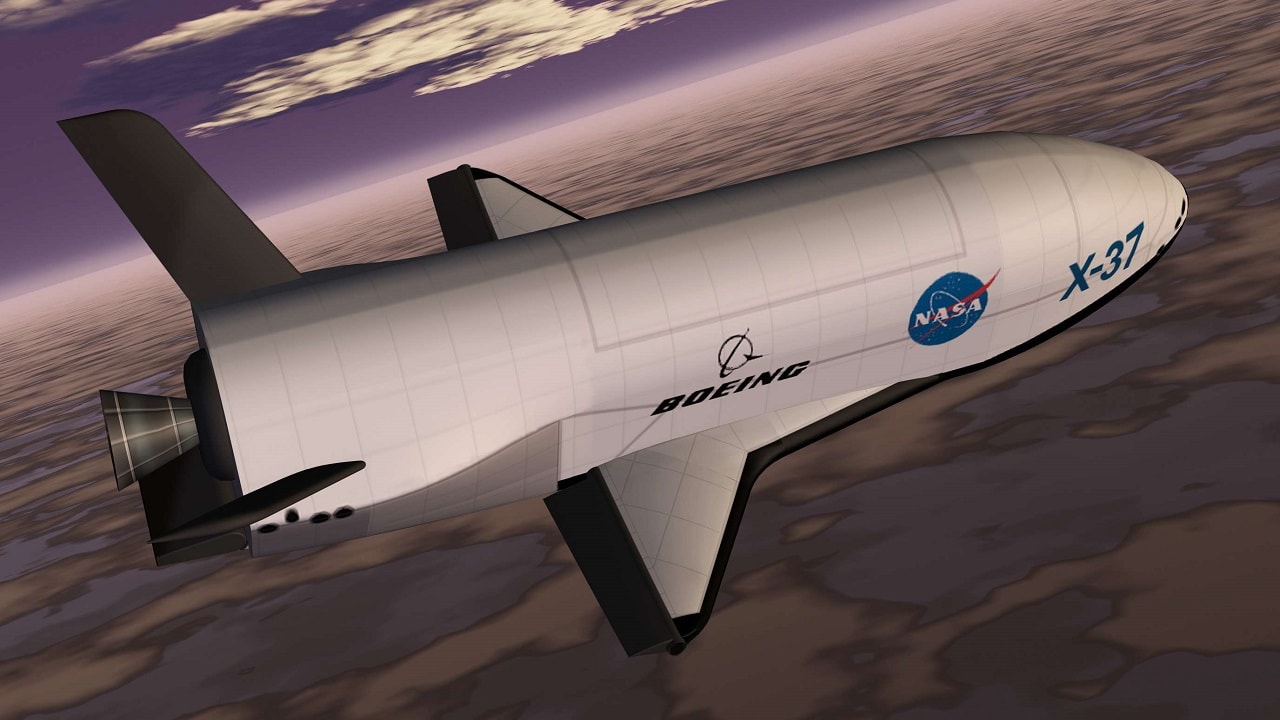
X-37B. Image Credit: Creative Commons.
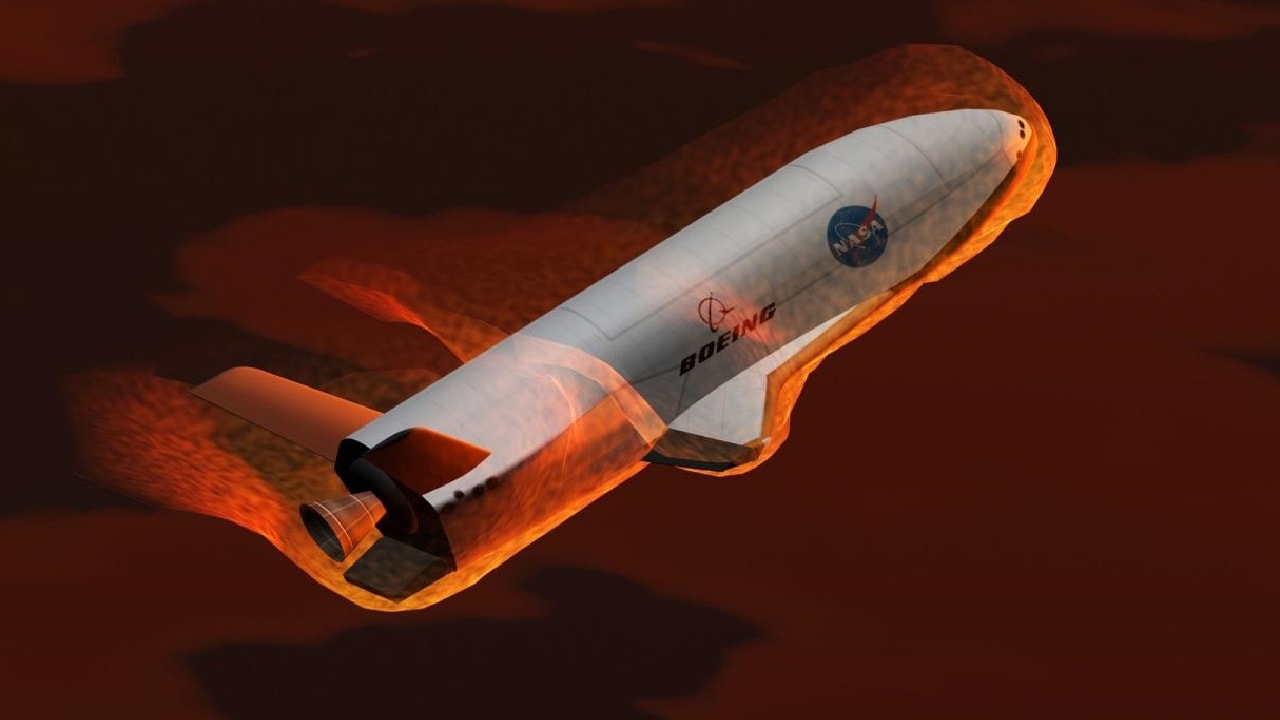
X-37B. Image Credit: NASA.
Helping Humans With EVAs
The X-37B could be measuring the radiation inherent to space. These readings could help with space walks and other types of astronaut Extravehicular Activity (EVA). The X-37B has a diverse range of use cases that could further the proficiency of EVAs and the best way for humans to live in space.
Advancing Science While in Orbit
The spacecraft can change orbits at will, unlike a satellite, and since it is unmanned, it can stay in space for extended periods without the risks of manned flight. This is a single platform that can create new scientific discoveries and help make space flight a regular occurrence for humans in other craft. The X-37B can validate or negate theories that would not otherwise be feasible.
Keeping U.S. Enemies Guessing
The X-37B also accomplishes more by simply existing. U.S. adversaries such as China and Russia must assume that the spacecraft also has military uses. Is it experimenting with new weapons, such as directed-energy systems? The “Star Wars” aspects of the X-37B could be startling. The craft could take out satellites or place them in jeopardy.
Anti-satellite Duties
Are there other types of space weapons being developed that have yet to be discovered? There might be another way that the United States could “foil” and “spoof” satellites from other countries. It is also within the realm of possibility that the Americans could develop some type of miniature nuclear weapon that could be jettisoned from the spacecraft and sent rapidly to Earth. This blurs the lines between civilian and military use.
The Future Looks Bright
The United States can develop additional missions for the X-37B in the future. There will be new launch vehicles and improved propulsion. The scientific use cases are interesting, and adversarial satellites should be forewarned. The X-37B has a bright future ahead.
We can only speculate about what makes it special, but the Americans have a hit on their hands, and if it continues to progress, they could have a future that guarantees planned space missions succeed and helps manned and unmanned flight in the coming decades.
About the Author: Brent M. Eastwood
Author of now over 3,000 articles on defense issues, Brent M. Eastwood, PhD, is the author of Don’t Turn Your Back On the World: a Conservative Foreign Policy and Humans, Machines, and Data: Future Trends in Warfare, plus two other books. Brent was the founder and CEO of a tech firm that predicted world events using artificial intelligence. He served as a legislative fellow for US Senator Tim Scott and advised the senator on defense and foreign policy issues. He has taught at American University, George Washington University, and George Mason University. Brent is a former US Army Infantry officer. He can be followed on X @BMEastwood.