
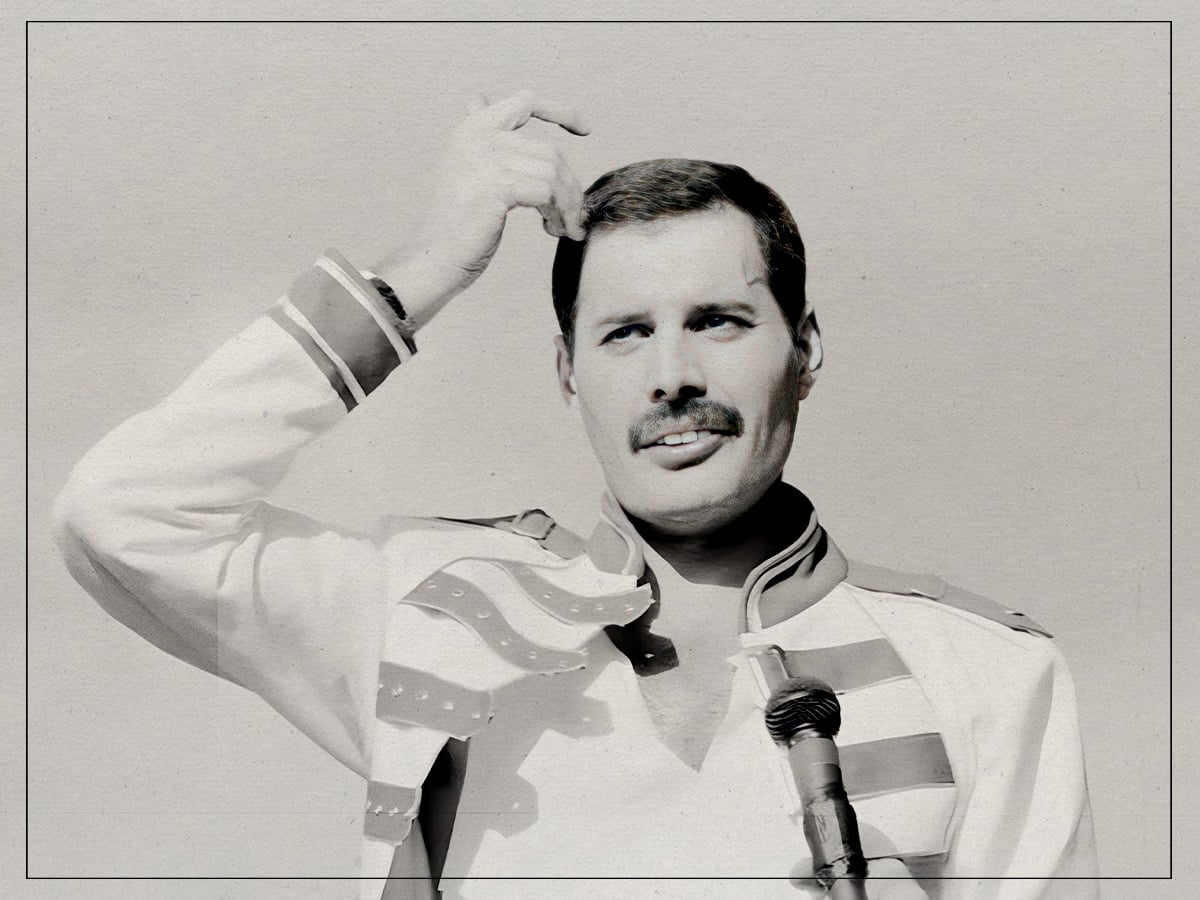
(Credits: Far Out / Carol Lee / Alamy)
Sat 21 March 2026 15:30, UK
In 1989, Freddie Mercury was confronting his HIV diagnosis head-on. He’d been showing symptoms since 1982 and had been diagnosed since 1987, but by the end of the decade, the singer was getting too ill to continue hiding it and had to come clean to his Queen bandmates.
They say that the second you admit you’re ill, you get sicker. For a lot of people, they want to avoid sharing the news for as long as possible to avoid their loved ones treating them differently or treating them like a fragile little thing. Mercury especially didn’t want to be treated differently, as he had every intention of working and performing until the very end, so he didn’t want anything, anyone or anyone’s sympathy holding him back.
But naturally, after telling his bandmates at the start of sessions for what would be their 13th album, his mindset changed. He still wanted to make music, but existentialism crept in as Mercury was reflecting on his life more and more as the end of it seemed to creep closer. With that theme weighting heavy on it, it began to completely shape The Miracle.
Initially, the album was going to be called The Invisible Men, but at the last minute, it was changed to The Miracle as Mercury contributed what would now be its title track. Taking a far more positive outlook than the original title held, the new one and the song, both indicators of gratitude and awe as he reflected on the world and the entirety of human existence, essentially listing the things that amazed him the most.
“All God’s creatures, great and small / The human race and the Taj Mahal, that’s a miracle,” Mercury sings. From the wonders of the world to inventions and advances like “test tube babies”, to weather patterns and nature’s landscapes, he is looking at the world with complete adoration here. It’s a celebration of life at its grandest level as he pulls together a list of the most incredible things the planet has to offer, and in the middle, he says a name: “Jimi Hendrix”.
In the song, Hendrix sits as the only modern musical name. It’s Mercury’s only shout-out to the entire world of art or music at all, as it seems that the Queen singer saw Hendrix as the one and only name needed, or as the absolute top of the pile. That is how he felt, and how he’d always felt, as he said in 1975, “Jimi Hendrix is very important. He’s my idol”.
In his eyes, Hendrix was the whole package and the absolute epitome of a musician and a performer, stating, “He sort of epitomises, from his presentation onstage, the whole works of a rock star. There’s no way you can compare him”.
He fits perfectly in the song as Mercury lists miracles because he truly didn’t think Hendrix’s talent was something you could develop. It was simply a god-given spark with the singer saying, “You either have the magic, or you don’t. There’s no way you can work up to it. There’s nobody who can take his place.”
And so in a list of “God’s creatures, great and small”, Hendrix exists in the “great” pile to Mercury and as he sat at the end of his life, reflecting on the best of the best and the true joys in his life, it would be wrong to erase his “idol” from that.
