
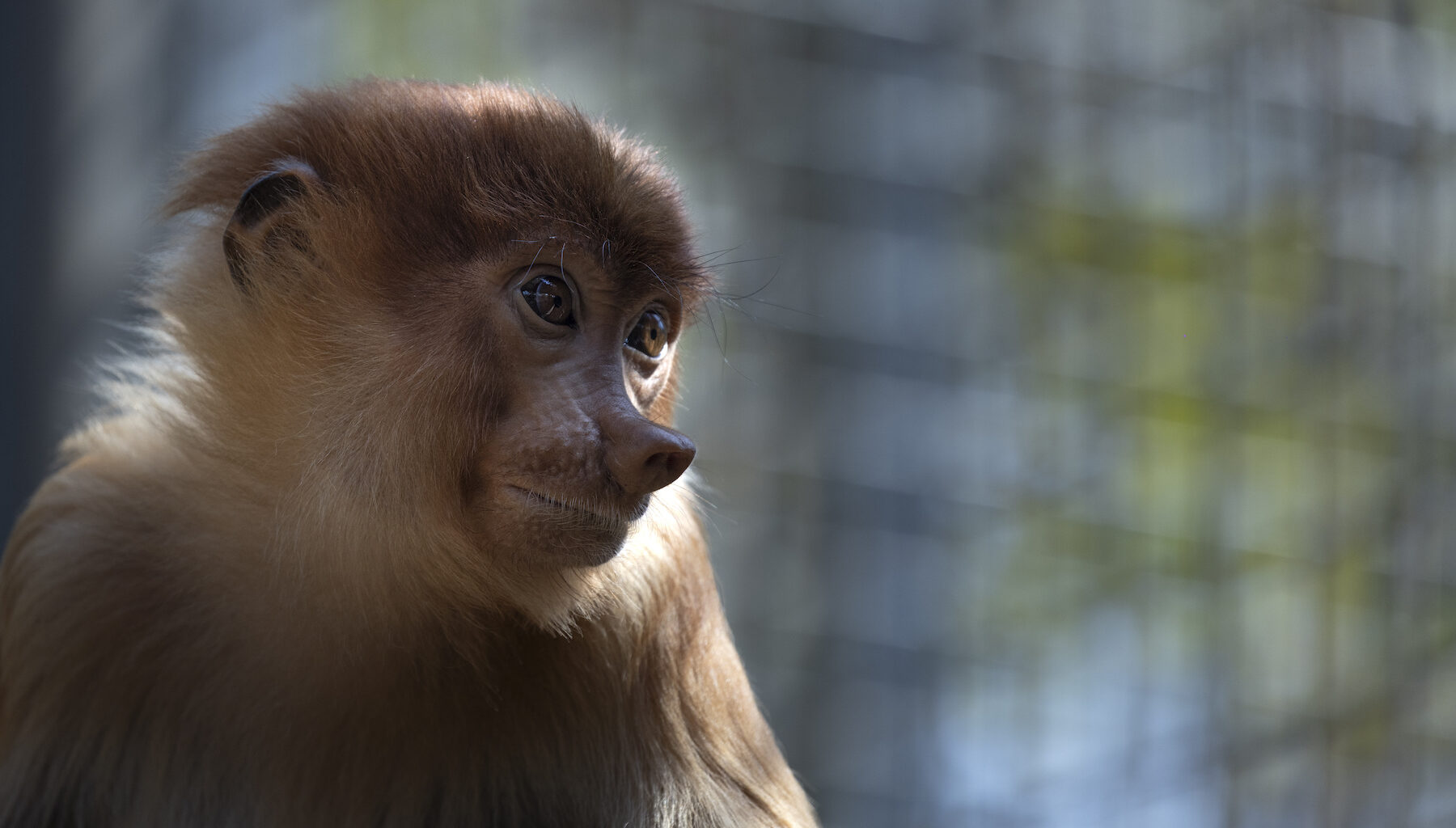
In January, an injured proboscis monkey was found near a railway track in Thailand’s Samut Sakhon province and brought to a nearby clinic.Proboscis monkeys are an endangered species endemic to Borneo, and international trade is banned except for research or conservation purposes — no permits that would allow such trade exist for the species in Thailand.Historically, trafficking for pets or zoos has not been a major threat to proboscis monkeys because it is very difficult to keep them alive in captivity, but recent research has found an uptick in live trade of the species.The monkey is currently recovering from its injuries at a government-run rehabilitation center, and while he will never be able to live in the wild again, officers there say he may be transferred back to his native range once his health is stable.
See All Key Ideas
RATCHABURI, Thailand — On Jan. 6, residents of Samut Sakhon province, central Thailand, found an injured monkey near a railway track. Pot-bellied with reddish-brown fur and a prominent, upturned nose, it was unlike other monkeys typically seen in the area.
After calling a wildlife hotline, they took the animal to a nearby clinic.
“That’s when they realized that this was a foreign monkey,” says Kanpicha Han-Asa, a veterinarian with Thailand’s Department of National Parks, Wildlife and Plant Conservation (DNP) at the Ban Pong wildlife rescue center, where the monkey was later transferred for rehabilitation.
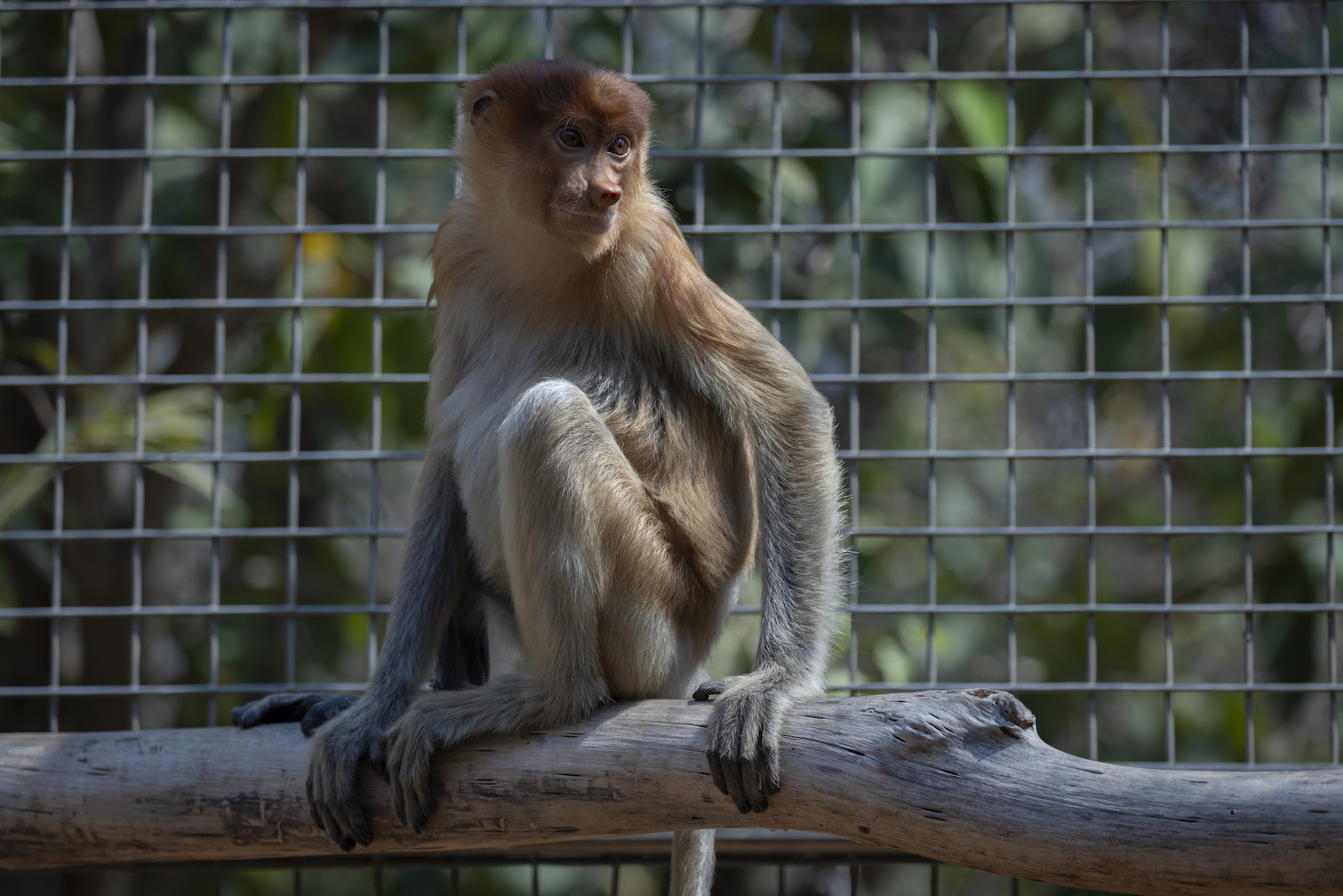 The rescued proboscis monkey at Thailand’s Ban Pong wildlife rescue center, where it is recovering from its injuries. Image by Ana Norman Bermúdez for Mongabay.
Proboscis monkeys (Nasalis larvatus), also known as long-nosed monkeys for their distinctive large noses, are an endangered species endemic to Borneo. The wildlife center in Ban Pong regularly receives animals intercepted from the illegal trade, including nonnative species, but this is the first proboscis monkey the team has handled.
“We haven’t seen or heard about cases involving this species before,” says Krishnapong Oncharoen, head of the wildlife protection unit at the center.
After receiving the monkey, officers checked for any permits linked to the species. Proboscis monkeys are listed under Appendix I of the Convention on International Trade in Endangered Species (CITES), meaning international trade is banned, except for very specific noncommercial purposes, such as conservation breeding or research.
“If you want to bring them into the country, you must have an import permit,” Krishnapong says. “I believe this monkey was brought illegally, because there are no records of it in the CITES database.” According to the database, which compiles official trade reports since 1975, Thailand has never recorded a proboscis monkey import.
Tom Taylor, from the Wildlife Friends Foundation Thailand, an organization that rescues animals from the illegal trade, read about the case on a government social media account. Taylor says he found the case “extremely shocking,” given how rare the species is in captivity. He says the animal “is certainly an escapee from the illegal wildlife trade.”
This appears to be the first proboscis monkey in Thailand that authorities have publicly identified as part of a suspected smuggling case, but at least one other proboscis monkey exists in the country.
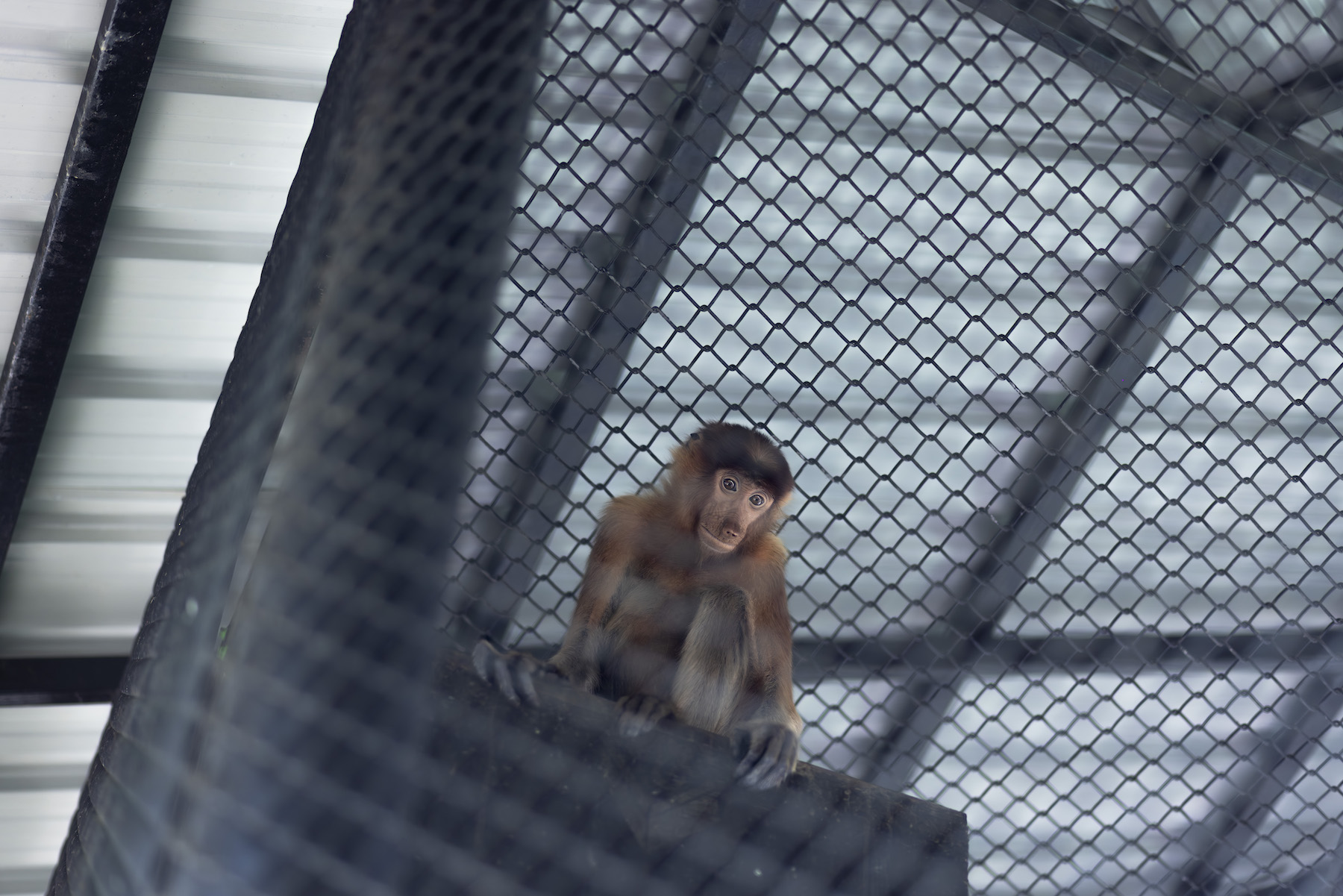 A proboscis monkey inside its enclosure at the Sri Ayutthaya Lion Park, a private zoo in Ayutthaya province. The animal does not have the bulbous nose characteristic of adult males of the species. Image by Ana Norman Bermúdez for Mongabay.
In the primate section of Sri Ayutthaya Lion Park, a private zoo in Ayutthaya province, a proboscis monkey sits alone inside a mesh enclosure, roughly 4 meters long (13 feet) and 3 m (10 ft) high. The animal, which appears to be a juvenile or female, was present at the zoo when Mongabay visited in March, with online accounts suggesting it has been there since December 2025.
Sri Ayutthaya Lion Park was approached for comment but did not respond. When asked about reports of a proboscis monkey held at a zoo, officers at the DNP said only that while international trade in proboscis monkeys requires CITES permits, the species is not among those that private owners must register domestically. Zoos are required to report their animals to authorities, but those records are not public.
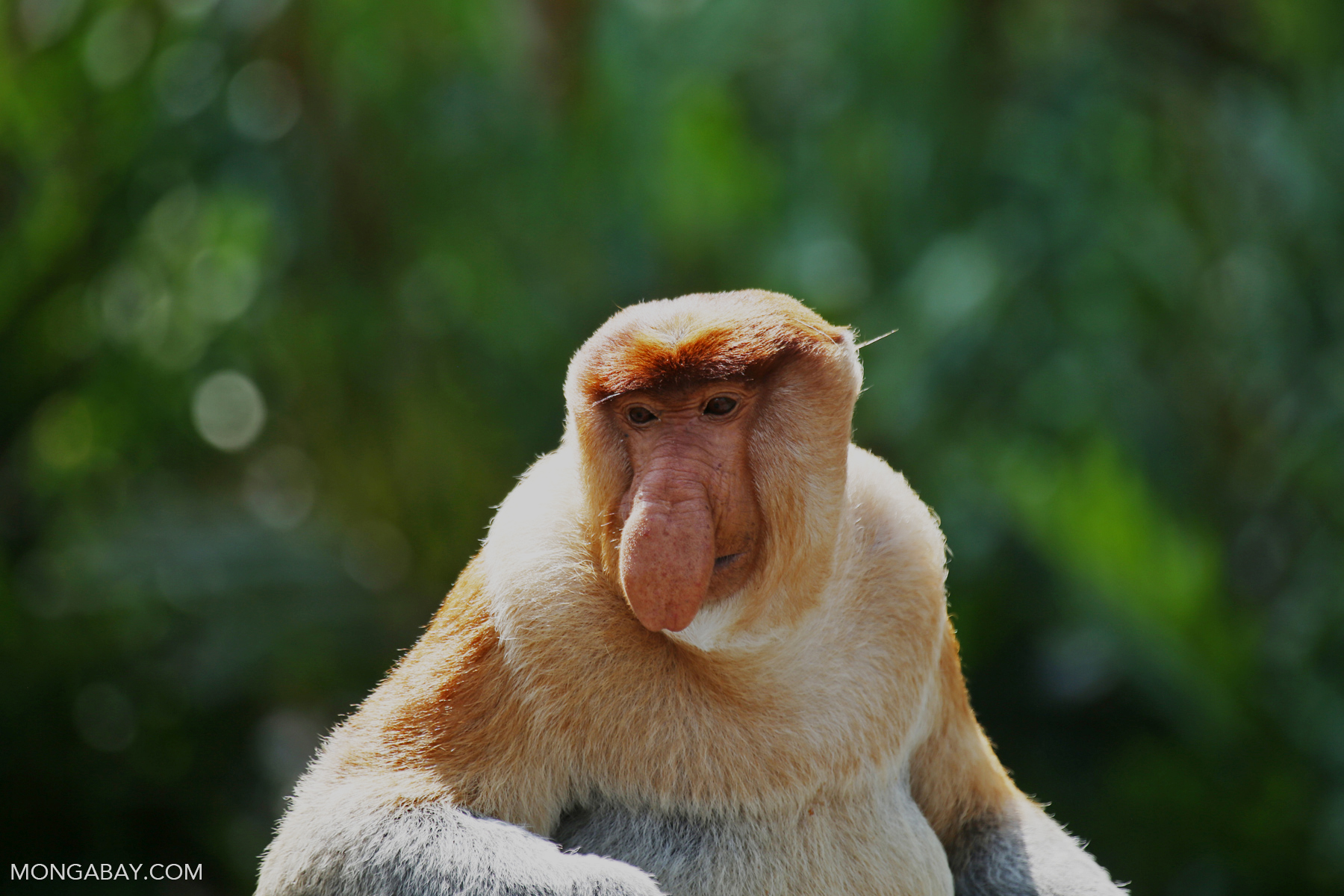 A male proboscis monkey with its characteristic long nose. The species is classified as endangered and is already threatened by habitat destruction, wildfires and hunting. Image by Rhett A. Butler/Mongabay.
A growing trade
Taylor says the cases fit a growing pattern of nonnative primates entering Thailand to fulfill demand for exotic pets and private zoo collections, sometimes through legal means. “Legal trade creates a market that can easily be exploited by illegal traffickers, especially when enforcement and monitoring are insufficient,” he says.
This trade has not historically been considered a major threat to proboscis monkeys, in part because they are notoriously difficult to keep in captivity. “They have highly specialized needs and a unique diet that is extremely difficult to replicate,” Taylor says. “Without specialized personnel taking care of them, they are not easy to keep alive.”
However, a recent study, published in the journal Discover Animals in June 2025, documented a worrying uptick in proboscis monkey trade over a 25-year period, particularly since 2016. The research found that the domestic trade in Indonesia has grown significantly in recent years, while the number of proboscis monkeys held in zoos worldwide has also expanded.
“The presence of these two proboscis monkeys [in Thailand] is alarming, but sadly, not surprising,” says Chris Shepherd, senior conservation advocate at the Center for Biological Diversity and co-author of the study. “Where did these animals come from? How did they get there? These are questions the authorities in Thailand need to explore.”
According to Shepherd, these cases are “a result of increased cross-border trafficking” of the species, not only into Thailand but also into India, where a proboscis monkey was intercepted at Mumbai’s airport in 2024 and where there has recently been a “massive increase” in wildlife smuggling driven by demand for exotic pets.
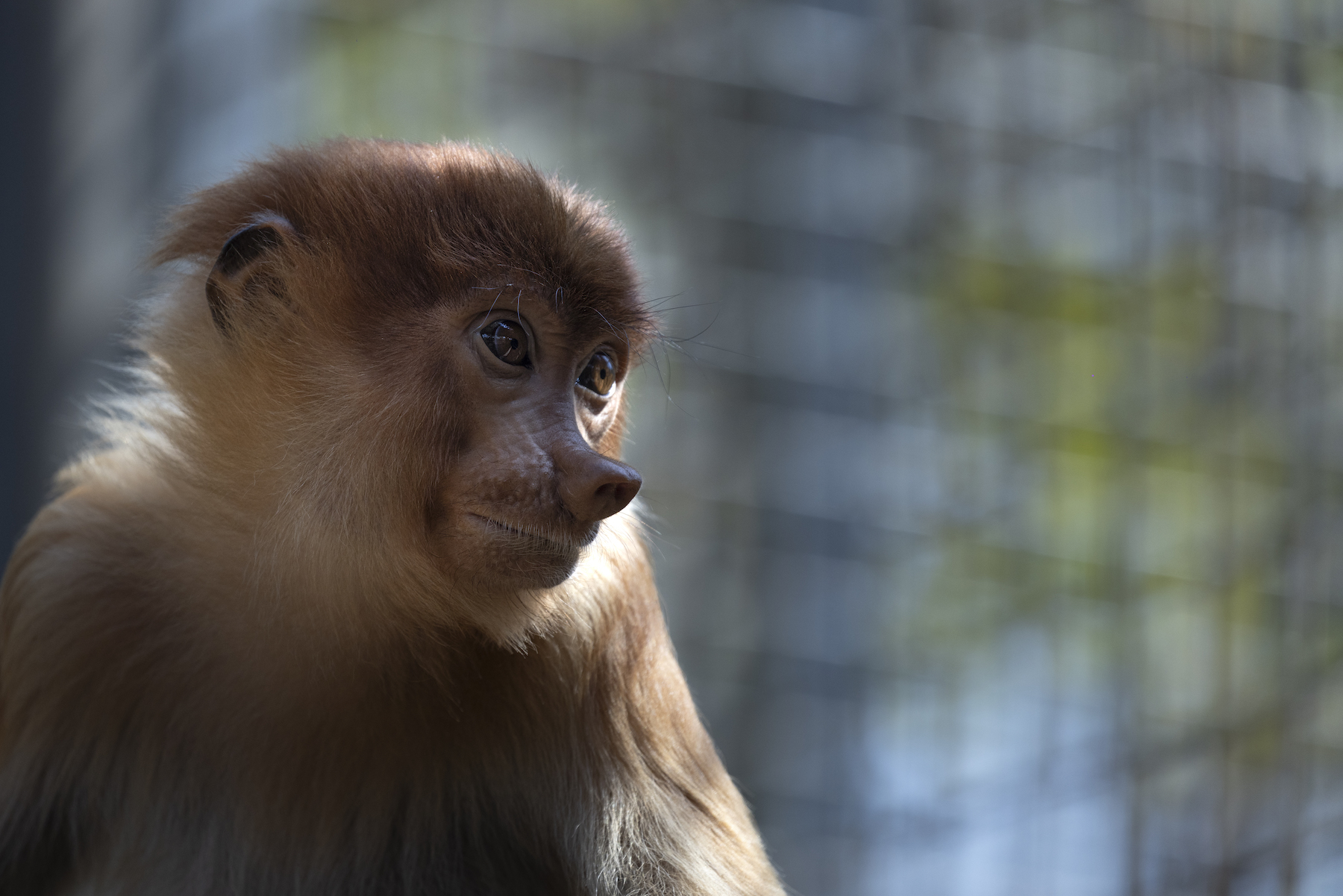 The rescued proboscis monkey at the the Ban Pong wildlife rescue center. Officials say it is unlikely he will be able to live in the wild again. Image by Ana Norman Bermúdez for Mongabay.
While the numbers are low, he says, the trafficking of proboscis monkeys “is still of great concern.” Proboscis monkeys are already under severe pressure from habitat loss, and “an increase in international trade will only further threaten these imperiled animals.”
In addition to reducing demand for exotic pets and improving legislation in both source and destination countries, Shepherd says enhancing enforcement in major airports is “essential.”
In Thailand, Taylor says, there should be an immediate ban on keeping endangered or critically endangered species and those listed under CITES Appendix I. Eventually, he says, “a complete ban on private ownership of primates would be the most effective long-term solution.”
At the Ban Pong center, the monkey is slowly recovering. When it was found, it had serious injuries, including open wounds on its hands and tail that required immediate treatment.
“We had to make the decision to amputate part of the tail and finger to prevent tissue infection,” veterinarian Kanpicha says, looking into the enclosure.
Beyond urgent care, the team has had to quickly learn how to keep the monkey alive in captivity. “We’ve had to research their diet. About 70-80% of the diet of this animal is actually leaves,” Kanpicha explains.
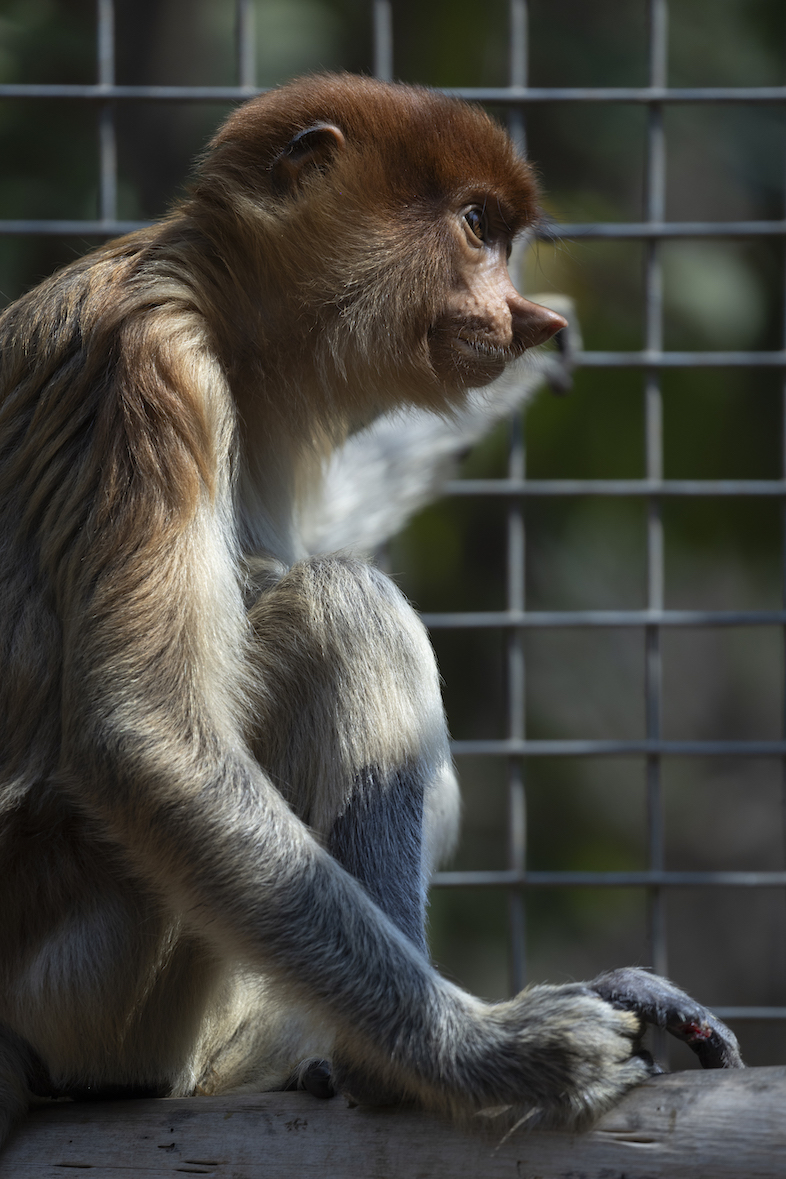 The rescued proboscis monkey at the the Ban Pong wildlife rescue center. Due to its injuries, veterinary staff at the center amputated one of the monkey’s fingers and part of its tail. Image by Ana Norman Bermúdez for Mongabay.
No one has come forward to claim ownership of the animal, and its origin remains unknown, though given its injuries and the fact it was found on a railway track, officers say the monkey may have escaped from a train.
The monkey, a juvenile male whose nose has not yet reached the size characteristic of the species, sat on a branch, holding his injured tail in his hands. His eyes widened as he noticed the presence of humans, and he leaped onto another branch toward the back of the enclosure.
“Right now, his health is improving,” Kanpicha says.
It is unlikely, officers at Ban Pong say, that he will ever return to the wild, but once his condition is stable, Thai and Indonesian authorities will discuss the possibility of repatriating the monkey to his native range.
Study finds worrying uptick in proboscis monkey trade in Indonesia
Citation:
Nijman, V., Shepherd, C.R. Review of the trade in proboscis monkeys over the last 25 years. Discov Anim 2, 36 (2025). https://doi.org/10.1007/s44338-025-00085-8
FEEDBACK: Use this form to send a message to the author of this post. If you want to post a public comment, you can do that at the bottom of the page.
