
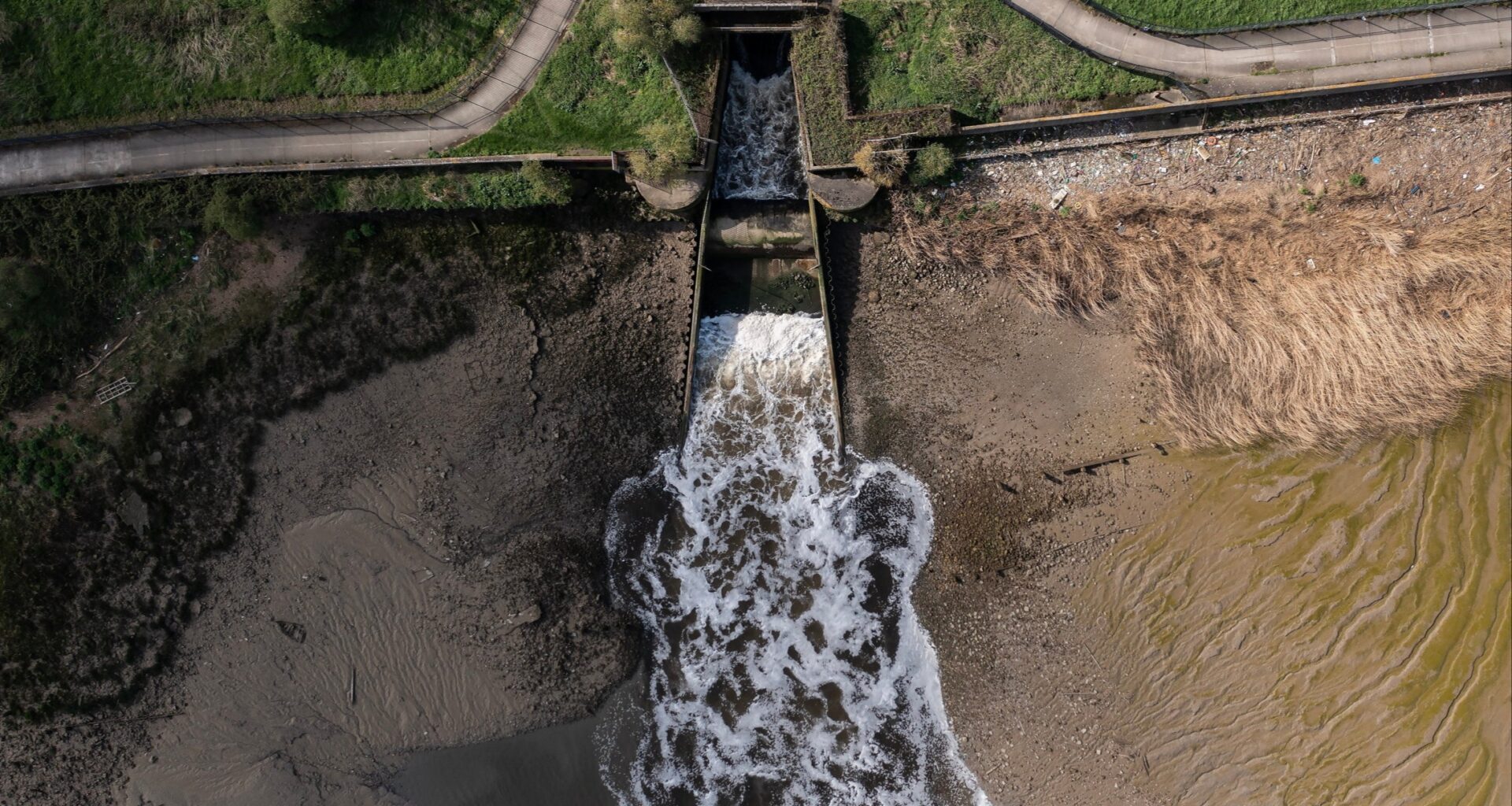
Sewage pollution is once again the focus of public attention, prompting questions about investor stewardship and returns
There were 592,478 confirmed untreated sewage discharges across the UK in 2024, lasting for a total of 4,786,038 hours, shows data from campaign group Surfers Against Sewage.
Almost all of Britain’s rivers are polluted. In England, only 14 per cent have “good” ecological status and none have good chemical status. Meanwhile, water scarcity is a growing concern for businesses.
On March 18, the non-profit standard-setting body Alliance for Water Stewardship published a new version of its International Water Stewardship Standard, highlighting risks including floods, droughts and pollution. One in five global companies reports significant water-related supply chain risks, with tens of billions of dollars of value at risk, shows 2024 research by CDP.
Under the UK Water Industry Act, sewage discharge is only allowed after heavy rain. But ageing infrastructure means untreated sewage has been routinely discharged into waterways since the late 1800s, becoming more frequent in recent years. Combined sewer systems, which carry sewage and surface water, can be overwhelmed during rain, leading to the use of storm overflows.
The recent TV docudrama Channel 4’s Dirty Business prompted renewed public interest in these illegal discharges.
As climate change drives more extreme rainfall, sewage discharges will become more frequent unless infrastructure is improved, SAS policy officer Louise Reddy tells Sustainable Views. The crisis reflects a failure by water companies, but investors also hold some responsibility, she argues.
Water company financing is being driven in a way that allows short-term investors, principally private equity companies, to profit from high dividends while being shielded from the consequences of financial mismanagement, Reddy says.
Since privatisation in 1989, the UK’s water companies have accumulated £69.2bn in debt and paid out £74.2bn to shareholders, says the SAS report.
Investors engaging with companies
Thames Water, the UK’s largest water company, is at risk of collapse as it has around £20bn in company debt. A £10bn rescue plan from its investors is being negotiated with regulators.
A spokesperson from investor group London & Valley Water tells Sustainable Views that the proposal will provide investment to deliver “enhanced transparency for regulators and clear accountability for reducing pollution and improving environmental outcomes”.
Pension funds including the Universities Superannuation Scheme and Canada’s Ontario Municipal Employees’ Retirement System were investors in the company, but they withdrew their investments in 2021 and 2018, respectively.
A statement issued by Kemble in March 2024 and shared with Sustainable Views said that shareholders were not in a position to “provide further funding” to Thames Water due to the “urgent need for substantial investment to improve performance”, after the company’s business plan was rejected by water regulator Ofwat.
Thames Water’s lender group now includes US activist investor Elliott Management and private capital group Apollo Global Management.
Some investors say they are engaging with water companies on the issue of pollution.
UK-based insurance and investment company Royal London Asset Management is a “long-term” and “active” investor in the sector, its head of climate transition and engagement Carlota Garcia-Manas tells Sustainable Views. RLAM is a bondholder in Thames Water.
In the event of material water-related financial risks, RLAM engages with water companies through “meetings, written correspondence and ongoing review of disclosures and regulatory findings”, with engagements often spanning years, says Garcia-Manas.
In 2023, RLAM launched a collaborative engagement initiative for the UK utilities sector, seeking to improve practices around sewage pollution, water leakage, climate change mitigation and adaptation and nature-based solutions.
The Border to Coast Pensions Partnership, an asset manager focused on responsible investment on behalf of local government pension schemes, has participated in the scheme and says in a 2025 report that water companies pose reputational, financial and regulatory risks to investors.
Garcia-Manas says the engagement has probably led to improved transparency and reporting from water companies.
Since 2024, companies have been required by Ofwat to produce more detailed and standardised pollution incident reduction plans. RLAM has asked companies to outline how they intend to deliver the improvements to investors, says Garcia-Manas.
Trade association Water UK says that water companies are implementing a £104bn investment programme to secure water supply, support economic growth and end sewage pollution.
A Thames Water spokesperson tells Sustainable Views that the company made a record capital infrastructure investment of more than £2.2bn between 2024 and 2025.
Growing regulatory risks
During the 2024 election campaign, all major political parties pledged to reduce the number of sewage leaks in UK waters and regulation is tightening.
The 2025 Water (Special Measures) Act strengthens water sector regulators and introduces the ability for the government to put failing water companies under special measures, meaning that executive bonuses could be blocked, criminal charges could be brought against persistent lawbreakers, new penalties could be introduced and sewage outlet monitoring could be mandatory.
Full secondary legislation that will implement the measures is yet to come into force.
In 2022–23, £9.7mn was paid out in executive bonuses and benefits to water and sewage company executives in England and Wales, the act says.
In a white paper published in January 2026, the government also outlined plans to consolidate the work of Ofwat, the Environment Agency, Natural England and the Drinking Water Inspectorate into a single regulator.
The government is likewise implementing rules that would require takeovers of major water utilities by foreign investors to be referred for national security screening under the National Security and Investment Act. The changes will be implemented via secondary legislation later this year.
However, Reddy says groups such as SAS will continue to push for more drastic regulatory action, as government policy is “meek”. The campaign group proposes temporarily bringing water companies under government control, under special administration, a call that has also been backed by other non-profits and some MPs.
Reddy suggests that the government then converts water companies to community-owned mutual businesses or co-operatives, with a much more limited role for private investments.