
a species believed to have been extinct for over 150 years has made an unexpected return to Australia’s wildlands. The Shark Bay bandicoot, once thought lost to history, has been reintroduced and is now thriving in the Pilliga State Conservation Area in New South Wales. This significant discovery, highlighted in a recent study by the Australian Wildlife Conservancy (AWC), marks a monumental step in efforts to restore Australia’s endangered species and repair the damage caused by invasive predators. The reappearance of this small marsupial is nothing short of miraculous and offers a beacon of hope for other endangered animals around the world.
A Species on the Brink of Extinction
The Shark Bay bandicoot, also known as the western barred bandicoot, once roamed freely across Australia’s arid regions. For years, this species had faced a devastating decline, driven by the introduction of predators such as foxes and feral cats. These invasive species decimated the bandicoot’s population, and by the early 19th century, it was declared extinct in many parts of Australia.
Previously found primarily in Shark Bay, Western Australia, the bandicoot’s disappearance represented a chilling example of how introduced species can drive native wildlife to the brink of extinction. Efforts to reintroduce the bandicoot in the past had been unsuccessful, and its prospects seemed grim. However, the Australian Wildlife Conservancy’s (AWC) innovative approach has breathed new life into the species, bringing them back into the wild after more than a century of absence.
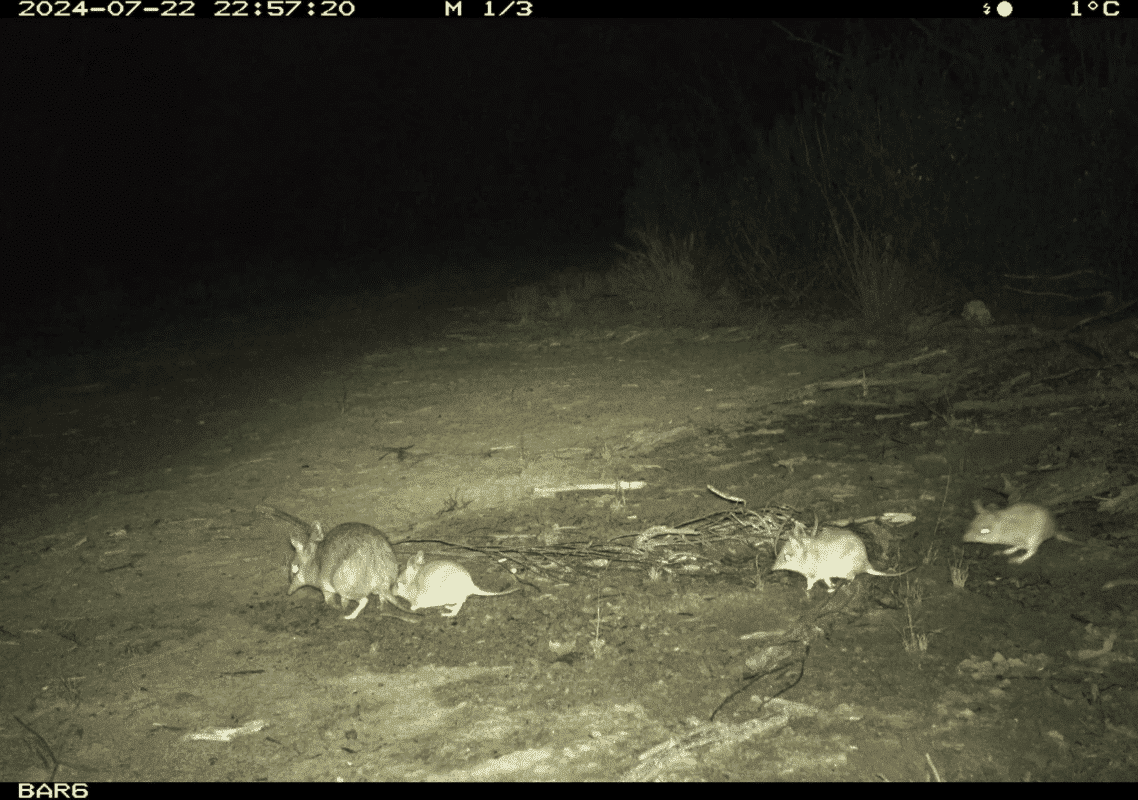 Motion sensor cameras deployed monitor the Shark Bay Bandicoots in the Pilliga State Conservation Area photographed a female bandicoot with three of her offspring following closely behind.
Image credit: AWC
The Role of the Australian Wildlife Conservancy
The turning point came in August 2023 when the AWC launched an ambitious initiative to reintroduce the Shark Bay bandicoot to the Pilliga State Conservation Area. Located in New South Wales, around 260 miles northwest of Sydney, this area was chosen for its predator-free environment, crucial for the survival of the bandicoots. A total of 66 bandicoots were relocated from their native Shark Bay habitat to the conservation area as part of a carefully planned relocation project.
The process was meticulous, with the AWC establishing safe zones, restoring habitats, and monitoring the environment for any signs of danger. The relocation was only the beginning of a year-long process aimed at ensuring the animals’ long-term survival in their new environment. The efforts were a true testament to the power of targeted conservation strategies, combining habitat restoration, rigorous monitoring, and community involvement.
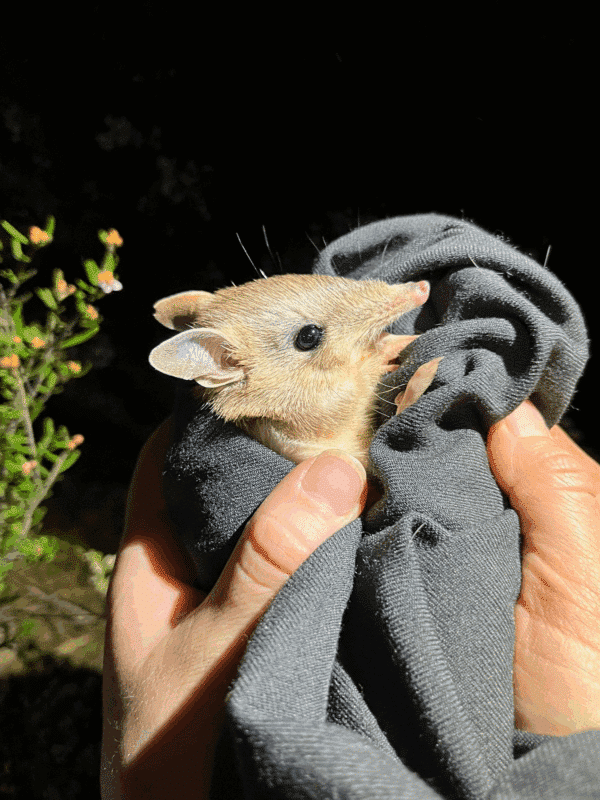 Image credit: Hayley Charlton-Howard/AWC
A Moment of Triumph: Bandicoots Reproduce in the Wild
In what is being hailed as a monumental achievement, the latest update from the AWC confirmed that the bandicoots are not just surviving but thriving in their new home. Motion-sensor cameras set up to monitor the relocated animals captured a remarkable sight: a female bandicoot with three young ones following closely behind her. This breakthrough discovery provided the first concrete evidence that the relocated population was successfully breeding in the wild.
“Aside from being completely adorable, it gave us great confidence that the bandicoots are breeding and that the population in the Pilliga is growing,” said Duffin, a lead ecologist involved in the restoration efforts. The sighting marked a crucial moment in the restoration of the species, proving that the reintroduction strategy had been a success.
This discovery is significant not only for the Shark Bay bandicoot but for conservation efforts worldwide. It highlights the importance of predator-free environments and shows how carefully managed rewilding projects can successfully reestablish populations of critically endangered species.
A Model for Global Conservation Efforts
The success of the Shark Bay bandicoot’s return to the wild is more than just a victory for this species; it represents a significant step forward in global conservation efforts. The Australian Wildlife Conservancy has set a precedent with its restoration programs, which aim to reintroduce six locally extinct mammal species across New South Wales. The strategies employed in the Pilliga State Conservation Area could serve as a blueprint for similar efforts around the world, offering a viable model for the restoration of species decimated by human activity and invasive species.
With continued monitoring and support, the AWC hopes that the Shark Bay bandicoot will thrive and eventually form a sustainable, growing population in the region. Their success stands as a testament to the power of human intervention, careful planning, and a dedicated commitment to preserving the world’s most vulnerable species.