
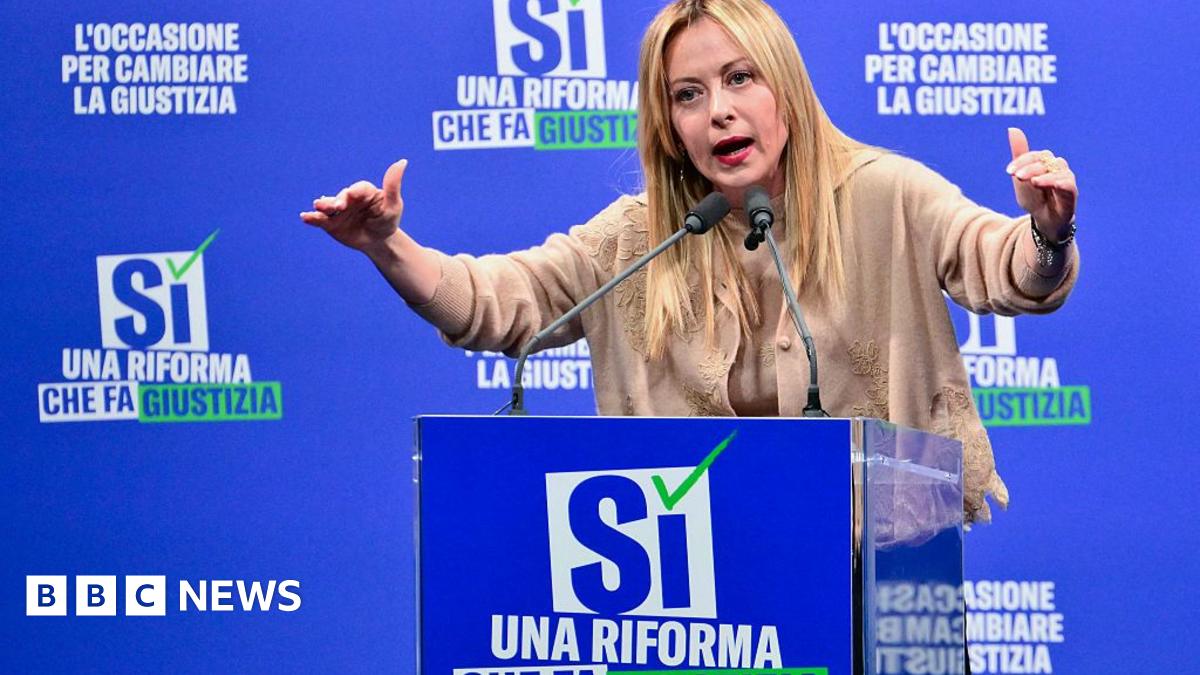
So is Italian justice really “broken”?
The system is certainly chronically overloaded, with some of the longest-running trials in the EU.
But the reform won’t address that.
The referendum looks at separating the career paths of judges and prosecutors, as well as creating distinct bodies to govern them. It also proposes a new disciplinary court for both.
The potential impact depends entirely on who you ask: many Italians struggle to understand this referendum at all.
The proposal is a project of the late Silvio Berlusconi’s party, Forza Italia, part of the current coalition.
Italy’s oligarch prime minister of many years was forever in and out of court and railed against the judiciary as a supposed “communist” block on his power.
Meloni herself has also clashed publicly with the courts, claiming that “powerful factions” routinely derail her signature policies, especially on migration.
In Milan recently she claimed – with no evidence – that rejecting the referendum would mean “even more… immigrants, rapists, paedophiles, drug dealers being freed and putting your security at risk.”
Such rhetoric is one reason why opposition parties are so wary of this reform.
They fear Meloni’s real aim is to subjugate the judiciary to her political control.
She and her team deny that.
But at a time of global uncertainty and rising prices caused by an unpopular US war, they also know voters may use the referendum to vent their frustration.
“The geopolitical situation is very tough, of course. People are scared. I completely feel that. But we need to stay focused on the purpose of the referendum,” Andrea di Giuseppe, a member of Meloni’s Fratelli d’Italia party, argues.
He suggested that an assessment of Meloni’s own record could wait for the general election next year.
“If you are not happy about this government, then in 2027 [you can] just kick it off the bus, change to another government. Now, the matter of the referendum is what counts.”