
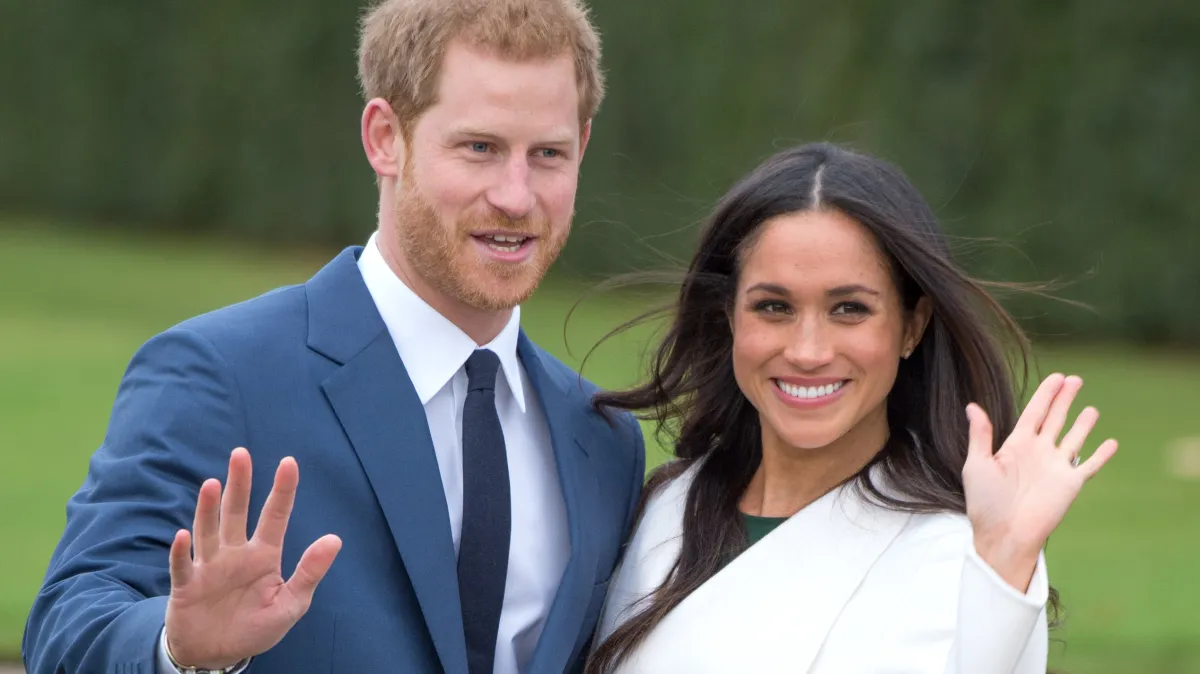
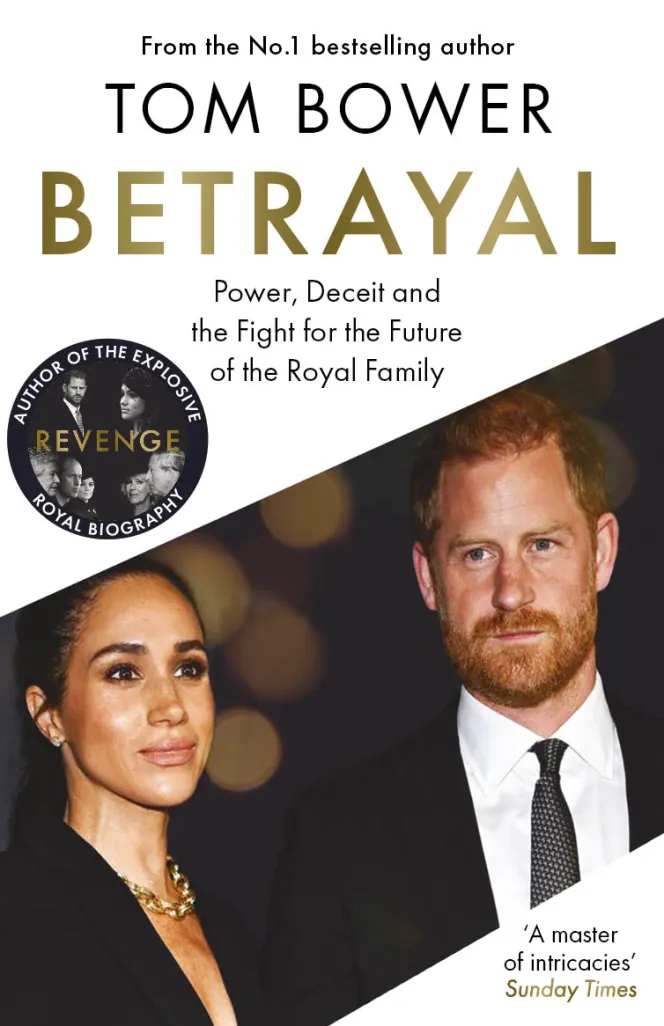
Second only, perhaps, to “You have an inoperable brain tumour”, the most terrifying sentence in the English language must be: “Tom Bower is writing a book about you.” Bower, an investigative journalist, has become best known for his unauthorised biographies of high-profile folk who offer low-hanging fruit of gossip and rumours — Boris Johnson, the Beckhams, Simon Cowell and so on. Bower doesn’t take a hatchet to them so much as savage them with a motorised axe, unearthing every disgruntled former acquaintance and snuffling out every negative story with the delight of a piglet finding a 5kg truffle (or, in Bower’s case, an incriminating quote in an old interview).
So it’s not surprising that he would write not one but two books in half a decade about Harry and Meghan, the Duke and Duchess of Sussex, given how many discarded employees and media savagings trail in their wake. After Revenge in 2022, we now we get the similarly titled Betrayal, catching us up on what’s happened in the past few years in Harry and Meghan Land.
For those who have forgotten due to the deluge of recent royal news (more on that shortly) or have opted for selective amnesia for purposes of self-care, we’ve had, in no particular order: Harry and Meghan’s Netflix documentary about their triumphant departure from Britain; Harry’s memoir, Spare, about his childhood trauma and his frostbitten penis; Meghan’s Netflix lifestyle show, in which she arranged fruit on a plate; Harry suing half of Fleet Street with, shall we say, mixed results; Queen Elizabeth dying; King Charles III and the Princess of Wales undergoing cancer treatment; Thomas Markle slagging off his daughter to journalists even as he was in hospital having his leg amputated; Meghan making a lot of podcasts; the couple losing their Spotify and Netflix deals. And so on and so forth.
Even as I write this, today’s Times newspaper informs me that Meghan will imminently make an appearance at a women-only wellness retreat in Australia where, for a mere £1,700, guests can be in a group photo with her — a news story that Bower wouldn’t so much wrap his teeth round as savage into a million tiny pieces.
Books newsletter
News, reviews, author interviews and suggested reads from our literary editors.
Sign up with one click
This is the first problem with writing a book about Harry and Meghan: the stories just keep coming. The last chapter of Betrayal — which recaps events up to the middle of last month — feels frantically written, as if Bower were furiously typing away as the book rolled on to the printing presses. The second problem is that, thanks to Harry’s babyish lack of self-awareness, and Meghan’s narcissism, quite a lot of their most embarrassing moments (hello, royal frostbitten penis) have happened in full view of the public.
When they stepped down as working royals they said they wanted “privacy out of the spotlight”. But it turned out that they — or Meghan, at least — actually wanted to be celebrities. It was their great fortune that their departure from Britain happened to coincide with the rise of two quite odd social justice movements, one that fetishised victimhood, and one that obsessed over racism. So Meghan’s insistence that the royal family is racist was accepted by Oprah Winfrey and her ilk at the time as a heroic truth.
Harry said that his focus in life now is “turning my pain into purpose”; he has gone from the Palace’s position of “never complain, never explain” to the Meghan mantra of “complain constantly, explain constantly”. As a result, pretty much everything anyone could ever want to know about Harry and Meghan is already out there, as a glance at Bower’s endnotes shows. Among the 987 footnotes, 44 refer to information Bower gleaned from “confidential interviews”, but the rest comes from contemporary media coverage, other royal books and, most of all, content made by Harry and Meghan.
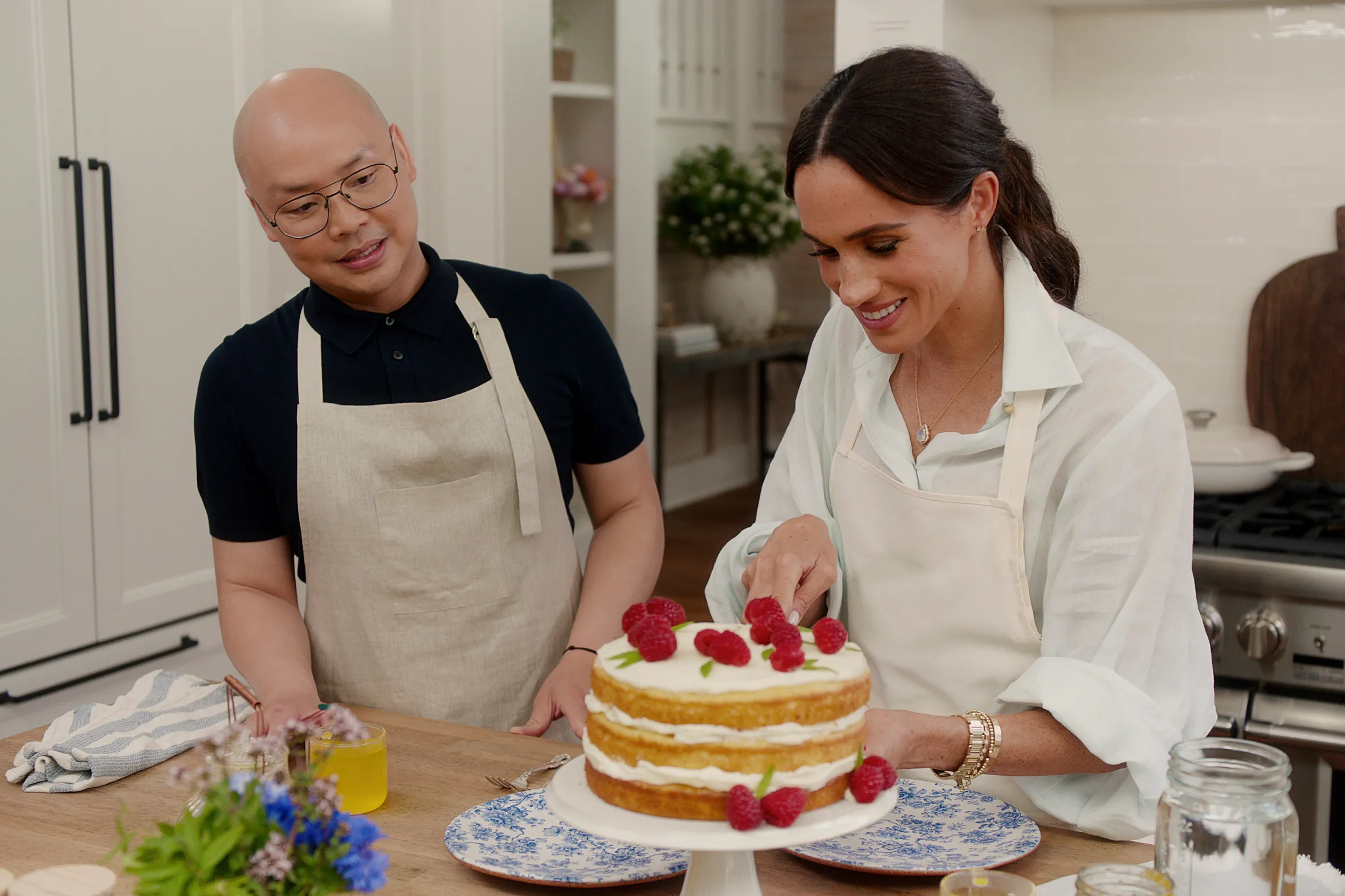 A scene from With Love, MeghanNetflix/ap
Nonetheless, Bower does a fine job of recapping in painstaking detail the chronology of it all, and he blasts apart Meghan and Harry’s everchanging stories (did they leave Britain because of the racism? Because of the tabloids? Because of unseen assassins hidden behind every tree?). He nails the most off-putting thing about Harry, which is that, despite being obsessed with the damage done to him by his undeniably weird and traumatising childhood, he extends no empathy towards his brother and father, whose childhoods were just as warped as his.
Bower lobs in plenty of details I didn’t know, such as that in the trailer for the Netflix documentary, the shots of Harry and Meghan allegedly being pursued by the paparazzi “were actually cameramen filming the British model and media personality Katie Price at Crawley magistrates court a year after the Sussexes left Britain”. Admittedly he gleaned this from a newspaper story at the time, but fair play to him for sifting through the mountains of coverage.
I probably have a bigger appetite for Meghan stories than most, and one of the many columns I’ve written about her makes an appearance in the book. But Bower’s determination to see malice in everything Meghan does feels like the mirror image of her unshakeable self-love. His loathing of her makes him bizarrely sympathetic to her appalling father, Thomas. But just as a person can agree that Harry had a terrible childhood but also believe he now needs to get his head out of his arse, one can also see Meghan as a delusional grifter and simultaneously think that her father is a self-pitying sociopath who has repeatedly sold out his daughter on a dime. In fact, I’m doing it right now.
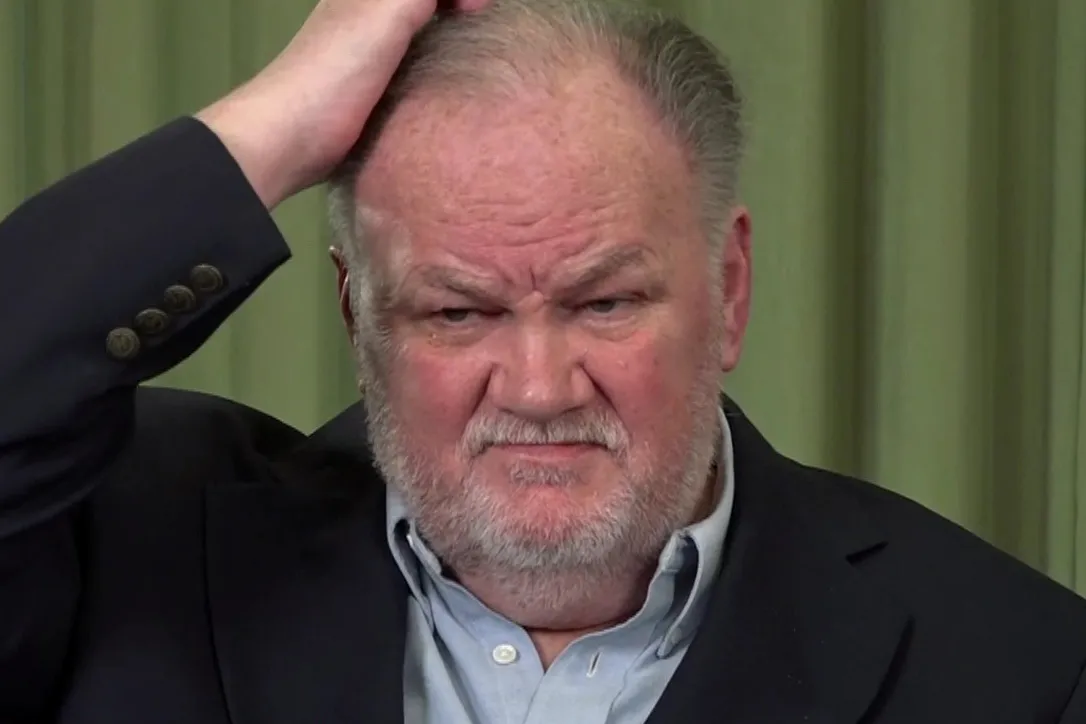 Meghan’s father, Thomas Markleitv
And here we come to the biggest problem. Yes, Harry and Meghan are self-obsessed, self-pitying and absurd, and God knows they have been easy bait for all of us columnists in slow news weeks. But since Prince Andrew became Andrew Mountbatten-Windsor, it’s been hard to get that worked up about this younger spare. So Meghan sprinkles flower petals in her salad and Harry has temper tantrums about his security provisions? I see that and raise you… photos of Andrew in the Jeffrey Epstein files doing, well, let’s not go there.
Bower clearly knows this, and the last few pages of the book are him hastily rehashing Andrew’s downfall and arrest. Maybe if he’d had more time he could have dug deeper into the spare problem: what can be done with spares like Harry and Andrew — and Princess Margaret before them — to keep them out of their various forms of trouble? Andrew has self-combusted worse than the rest, of course. But how to handle this perennial problem of the spare’s enormous sense of entitlement, which is at least equalled by their enormous sense of resentment? And why do some spares — like the stout-hearted Princess Anne and the dull but decent Prince Edward — escape this curse?
The more I read Betrayal, the more I thought about another family that had a spare problem: the Corleone family in the Godfather films. In those, the weak brother Fredo expresses his rage at being “passed over” by betraying his brother Michael, who promptly has him killed. Harry expressed his rage by writing a temper tantum of a memoir, and his brother has barely spoken to him since. Yet if Andrew provides any kind of lesson to the royal family, it should be that the spares need to be kept close, quiet and happy. Otherwise we’ll all be back here again in a few years, with yet another book recapping the latest embarrassing adventures of Harry and Meghan. And nobody wants that.
Betrayal: Power, Deceit and the Fight for the Future of the Royal Family by Tom Bower (Blink £25 pp464). To order a copy go to timesbookshop.co.uk. Free UK standard P&P on orders over £25. Special discount available for Times+ members