
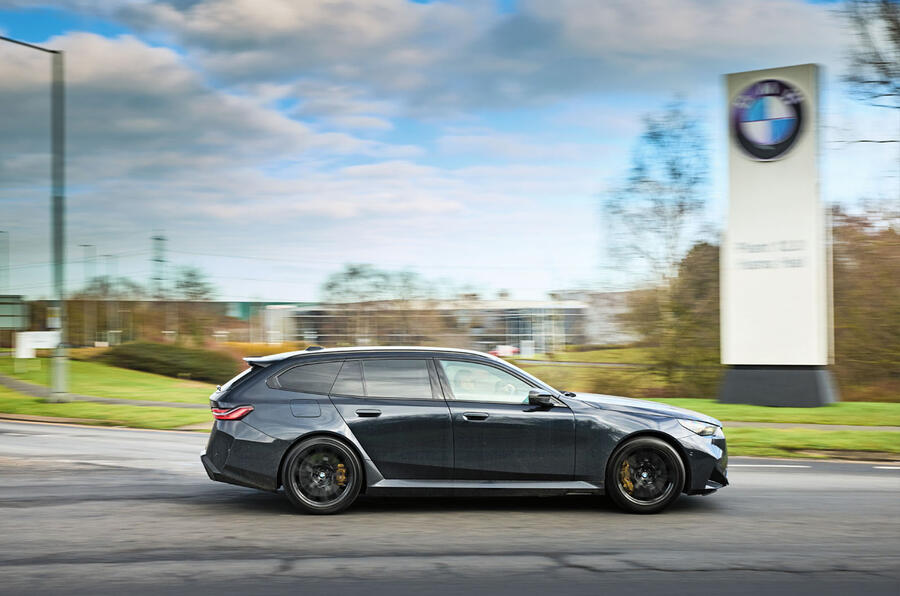
Quite a birthday present. As BMW’s Hams Hall engine factory turns 25, it does so with a fresh production line powering a halo product.
You would be forgiven for not knowing about this hidden gem of the British car industry; while headlines go to Nissan, Toyota, JLR and Mini for volume car production on UK soil, this 85-acre facility built more than 400,000 powertrains last year alone -taking its total past 7.6 million since opening on 8 February 2001.
It also machines components for BMW’s other engine facility in Steyr, Austria, extending its productivity further.
The three- and four-cylinder engines used in Minis and entry-level BMWs have been a stalwart of Hams Hall. Production began with the 316ti Compact’s modest 1.8-litre petrol engine in 2001, heralding the debut of Valvetronic (and its efficiency benefits) as it did so.
But BMW’s chiselled Neue Klasse era has recently upped the glamour in the West Midlands: from 2022, the production of V8s and V12s began to move from Munich to Hams Hall to free up space in Bavaria for the next chapter of electrification.
Now, internal-combustion Rolls-Royces and M division’s finest all procure their power from an unassuming industrial estate a dozen miles from Birmingham.
So I had no other choice but to turn up to celebrate in a ‘G99’ M5 Touring, all £135,408 and 717bhp of it, especially since the source of that power was built in Brum.
We’re not merely here to sip cocktails or play musical chairs, though. Autocar has come for an intimate tour – and specifically of the V8 line. Rather ominously, I’ve been asked my glove and shoe size…
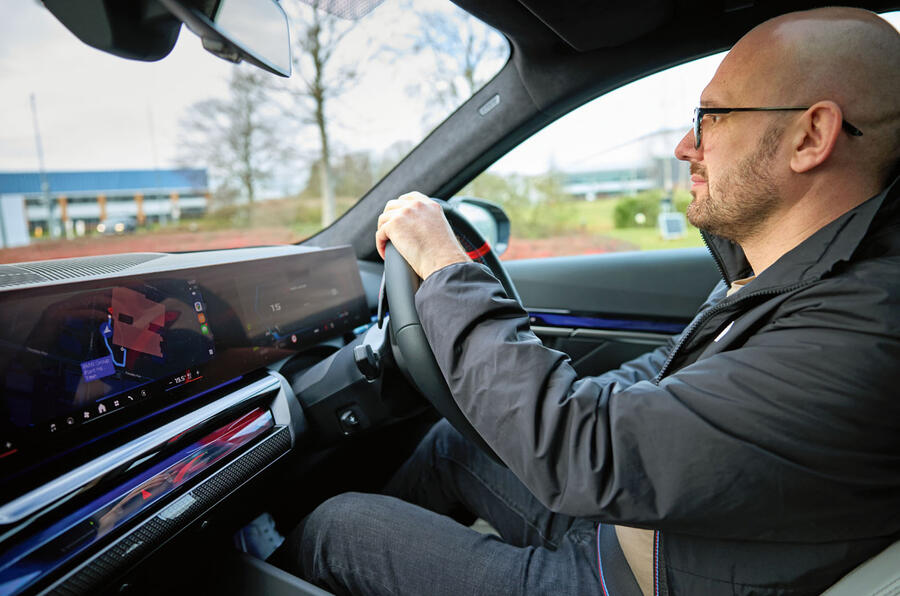
Hams Hall houses 1700 staff working across three shift slots, right around the clock, five days a week. Two of those employees are my tour guides today: James McDonald and Ben Hackett both occupy leader roles in ‘V engines’.
The existing three- and four-cylinder line prioritises machinery and robotisation, but 84% of the V8 line is hands-on for its employees, with automated processes reserved for the most intricate or repetitive of tasks. (The 6.75-litre V12s destined for the long bonnet of Rolls-Royce products are 100% hand-built, I hasten to add.)
“The V8 engine is a bit of a beast, and you’ve got to want to do it to be able to get into it,” says McDonald. “It can be quite daunting when you first look at a finished V engine. With the customers you’re building these for, the expectation level goes up.” The products this ‘S68’ unit powers are typically used much harder, in other words.