
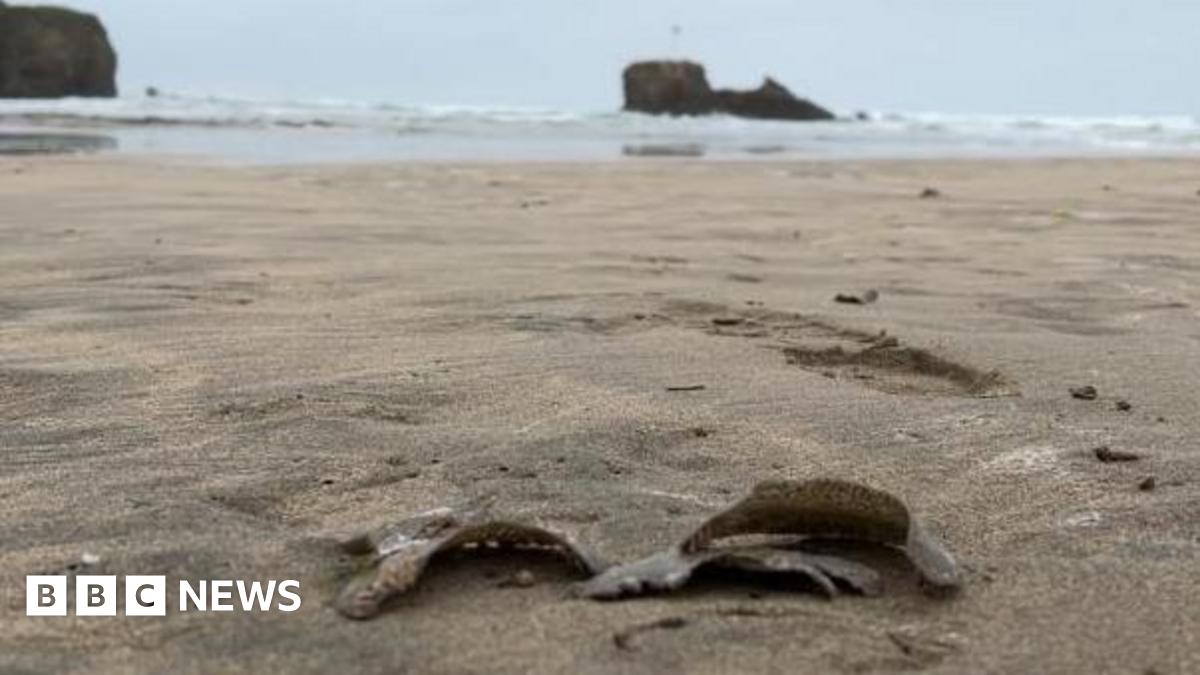
Slater said moon or necklance shells were native to the UK. They are large round snails, about an inch across, which live on soft sandy seabeds all around Cornwall’s coastline.
He said they were a predatory creature which feasted on other molluscs like clams and mussels, using a kind of teeth and enzymes to break through their shells.
“The strange thing is this incredible structure they create to embed their eggs,” he said.
“It’s actually a sort of a mucus structure that gets lots of sand stuck in it and it looks kind of like plastic and that’s why people have been getting a bit confused when they’ve seen these things.
“It might have been a really good year for this particular species. We often see a few of these washing up after storms, but we’ve had reports of quite large numbers [this year].”