
The number of confirmed meningitis cases linked to the Kent outbreak has fallen from 23 to 20.
The UK Health Security Agency (UKHSA) said on Sunday that three cases previously thought confirmed had been downgraded after further testing.
The government body said the number of suspected cases under investigation had also fallen, from 11 to nine, putting the total number of cases at 29, down from 34 reported on Saturday.
It said more cases would likely be downgraded in the coming days with the completion of further lab tests.
Nineteen of the 20 confirmed cases are meningitis B, known as MenB, and all have required hospital admission.
[ Meningitis cases rise to 34 in UK as students queue for third day for vaccinesOpens in new window ]
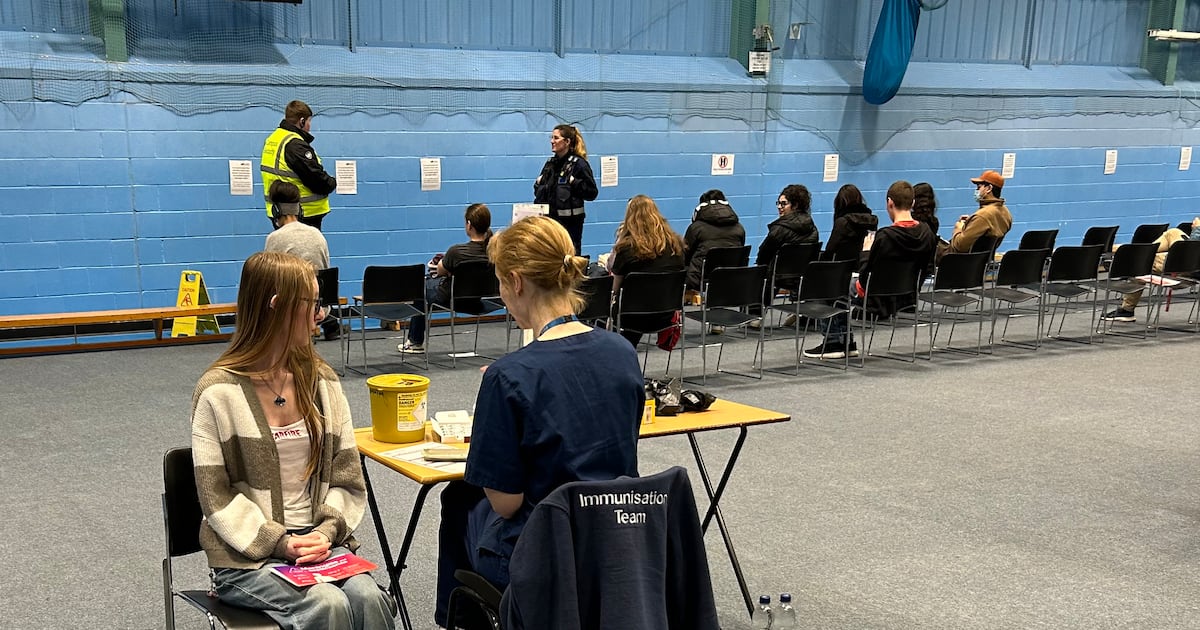
As the campaign to vaccinate thousands of young people in Kent continued into a fourth day, dozens of those eligible again queued up around the county for the vaccine or preventive antibiotics.
NHS Kent and Medway said more than 8,000 MenB vaccines and 12,157 antibiotics had been handed out by 6pm on Saturday.
Two students have died in the outbreak. They are 18-year-old Juliette Kenny, a sixth-former who was described by her family as “fit, healthy and strong”, and a University of Kent student who has not been publicly named.
Dr Sherine Thomas, an infectious diseases consultant at UKHSA, said: “We continue to remain vigilant for new cases and work closely with NHS England and local authorities across the country to ensure that any new cases identified are responded to as quickly as possible.
“Although the risk to the wider population remains low, it is still really important that people know the symptoms of invasive meningococcal disease and seek immediate medical attention if they or anyone they know develops them.”
Kent County Council’s director of public health, Dr Anjan Ghosh, warned on Friday that “small household, sporadic clusters” could appear in other parts of the UK as students who have travelled away from Kent “incubate” the illness. But he said these would be “containable” and stressed that the risk of infection between individuals remained low. – Guardian service