
Rats are thought to have travelled over on boats in the nineteenth century.
The ferret is thought to have been brought in deliberately in the 1980s to control pests.
But instead of hunting rabbits and rats, it rapidly turned its attention to the easy prey of ground-nesting birds, their eggs and chicks.
Erin McKeown, RSPB NI’s Senior Seabird and Marine Policy Officer, said breeding seabirds across the UK and Ireland have declined by 62% over the last two decades.
“Here on Rathlin in 2017, a feral ferret reached one of our puffin colonies and killed 27 puffins in a two-day period,” she said.
“So we’re hoping alleviating that invasive non-native species pressure will allow our seabirds space to breed, raise their young and flourish once more.”
Life Raft was launched in 2021 to rid the island of both ferrets and rats.
More than 400 ferret traps were laid in 2023.
Almost 7,000 handmade rat bait traps were set every 250m across the island in 2024.
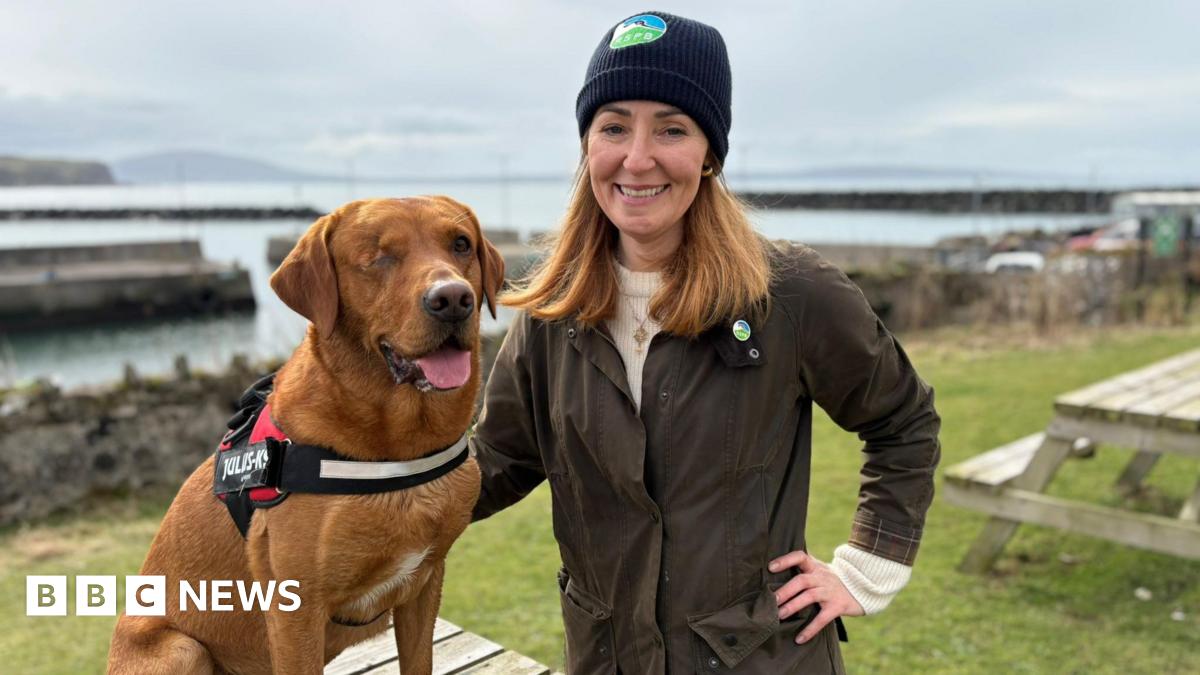
Claire Barnett said providing seabirds with safe breeding spaces is crucial as they face massive challenges globally.
“Seabirds are in big trouble – when they’re not inland nesting, they’re out in the seas, so they’re under a huge amount of pressure from climate change, from our warming waters, from overfishing, from plastic pollution.
“All of those things are having serious implications for these birds, but what we can do and do quite quickly is make sure they’ve got a safe place to nest.
“Because they’re seabirds, they have one egg every year, and if they don’t get those birds away, the numbers are going to dwindle very, very quickly.”