
The RSPB has sounded the alarm for seabird populations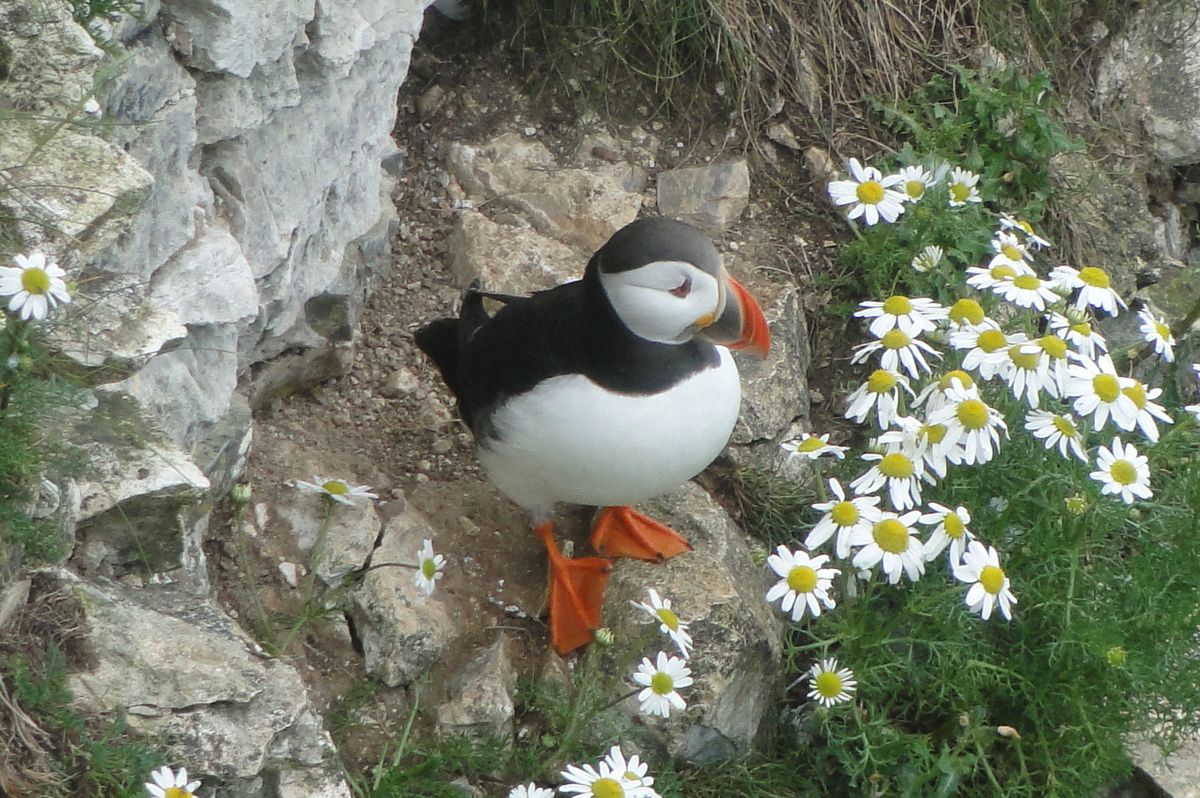
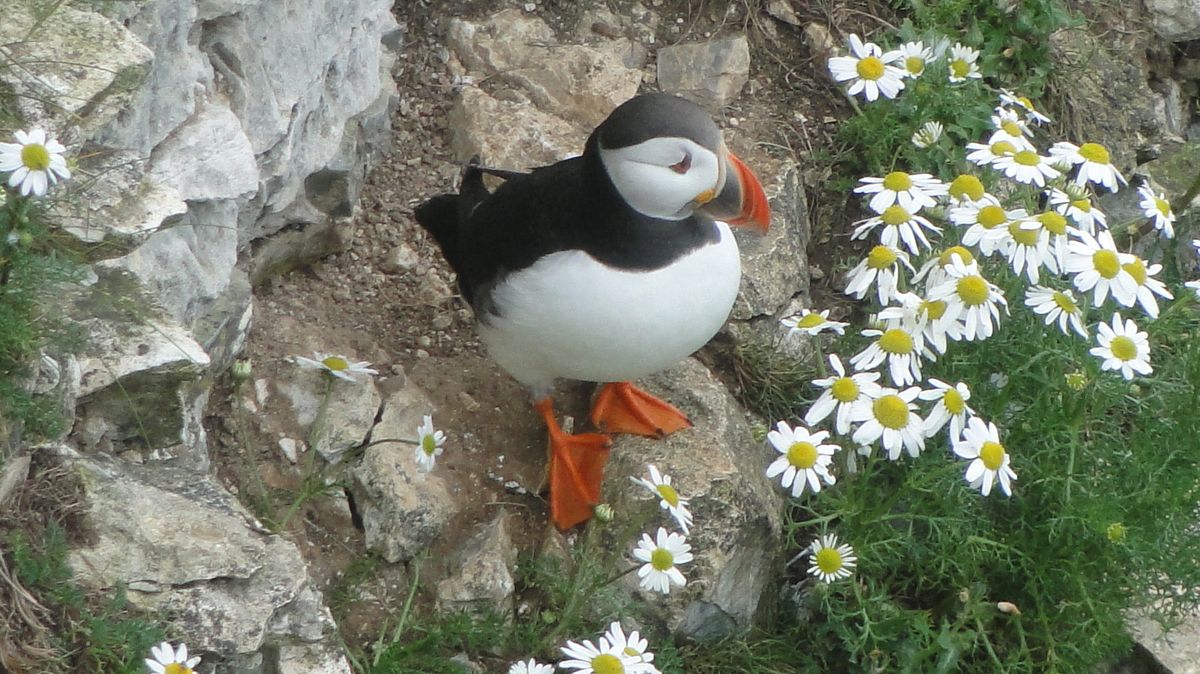
East Yorkshire’s puffins can be ‘cheeky little monkeys'(Image: Submitted picture)
Endearing little birds with clown-like features, it is no wonder puffins are so much loved and draw so many people to spot them on the East Yorkshire coast when they visit each year. RSPB Bempton Cliffs is home to the UK’s largest mainland seabird colony and of national and international importance.
The chalk cliffs that tower hundreds of feet over the North Sea recently welcomed back the first puffin of the season, faithfully returning to its nesting site. Around 3,000 of the distinctive birds, with their bright orange legs and multi-coloured bills, will colonise the cliffs up until the summer, with pairs of puffins each raising a single chick, cutely-named a puffling, in their secret burrows.
It is a magical experience to witness and one that Kirsten Carter, the RSPB’s head of marine policy – UK land and sea, highly recommends. Kirsten has some heart-warming facts to share about the puffin, whose comical appearance has earned it the monikers Sea Parrot and Clown of the Sea.
But there are more sobering things that Kirsten has imparted too, that are no laughing matter. And it is why the RSPB is launching a Save Our Seabirds campaign to coincide with World Puffin Day, on Tuesday, April 14.
Kirsten said: “Over the next few weeks we will see an increase in visitor numbers as the puffins return to the cliffs at Bempton. They will burrow in and have their eggs and a bit later on, in May or June time, we will see them back out again on these cliffs and then shortly after lots of pufflings, which is just lovely.
READ MORE: The day I went on a ‘puffin cruise’ at Flamborough
“Baby puffins navigate by the stars,” said Kirsten, throwing in another enchanting fact about the seabird. “They come out on the cliff and they sit there and get to know their surroundings.
“One thing many don’t realise is that puffins are quite small – people think they are the same size as a penguin – and they really are cheeky little monkeys. They are sitting on these rock ledges and they will see these little stones; they will kick one and run away and wait for it to land on the bird underneath them.”
When the adult puffins are seen bobbing about on the waves, around June time, that is officially called “loafing” and the record for the number of sandeels – a main source of food for puffins and their chicks – to be counted in a single puffin’s bill is over 80, “quite substantial” for such a small seabird. “It’s nice when you come to somewhere like Bempton,” said Kirsten.
“You get to see them burrow; you get to see a baby puffin take its first flight; you see the puffins taking bits of weed or whatever into their nest. You get to see the full life cycle.”
Despite the joyful return of East Yorkshire’s puffins, recent “seabird wrecks” have seen dead puffins washing up along this part of the coastline. The reason so many birds have died at sea this year is not yet clear, though stormy weather, reduced fish availability and bird flu could be possible causes.
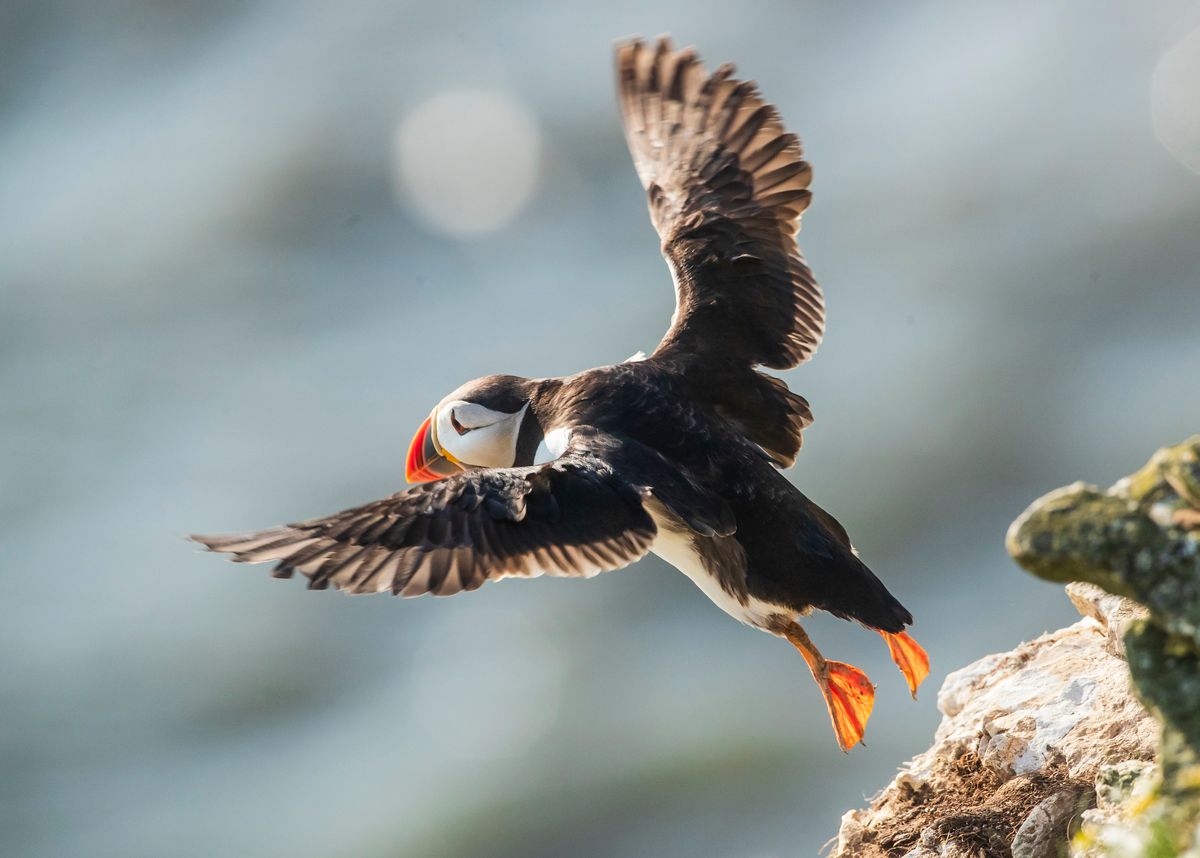
A puffin takes flight at RSPB Bempton Cliffs(Image: Danny Lawson/PA Wire)
The “wreck” is thought to be the most significant since 2014 and has also affected other parts of the UK, the Channel Islands and mainland Europe. Kirsten said seabirds faced numerous challenges, including lack of food through over-fishing and climate change.
“There is also the over-use of sea space, including for offshore wind farms,” she said. “The birds can hit the turbines or they have to fly further to find food; it’s that extra pressure on them.”
On the back of a successful campaign to see industrial sandeel fishing in UK waters ended – something that was “critical” to the survival of puffins, Kirsten said – more lobbying was taking place. “We are now working closely with Government and the fishing industry on how to build an eco-system based management, based on the principle that wildlife needs food as well as people.”
She encouraged people to “get out there and experience wildlife” to appreciate what it truly means and also said people could write to their MP about prioritising seabirds. Sadly, around one in four puffins may have been lost from across the UK since 2000 and if things do not change, it is estimated up to 90 per cent of the puffin population will have been lost by as soon as 2050.
The RSPB warns that much more is still to be done to help these red-listed, charismatic birds, and other threatened seabirds. Poppy Rummery, RSPB visitor experience manager at Bempton, said: “It’s always a special moment when our first puffin returns to Bempton.
“They bring so much joy and energy back to the cliffs and visitors absolutely love seeing them up close. While we’ve sadly seen recent ‘seabird wrecks’ along our coastline, events like this remind us just how important places like Bempton are.
“By protecting their nesting sites and improving the health of our seas, we can give them the best possible chance to recover and thrive. That’s why conservation action now is so crucial.
“Every positive step helps build stronger, more resilient seabird populations for the future.” The RSPB says that of all the world’s bird groups, seabird populations are plummeting faster than any other, with a staggering 62 per cent of populations declining around the UK coast. That is not just bad news for the seabirds themselves; the health and the future of all marine life, and the many other species who depend on our seas, are also at risk.
Through the “Save Our Seabirds” campaign, it is hoped to raise £250,000 with donations supporting the RSPB’s Marine Recovery Programme, to put seabirds and marine life on track for recovery. Dave O’Hara, senior reserve manager at RSPB Bempton Cliffs, said: “As the sun rises over our rugged coastline, I’m lucky enough to spot the silhouettes of puffins arriving home to nest.
“It’s a joy to hear the gasps of delight from schoolchildren, walkers and keen bird watchers. These birds have faced real challenges in recent years, but there is hope.
“Thanks to conservation efforts – including our successful campaigning to end industrial sandeel fishing, thus protecting their food sources – we now have an opportunity to turn the tide. Campaigns like Save Our Seabirds are about making sure future generations can experience this incredible spectacle for decades to come.”
People can donate to the RSPB “Save Our Seabirds” campaign via the charity’s website.
Did you know you can make Hull Live a preferred source of Hull news in Google, which will mean you get more of our breaking news, exclusives, and must-read stories straight away? Here’s more information about what this means and how to do it – you can also do it straight away by clicking here .