

From the top floor of University College London’s Bloomsbury headquarters, Professor Geraint Rees points out a string of landmarks that make up the city’s so-called Knowledge Quarter.
There is the steel-vaulted roof of the Francis Crick Institute, a mammoth lab complex in King’s Cross, and One Triton Square, a £400 million hub for tech start-ups on nearby Regent’s Place. Still being built is UCL’s £281 million neurology and dementia research centre.
But the crown jewel for Rees, UCL’s vice-provost of research, innovation and global engagement, is not a specific building but a tie-up with the US tech titan Nvidia — a partnership that, he hopes, will quicken the transformation of the area into a rival to science and technology hubs across the Atlantic.
“I walked into a coffee shop and for the first time I overheard someone pitching their new company to somebody. It’s something you would hear in Silicon Valley, or you might hear in [Boston’s] Kendall Square,” he said.
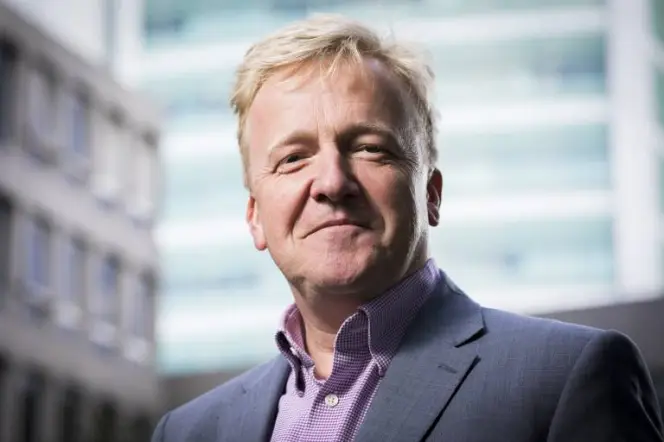 Professor Geraint Rees from University College London hopes the Knowledge Quarter in King’s Cross can rival similar hubs in the United StatesUCL
UCL signed a landmark “strategic partnership” with the chipmaker last year. This came amid a wider investment blitz by Nvidia, which has pledged to plough £2 billion into British companies at the forefront of the AI boom.
Jensen Huang, the Taiwan-born billionaire who leads Nvidia, has emerged as a particularly ardent evangelist for British tech, predicting last year that “the first trillion-dollar company in the UK will be an AI company”.
Ministers certainly hope this will be the case; last year, Sir Keir Starmer launched an aggressive push to turn Britain into an “artificial intelligence superpower” as he tries to jumpstart the UK’s stuttering economy.
Huang has said he believes the UK is having a “Goldilocks” moment for AI, citing the country’s “amazing start-ups” and the ease with which the supercomputers needed for AI can be built here.
 Sir Keir Starmer with Jensen Huang in London last year. The Nvidia founder is placing a big bet on British tech. Below, he receives the 2025 Queen Elizabeth Prize for Engineering from the KingCrown Copyright
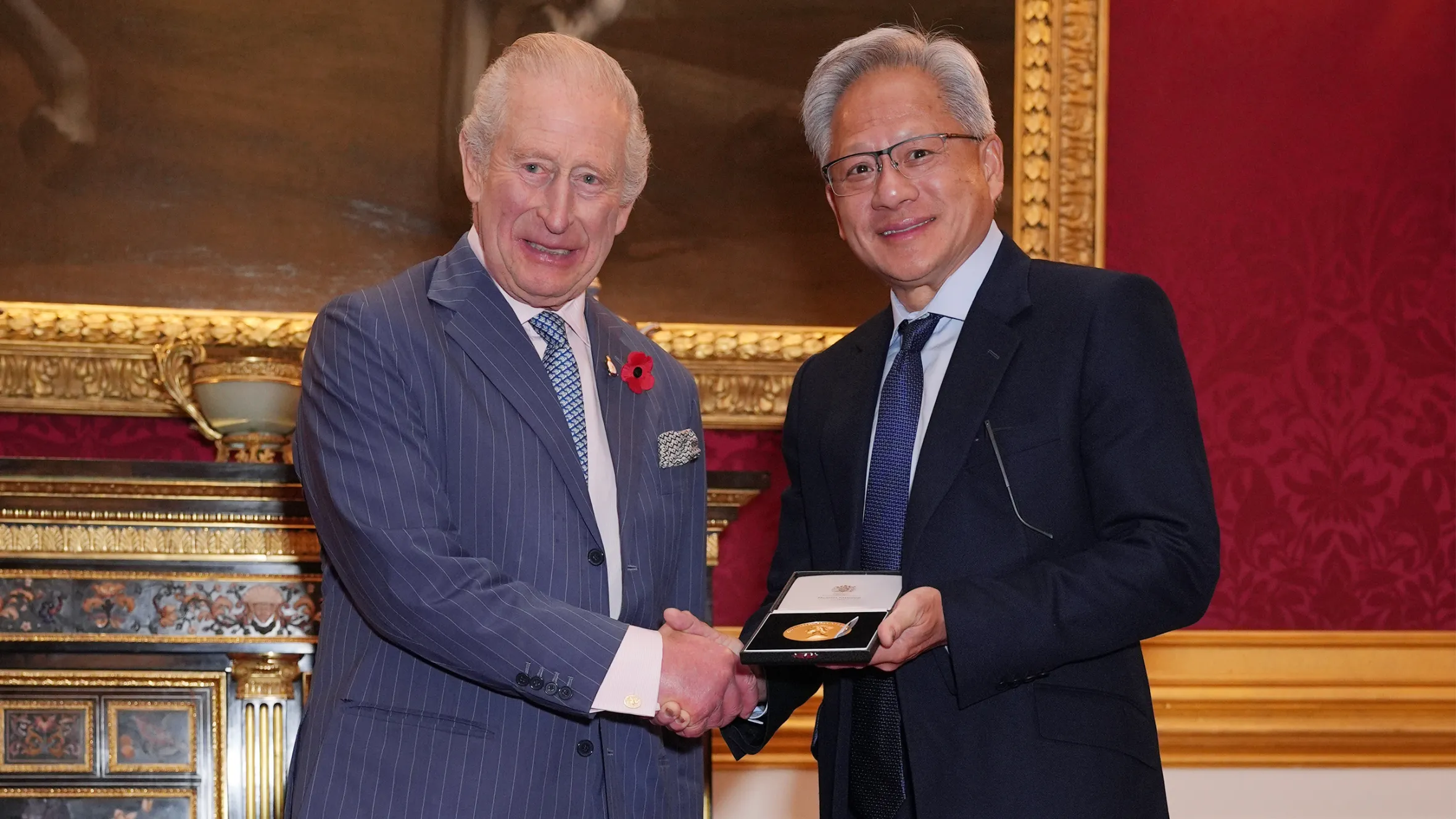 YUI MOK/PA
Nvidia worked with UCL for many years before agreeing to form the official partnership last year. At the core of the tie-up is a drive to create “sovereign AI” in Britain — a digital and physical infrastructure for artificial intelligence, similar to the national grid for power. This infrastructure is the one missing element in Britain so far, Huang has said publicly.
“It codifies your culture, your society’s intelligence, your common sense, your history — you own your own data,” Huang previously told the World Governments Summit in Dubai.
“[Sovereign AI] is the idea that it’s important for the UK to have its own ability to train and deploy advanced AI models, and to have the people and the skills to do that, as well as the hardware and the computing to do it,” said Rees. “The alternative is just to pay for somebody else, somewhere else in the world, to do it.”
It’s clear why the latter could be disadvantageous. No country wants to have its AI turned off by a foreign provider, or sensitive data to end up in the wrong hands — especially at a time of global turmoil.
Advocates believe sovereign AI initiatives could transform the efficiency of public services. One of the projects on which Nvidia and UCL are working is UK-LLM (large language model), which “thinks” in the multiple languages spoken across Britain — such as Welsh, Irish, Scottish Gaelic and Cornish — rather than simply translating them. This allows for easier automation and reduces the likelihood of errors in high-volume administrative work.
At UCL, the tech giant is also fuelling research into how “digital twins” — in effect, virtual models created with AI — could be used to predict and treat health conditions such as strokes. “That’s the kind of thing we’re going to see in the NHS tomorrow, I believe,” said Rees.
Under way as well are research projects in quantum computing and polar observation. Nvidia is providing grants, donating its highly sought-after graphics processing units (GPUs), and access to its platforms and products.
Students are certainly seeing the benefit. This month, UCL hosted a “hackathon” event where groups of them were given the task of developing prototype new AI tools.
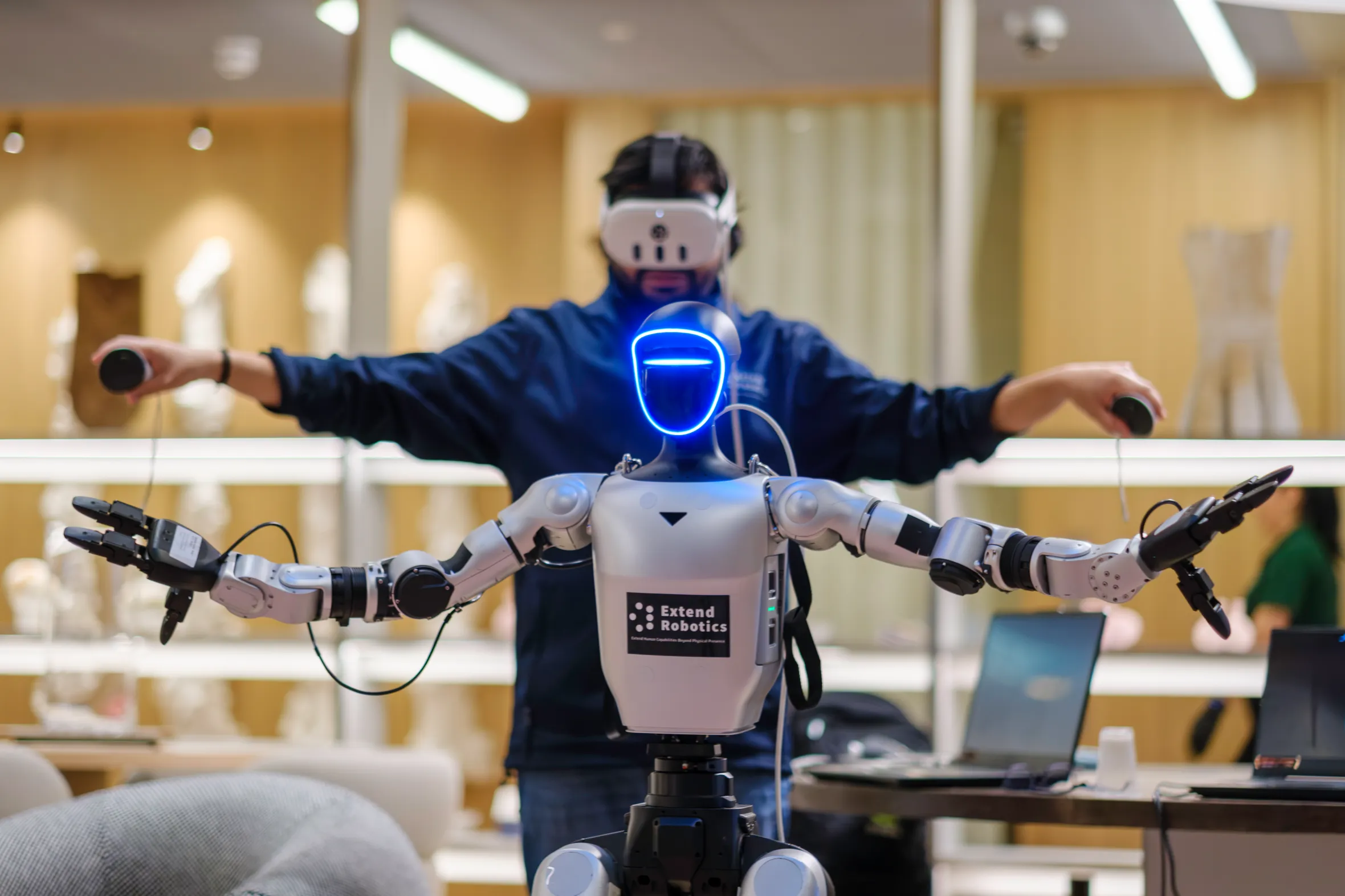 Staff from Nvidia’s global robotics division held a workshop at UCL after the tie-up with the universityUCL
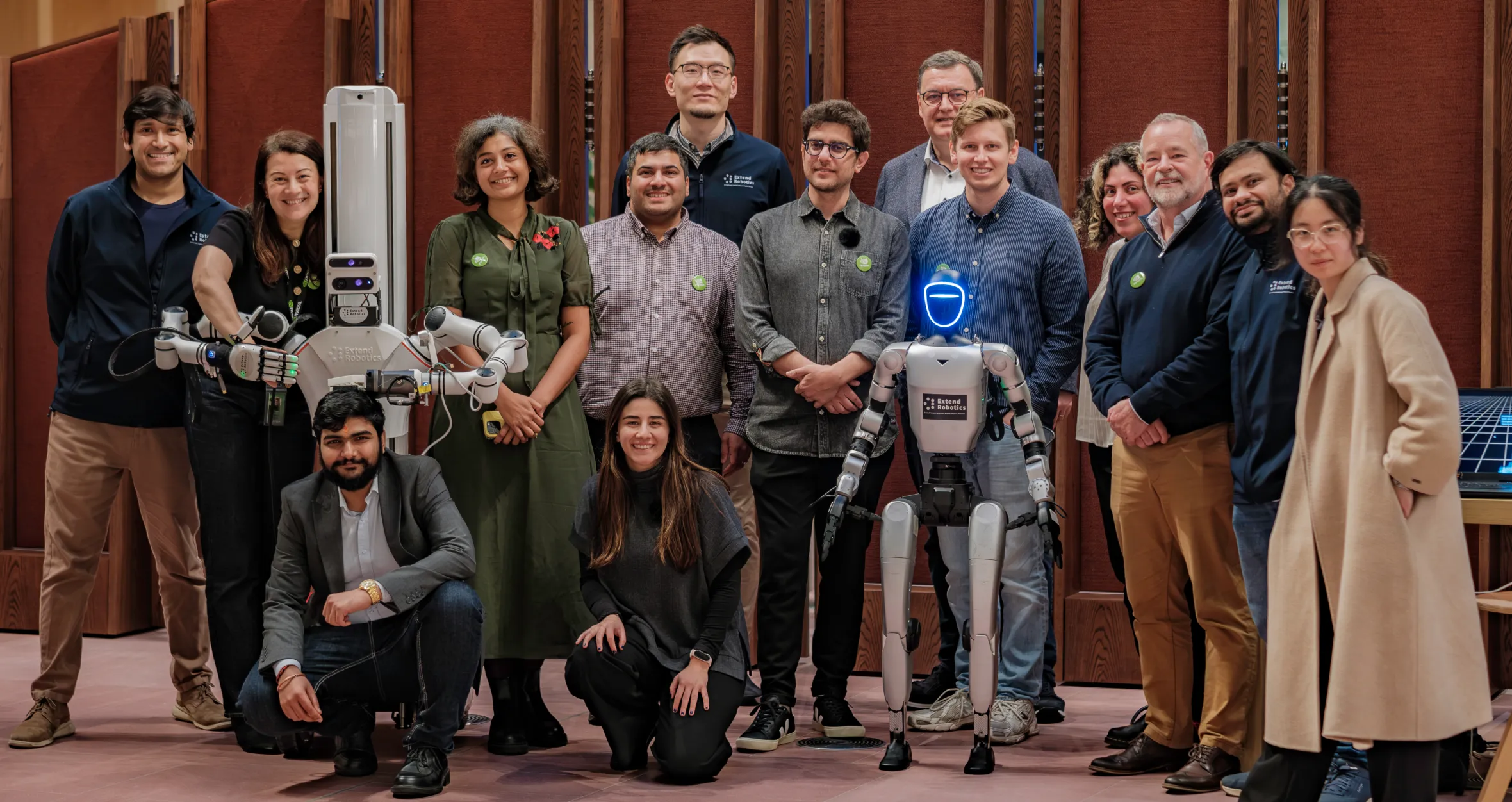 UCL
UCL
The winners — Lucas Lim, Joe Tan and Shashank Durgad from UCL, and Cambridge University student Desmond Zee — came up with a tool that “polices” autonomous AI agents to stop them going rogue. Their prize is a trip to Nvidia’s GPU Technology Conference — in effect, the Davos of AI — this month.
Questions have been raised over the merits of building “sovereign” AI for Britain based on American tech. Writing in The Guardian last year, Matt Davies of the Ada Lovelace Institute, a body dedicated to ensuring that “data and AI work for people and society”, warned about “the quid pro quo that comes with investment from big tech”.
Yet if the UK wants to grow its AI capabilities, there aren’t many other options beyond US firms, said Saul Klein, founder of the London-based venture capital firm Phoenix Court.
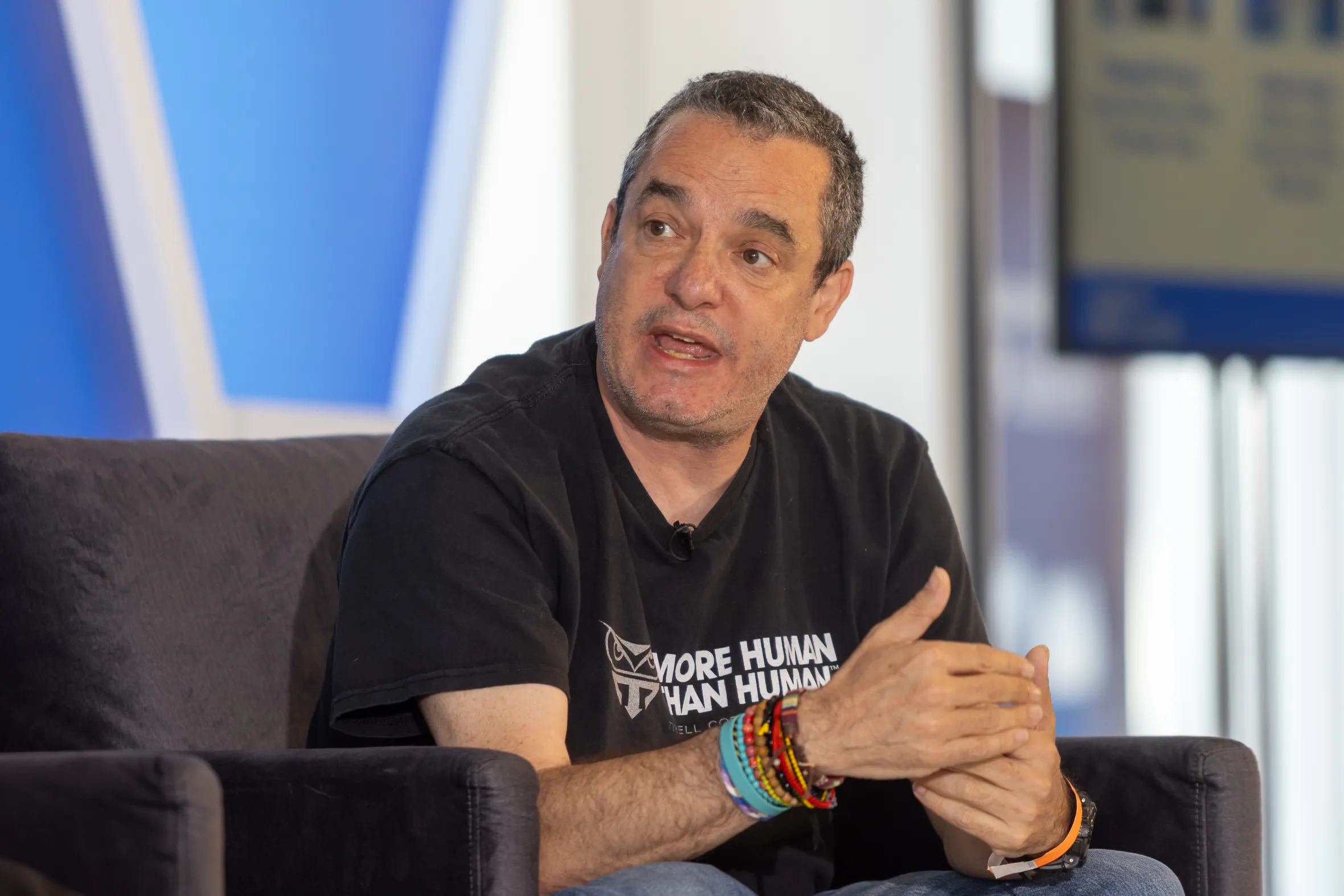 Saul Klein BETTY LAURA ZAPATA FOR THE TIMES
Klein agrees that Britain needs to build “more resilience, more independence and more leverage”, but he is not so worried about the role played by big American firms. “Google, Nvidia, Amazon and Microsoft etc are [already] big parts of the UK economy,” he said.
The tie-up between Nvidia and UCL comes amid a flurry of investment in London’s Knowledge Quarter. Once known for deprivation and vice, King’s Cross and the areas around it have been transformed in recent decades. In 2024 The Economist magazine dubbed it a “miracle” and “the best hope for the British economy”.
According to UCL predictions, the quarter will add an extra £1.5 billion to the economy every year if it continues its present trajectory.
 London’s Knowledge Quarter, with Google’s UK headquarters located to the right behind King’s Cross stationADRIAN MARS/GETTY IMAGES
Synthesia, an AI video-creation business co-founded by UCL professor Lourdes Agapito, was recently valued at $4 billion (£3 billion) following a $200 million funding round, and has taken on a 20,000 sq ft headquarters at 20 Triton Street in Regent’s Place.
“London is buzzing with AI talent,” Agapito said. “There’s not just universities and start-ups but also the big tech labs. At the beginning we only had ten people, now there’s more than 600 — so many jobs that we’ve created.”
Klein argues that the area should be considered a “new Square Mile” of even more vital importance to Britain’s future than the City. “Literally by any kind of economic output metric, [it] is more valuable than the ‘old’ Square Mile,” he said.
Yet while the so-called innovation economy has flourished around King’s Cross, there are still questions over how it can benefit all the local residents. The Somers Town neighbourhood nearby in Camden is one of Britain’s most deprived neighbourhoods: more than half of all children there are living in poverty — far worse than the borough’s overall average of 36.3 per cent.
The local council has been trying to address this by partnering with employers on apprenticeships and other training opportunities. “Our school children can say they’ve had science demonstrations in the Francis Crick Institute, and our young people are doing apprenticeships at Google learning AI,” said Richard Olszewski, leader of Camden council.
“The real challenge for the ‘new Square Mile’ is not how much it can grow, but whether it can grow inclusively,” said Klein, whose firm donates a significant chunk of its profits to causes in the local area. “The Silicon Valley innovation model is extremely economically successful — but the distribution of dividends never really went beyond the founders and the investors.”
Yet it is precisely the reputation of Silicon Valley — as a place for the brightest minds to get rich quick — that is contributing to wider worries about Britain’s ability to hang on to talent. Last November a report by the science and technology committee of the House of Lords urged ministers to make Britain a more attractive place to scale businesses.
 Silicon Valley in CaliforniaGetty IMAGES
This came after the pharmaceuticals giants Merck and AstraZeneca both cancelled huge planned investments within the space of a week. Merck U-turned on a proposed £1 billion research centre in London, claiming the government was not investing enough in the sector, while AstraZeneca put the brakes on a £200 million investment in its R&D facility in Cambridge amid a row over NHS charges.
Anthony Hills, regional director for the UK & Ireland at Nvidia, said AI was “one of the areas where capital and ambition have continued to come into the UK” despite “a tougher overall environment”.
Meanwhile, British pension funds are lagging behind international counterparts such as Canada in their exposure to UK life sciences and technology, despite “Mansion House” reforms in 2023 designed to encourage domestic funds to invest more in private companies.
This is a problem because it means a large portion of the benefits of growth may go abroad. “It means that 80 to 85 per cent of the economic benefit then goes to the people who are … a nurse in Denmark, a teacher in Ontario, a worker on the Singapore metro system or the Saudi royal family,” said Klein.
Rees added: “What I’d like to see is that execution sped up. These companies need investment, and often the level of investment they need is in the hundreds of millions.”
If access to funding can be improved, Rees believes the density of start-ups, investors, academic resources and transport links within the Knowledge Quarter will prove “very powerful as a way of keeping people here”.
“They bump into each other and … they make new connections,” he said. “Silicon Valley has a density of established entrepreneurs, serial entrepreneurs, academic anchors and venture capital that is possibly one of the densest on the planet. We’re not there just yet, but we’re on the way towards that.”