

This article was originally published on South Asian Voices, a publication of the Stimson Center.
“Do not give away Diego Garcia,” warned U.S. President Donald Trump on February 19, as the United Kingdom moved forward with plans to transfer sovereignty of the Chagos Archipelago to Mauritius. While the Chagos Archipelago has often been viewed through the prism of the sovereignty dispute between the United Kingdom and Mauritius, the islands today serve as a fulcrum for regional rivalries and great-power competition.
The geopolitics of the wider Indian Ocean have undergone tremendous shifts over the past few decades, as traditional maritime powers like the United Kingdom, the United States, and Japan have increasingly shared the theater with rising navies like those of India, China, and the United Arab Emirates. This transformation follows a broader deterioration in the global security environment, especially in the maritime domain: from Houthi attacks on commercial vessels in the Red Sea to U.S. strikes on Iranian naval ships and joint China-Russia naval exercises, the Indian Ocean is experiencing a notable militarization.
The Chagos Archipelago sits at the center of this important trend and—in light of the ongoing conflict in the Middle East—Diego Garcia in particular has become more visible and contested than ever before. Recent developments surrounding Chagos reveal how external powers, regional actors, and small island states are simultaneously expanding their military footprints across the Indian Ocean. The archipelago may represent a canary in the coal mine for the growing militarization of the wider region.
Background: Chagos and U.S. Policy Shifts
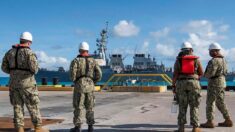
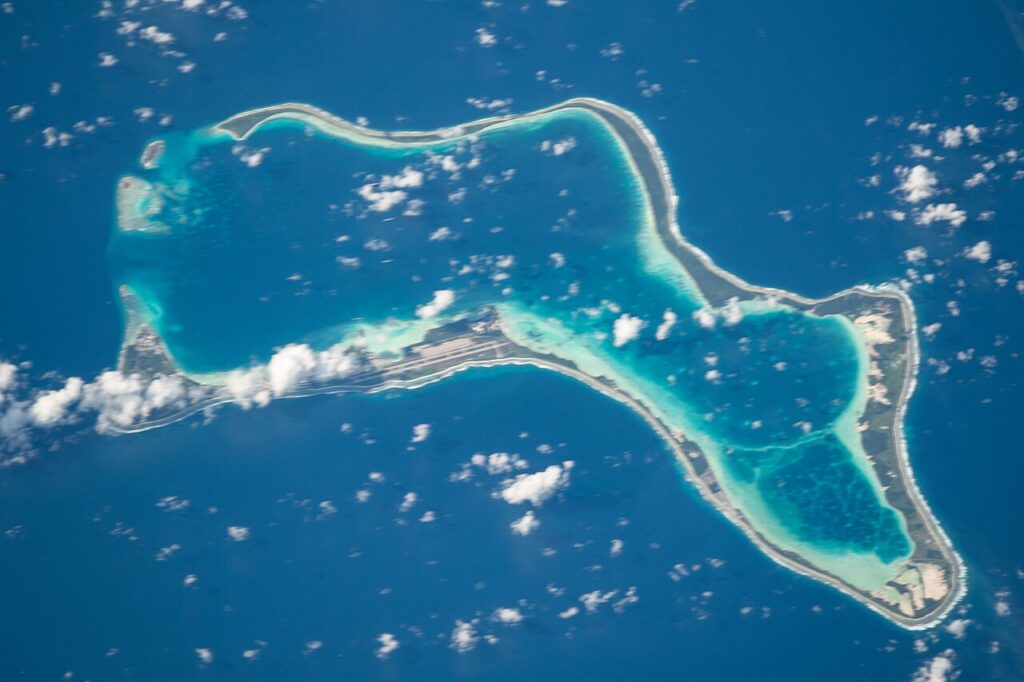
The Chagos Archipelago is a group of about sixty small islands in the middle of the Indian Ocean currently administered by the United Kingdom as the British Indian Ocean Territory (BIOT). The largest and southernmost of these islands, Diego Garcia, has been the site of a joint U.K.-U.S. military base since 1973.
Critically, the Chagos is at the center of a longstanding sovereignty dispute between the United Kingdom and Mauritius. In 2024, the two countries reached a deal to transfer sovereignty of Chagos to Port Louis, which included a number of conditions for the protection of U.K. and U.S. military interests. While the deal was immediately lauded around the world as a victory for decolonization, U.K. and U.S. conservatives raised alarms about the loss of their territories and the growing regional presence of China. Despite these concerns, both governments in the United States and the United Kingdom continued to move forward with the agreement.
Soon after the second Trump administration took office however, U.S. military priorities shifted. The administration’s overall focus on the projection of U.S. hard power, and specific coercive strategy toward Iran, has heightened the relevance of Diego Garcia as a support node for U.S. operations across the globe. Beyond military doctrine, the Trump administration has also recalibrated U.S. diplomacy, especially its relationships with major allies like the United Kingdom.
As a result of these shifts, Trump has repeatedly challenged the U.S.-U.K. status quo on the Chagos Archipelago. In January 2026, he criticized the U.K.-Mauritius deal as a way to put pressure on U.K. Prime Minister Keir Starmer over the U.S. pursuit of Greenland; between February and March, Trump renewed these criticisms as Washington prepared to attack Iran. Reports suggest that this second wave originated from a disagreement between the two allies about the use of U.K. bases for U.S. strikes against Iran.
In response to these developments, in a letter to the UN Security Council on February 19, Iran said that if the United States uses Diego Garcia to conduct a strike, then that base would constitute a legitimate target for Tehran. Previously, during U.S. strikes against Iran in June 2025, Tehran threatened to pre-emptively send drones and missiles to Diego Garcia. As U.S. operations continue, now with British support, the current status of the Chagos sovereignty transfer is more uncertain than ever.
Regional Perspectives
Amidst the recent military strikes, Chagos has gained significant media attention. However, dominant narratives about the United Kingdom and the United States often overlook the important regional dynamics at play. Below the surface-level sovereignty dispute lie several critical developments—driven by regional actors like India, Maldives, and China—that could impact the future of the Indian Ocean.
India
Indian strategists have historically viewed the Indian Ocean as New Delhi’s “Great Lake.” As such, India has pushed for a presence in the region and close relationships with island states, including Mauritius. India has consistently supported Mauritius’ sovereignty over the Chagos Archipelago as part of its stance on decolonization and regional stability. In addition, supporting Mauritius has been part and parcel of Delhi’s attempts to bolster Indian influence as a counterweight to the growing Chinese presence in the Indian Ocean. In spite of these efforts, India has always pragmatically accepted the continued, long-term operation of the base in Diego Garcia.
In recent years, India has played a quiet but important role in facilitating the negotiations between the United Kingdom and Mauritius, both to assert regional primacy and to ensure that any deal aligns with India’s interests. These include the construction of an Indian military air base in Mauritius on the island of Agaléga, about 1100 miles from Diego Garcia, which is slated to include a long runway, deep water jetty, and radar and communications infrastructure capable of supporting Indian maritime patrol aircraft. Mauritius defends this installation as enabling mutually beneficial coast guard support; meanwhile, this new air base would significantly bolster India’s ability to project power and conduct long-range surveillance in the western Indian Ocean.
Furthermore, in 2025, India agreed to provide an additional USD $680 million in economic assistance to Mauritius for healthcare, infrastructure, and maritime security projects. This includes support for the development and surveillance of the marine protected area that exists around the Chagos Archipelago. Despite the environmental justification, such maritime surveillance could, in practice, create an Indian-led security perimeter around Chagos.
China
China’s presence in the Indian Ocean is one of the most frequently cited concerns by skeptics of the U.K.-Mauritius sovereignty agreement. Today, China is an undeniable player in the Indian Ocean region. As of 2020, China has become the largest trading partner in the Indian ocean with a trade volume of nearly USD $900 billion. The country’s military presence in the region, in terms of counterpiracy operations, logistics facilities, and the pursuit of port projects, has followed alongside its economic engagements, increasing steadily over time.
Mauritius is no exception to this trend: in 2021, it signed a free trade agreement with China, making it the first African country to do so, and has since imported about USD $1.25 billion in goods from China each year. However, the Chinese government has generally avoided commenting directly on the Chagos Archipelago dispute.
Similar to India, China views the Chagos dispute as part of a process of decolonization and supports the bilateral negotiations process, though some observers argue that “decolonization” represents the replacement of European and U.S. influence by a greater Chinese presence. From this perspective, the continued operation of the U.S.-U.K. military base on Diego Garcia, regardless of the terms, represents a setback for Chinese ambitions by deterring Port Louis from pursuing closer strategic ties with Beijing. Additionally, Mauritius’ diplomatic proximity to India provides a significant counterweight to its relationship with China. In this sense, it may be India-China rivalry rather than U.S.-China rivalry that drives strategic alignment and competition in the Indian Ocean region.
Maldives
Beyond India and China, the Maldives has also come to play an increasingly important role in the Chagos dispute. Under international law, the Maldives has some overlapping Exclusive Economic Zones (EEZ) with the Chagos Archipelago. In 1992, the Maldives negotiated to divide this EEZ with the UK “down the middle.” While this agreement was never signed, both countries respected the boundary in practice.
However, the arrangement unravelled after the International Court of Justice recognized Mauritian sovereignty over Chagos in 2019. In 2021, the International Tribunal on the Law of the Sea re-divided the overlapping zones between Mauritius and the Maldives. Following the ruling, Maldivian President Ibrahim Solih formally recognized Mauritian sovereignty over Chagos.
Since then, Solih has faced criticism in the Maldives for “ceding maritime territory.” In 2023, an election in Maldives brought a new government to power under Mohamed Muizzu, who immediately initiated efforts to challenge the Tribunal decision. Muizzu withdrew recognition of Mauritius’ sovereignty, established a commission of inquiry into the boundary decision, and set up an office to define the Maldives’ maritime boundaries. In February 2026, the Maldivian Ministry of Defence announced that its forces would conduct surveillance to safeguard the nation’s territories, launching a special operation in the disputed Chagos zone. Muizzu then took the issue a step further by asserting sovereignty over the full Chagos Archipelago—which no previous Maldivian government had ever claimed. These moves reflect more than a simple boundary dispute: they coincide with a broader effort by the Maldives to assert strategic autonomy amid intensifying regional competition.
The India-China rivalry is also embedded in the increasingly fraught Mauritius-Maldives relationship, with China and the Maldives growing closer since the election of Mohamed Muizzu. Likewise, relations between the Maldives and India have been in flux for some time, souring during the “India Out” Campaign and slowly warming after a recent recalibration in Malé. The shifts in Maldives’ alignment reflect the government’s search for balance between nationalist sentiments, electoral promises, and external pressures.
Within this context, the Muizzu government has accelerated defense modernization and sought new military partnerships with Türkiye and China. For a state that has historically relied on diplomacy and external security guarantees, this militarization is notable. By expanding maritime claims and deploying forces in contested waters, the Maldives is signaling a willingness to defend its interests more directly. This illustrates how even small island states are militarizing amidst the wider strategic competition unfolding across the Indian Ocean.
The Path Toward Militarization
This process of militarization in the Indian Ocean shows no sign of slowing. At present, the Chagos Archipelago remains part of the British Indian Ocean Territory and the site of the joint U.S.-U.K. Diego Garcia military base. With the recent U.S. torpedo attack on an Iranian ship off the coast of Sri Lanka and Iran’s closure of the Strait of Hormuz, Diego Garcia will remain in the spotlight as the turmoil in the Middle East spills over into the wider Indian Ocean region. Moreover, if the conflict with Iran persists, Tehran may target Chagos. At the same time, India is establishing its own military base in the region, and the Maldives has claimed the entire archipelago. The result is an increasingly crowded and volatile maritime space.
Going forward, the Chagos Archipelago will be a litmus test for the future of order in the Indian Ocean. If current trends continue, the Indian Ocean will be securitized in ways that narrow diplomatic space and incentivize coercive postures. In this environment, stability will depend not only on the strength of great power navies, but on the choices of the island states who call the ocean region home.
Nitya Labh is the current Schwarzman Academy Fellow at Chatham House’s International Security Programme. She is also a consultant for the Centre for Humanitarian Dialogue and a Visiting Fellow at the College of William & Mary’s Global Research Institute.
Sources: Academia; Al-Jazeera; The Atlantic Council; BBC; Carnegie Endowment for International Peace; Chatham House; CNN; Corporate Maldives; East Asia Forum; The Economic Times; Fisconsult-Sinews Group; Foreign Policy; Foreign Policy Watchdog; French Institute for International Relations; The iPaper; International Court of Justice; Just Security; Lieber Institute; Maldives Voice; The Maritime Executive; Observer Research Foundation; OEC; Pakistan Times; pa media; The Press; Republic of the Maldives President’s Office; The Report Company; Reuters; Stars and Stripes; The Telegraph; Times Now; Times of India; Walter H. Shorenstein Asia-Pacific Research Center
Photo Credits: Jordan Steis via Wikimedia Commons; Image 2: NASA via Wikimedia Commons