
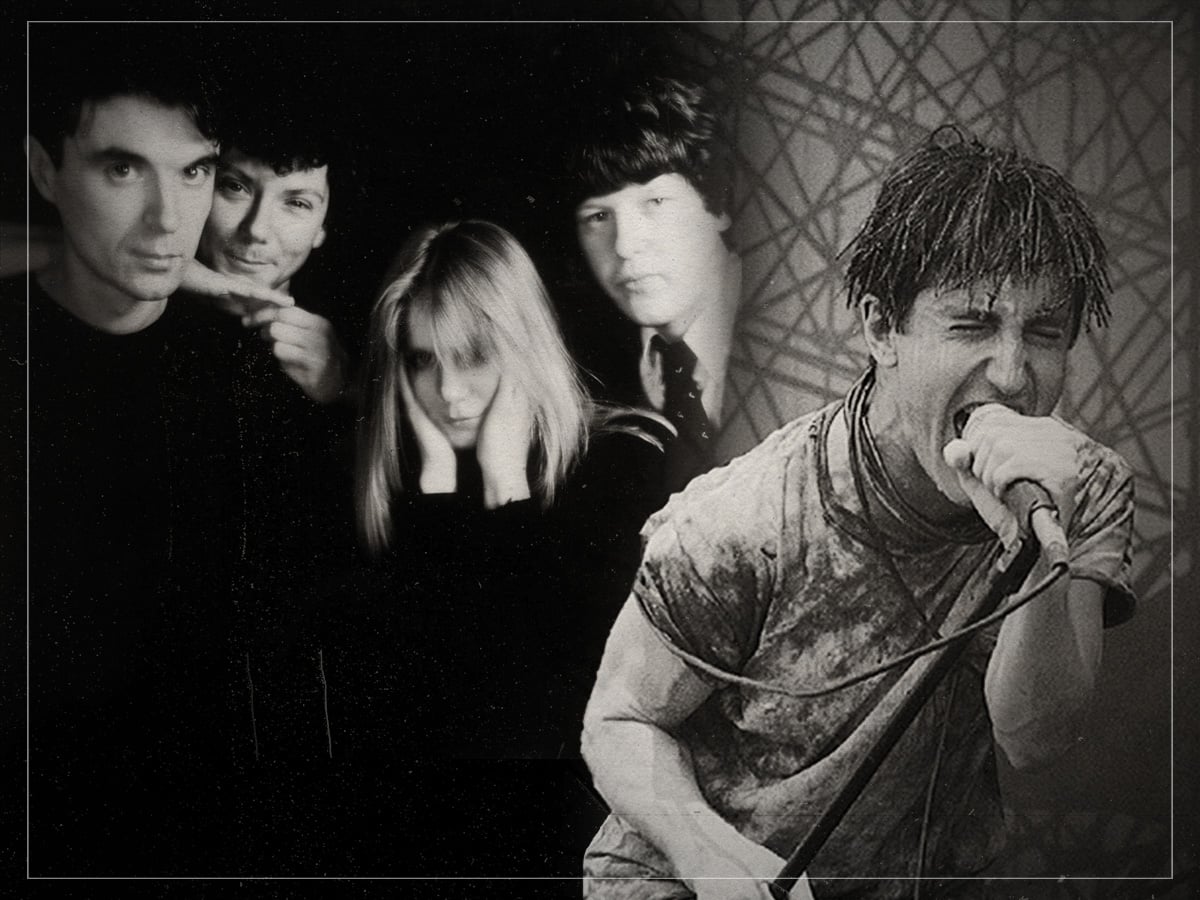
(Credits: Far Out / Sire Records / Rik Goldman)
Tue 24 March 2026 21:00, UK
Trent Reznor has always spoken candidly of just how important his record collection was in offering an escape from his rural upbringing.
Growing up in Pennsylvania’s small town of Mercer, the future Nine Inch Nails frontman’s road to industrial juggernaut would be shaped by several key albums that unveiled exactly the path needed to traverse on his musical journey.
Pink Floyd’s The Wall showed how to create a narrative cohesion, Tubeway Army’s Replicas struck a chord with its organic weld of electronics and post-punk, Ministry’s Twitch showed that keyboards could snarl with muscle, and virtually any of David Bowie’s golden album run set a standard of artistic courage that Reznor would carry all his life.
As a teen, one LP’s drop back in 1980 arguably proved to be the most foundational sonic template for Reznor’s budding compositional chops. “And then suddenly this album landed,” he told Vinyl Writers in 2020.
“A strange, synthetic, polyrhythmic piece of art with African influences, which confused me in every way.”
He added, “With good albums, it is the case that at the beginning, you don’t know what you are actually dealing with. But you are fascinated by it, and with about six listens, it slowly reveals itself to you. With the tenth listen, you are completely thrilled, but even when you listen for the 30th time, you still discover something new.”
For their fourth album, Talking Heads made their boldest step forward in their most alien and bristling groovy offering yet. Such a spiky flourish has been harnessed on 1979’s Fear of Music, but the band and Brian Eno’s second studio collaboration on the following year’s Remain in Light slapped together its leftfield influences into a more synergised whole. Aural expanse, Afrobeat licks, electronic washes, and mutoid funk all wriggle and wrestle together fractiously while still gleaning a pop hook at its weird centre.
Such skills would prove instrumental to Reznor. As Skinny Puppy and Ministry’s hardened industrial belligerence would imbue the nascent Nine Inch Nails’ tougher take on synthpop, 1989’s Pretty Hate Machine debut would glow with Remain in Light’s unorthodox approach to popcraft. Amid its belligerent pummel, Reznor and co-producer Flood lace the electronic angst with a smattering of all kinds of disparate samples, from Christmas rap songs, East African warrior chants, and Scritti Politti sampled and warped amid the drum machine punch.
“Remain In Light taught me that,” Reznor concluded. “The record enlightened and changed me. It showed me what music can do, how song structures can look like, or how drum parts can interact with other parts. Since I started making music myself, this wonderful album has been something I can always consult. The great thing is that the record can still be approached from so many different directions without losing its puzzles.”
Such intriguing permanence is a quality that hovers all over Nine Inch Nails’ work at their best, The Downward Spiral and The Fragile offering new dimensions and insights just as Remain In Light had all those years previously.
