

Former US talk show host Ellen DeGeneres submitted plans for traditional stone stables to stay ‘long term’ at her flood-hit Cotswolds property in the United KingdomTom Bevan, Alex West Assistant Entertainment Editor, SWNS and Emma Slee
21:59 ET, 24 Mar 2026

Ellen DeGeneres and Portia de Rossi are among the many A-listers who moved out the United Kingdom(Image: Dave Benett/Getty Images for RH)
Talk show host Ellen DeGeneres has submitted plans for horse stables to remain ‘long term’ at her flood-hit Cotswolds property.
Ellen and her partner Portia De Rossi purchased Kitesbridge Farm near Burford for £15M ($20.1M) in 2024 and spent a reported £7.5M ($10M) on external and internal renovations.
But they relocated after less than a month to find somewhere more suitable to accommodate Portia’s passion for horses. It was believed they would sell the property when it was listed last July but it failed to attract a buyer and was affected by flooding from the River Windrush that runs through the 43 acre site. It comes as rumors brew about Ellen’s next career plan.
READ MORE: Donald Trump’s ‘worrying’ speech sparks concern as viewers all say same thingREAD MORE: Trump makes ‘idiotic’ 5-word comment while looking around Elvis’ home
There had been reports that a sale was ‘close’ after she had ‘secretly’ slashed £4.5M ($6M) off the £22M ($29.5M) asking price and the house was taken off the market as a condition of sale, reports Gloucestershire Live.
But new planning documents reveal they now have ambitions to make it their ‘long term home’ if their bid for new stables is successful.
In a design and access statement to support their application to West Oxfordshire District Council, their representatives said, “The applicants carried out a successful renovation of the house last year and wish to make this their long term home.
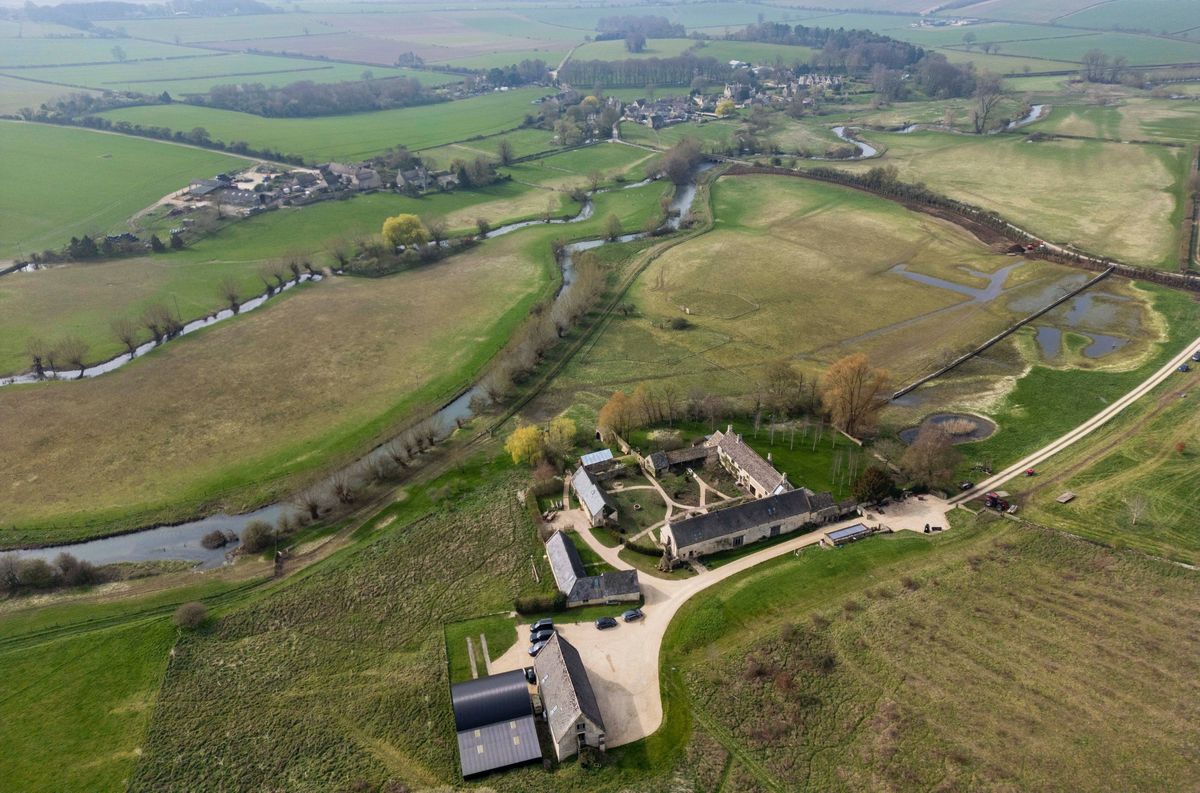
They submitted plans for renovations to the home
“One of their passions is horses and although the building group is large, there is no provision for horses or for their training and bringing up. This application seeks to address this in as sensitive a way as possible.”
The complete planning proposal, which aims to demolish an agricultural structure and construct stables in its stead, will be reviewed by West Oxfordshire District Council.
Ellen has previously discussed the necessity for a property with equestrian facilities and stated in an earlier comment, “When we decided to live here full time, we knew that Portia couldn’t live without her horses. We needed a home that had a horse facility and pastures for them.”
The planning submission described the property owners as “horse owners” who do require stabling for their horses.
The planned structure would accommodate two loose boxes and the storage of all related equestrian equipment within a single building.
Designs showed it follows traditional architectural style, to be constructed in stone with a pitched tile roof and has been created to serve as a natural addition to the existing group of buildings.
The submission added, “There are no nearby neighbors and thus no impact on residential amenity that would result from the provision of stabling.”
The proposal reveals alternatives were considered which examined the larger American barn style, or a group of smaller byre ranges forming a U-shape.
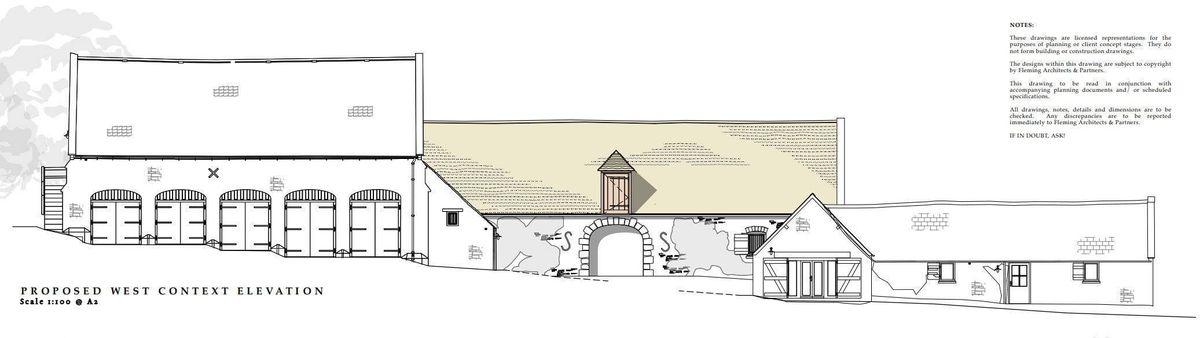
They requested the approval to be expedited
It added, “Both are traditional per se, but the American barn was felt to be too large and might easily dominate the pleasing building cluster to the west; a U shaper byre range conversely not providing the cover and practicality required.
“Hence, the ‘in-between’ option is proposed, a traditional stone building, single range, built in the local vernacular, so as to blend in to the existing building group.”
Representatives for Ellen explained the structure had been strategically positioned to align centrally with the granary barn to the north and byre range to the south to “create a pleasing viewpoint on approach.”
The statement continued, “The building largely designs itself: sufficiently wide to provide stabling and cross-ties, and tack room at one end and feed/storage at the other.
“A first-floor level is provided, accessed by tallet steps. This is really the resulting space from the design of the building, and would be used as a hayloft or for storage, but is not central to this application.
“Overall, when comparing the existing shed against the proposed stable building, it is likely the traditionally designed stone building would sit better in the landscape, and appear to belong more coherently to the adjacent building group.”
The submission featured an appeal for council planners to greenlight the proposal as “quickly as possible.”
It wrapped up, “The stable building has been sensitively designed, sited and orientated, to reduce visual massing and tie the new stable building into the existing building group.
“Indeed when comparing the existing agricultural shed — which is to be demolished — against the proposed stable building, it is likely the traditionally designed stone building would sit better and belong more coherently to the adjacent building group.
“Overall we feel this scheme would give great enjoyment and amenity to the site without any significant harm, especially alongside the removal of the agricultural shed, and accordingly we hope this meets with officer approval.”
No public feedback or representations have been submitted to date, and West Oxfordshire Council will make a decision on the application at a future time.
For the latest local news and features on Irish America, visit our homepage here.