
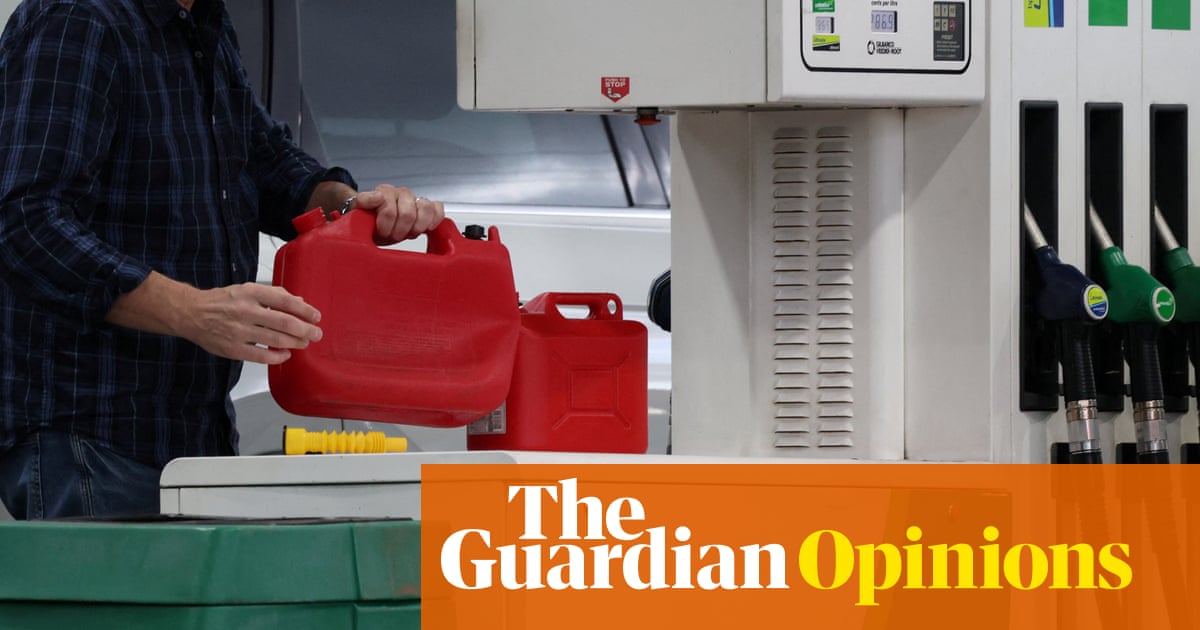
As Australians stock up on jerry cans amid fears of oil shortages due to war in the Middle East and politicians label such behaviour as “un-Australian”, a familiar blame game is taking place.
But pointing the finger at “panic buyers” misses the point, obscures the real problems and can make matters worse. We can learn a lot from the way we handled – and mishandled – the Covid-19 toilet paper crisis.
During the Covid lockdowns in Australia, toilet paper was suddenly in short supply, prompting genuine anxiety and a wave of lighthearted memes – along with similar messages berating “panic buyers” for their behaviour. We analysed how “panic buying” was portrayed in the media and by politicians, revealing how this coverage can fuel anxiety, drive bulk buying and stigmatise already vulnerable groups.
Blaming “panic buyers” tends to obscure what’s really going on. During the lockdowns, bulk buying was framed as irrational, antisocial and immoral. Individual shoppers were blamed for creating disorder and chaos through panicked, frenetic behaviour. They were described in ways usually reserved for animals: moving in collective nouns such as “packs”, “herds” and “hordes” while engaging in such behaviours as “flocking”, “stripping” and “swooping”. We are already seeing headlines calling stockpiling petrol a “dog act”.
This language distorts the problem and dehumanises the people involved.
Adaptive purchasing behaviour (a more objective term that is preferred by researchers) is a deeply human and historically common response to uncertainty. People have often stockpiled during times of disaster. What people buy in bulk depends on the context: it was clothing and fabric in the US during the second world war, duct tape in Washington DC during a terrorism threat and fuel in the UK in the lead-up to Brexit. There also was a surge in toilet paper consumption in Japan during the oil shock of the 1970s.
In all of these cases, focusing on individual behaviour distracted from the global crises and structural issues that produced feelings of uncertainty. Similarly, today’s fuel panic risks being misdiagnosed as an individual moral failure rather than a systemic one.
double quotation markIn addition to creating ‘villains’, crisis narratives also cast ‘heroes’ and ‘victims’ in misleading ways
We also found that not all “panic” is treated equally and who gets blamed matters. During the Covid lockdowns, media narratives disproportionately blamed lower-income shoppers. Recycled images of people filling up their trolleys with toilet paper or scuffling over products in supermarket aisles often featured buyers from disadvantaged suburbs. There was little coverage of the fact that Australia’s wealthiest suburbs accounted for the highest demand for the online toilet paper brand Who Gives a Crap, quickly driving it out of stock. In other words, wealthier Australians were also stockpiling but in ways that were less visible and less criticised.
Moreover, as often happens in times of crisis, migrant communities tend to be scapegoated. In the coverage of “panic buying” during Covid-19, the behaviour was regularly referred to as “un-Australian”. Rumours were promulgated in the media by “anonymous sources” that the Chinese community was buying in bulk to sell overseas. The energy minister, Chris Bowen, has just called out buying jerry cans as “un-Australian”. We need to resist this familiar terrain.
In addition to creating “villains”, crisis narratives also cast “heroes” and “victims” in misleading ways. While in-store shoppers were vilified during Covid-19, Australia’s supermarket giants were positioned as either innocent victims or as virtuous “heroes” saving the day. This framing deflected attention from the role of these large institutions in monopolising the industry and shaping (and profiting from) the scarcity.
We must continue to scrutinise fuel markets and distribution failures. Some commentators have argued that the Australian government has systematically reduced its oil refineries over time and failed to plan ahead for oil shocks that have happened before and will happen again.
Another planning problem relates to equity and access. The greatest need for fuel is often in regional, remote and farming areas, where there’s a strong reliance on independent fuel suppliers now bearing the brunt of the shortages.
And, as the cost of living continues to increase, it is understandable that those already living on the edge may feel a need to buy extra petrol now before the price goes up. By portraying individual “hoarders” as the problem, attention shifts away from corporate profiteering, bad policy decisions and crisis management failures.
Perhaps most importantly, saturated media and social media coverage of “panic buying” can amplify the behaviour it condemns. The intense focus on empty shelves and panic during Covid-19 helped create a feedback loop: the more people saw shortages and community anxiety, the more they rushed to buy. Likewise, constant coverage of panic, crime and competition over fuel risks exacerbating demand rather than calming it.
Past examples of adaptive purchasing behaviour are a good reminder of the role that commentators and authority figures can play in fuelling or defusing consumer anxiety in times of crisis. Framing fuel stockpiling as “panic buying” risks scapegoating individuals, amplifying fear and distracting from the real problems we need to focus on solving – namely, Australia’s failure to properly plan for and regulate its fuel security.
Tarryn Phillips is a medical anthropologist and associate professor of crime, justice and legal studies in La Trobe University’s department of social inquiry. Danielle Couch is a public health researcher, health sociologist and adjunct senior research fellow at Monash Rural Health. Carmen Vargas is a research fellow at Deakin University’s school of health and social development