
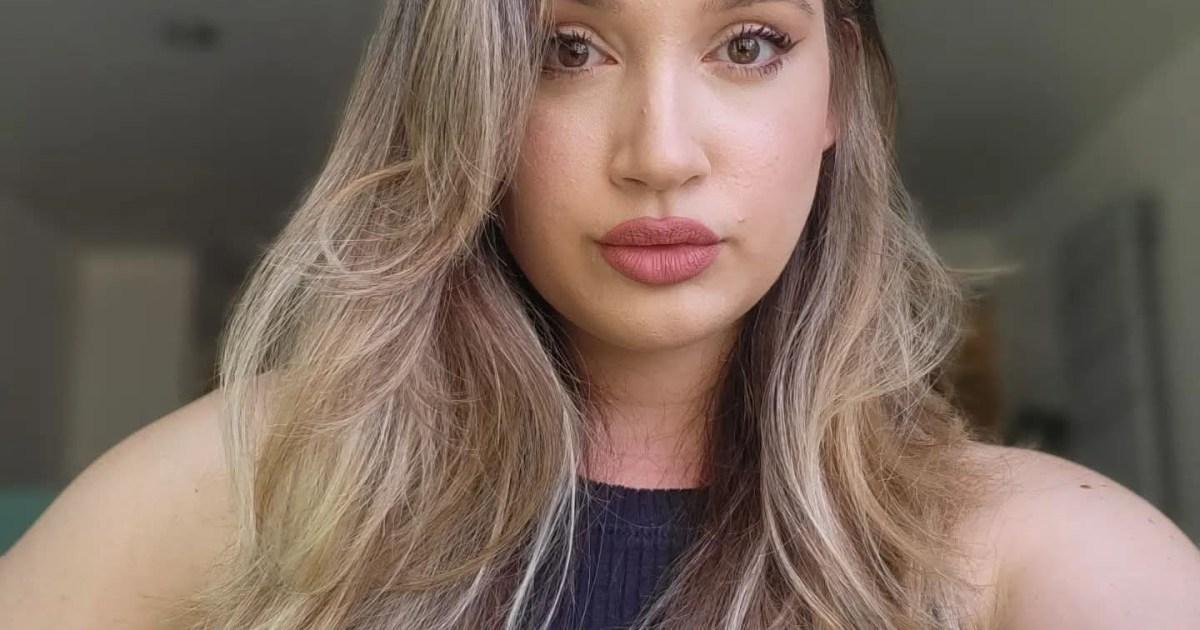
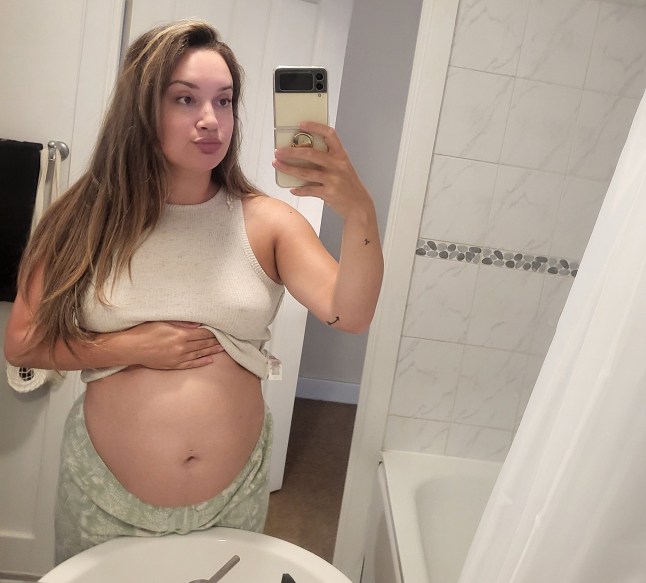
Laura with ‘endo-belly’ – painful bloating caused by the inflammatory condition (picture owner supplied)
When Laura Packer’s first period arrived on her 12th birthday sleepover, it knocked her sideways.
‘I remember looking down at my pyjamas and they were covered in blood. I was really sad because they were a birthday present and I loved them.
‘And I was scared. I thought – this can’t be a normal,’ Laura, now 31, recalls.
It was a moment that marked the beginning of years of agony.
‘My periods were like a massacre – I would leak through everything,’ Laura, from Bedfordshire, tells Metro starkly. ‘I had the most horrendous pelvic pain, to the point I would be sick and have terrible migraines.’
Although she looks comfortable as she chats over Zoom, the reality is Laura has spent years masking the pain every day with tramadol, morphine, heating pads and a tens machine.
Describing the agony she often lives with, Laura explains: ‘It’s like knives inside you, tugging at your organs and stabbing them. And a twisting pain, like someone has grabbed your ovaries. Not just on your period, but every day.’
When her periods first started, Laura hoped the pain would subside as they settled down, but when they didn’t, she made an estimated 20 trips to her GP for help.
‘I was told it was anxiety, that I needed to drink milk [the vitamin D can help with period cramps] and to go for walks. I was told to test for sexually transmitted diseases, even though I was a virgin,’ she remembers.
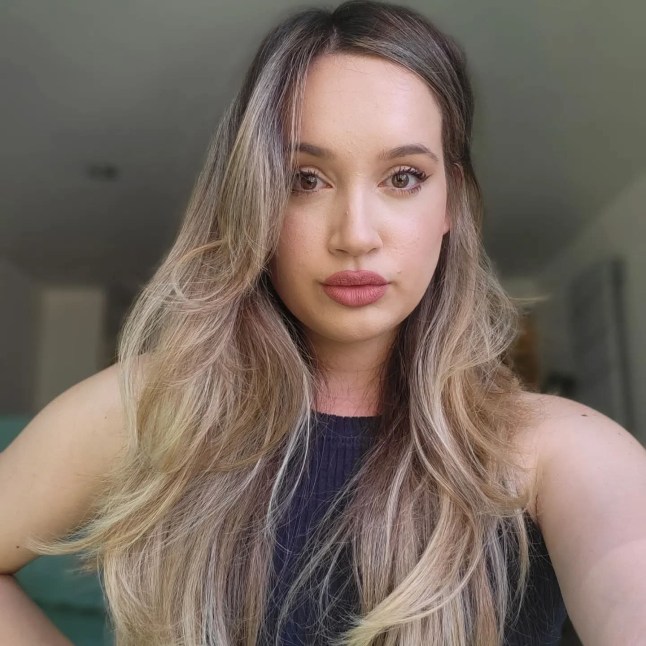
Endometriosis has taken over Laura’s life since the age of 12 (picture owner supplied)
The pain was even too much for Laura to use tampons, so she would double up on thick incontinence pads, which would leak at school.
‘I felt gross, like there was something wrong with me,’ says Laura, who manages a statutory advocacy service for people in prisons, hospitals and care homes.
‘I was this weird girl who was always leaking, which was really embarrassing at that age. It made me very secretive and I became very good at hiding the bleeding. It was hard to concentrate in school when you’re in that much pain and feeling self-conscious.’
Laura carried tissue everywhere, in case she needed to clean a seat when she left it, and had to plan all her activities around the nearest toilet.
Despite this, she did well at school and went to Goldsmiths, at the University of London, where she juggled her sociology degree with continuing cycles of pain.
At 19, Laura was finally diagnosed with endometriosis, following exploratory surgery. Affecting more than 1.5 million women in the UK, the condition sees cells similar to those in the lining of the uterus grow in other parts of the body, causing a raft of symptoms.
It takes an average of more than eight years to be diagnosed, according to Endometriosis UK, while a survey by Holland & Barrett reported that more than a third of women say menstrual symptoms have been dismissed by a healthcare professional. However, one of Laura’s doctors was an endometriosis specialist, and as soon as he saw her bloating – often known as endo-belly – he correctly predicted her condition.
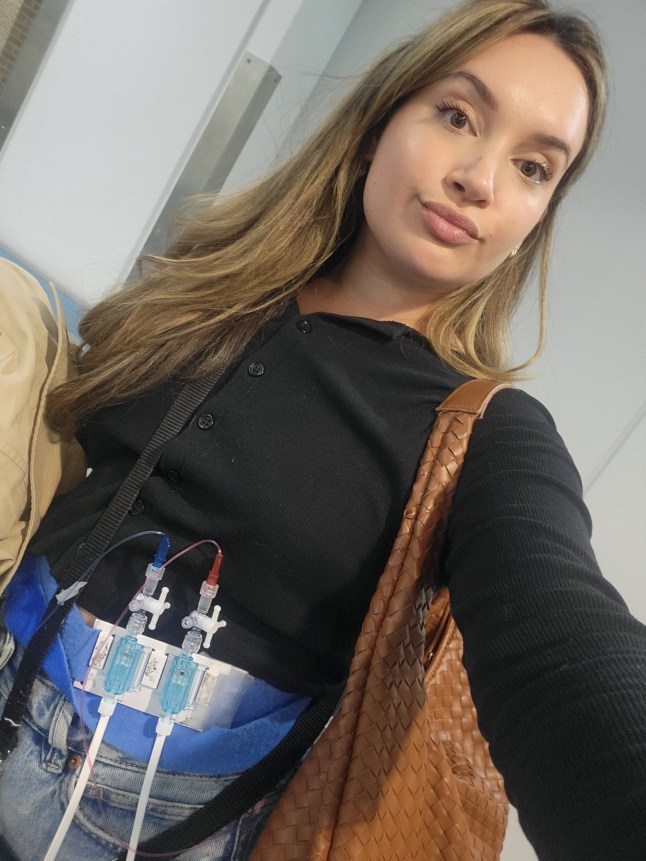
Laura has undergone six surgeries to try and alleviate the pain (picture owner supplied)
‘I was so relieved to get the diagnosis, because so many medical professionals made me feel I was being dramatic, or making it up,’ she remembers.
‘I’d heard a lot of: “Oh, it’s just a bad period. You’ll grow out of it. Come back in a year, see how you are.” And: “You’re functioning, you’re going to school, you’re going to college, you’re working. So it can’t be that bad.” It was frustrating. I felt so dismissed. So I was just relieved that I wasn’t being pathetic – or insane.’
That same year Laura had her first surgery to remove some of the endometriosis, which provide a few months’ relief. Then, a year later, she was given medication to stop her periods, which forced her into artificial menopause and caused her hair to fall out. She also suffered frommemory problems and extreme bouts of rage.
‘One morning I got up, took a broom and just started beating the boiler. I have no idea why. Nothing had triggered it. I just felt rage like I never have before,’ Laura recalls.
Eventually, she abandoned that drug and has since had six operations to try and remove more of the endometriosis.
The condition means that Laura also suffers from cysts – or endometriomas – which form on the ovaries, and can suddenly burst. Filled with thick, old blood, it can be agonising, says Laura, recalling one occasion on her graduation day, when she was 21.
‘I went to stand on stage, and I could feel blood had gone all the way down to my feet. I had to rub my legs together to smear it so that it didn’t hit the floor,’ she explains. ‘Everyone thought I was having a panic attack, but my dress and graduation gown was saturated with blood. It was really embarrassing.’
Instead of celebrating with her friends, Laura got a taxi home, took painkillers and went to bed in tears. She didn’t realise at the time that she should have gone to the doctor, as the rupture could have caused an infection.
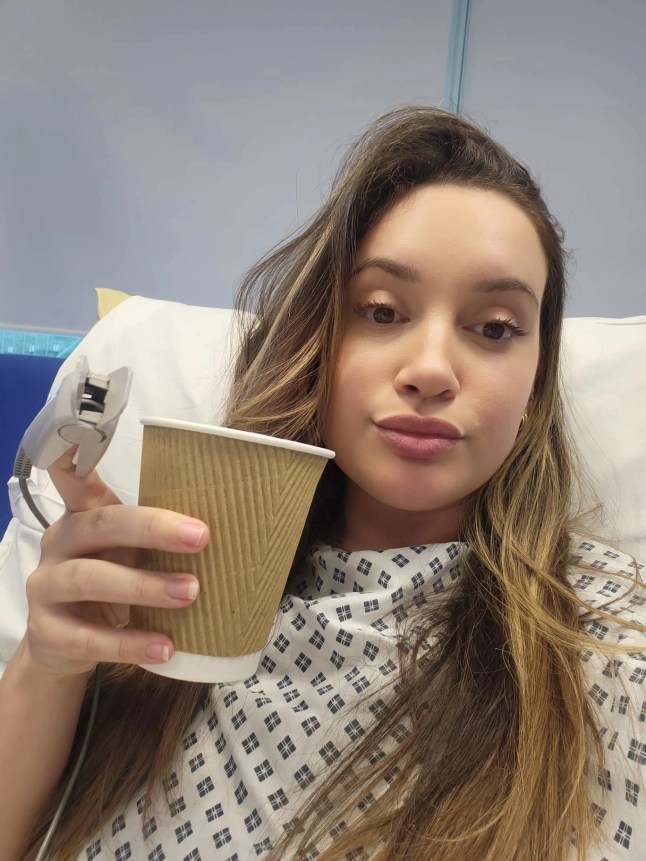
Laura is waiting for surgery that could transform her life (picture owner supplied)
Following her diagnosis, Laura has been posting about the realities of living with her condition on Instagram as @endometriosisandme. She explains how it can attack the nerves, muscles, and structures that control her bladder and bowel.
‘I was left urinary incontinent at 21 and doubly incontinent at 26,’ she says. ‘At first, it was frequency, urgency and then it turned into leaking.
‘It was awful. You can hide pain and do things to try and prevent it, but incontinence is a lot harder to hide. It’s stopped me from doing so much; going to parks, beaches, and travelling.’
Even going to a shopping centre is difficult, admits Laura. Anything more than a half hour drive needs careful planning and all the things that we are told improve our health and mental wellbeing – running, swimming, a walk in nature – are out of bounds.
Having a relationship was something Laura always assumed would be impossible due to her condition, but in lockdown she met Owen online. The pair quickly fell in love and within two months had moved in together.
However, her condition means sex is too painful, and while they would like to have a baby one day, Laura has no idea whether that will be possible and how much the surgeries have affected her fertility.
‘I used to get horrendous pain with sex, but with opioids, I could tolerate – not enjoy – it. But for the past three years I have been unable to have sex.Every time Owen and I try, I am in agony, and have to stop. He is really understanding.’
Laura explains sadly that she has also had to give up on her dream of becoming a psychologist because she was unable to sit in lecture theatres for long periods, and, despite being engaged to Owen for three years she is unable to plan the wedding until she knows what is happening with future operations.
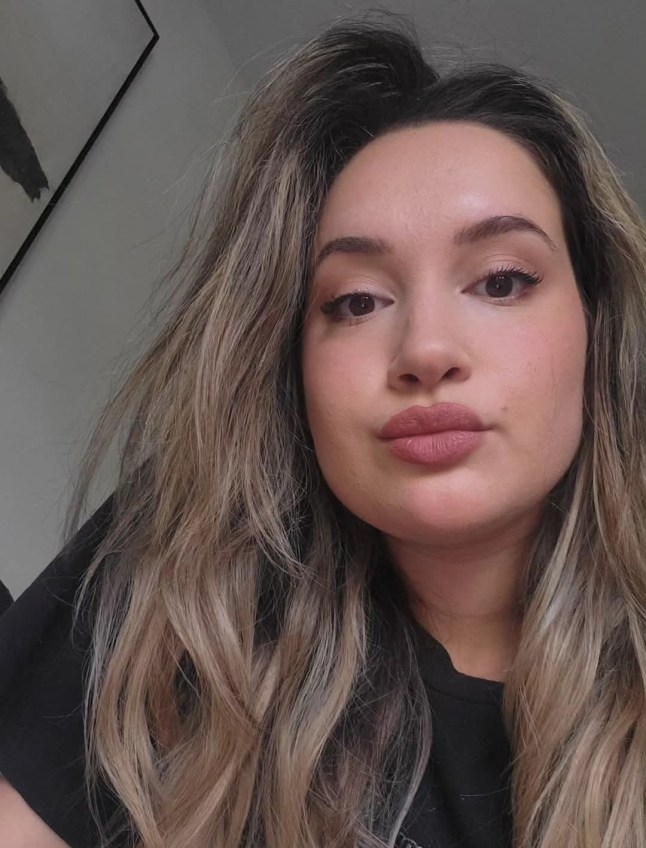
Endometriosis has affected Laura’s career, friendships and family life (picture supplied)
She has been told she can have a hysterectomy, but that it won’t be curative. The next step is to try Botox in her bladder and sphincter, or possible bladder removal.
‘I just want my bladder out. Because it causes me so much pain. I would have the surgery now if it could give me some quality of life back,’ says Laura.
‘It is bleak to live with. I have been on antidepressants since I was 15, and incontinence really impacts my mental health, giving me constant anxiety and overthinking about toilets, planning things, whether I can go out. It keeps me home a lot.
‘The only light at the end of the tunnel is that surgery could repair my bladder – but there are a lot of risks, implications and complications to that surgery – which may not even work.
‘It is frustrating and unfair that young women are going to the doctors and being dismissed. If this was a male disease, I believe there would be a cure and much better support.’
‘This is not a period disease’
Laura is speaking out as part of a Holland & Barrett campaign, which in partnership with The Endometriosis Foundation, has created the very first ‘Endo Pants’ to illustrate the symptoms of the chronic and inflammatory disease.
‘Most people have heard about endometriosis, but they don’t always understand the extent of it,’ she says. ‘I just want people to get how much it can affect every part of your life. This is not a period disease; it’s a full body, inflammatory disease.’
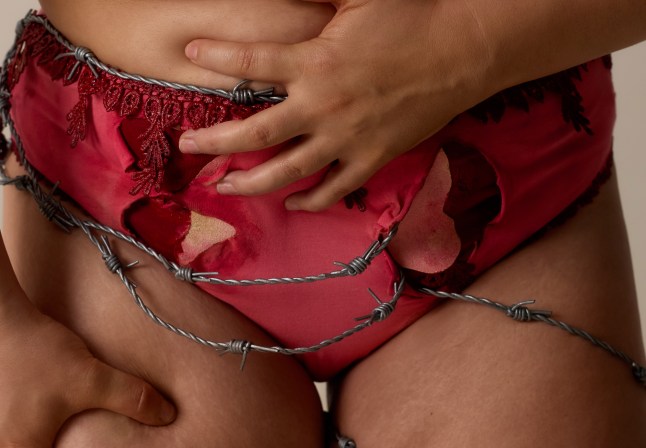
Endometriosis can cause intense and complex abdominal pain (By Rebecca Spencer)
If you are suffering from endometriosis, or other conditions polycystic ovaries, fibroids or problems with period symptoms or your hormone cycle, you can book a free appointment online with a Menstrual Nurse at: https://www.hollandandbarrett.com/info/menstrual-nurse/
Arrow
MORE: Excluding trans girls from the Guides isn’t just unfair – it’s dangerous
Arrow
MORE: Pain under my rib led to being diagnosed with a cancer I’d never heard of
Arrow
MORE: We got my husband’s diagnosis – he died within days
Comments
Add Metro as a Preferred Source on Google
Add as preferred source
The Slice
Your free newsletter guide to the best London has on offer, from drinks deals to restaurant reviews.