

It was the early Eighties, and Antonio Banderas was just starting out as a theatre actor, playing venues in Malaga and Madrid. One day he bumped into Pedro Almodóvar at Café Gijón in Madrid. “A chubby, funny bloke who showed up with a red plastic briefcase,” Banderas recalls. “He told me that I had a romantic face and that I should act in films and then left. I asked my friends who he was and they said he was a director.”
Almodóvar gave Banderas, then in his early twenties, his film debut, casting him in the screwball comedy Labyrinth of Passion (1982). But it was a role in Almodóvar’s Women on the Verge of a Nervous Breakdown in 1988 that thrust Banderas into the spotlight. He pitched up in Hollywood, with Madonna putting him on stage in Truth or Dare, her 1991 pseudo-documentary of a concert tour in which she publicly lusts after Banderas, as well as introducing him to people in the industry (she was dating Warren Beatty at the time). International fame followed, including acting alongside Tom Hanks in Philadelphia in 1993, the year after Billy Crystal had introduced him at the Oscars as “the sexiest man in the world”.
 With director Pedro Almodovar and actor Penelope CruzGetty images
Banderas had it all. He dominated Hollywood with hits that included Desperado, Evita, The Mask of Zorro, Spy Kids and Once Upon a Time in Mexico, and he became the voice of Puss in Boots in Shrek 2. His films have grossed a reported $7.7 billion, and he was half of one of Hollywood’s most famous couples when he was married to Melanie Griffith from 1996 to 2015.
And then? He gave up the Hollywood lifestyle.
The best thing that ever happened, he has said, was having a near-fatal heart attack in 2017. “Seriously. Mine was a really serious warning. It changed the way I look at life.”
He was living between the US and the UK, with a mansion in Cobham, Surrey. In a flash he quit smoking, sold his private jet and returned to Malaga, the city of his birth, where he bought a theatre. “Faced with death, it made me look back and realise that I am, in fact, a theatre actor,” he tells me, shrugging his shoulders.
These days Banderas, 65, lives in a flat in the historic centre with his partner, Nicole Kimpel, near the landmark El Pimpi, which he owns, among other restaurants.
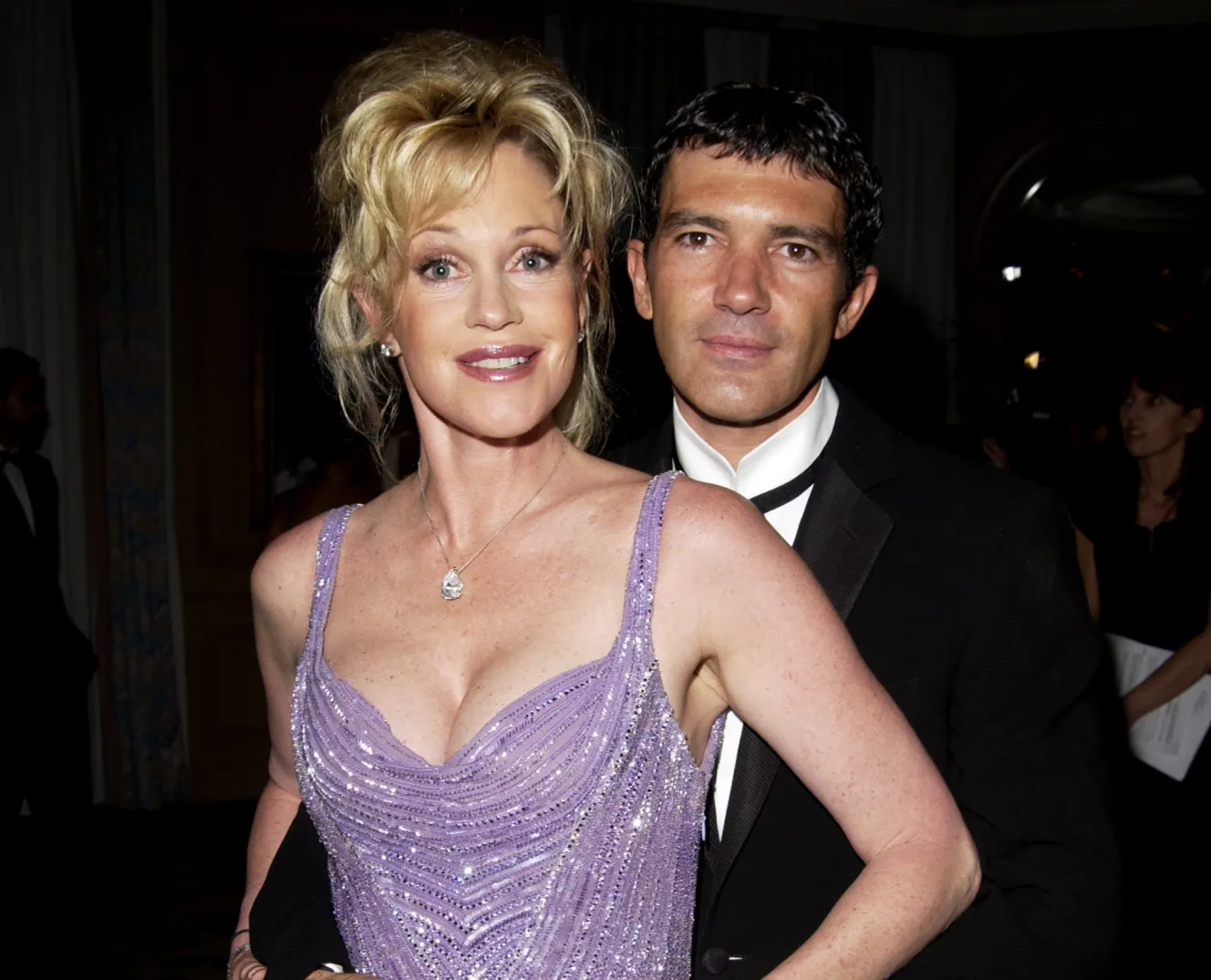 Melanie Griffith and Banderas were married for 19 yearsGetty IMAGES
Hollywood films pay his bills, but it is his not-for-profit theatre, Teatro del Soho, that is now his greatest passion — and a driving force behind the southern Spanish port city’s cultural renaissance. “I have never been so happy,” he says.
In his small theatre dressing room, which is cluttered with artefacts, Banderas is in the animated and expansive form characteristic of his native Andalusia. Lunging forward to emphasise a point as if wielding a sword like Zorro, the character he first played to acclaim in the 1998 film, he is constrained only by a bad back. “I pulled it picking up my dog,” he says. Admitting with a smile that Gypsy is a chihuahua, he adds: “But a big one!”
His heart attack has not affected his ebullience. Today he is overseeing a rehearsal of the theatre’s in-house orchestra, the Sinfonica Larios Pop del Soho, as it prepares for its annual concert dedicated to the processional marches of Holy Week. In Malaga the scent of azahar, orange blossom, is in the air, spectator stands have been put up for Easter’s processions and the city’s palm trees seem a long way from those of Hollywood. He will process with one of the city’s brotherhoods, some of whom march wearing pointed hats while others shoulder a four-tonne float topped with a statue of the Virgin Mary. The film star has taken part in the Semana Santa ritual since he was 15.
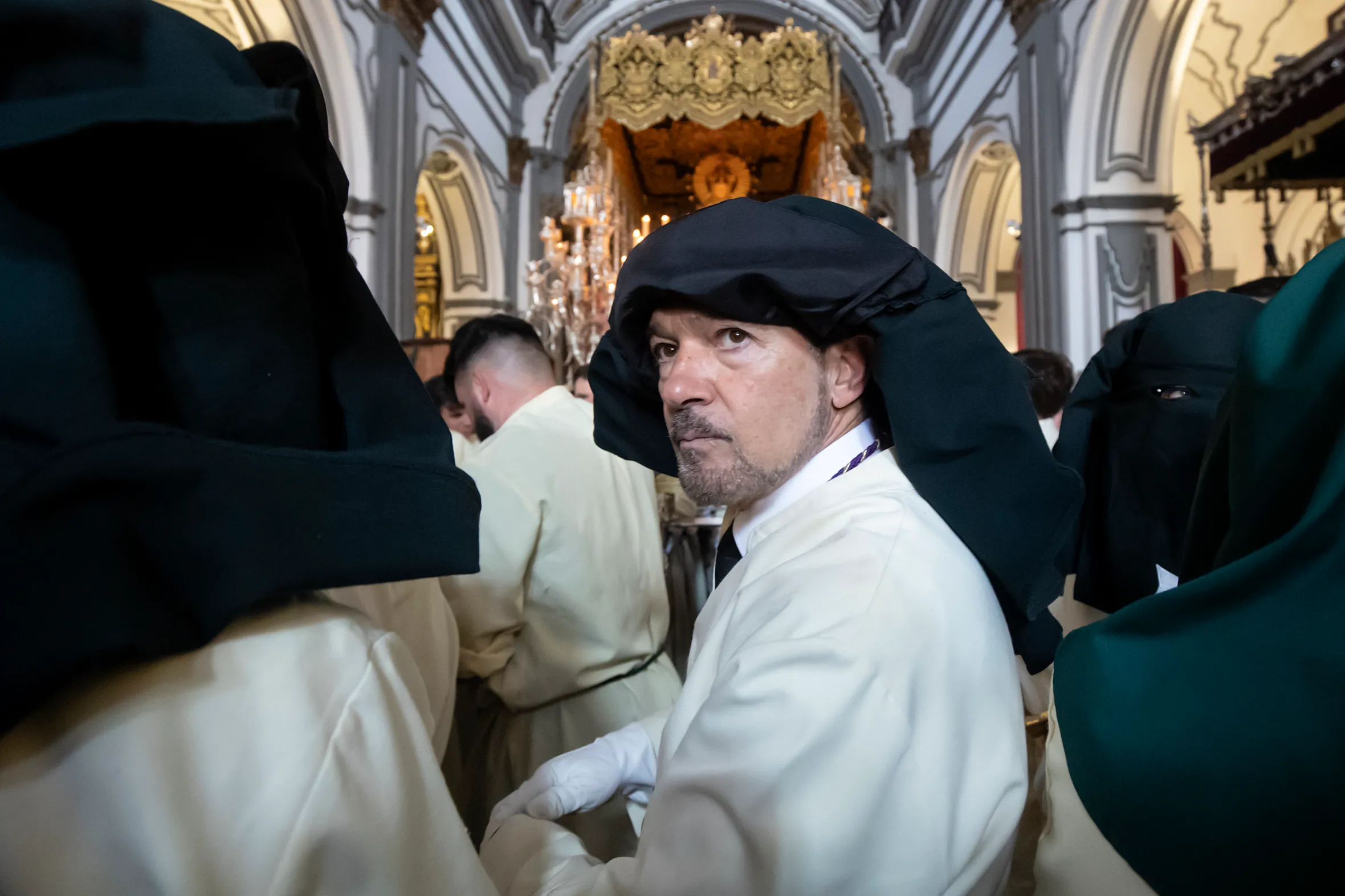 The Holy Week festivities are the “greatest theatre you can see”, he saysGetty IMAGES
His fellow members of the Brotherhood of the Most Holy Mary of Tears and Favours “call me ‘José Hollywood’”, Banderas says with a chuckle. “So it keeps me in touch with my roots, my neighbourhood, my people. I haven’t lost that connection over the years. Quite the opposite.”
Banderas describes the Holy Week festivities, with their sombre music, pageantry and high emotion, “as the greatest theatre you can see”. His theatre has deepened his popularity in Spain, where Banderas is regarded as a national treasure. What does he make of this possibly unique status in a country riven by deep political polarisation?
“Sssh, don’t mention it,” he quips in a conspiratorial voice like the one he employs for Puss in Boots. “It could end at any moment.”
Opened in 2019 with a performance of A Chorus Line, the theatre has premiered productions of musicals such as Company, Godspell and Gypsy that have gone on to national success. Next month it hosts Malaga’s first international dance festival, Tiptoe.
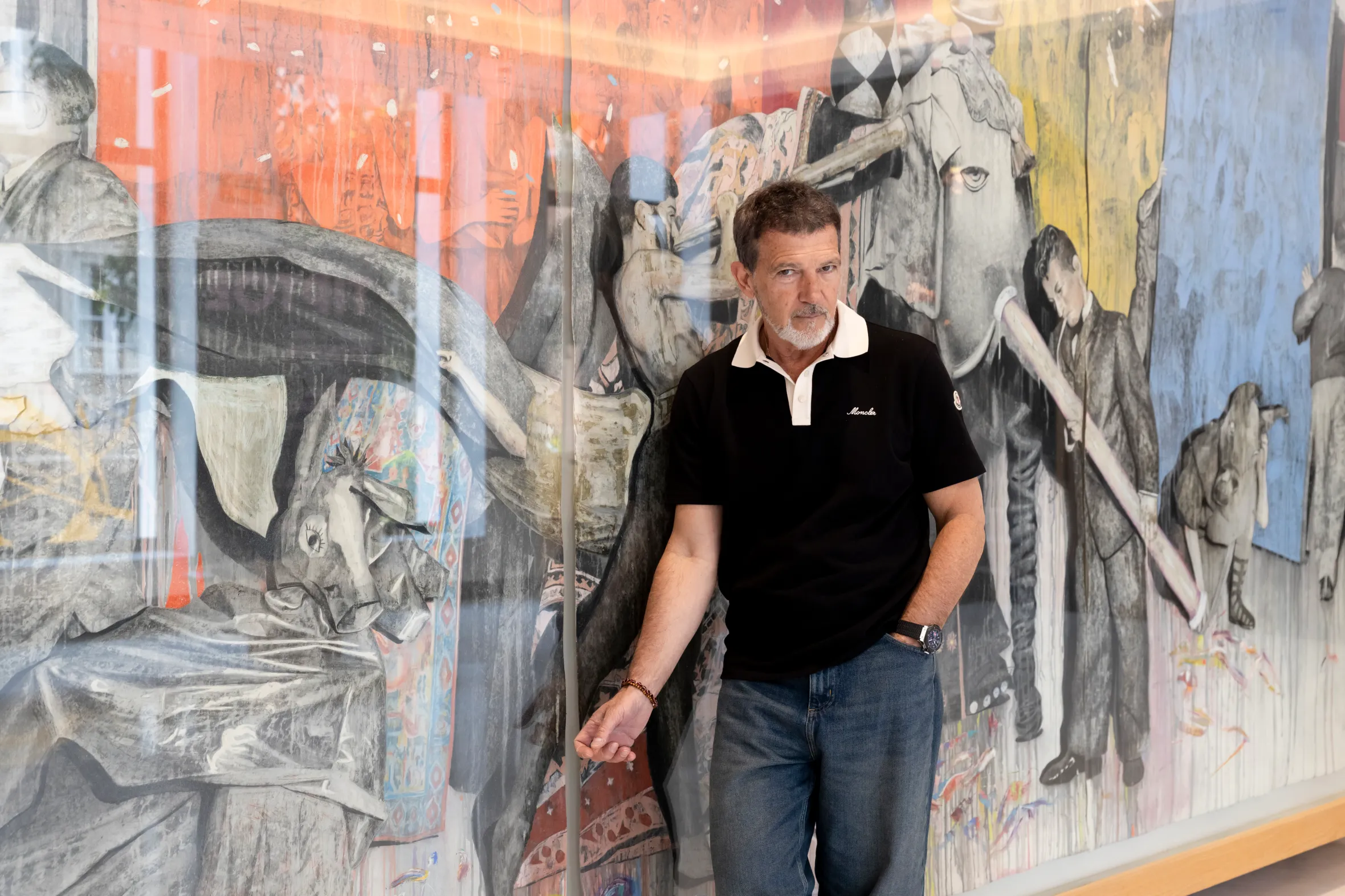 At his Theatre “Teatro del Soho Caixabank” in MalagaMarta Gonzalez de la Pena for The Times
“I did theatre on Broadway in 2003 with quite a bit of success — we won a Tony that year for Nine — but there were lots of musicals I wanted to put on at a time when there were no musicals in Spain,” he says. “Then the opportunity arose to buy this venue, a former cinema, which was in a state of disrepair and full of asbestos. It was awful. So I cleared it out and built it inside its shell.”
With musicals inspired by works ranging from those of Shakespeare to García Lorca, the Teatro del Soho has become an institution, bolstering Malaga’s international appeal alongside a handful of art museums, including one dedicated to Pablo Picasso, who was born in the city, and an outpost of Paris’s Pompidou Centre. Funded by corporate sponsors, and with zero public finance, it draws at least €200,000 annually from Banderas’s own pocket. He admits he is losing money to feed a “vice to which I am addicted”.
Theatre newsletter
Our chief theatre critic on what to see (and what to miss) in the West End and beyond.
Sign up with one click
Nearly half a century after he left Malaga to seek his fortune, his home town and theatre are once again his life. They are fused in his DNA. “When I first began to love the theatre I was very young; my father and mother were great theatre enthusiasts,” he says. Seeing musicals such as Godspell and Hair in Malaga in the Seventies, during the last years of the dictatorship of Francisco Franco, set him on the road to acting in the theatre.
“At the same time as my country was moving from a dictatorship to a democracy, I was moving from childhood into adulthood. Against all odds, musicals were premiering in Spain that brought a different kind of modernity to the stage,” he says.
As a fledgling actor in the city Banderas was arrested by Francoist authorities after his drama group protested against the detention of some fellow thespians. It is a tale that highlights the complexities during the regime of even family life.
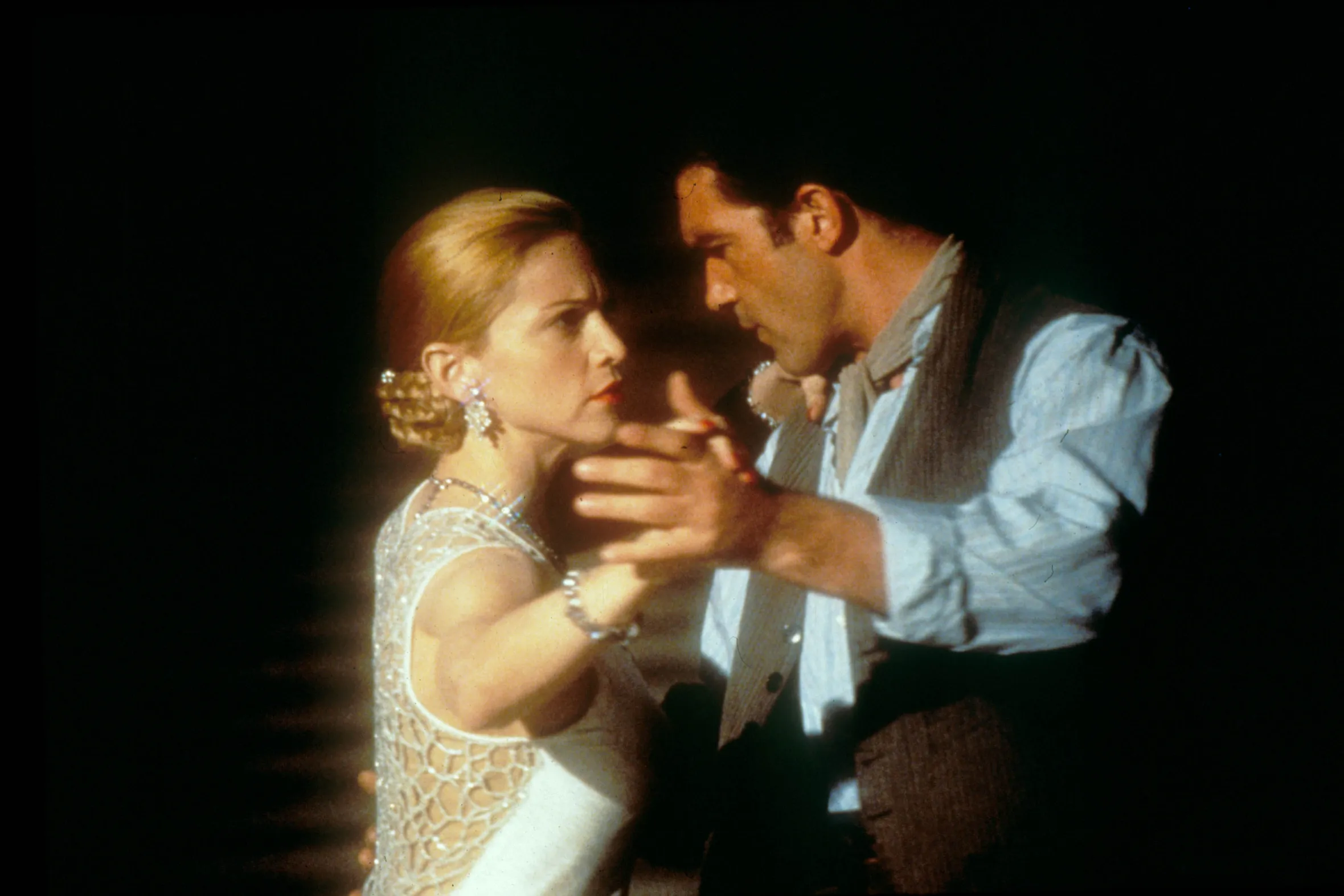 Madonna and Banderas in Evita Moviestore/Shutterstock
“I was on stage dressed as a mime, with a white face, black tears. I saw something shining in the audience,” Banderas says, laughing again. “It was police helmets glowing in the dark. They got everyone down on the floor, handcuffed us and took us to the police station. When we got there my father, who was the chief inspector of the Malaga police, looked at me and said, ‘Is that you? What are you doing here?’” They were all released, to the relief of his schoolteacher mother.
Banderas calls theatre “a true act of civilisation”. His theatre, he insists, has an educational mission to chip away at the last vestiges of what he says is Spain’s “huge inferiority complex”, dating from the decades of dictatorship.
He admits having suffered such a mindset. The international success of Spanish sports stars such as Seve Ballesteros started to change that. Then came his own “big leap to Hollywood, which had been off limits to Spaniards”, he says, adding: “I didn’t speak English, but little by little I made a career for myself there. I later married an American woman [Griffith; they had a daughter together and he became stepfather to the actress Dakota Johnson] and my life changed, my insecurities disappeared.”
 Banderas became a stepfather to Hollywood actress Dakota Johnson in 1996Getty Images
He pooh-poohs his old friend Almodóvar’s claim that Madonna treated both Spaniards “like bumpkins”. But he affirms that on arriving in America he was told that as a Spaniard he would play only villains in Hollywood.
“They said, you are here, like the blacks and the Hispanics, to play the bad guys,” he says. “The problem was a few years later I had a mask, hat, sword and cape and the bad guy was Captain Love, who was blond and had blue eyes.” He adds: “Even more important is Puss in Boots, because it’s for young kids. They see a cat that has a Spanish, even an Andalusian accent and he’s a good guy.”
Spain is now booming, the envy of bigger economies. Malaga is bustling and spruce, a far cry from the shabby former industrial city that tourists once bypassed on their way to the resorts of the Costa del Sol. Meanwhile, Café Gijón in Madrid has just closed, to be reopened as a tourist restaurant. Overtourism also blights Malaga’s old centre. “Perfection doesn’t exist,” Banderas says. “That said, today’s Malaga is much better than the Malaga I left behind.”
As Banderas watches his orchestra rehearse a funeral march that he composed as a tribute to his father, he says: “A few months before he died we were watching the procession of the Holy Sepulchre pass by on the night of Good Friday and suddenly, without looking at me, he said: ‘I think there’s nothing. I think there’s nothing after death.’ My father, who was very Catholic, said that.”
And Banderas’s thoughts on his own death? “I will come back as a ghost,” he says. “To haunt my theatre.”