
I love this passage, because it captures that goosebump moment of entering the inner sanctum for the first time. For so many sporting tragics, religious metaphors are inescapable. The congregation. The songs. The spiritual transport. And the other common theme that crops up – as long as your taste runs to turfed activities rather than basketball courts, ice rinks or motor-racing tracks – is the Platonic ideal of that luminous green.
Life-changing experience
Not everyone is as upbeat as Collins, an extroverted figure who was almost as famous for his garish trousers as he was for his tennis reports. In Nick Hornby’s memoir Fever Pitch – a book which changed the way people looked at football writing – the author couched his first trip to Highbury in 1968 amid the misery of his parents’ recent separation. When his father suggested going to the game, he wasn’t particularly excited. As a nerdy 12-year-old, his priority was to avoid another of those evenings when “we sat in a deserted hotel dining room … in more or less complete silence.” But the experience changed his life.
“What impressed me most was just how much most of the men around me hated, really hated, being there,” Hornby wrote. “As far as I could tell, nobody seemed to enjoy, in the way that I understood the word, anything that happened during that entire afternoon. Within minutes of the kick-off there was real anger [‘You’re a DISGRACE, Gould. He’s a DISGRACE!’ ‘A hundred quid a week? A HUNDRED QUID A WEEK! They should give that to me for watching you.’]; as the game went on, the anger turned into outrage, and then seemed to curdle into sullen, silent discontent. Yes, yes, I know all the jokes. What else could I have expected at Highbury? But I went to Chelsea and to Tottenham and to Rangers, and saw the same thing: that the natural state of the football fan is bitter disappointment, no matter what the score.”
Fever Pitch is a classic example of a sports book that isn’t a sports book, because it said more about Hornby himself than it did about Arsenal. For all the insights of its terrace commentary, the most telling detail is that Highbury became the place where “we” – meaning the young Nick and his father – “could be together”.
And maybe that’s the point about these halcyon days. The sport is only part of the picture. For Collins, much of the thrill involved escaping the orbit of his small-town upbringing in Ohio. He describes buying a used US Open tennis ball – “basic white … authentically smudged in green” – from a stand at Forest Hills. “A wonder of our world, something like a chunk from the White Cliffs of Dover. That ball rested on a shelf in our dining room, among Mom’s potted geraniums, to be talked about and admired, symbol of a journey to another realm. Our moon rock.”
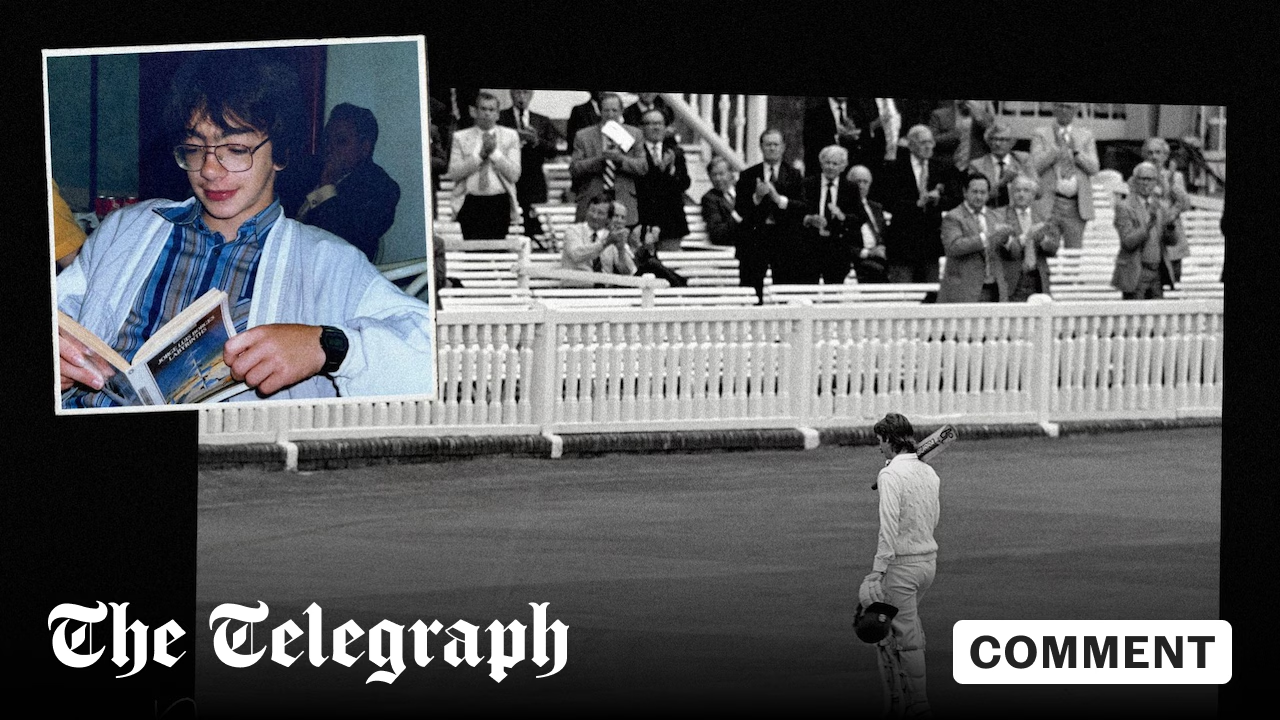
In my case, the whole excursion felt particularly exciting because I was on my own. Glorious independence at last! A chance to pose as a grown-up for a few hours. Perhaps the story has aged badly, but this was a time when you could let a young teenager – and not even your own young teenager, in this case – roam around London without feeling guilty.
Living the dream
After reluctantly putting down Fever Pitch, I started leafing through the dozens of sporting autobiographies on my shelf. Surely, I thought, we can turn to David Beckham, or Billie Jean King, or Kevin Pietersen, and find something about their own first transformative visit to Wembley, or Wimbledon, or the Wanderers.
Turns out, though, it doesn’t work like that. Future athletes are far too busy working their way up the pecking order of junior sport. All the training and competing doesn’t leave too many weekends free to travel to elite events. And when they do go, they are far more literal-minded than the bookish types we have quoted thus far.
Yes, my library told me that a 12-year-old James Anderson supported Lancashire at the 1995 Benson and Hedges Cup final. Yes, I discovered that a 13-year-old Sue Barker had carried a handful of torn grass clippings home from the Aberdare Cup schools event at Wimbledon. But there isn’t the same sense of revelation in their accounts.
Why, then, the disparity? Part of it, I suspect, is that professional athletes overlay their first memories with so many later ones, so that Anderson’s family trip to Lord’s in 1995 was eventually outshone by his five-wicket haul there in 2003. Lord’s went on to become a place of work for him, just as Old Trafford would for Beckham.
But for the rest of us mortals, for the dreamers who lacked the talent to build a professional sporting career, we may never feel as close to the game than we did on that first, glorious visit.