
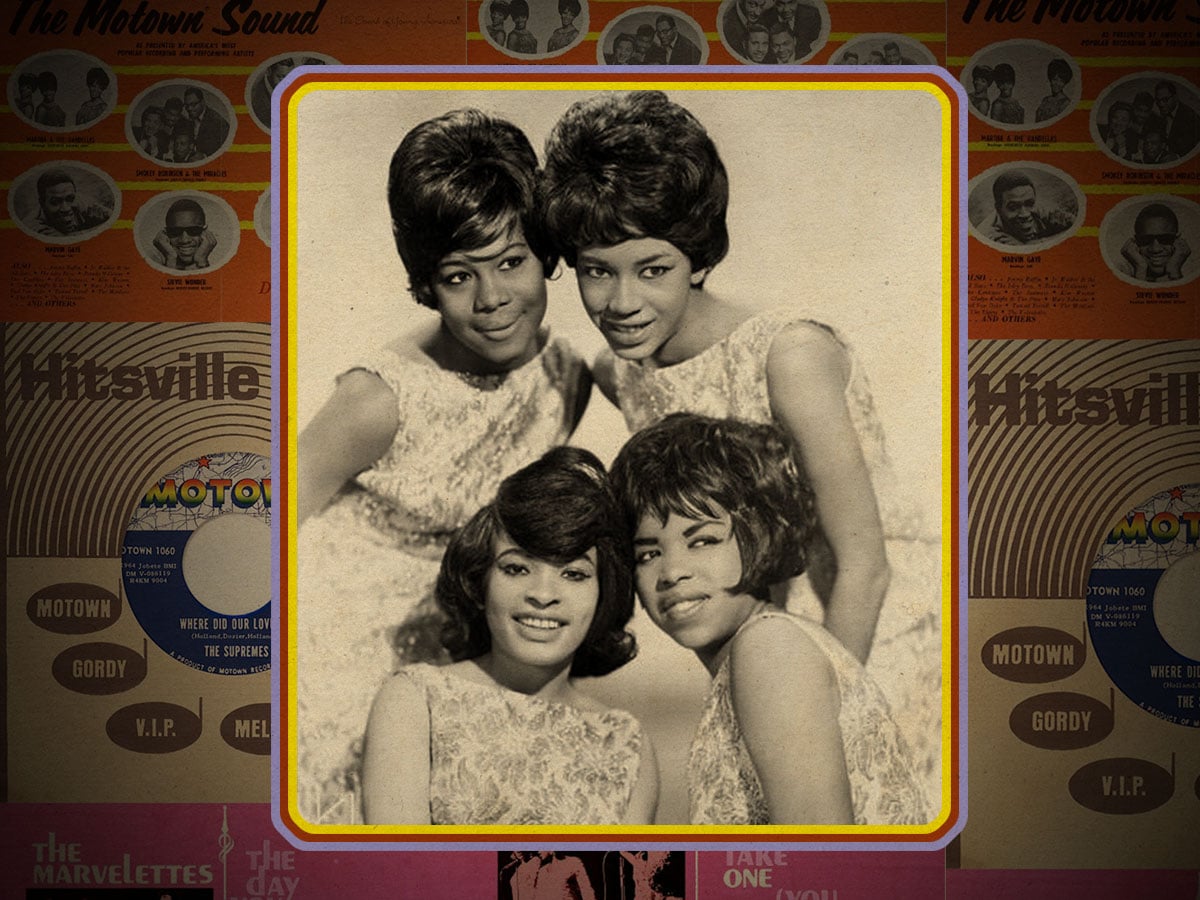
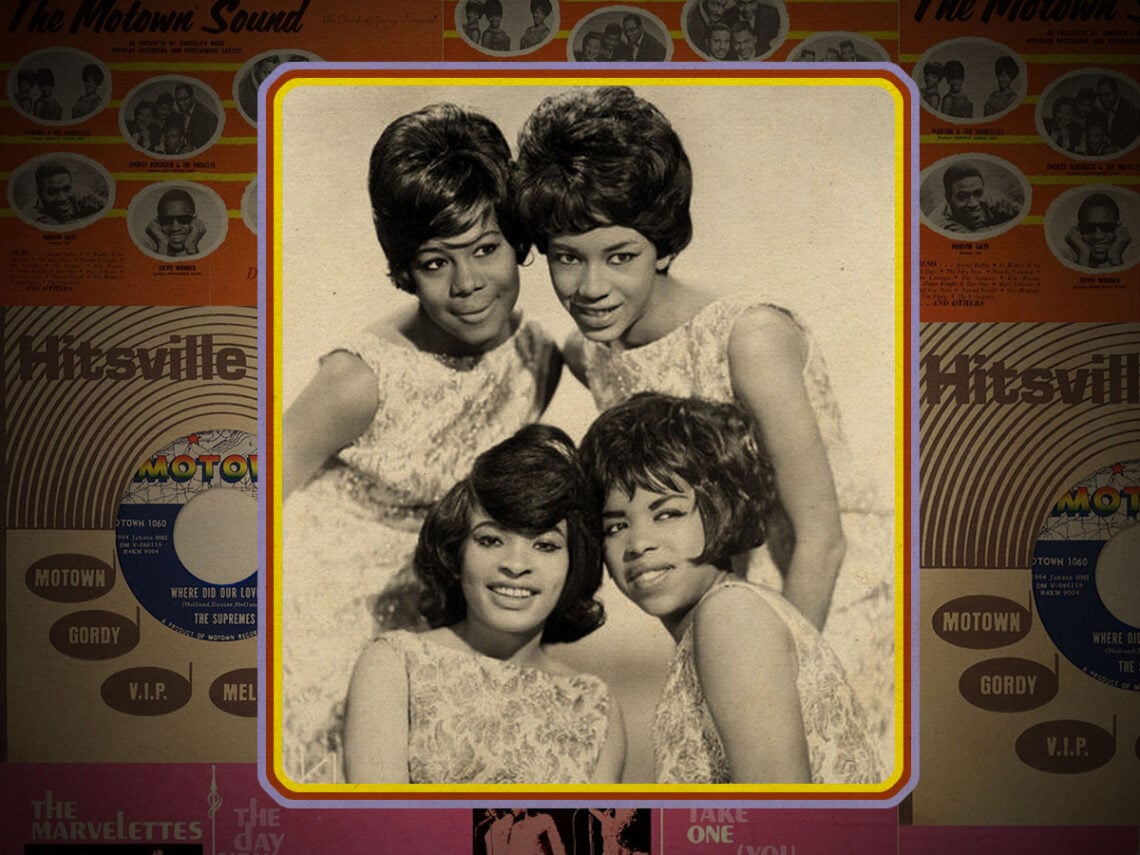
(Credits: Far Out / Motown Records / James Kriegsmann)
Thu 26 March 2026 23:00, UK
If the British invasion was battling against anything, then it was the sweet sound of Motown. This friendly fracas would define the music of a golden generation.
1961 had been a fraught year. The Bay of Pigs Invasion had placed America on the perilous brink of nuclear war. The construction of the Berlin Wall was dividing Europe, literally in this case. And a 50 megaton bomb was detonated in the Arctic. But in December, a gang of schoolgirls would deliver a coda that changed the world just as clearly and for the better.
Only a year earlier, the four budding students at Inkster, Mich, High School had entered the talent contest and came in at fourth. To quote the film The Guard, “You don’t get anything for fourth. It’s a cruel world.” It’s even crueller when you consider that the prize for coming first was an audition for Motown.
That being said, in 1960, the chance of performing for a label that had only been formed in January 1959 using an $800 loan was not quite as promising as it might sound in retrospect. Berry Gordy’s new music enterprise was yet to have a hit. So, when the Casinyets failed to achieve a podium finish, they hardly kicked up a fuss.
But their teacher, the aptly named Mrs Sharpley, certainly did. She spotted a twinkle that the rest of the judges had missed. So, she pressed the principal to allow them to go along to the Motown audition alongside first, second and third. It was the moment that the flippant foursome – Catherine Anderson, Juanita Cowart, Georgia Dobbins, Gladys Horton, and Wanda Young – met the Miracles that they realised that this could actually be quite a big deal.
 (Credits: Motown Museum)
The reason why Mrs Sharpley had seen something in them was evident from the off. In less than a year, it would become evident to the world, too. They were wry, sweet, and effervescent without ever being overawed. Much like the Fab Four who they would soon find themselves competing, their nonchalance was part of the charm.
Nevertheless, they needed an original song. As it happens, pretty much everyone in Inkster, Michigan, seemed to know at least somebody who knew their way around a tune, and Dobbins knew a fellow called William Garrett. While he might be forgotten in the annals of history, devoid of a Wikipedia page or due credit, this friendly neighbourhood songsmith just so happened to have a bluesy tune called ‘Mr Postman’ that he was happy to share.
The melody struck Dobbins from the off. But, naturally, Garrett’s lyrics didn’t really ring true to a teenage girl. So, in one single sitting after school, she reshaped them from scratch, keeping nothing but the title. When they performed it for Motown producers, it was quickly agreed that the girls should be signed up.
Sadly, despite how pivotal Dobbins had been in getting them to this position, she had to step away to care for her ailing mother. This fateful move led to a rebrand, and Gordy christened them The Marvelettes. And in the hot summer of ‘61, their tale of star-crossed teenage lovers craving attention would be heard by the world for the first time. And the world wanted nothing to do with it.
 (Credits: Far Out / Alamy)
It failed to chart in its first weeks, finally breaking into the Billboard Hot 100 in September. But Rome wasn’t built in a day. And come December, Marvin Gaye showed up for work at the Motown office only for Gordy to slap a copy of Billboard down on his desk. ‘Please Mr Postman’ had risen to number one.
“Everyone was jumping up and down,” Gaye recalled. I realised that doing ballads and singing jazz was cool, but I wanted a hit too.” Everyone on the entire label did. And that pretty much changed music history. In Detroit, you had a new commercial outfit singing songs from the heart that connected with the masses.
And you had Brits flocking over to compete, as proven by the Fab Four’s swift cover of the track, and then rapid deviation from the sound of Motown in a bid to offer a point of difference. The pace was set for the decade, and the charts were suddenly awash with an influx of enthusiasm. But strangely, the humble Marvelettes were lost in all of this.
When they arrived at Motown as teens, they “didn’t even know how to put on make-up”, and that led to them being overlooked as the flashier Supremes pruned their way towards more profound attention. As Anderson would later bemoan, “We were never really given our just dues as Marvelettes. For instance, we never received a gold record for ‘Please Mr Postman’ … We didn’t think about it much at the time, but looking back I can admit that it really wasn’t fair the way the Supremes were put ahead of us in every way.”
Yet, as the group that landed the first meaningful smash-hit of a decade that the world is still reeling from, surely it is time that they are finally given their flowers? Not bad for a fourth-place talent show band. Who the hell came first?! And could they possibly have had hair that competed with the unrivalled volume that the Marvs mustered?
