
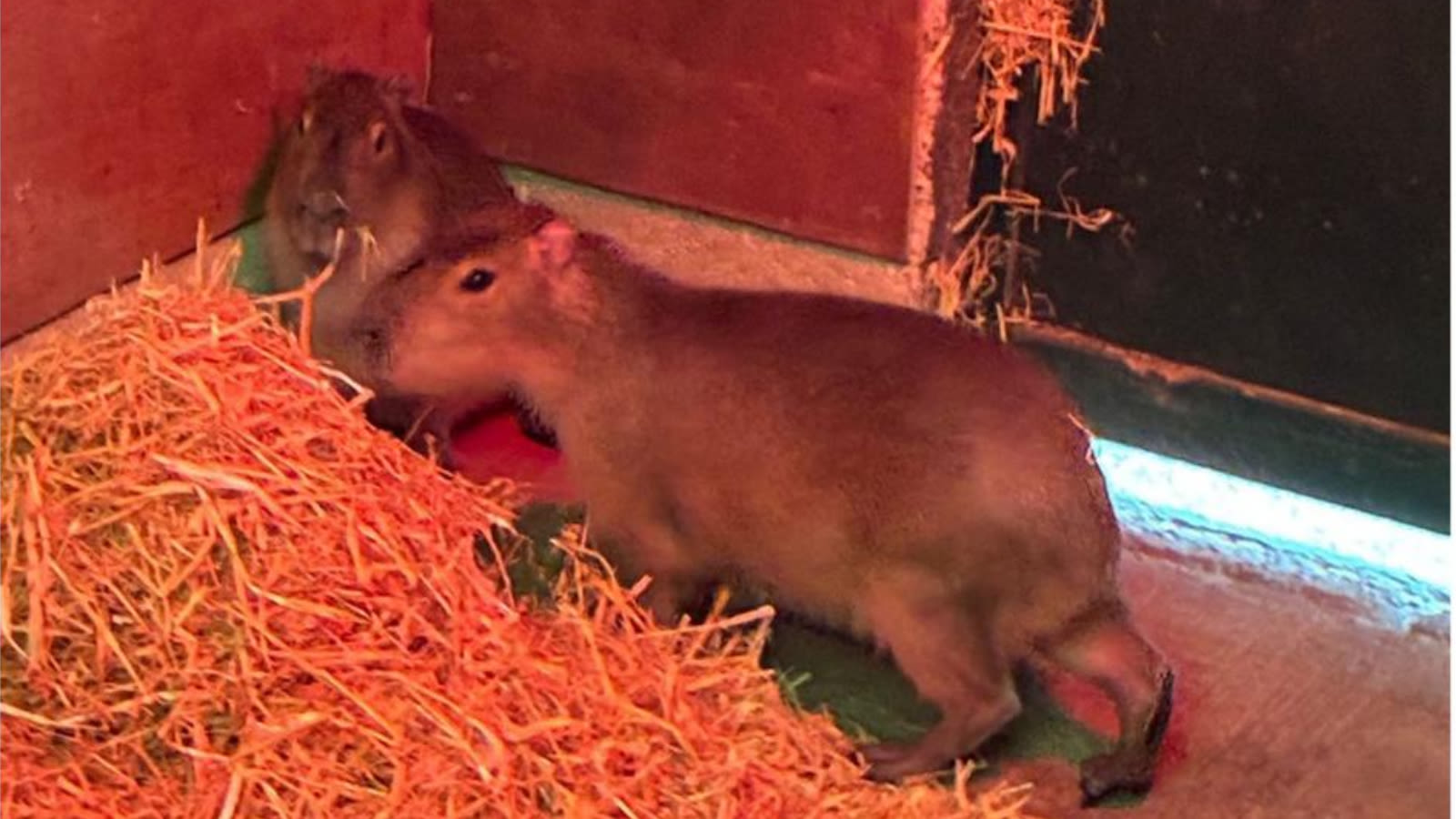
It’s been nine days since Samba the capybara escaped from a Hampshire zoo and efforts to find her are very much continuing.
Samba has been missing since Tuesday (March 17) when she and her sister, Tango, escaped from a temporary holding enclosure at Marwell Zoo.
The pair had recently arrived from Jimmy’s Farm & Wildlife Park in Suffolk.
Zookeepers were quickly able to locate and re-capture Tango, but Samba was “more adventurous”, the zoo said, and evaded capture.
Drone teams have been out searching and camera traps have been dotted around to try to spot her but with no luck so far.
Video footage of Samba resting on a bank of the River Itchen, near Winchester, was shared earlier this week by a dog walker.
But what are capybaras, the world’s biggest rodent species?
According to Laura Read, the Chief Executive of Marwell Wildlife, capybaras like Samba are related to animals such as guinea pigs, mice and rats.
They are native to South America and are semi-aquatic, living in and around rivers, riverbanks, or waterways.
When they feel threatened, they jump into the water and hide where they can hold their breath underwater for up to 10 minutes.
Samba will be eating a vegetarian diet in the wild like other capybaras which includes grass, leaves and fruit.
Ms Read described them as “gentle” and “calm”, explaining they don’t pose a risk to anyone.
She said they like to be social and live in big groups with other capybaras.
At nine months old, Samba is not yet fully grown and is the size of a small to medium dog.
Where could Samba be?
Ms Read thinks she could be on the waterway between Twford and Allbrook which is about two and a half miles from the zoo which would be an “ideal habitat”.
She said: “We are following up on as many sightings as we feel are legitimate.
“We have had some sightings that are a very, long way away, as far afield as Birmingham.
“We are not following up on those ones because we know that’s not possible.
“However if we think it’s a legitimate, realistic sighting we are following up on that.”
She explained some of the sightings have been Muntjac deer which are about the same size and colour as capybaras.
Efforts to find her
As well as drones and camera traps being used, the zoo said: “We have been reviewing our use of humane traps. We do have some badger traps available that we have used in the past for vaccination programmes.
“We know that she really likes melon or any strong smelling fruit.
“So we are still debating and weighing up the operational considerations about whether to deploy those traps.
“But that is another thing we can try in our resource bag of tools.”
Coping in the wild
Ms Read said: “We are not concerned in terms of her safety other than roads which we are really hoping she’s staying away from.
“She’s got food, she’s got no natural predators and if she’s by the water that’s where she’ll feel her safest.
“They are great swimmers, and they always hide in the water for safety and security in the wild.
“We know as long as she’s not too cold, she’ll be ok.”
She added: “The video we saw the other day she looked fairly relaxed and she looked fairly well in terms of body condition so that gave us quite a lot of reassurance that she’s coping alright and her natural instincts have kicked in.
“The temperature is a little bit of a concern because it has got a lot colder over the last two days but she’s likely to have found somewhere to burrow into.”
What if I spot Samba?
Anybody who sees Samba is being asked to take a photo or video of her and call Marwell as soon as possible with a precise location.
People are being asked not to approach her so she doesn’t get spooked and run away.
Reporting History sees journalists join News At Ten anchor Tom Bradby to revisit their remarkable on-the-day reports of the defining events of the modern age. Listen to the episodes below…