
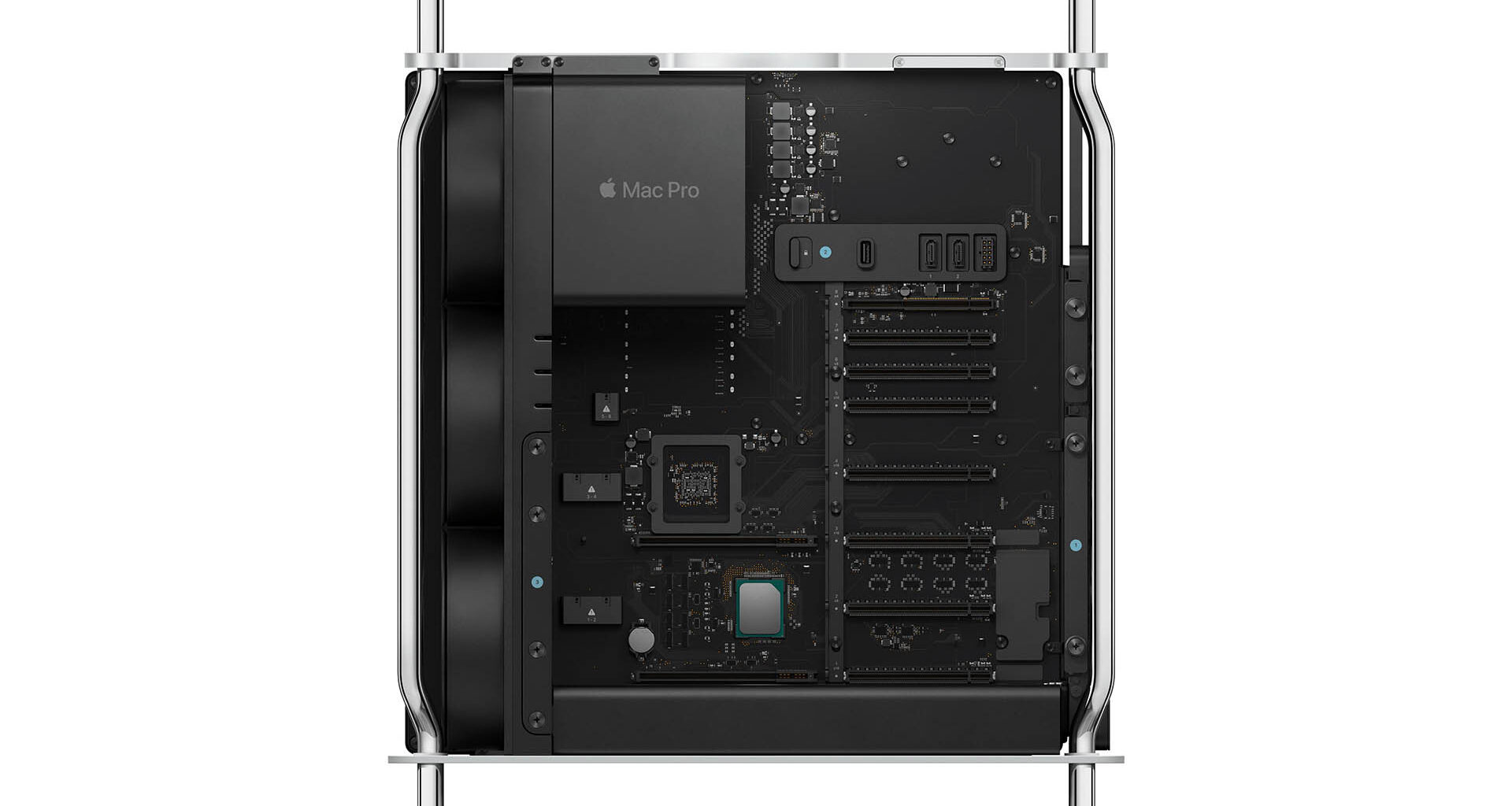
The M5 Pro and M5 Max launched earlier this month, leaving only the M5 Ultra, which is due for a release in the first half of this year. With Apple running out of time with the impending announcement of its most powerful silicon, it had to make some critical decisions on whether its workstation-class chipset would only be found in both the Mac Studio and Mac Pro, or just one of them. In the end, a new report states that Apple has officially thrown in the towel for its Mac Pro, marking the end of the tower form factor and ushering in a new technological era that will be dominated by compact, but incredibly powerful hardware.
The Mac Pro was previously reported to be ‘largely written off’, and given the Apple Silicon revolution, the company’s most powerful SoCs can be used in the Mac Studio without any glaring consequences
The news was confirmed to 9to5Mac, with Apple also removing anything related to the Mac Pro from its official website, leaving the Mac Studio as the only workstation-class product that’s available to purchase right now. To be fair, Apple indirectly hinted that it would give its larger workstation less importance ever since it introduced the M3 Ultra exclusively for the Mac Studio. The Mac Pro, on the other hand, couldn’t be configured beyond the M2 Ultra.
Apple has also been reported to have ‘largely written off’ the Mac Pro, seeing as how a major price disparity exists between the latter and the Mac Studio. We previously discussed that with both machines kitted out with the M2 Ultra, a major $3,000 difference exists, with the Mac Studio being the more affordable of the two. Given that buyers only have to sacrifice a couple of ports in exchange for better portability and similar performance, the majority of upgrades would be recorded for the smaller workstation.
Also, in case you forgot, with the Apple Silicon now featuring unified memory and soldered storage, it makes even less sense to continue selling the Mac Pro. Sure, with the Intel Xeon version, which allowed user-upgradeable RAM and expansion of existing storage via PCIe cards, an argument could have been made, since the Mac Studio wouldn’t have offered such flexibility. Unfortunately, there’s no universe in which Apple will gravitate to Intel’s Xeon family or AMD’s Threadripper processors in favor of its own chipsets.
Follow Wccftech on Google to get more of our news coverage in your feeds.