
What is “good taste” anyway? Allow your favorite actor, musician, celebrity, or comedian to let you in on what they’re watching, reading, and consuming.
Photo-Illustration: by The Cut; Photos: Lindsey Byrnes, Getty Images, HBO, Spotify
The Australian indie-rock singer-songwriter Courtney Barnett suffered from writers block working on her new album, Creature of Habit. Known for her witty lyrics — “The paramedic thinks I’m clever cos I play guitar/I think she’s clever cos she stops people dying,” she sings on 2018’s “Avant Gardener” — she started to realize she was using humor as a crutch. “I see things like sarcasm used as protection,” she tells me about her past music over coffee at Ariston Flowers & Cafe in Union Square. “Not that I was being dishonest, but I can now see where I was hurting.”
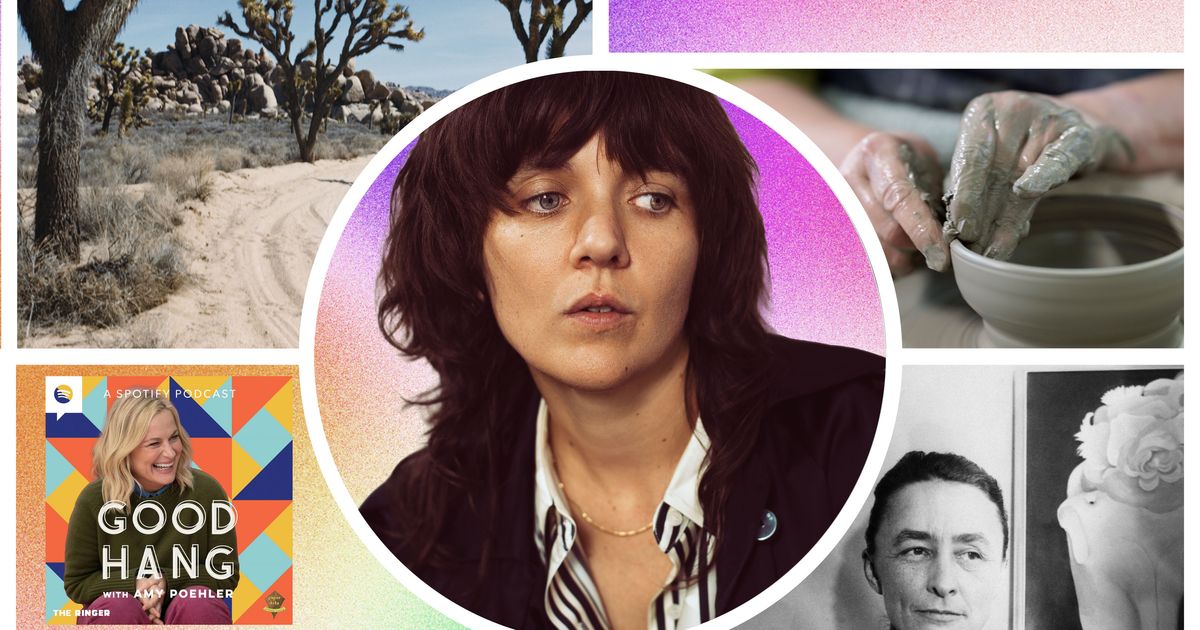
Creature of Habit was born from her time living in Joshua Tree, where Barnett decamped to be alone and learn about herself. She began recording her dreams, drawing from her subconscious as a kind of self-study: “I was thinking about honesty in writing — how honest you can really be when you know someone will hear it,” she says. The result is still funny, but more reflective and mature than before, with the same infectious sound. Here, Barnett chats about her favorite podcasts, Joshua Tree, and perfectionism.
Where are you getting your culture recommendations?
A lot of the time from friends. I listen to a lot of podcasts, so I guess I discover things that way. I love The Daily, Fresh Air, Good Hang, Wiser Than Me, and an Australian one called 7am. I also listen to Democracy Now and Pod Save America for news. The new Maggie Gyllenhaal film — I want to see that because I listened to an interview about it.
Are you a Criterion Channel subscriber?
Yeah, it’s really good. I only found out about it in 2020. It kind of changed my life.
Have there been any new directors or new-to-you movies that you’ve watched recently that you’ve been really into?
My God, all I can think of is The Pitt. I’m so obsessed at the moment. Before that, I had been rewatching all the Jim Jarmusch films. Last week I watched Stranger Than Paradise, which is about the idea of the grass being greener, wishing you were somewhere else because you think it’s better and realizing it’s the same, just different. I didn’t always see the point of rewatching things, but now I do — you pick up something new every time.
What Oscars movies have you watched recently?
I’ll always remember One Battle After Another because I saw it in L.A. at the Vista. It’s a one-screen theater. I’m really falling back in love with going to the cinema.
It was packed, and toward the three-quarter mark, someone walked in and sat in the front row. An usher came, then more ushers, trying to get the person to leave. The person stood up and started yelling. My friends and I looked at each other like, “Should we leave?” Then we turned around and saw the whole theater evacuating. It was really scary — we thought they had a gun.
We all went outside, the police showed up, the person ran away. After about 30 minutes, most people went back in to finish the film. I did — I wanted to know what happened.
So you went back in and watched the rest?
Yeah. It was terrifying, though.
Do you have a favorite cinema in L.A.?
I love the Vista, the Laemmle in Glendale, and the Alamo Drafthouse downtown. There are some really good cinemas in L.A.
What matters most to you in a moviegoing experience?
Probably curation. I can take or leave snacks. Good sound is important. Those cinemas I mentioned have great programming. There’s also a place called Vidiots that I haven’t been to yet, but they do great curation too.
It seems like The Pitt is really occupying your mind. Tell me about it.
I never watched ER or Grey’s Anatomy growing up, but I love this show. It’s beautifully done — each episode covers one hour, which is a great concept. It’s subtle and empathetic, and it touches on real-life issues like health care and gun violence without being over the top. I always get emotional watching it.
There’s also a story line about AI and technology. I won’t spoil anything, but there’s a situation where they have to turn off all the computers, so it becomes a commentary on how they need to rely on their own skills instead of technology. I like that aspect. I go through phases of watching a lot of TV. It can feel like a distraction from work, but I’ve watched some great things. I’m watching Love Is Blind right now.
How does this relate to your album and your habits while working on it?
I had a lot of writer’s block, especially with lyrics. I would write every day but not come up with anything I liked. I ended up procrastinating by watching TV, then feeling bad about it and trying to justify it as learning about human behavior.
There’s even a line in one of my songs about watching too much TV. But I’m trying to embrace the idea that there’s such a thing as healthy procrastination — that stepping away can give you a new perspective.
Are there lines on this album that felt especially honest to you?
There’s a song called “Mantis” that feels the most important. It came from a moment where I saw a praying mantis and had a very reflective experience. It felt like a sign, like something meaningful beyond what I could fully explain. It was a kind of turning point.
You’ve mentioned Georgia O’Keeffe — what about her work inspired you?
I had a lot of her books with me and found her really inspiring as both a person and an artist. I especially liked a cookbook connected to her life — it showed small, everyday moments in a more informal way, which I enjoyed. Simple things like growing her own vegetables.
What’s your relationship to visual art more broadly?
There are always things I return to. While I was in the desert, I also started drawing, experimenting with ceramics and photography. It was nice to do something without expectations — just for fun, like a kid. That helped me break out of the pressure of writing.
I still do photography. I’ve started developing film at home again, which I hadn’t done since art school. It’s fun to experiment. Ceramics and photography feel almost magical — creating something tangible with your hands or seeing an image appear in the darkroom.
Did these hobbies feel social or more solitary?
A bit of both. I met people through classes, which was a challenge for me but also rewarding. I remember overhearing a conversation that really stuck with me.
The teacher said that perfectionism doesn’t mean you make something perfect — it means you keep working on it forever trying to make it perfect. That really stayed with me. I can spend an entire day changing a single word. It’s hard to explain that level of focus to someone else, but I don’t want to waste any words — I want everything to have meaning.
This interview has been edited and condensed for clarity.
Related