
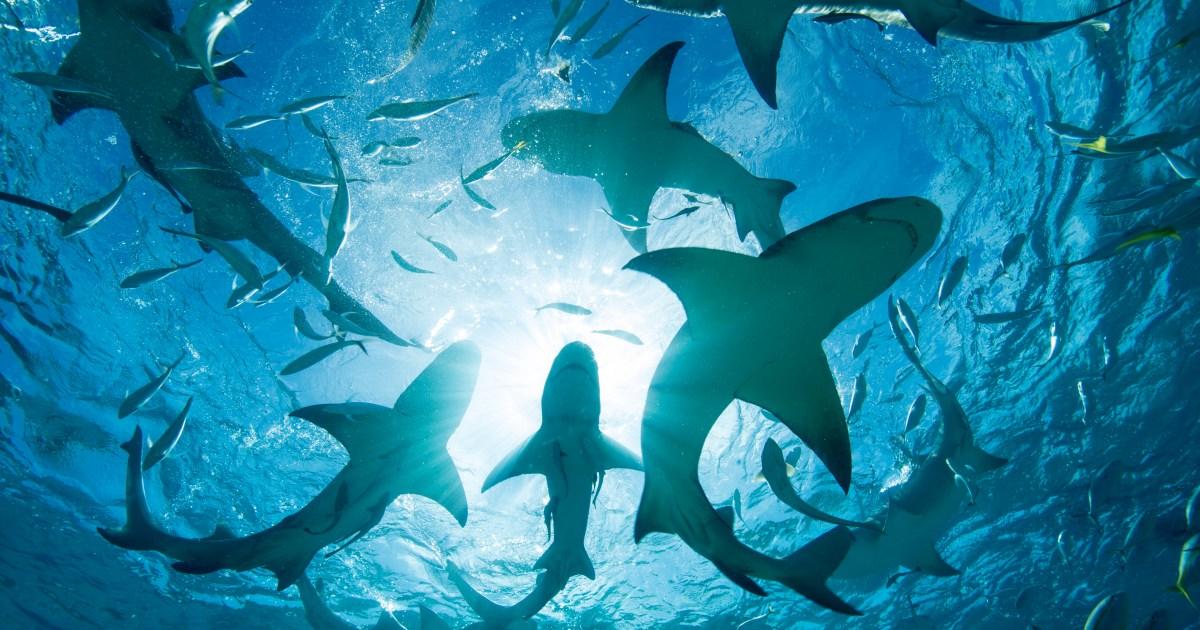
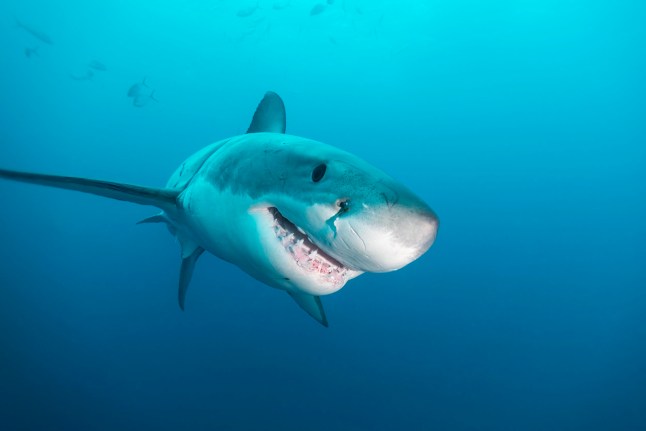
Sharks, much like people, can become more aggressive on cocaine (Picture: Getty Images)
Just when you thought it was safe to go back in the water…
Sharks could be showing more aggression after chomping down on cocaine spilled by tourists in the Caribbean Sea, according to a study published in Environmental Pollution.
Scientists found nearly 30 sharks, spanning three species, that tested positive for drugs after being caught by a remote island off the coast of the Bahamas.
The most common was caffeine, followed by acetaminophen and diclofenac, the active ingredients in painkillers Tylenol and Voltaren.
But two of the prehistoric fish tested positive for cocaine.

It is the first time cocaine has been detected in sharks off the Bahamas (Picture: Getty Images)
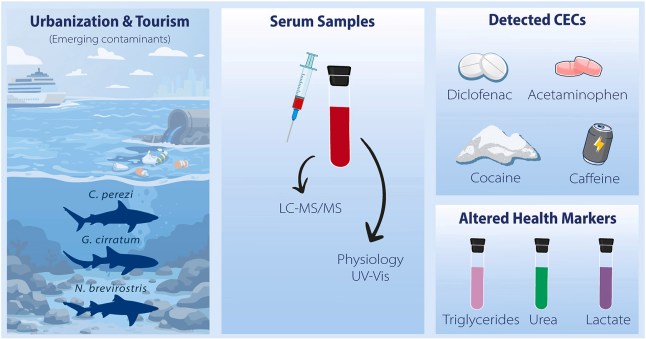
Scientists have found traces of cocaine in the blood of sharks swimming in the deep blue waters of the Bahamas for the first time (Picture: Environmental Pollution)
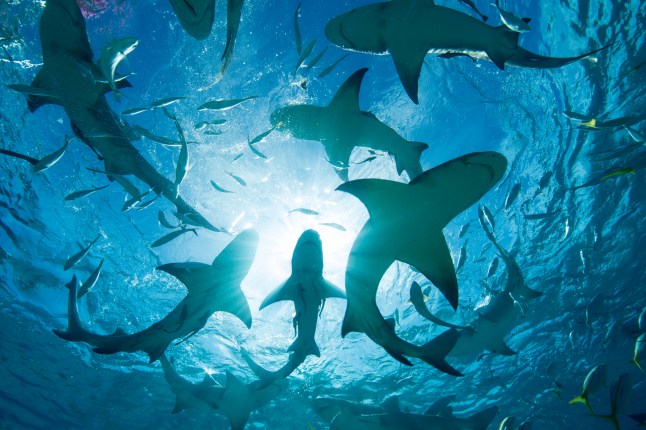
Circling sharks could be high on cocaine (Credits: Getty Images)
The sharks tested exhibited changes in metabolic markers, including lactate and urea.
But it remains to be seen how these changes might impact their behaviour.
Most sharks were caught about four miles offshore, around an inactive fish farm popular with divers.
It remains unclear how the drugs entered their bloodstream. Experts say currents could carry drug traces from sewage, but divers are the more likely culprits.
‘Pharmaceuticals and illicit drugs are increasingly recognised as contaminants of emerging concern (CECs) in marine environments, particularly in areas undergoing rapid urbanisation and tourism-driven development,’ scientists said.
Natascha Wosnick of the Federal University of Paraná in Brazil, told Science News: ‘It’s mostly because people are going there, peeing in the water and dumping their sewage in the water.
‘They bite things to investigate and end up exposed.’
Research in goldfish suggests caffeine increases their energy and focus, Wosnick says, much as it does in humans.
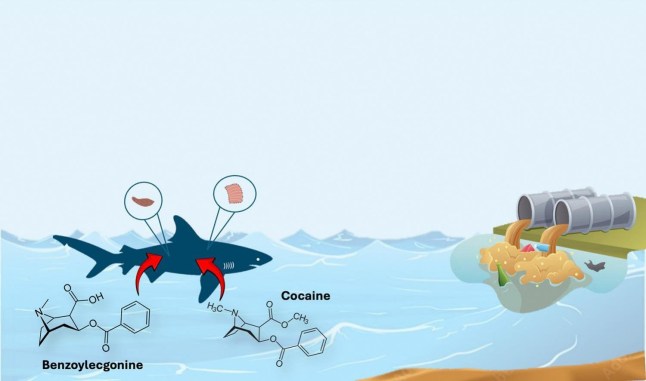
Sewage containing cocaine is thought to be spilling into the sea where sharks ingest it (Picture: Science Direct)
Several fishermen have claimed to have seen sharks savaging their way through dumped bricks of cocaine dumped by drug traffickers.
Hammerheads normally avoid humans, but one filmed for Shark Week came straight for divers, swimming at a strange angle.
Tracy Fanara, not part of the project but produced a documentary on Cocaine Sharks, says that the findings are ‘a reminder that coastal infrastructure, tourism and marine food webs are tightly connected.’
Effects of cocaine on humans
The NHS says cocaine (hydrochloride) is a highly addictive drug. It acts as a short lived central nervous system stimulant and local anaesthetic.
Common effects of cocaine include:
anxiety
confidence
dilated pupils
energy
euphoria
increased heart rate
paranoia
restlessness
Longer term effects of using cocaine can include:
dependency
damage to the heart
mood swings
poor sleeping patterns
impotence
malnutrition due to suppressed appetite
difficulties managing your mental health
Arrow
MORE: This is how many times a week you should be pooing, according to scientists
Arrow
MORE: Ex-Tory MP says he threw chemsex parties to help inform David Cameron’s policies
Arrow
MORE: Scientists reveal why Harry Potter gives us goosebumps
Comments
Add Metro as a Preferred Source on Google
Add as preferred source
News Updates
Stay on top of the headlines with daily email updates.