
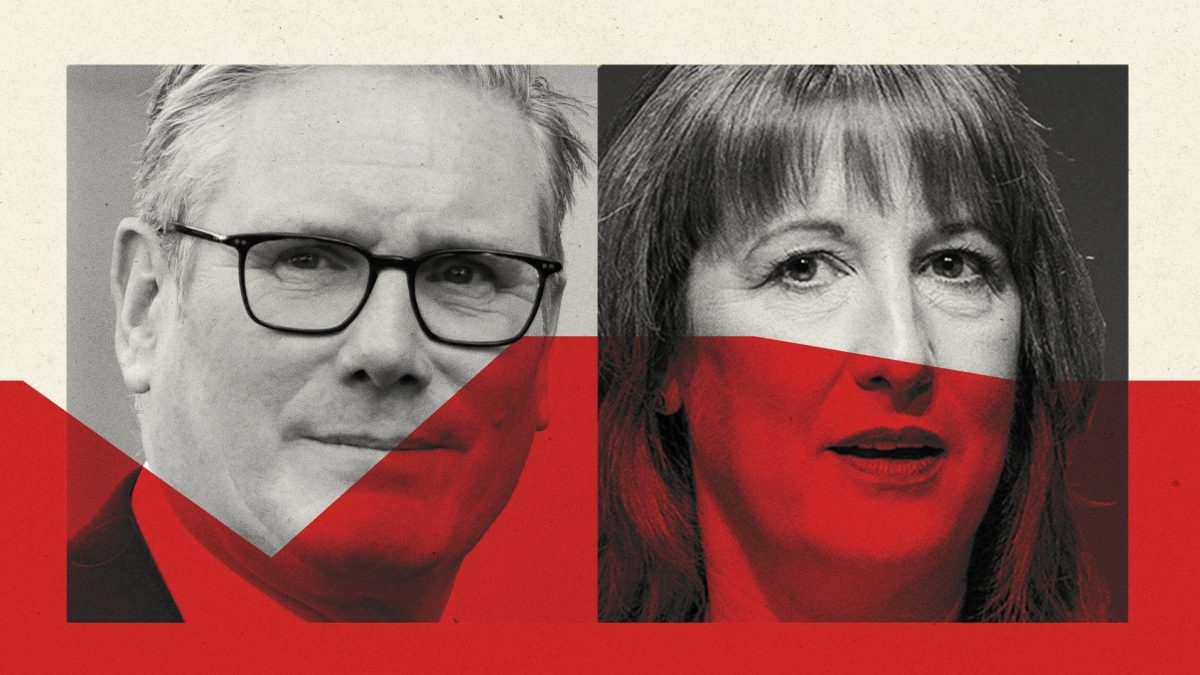
In a rare glimpse this week of how concerned Sir Keir Starmer is by the consequences of the Iranian conflict, he warned that the manner by which it concludes “could define us for a generation”.
It will certainly define his Government. As with so much of the UK’s fortunes, the impact of global events dictates governmental decision-making perhaps more keenly than those of our international counterparts.
This is undoubtedly felt most acutely by Rachel Reeves, who has witnessed her economic plans go up in a plume of Middle Eastern smoke, and now faces ever-growing demands from an increasingly diminishing pie.
New FeatureIn ShortQuick Stories. Same trusted journalism.
The predicament confronting the Chancellor emerged twice this week. First, when the Organisation of Economic Co-operation and Development (OECD) warned that the UK will suffer the biggest hit to growth in the G20, as a result of the Iran war that will tip it close to recession.
Then came the news that the Royal Navy was forced to borrow a warship from Germany to carry out its duty commanding a Nato taskforce next month. It underlined the need to dramatically ramp up defence spending, and just how underprepared the country is for the rapidly changing world.
‘A nightmare for Reeves’
Former shadow Chancellor Ed Balls neatly summed it up on his Political Currency podcast when he said: “[Starmer] is saying we’re going to tackle the cost of living… We’re going to sort out the problem of the energy crisis. He says we’re going to spend more on defence, and we’re going to do it quickly… If you are Rachel Reeves in the Treasury at the moment looking at all of this…it is a total nightmare.”
Sympathy for Reeves’s situation is in abundance within Westminster, but there is also a simmering frustration that the leadership has not been bolder when it comes to growth, particularly at a time of crisis.
“It’s really frustrating for Rachel,” a Cabinet member told The i Paper. “Because the Spring Statement felt really positive. We had started to make progress, getting business confidence up, getting growth, putting more money in people’s pockets – but we’ll just have to see what happens now.
“We’ve said the cost of living is the number one issue, and when we’ve hung so much on helping people with it – it’s difficult if that’s then buffeted by external events.”
Asked whether there was belief at the top of Government of the need to take more decisive action on economic growth, the minister replied: “Yes, there are a lot of conversations live at the moment in the context of the Iran situation on how we do that.”
A ‘dogmatic approach’ from The Treasury
But while there is agreement on the need to do more, vested interests and the “dogmatic” approach from the Treasury means pushing through such policies remains near impossible.
One example is that ministers are now looking at how they can coax British companies that moved to the Middle East to benefit from cheaper energy costs back to the UK and set up industry on these shores once more.
“These firms are now thinking it’s not that stable and so there could be opportunities [for us] there,” the minister said, before adding: “The biggest challenge is about changing the culture in Whitehall and the Treasury and them understanding the growth opportunities in industry in this country. The PM gets it, Rachel gets it. But that’s where we should try and push.”
Another blockage, or “challenge” as the minister put it, is Ed Miliband’s Department for Energy Security and Net Zero, which is opposed to such energy intensive, fossil fuel guzzling companies returning to these shores as it runs counter to the zero carbon agenda.
A different minister complained over the Treasury’s refusal to entertain policy suggestions to attract the brightest minds around the world by offering visas with lucrative tax breaks. “As soon as you mention anything about tax they shut it down,” the minister sniffed.
Such intransigence is only likely to further fuel frustration within Westminster and beyond as the competing demands from the fallout of the Middle Eastern crisis come into sharper focus. Reeves has promised “targeted” energy bill support to help the poorest households deal with the looming spike in energy prices, while the need for more defence spending has come under even greater scrutiny.
‘British Army could barely seize a small market town’
As well as the UK’s stretched naval resources, this week saw General Sir Richard Barrons, the former commander of Joint Forces Command, warn that the British Army could barely “seize a small market town, on a good day”.
The parlous state of the Armed Forces prompted Lord West, the former head of the Royal Navy and a Labour peer, to demand more spending on defence. “We need the money that Starmer said would be provided earlier at Munich,” he told The i Paper. “He said at Munich that he’d pull that 3.5 per cent earlier into this Parliament. That needs to be done. Money needs to be spent today.”
But increasing spending on defence has only become harder as a result of the economic shock caused by the Iran war and the ongoing chokehold the regime has on the Strait of Hormuz.
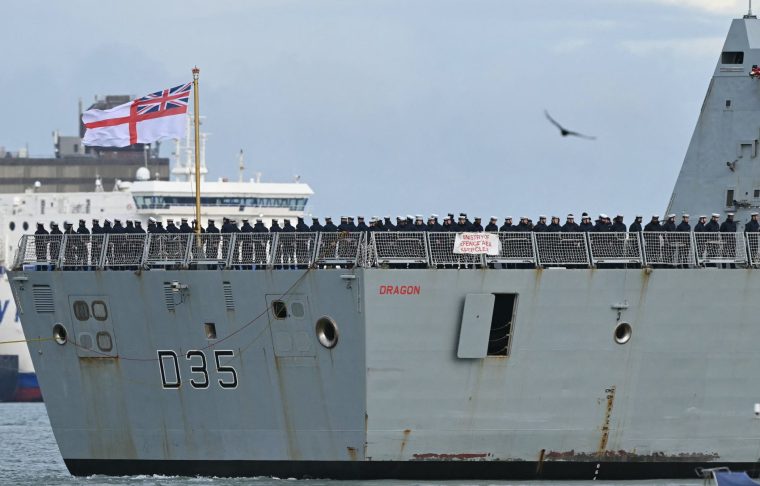
Crew members stand on the deck of HMS Dragon, a Royal Navy Type 45 Daring-class air-defence warship (Photo: Justin Tallis/AFP via Getty)
As Ben Judah, a former foreign office adviser to David Lammy, pointed out at a conference this week, the Middle Eastern conflict meant there would be “less money available for defence” – despite the fact that “defence spending needs to go up and it needs to go up faster”.
While the full impact of the energy crisis on the UK is yet to be fully understood, the longer it continues the bigger the hit will be to the country’s finances, raising the prospect that Reeves could be forced to hike taxes once again in her Autumn Budget, bringing with it all the political consequences.
One Labour backbencher attempted to put a positive spin on the situation, claiming it would ram home the need for more defence spending.
“The [economic] situation is utterly horrible and horrific and it’s terrible. But there’s also a massive opportunity here. Primarily on defence,” the MP said, suggesting that if tax rises were framed by the need for more defence spending the public would understand.
“The public would go, ‘Sure we see the risk now, you’ve got us’. So there’s a gap where you would get licence from the public to do quite a lot, as long as you were really clear what you were doing it for.”
Another Labour MP made a more novel suggestion. “If we do end up having to do tax rises, we should be very clear about the branding – we should call it a Trump tax.”
Such labelling is unlikely to appease voters, however, regardless of how much they are likely to blame the US President for the difficulty the UK Government now finds itself in. Further tax rises are likely to be unpopular.
Starmer was right when he said this war will have far-reaching consequences, it will not be long before he discovers what it means for him.