
Sarah Cipollone is used to dealing with pain.
As an osteopath living in Airlie Beach in north Queensland, she often meets and helps treat people living with complex or chronic soreness.
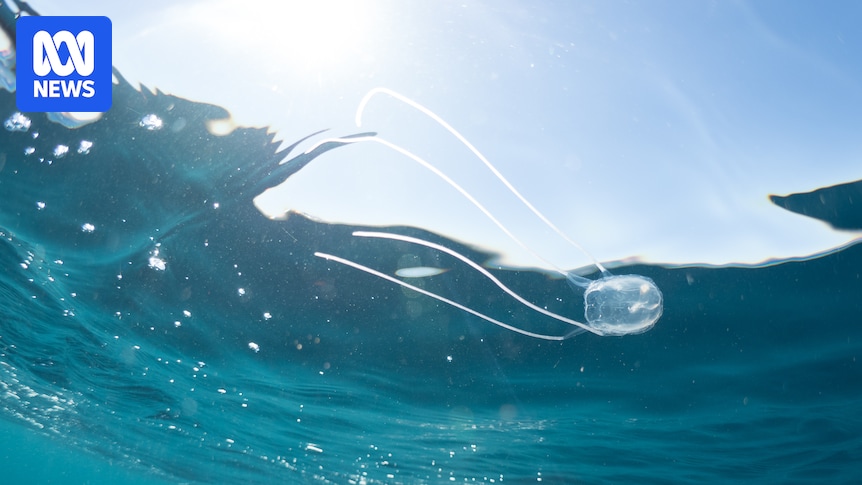
But nothing prepared her for the agony delivered by the sting of a fingernail-sized Irukandji jellyfish.
“It was unimaginable and indescribable pain … I really did think I was going to die,” she said.

Sarah Cipollone says she wants others to be more careful in the water. (ABC Rural: Aimee Mitchell)
The highly venomous Irukandji is found in Australia’s warm tropical waters between November and May.
They are almost invisible and there is a delay between contact and the searing pain, so most people will not immediately realise when they have been stung.
What does an Irukandji sting feel like?
After spending Christmas morning snorkelling, Dr Cipollone and her friends stopped their boat to flick lures at tuna before jumping “in and out” of the water to escape the stifling heat.
She did not bother putting back on the spandex stinger suit she was wearing earlier in the day.
Dr Cipollone said her back started to hurt about 15 minutes later, by the boat ramp, and she assumed it was a muscle strain.
“So, I got down on the ground to just stretch out my back and then I couldn’t get back up,” she said.
“My legs didn’t work anymore.”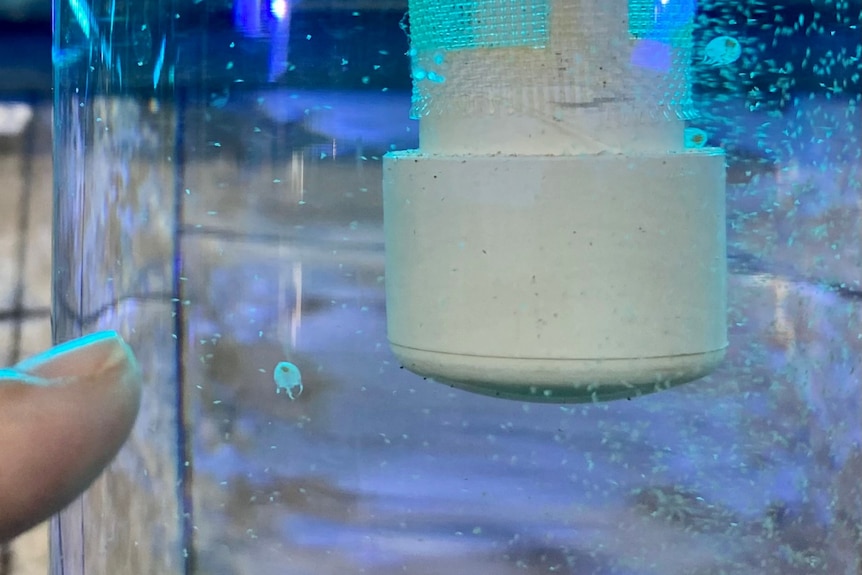
Irukandji stings can cause feelings of “impending doom” and anxiety. (ABC News: Sharnie Kim)
About 40 minutes after swimming, Dr Cipollone began to realise she had been stung when she could no longer put any pressure on her back due to the intense pain.
“And then rolling over onto my side and I’m hyperventilating and I’m panicking,” she said.
She called an ambulance and was treated in Proserpine Hospital with painkillers until her symptoms began to fade hours later.
How does an Irukandji jellyfish sting work?
Marine biologist Lisa-ann Gershwin, who has studied the species for more than 20 years, said a tiny drop of venom was enough to deliver incredible pain.
“They have little, tiny, microscopic stinging cells inside, embedded in the surface of the tentacles,” Dr Gershwin said.
“Each stinging cell is basically a little capsule with a harpoon coiled up inside and a hair trigger at one end.
“And inside the stinging cell and inside the harpoon, it is the venom.”

Lisa-ann Gershwin has studied jellyfish for decades. (ABC TV: Compass)
When triggered by contact, the tiny “harpoon” can fly out at 40,000 times the force of gravity.
“Either you don’t feel it at all, or it’s really so minor that you just dismiss it,” Dr Gershwin said.
She said painful symptoms generally developed between five and 45 minutes after the initial sting.
“People describe it as feeling like an electric drill is drilling into the back or like they’re being hit with a cricket bat again and again. It comes in waves.”
Irukandji stings are rarely fatal with only two deaths recorded in Australia.
Dr Gershwin said scientists were still researching what chemicals or proteins caused the potentially fatal Irukandji syndrome, which is caused by some species of the jellyfish.
Symptoms include high blood pressure, abnormal heart rate, severe chest and abdominal pain, and a sense of “impending doom”.
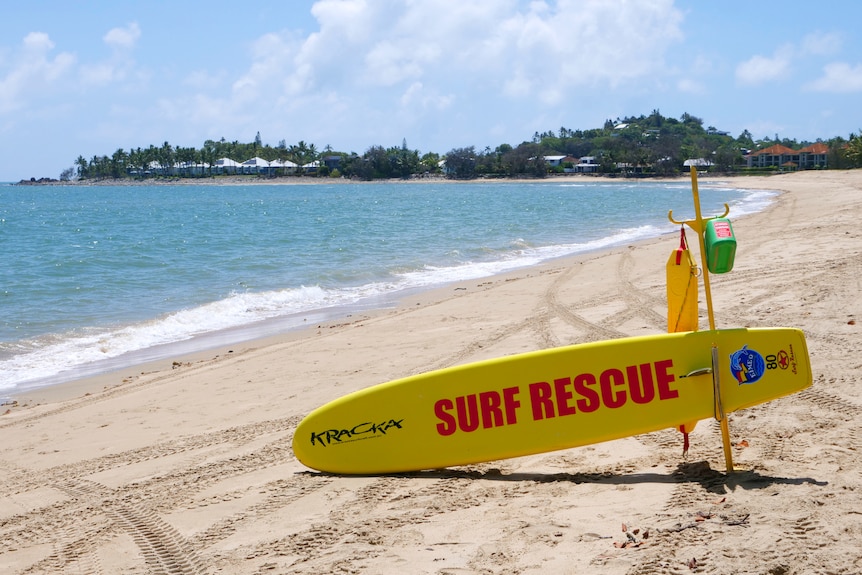
Painful box jellyfish and Irukandji are a risk to swimmers during the wet season at Eimeo Beach, near Mackay. (ABC Tropical North: Bryn Wakefield)
How is an Irukandji sting treated?
Whitsundays GP Chris Gill said treatment involved reducing pain and watching for severe symptoms including high blood pressure.
“Essentially, it’s lots of pain relief,” he said.
“It’s hard to cut through when people are in distress, but it’s always important to keep talking to them, and keep reassuring them that this is a normal response and it will settle with some pain relief.”
Since September last year, at least 21 people presented to the Mackay Hospital and Health Service with symptoms.
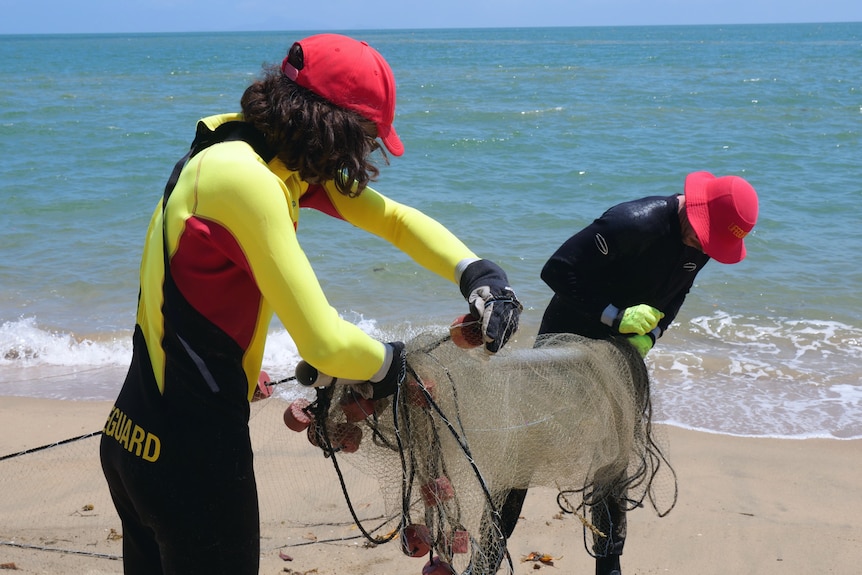
Lifeguards conduct “stinger drags” using nets to test for jellyfish. (ABC Tropical North: Bryn Wakefield)
“If you get into distress or you need some help, there’s always Triple Zero (000),” Dr Gill said.
“Just present to either the hospital or your nearest medical practitioner if you’ve got questions or [need] advice just call for help early.”
He said dousing the affected area with vinegar was also important to neutralise the stinging cells so that they did not inject any more venom.
“Even if it’s just a minor sting and you don’t know what it is, just whack it with vinegar,” Dr Gershwin said.
Symptoms of an Irukandji Sting
A skin reaction similar to goose bumpsFatigue or weaknessSevere limb, back or abdominal painNausea or vomitingShortness of breathSweatingHeadachesAbnormal heart rateA feeling of “impending doom”In extreme cases, high blood pressure