
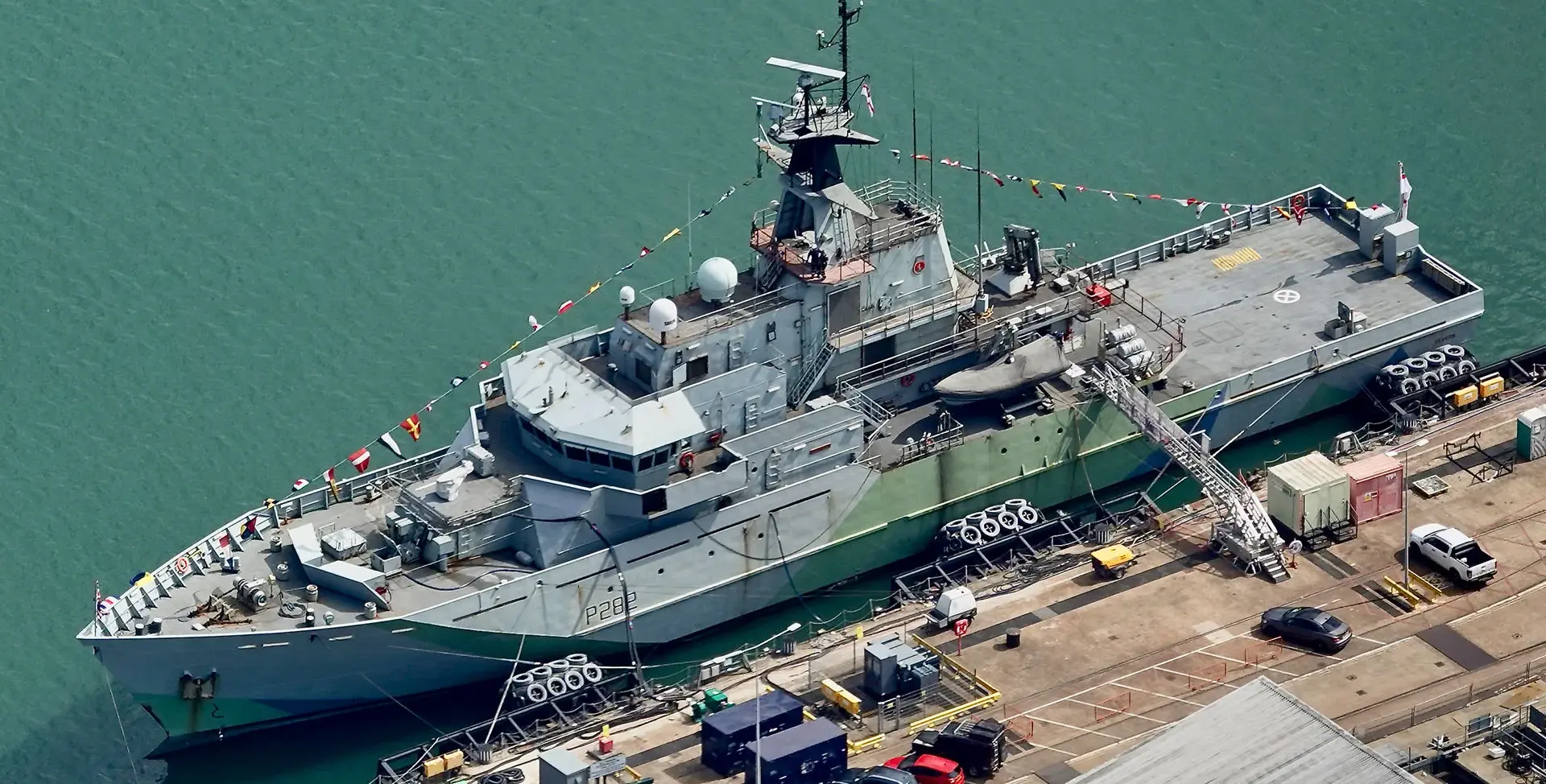
Local media reports the UK has offered to sell the three River-class Batch I OPVs, HMS Tyne, HMS Mersey and HMS Severn to the Uruguayan Navy when they go out of service in 2028.
In October 2025, the Uruguayan government announced that it would terminate a contract with Spanish shipyard Cardama, signed in December 2023, for two 1,500-tonne OPVs that were due to be delivered in 2028. The reasons given for the cancellation were “contractual irregularities” and possible fraud.
The acquisition of second-hand OPVs by Uruguay is seen as a short-term solution to the gap left while plans are developed to acquire new-build vessels in the longer term. The River-class would meet the Uruguayan Navy’s requirements for ocean-going vessels. Each ship would reportedly be sold for around $20M (£15M), compared with around $60M for a brand-new OPV. The Uruguayans will need to see more detailed technical documentation and consider support arrangements before advancing negotiations.
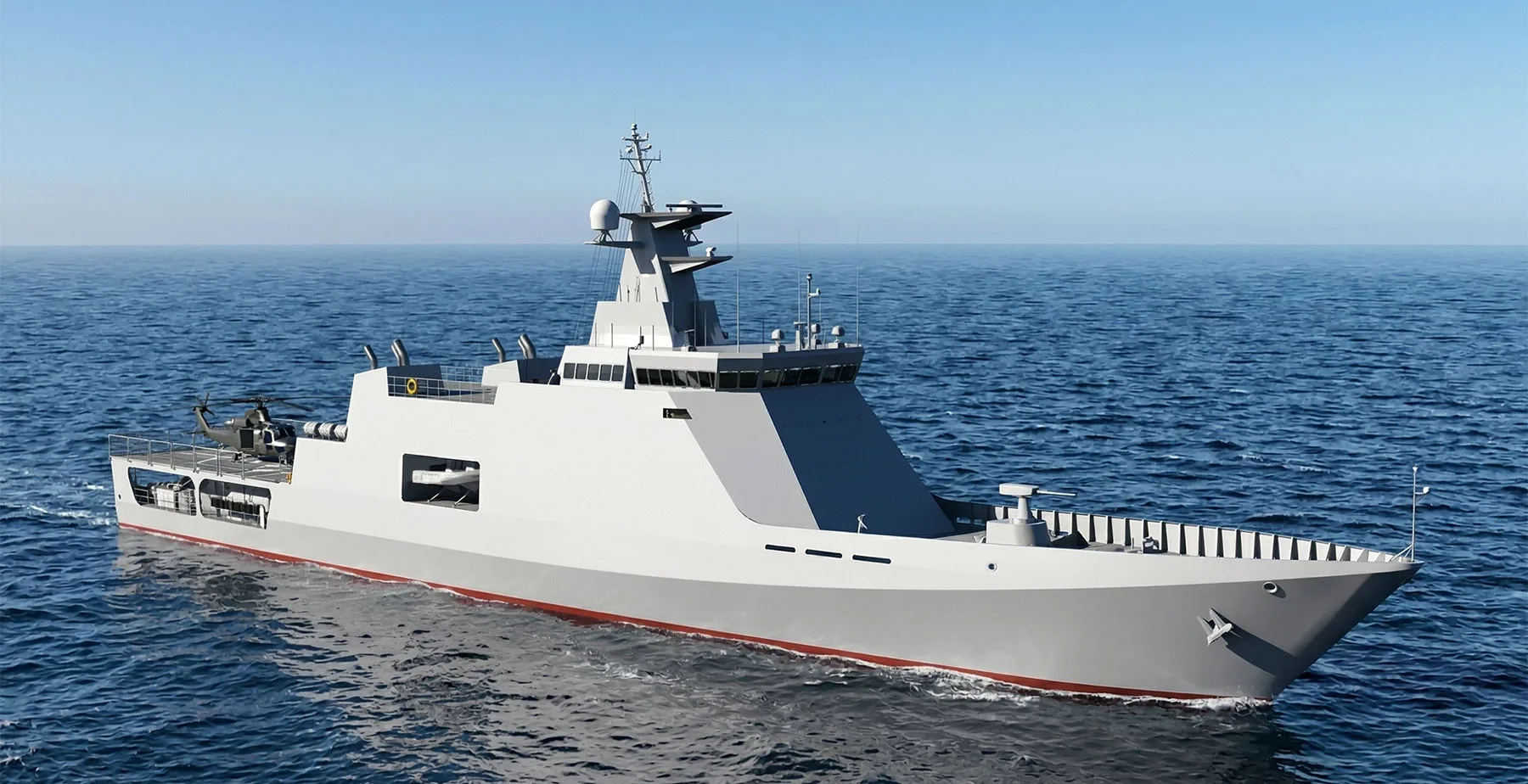 Rendering of the Cardama-87 OPV design. Work on the first ship, laid down in Spain during May 2024, was well underway when the contract was cancelled.
In November 2018, it was announced that the three Royal Navy Batch I OPVs would be retained in service. (The fourth modified vessel, HMS Clyde, was sold to Bahrain in 2020). This was a reversal of the 2015 SDSR decision that they would be permanently retired as the Batch II OPVs were delivered. By the time of the announcement, HMS Severn had formally decommissioned, while HMS Tyne never held her planned farewell ceremony in May 2018. HMS Tyne was reactivated in July 2018 and HMS Mersey never left service.
Retaining the Batch Is has proved to be a very wise decision. The shortage of frigates has meant these vessels are on the frontline monitoring activity in UK waters. No longer tasked with their original fishery protection role, they remain an important part of the RN’s day-to-day presence in territorial waters and the Exclusive Economic Zone. Primarily tasked from Northwood as part of CTF 320 maritime security operations, one of the ships is also tasked to provide navigation training and carries containerised classrooms on the quarterdeck for instructional purposes.
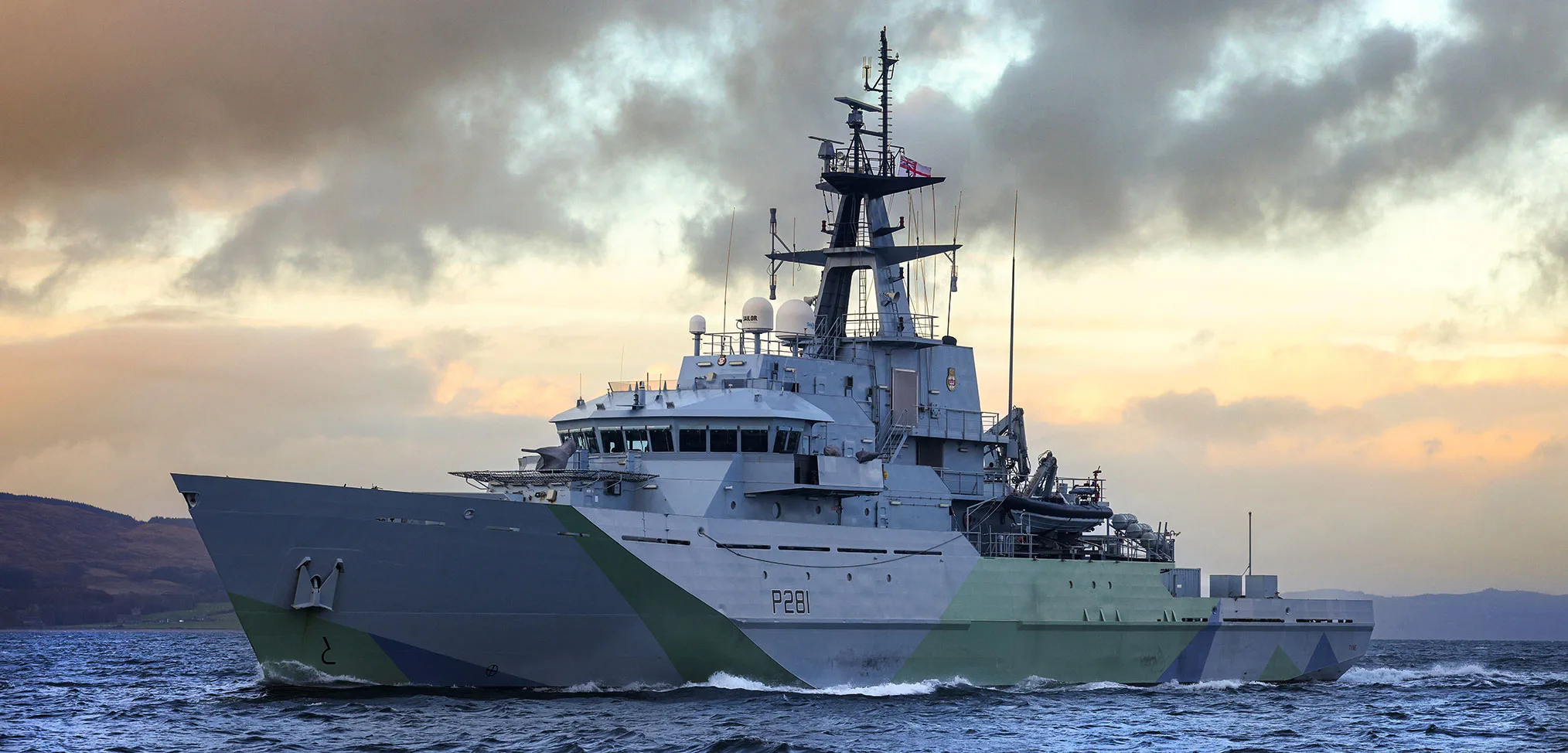
All three Batch I OPVs have now completed a life extension refit designed to see them serve for another five years and have been well-maintained throughout their lives. Inevitably, there is no plan to replace them in 2028 as there is no budget. Some of the Batch II OPVs, mostly forward-deployed overseas, will have to be brought back home to take over their roles while Type 31 frigates eventually replace them. The vague official line is now that the first Type 31 frigate, HMS Venturer, will not enter service “until the end of the decade”, so another gap is looming. Building a new batch of low-cost OPVs would be a sensible solution, or at least extending the Batch I in service rather than selling them overseas.
Main image: HMS Severn dressed overall for D-Day 80 celebrations, June 2024. Photo: Andy Amor.