
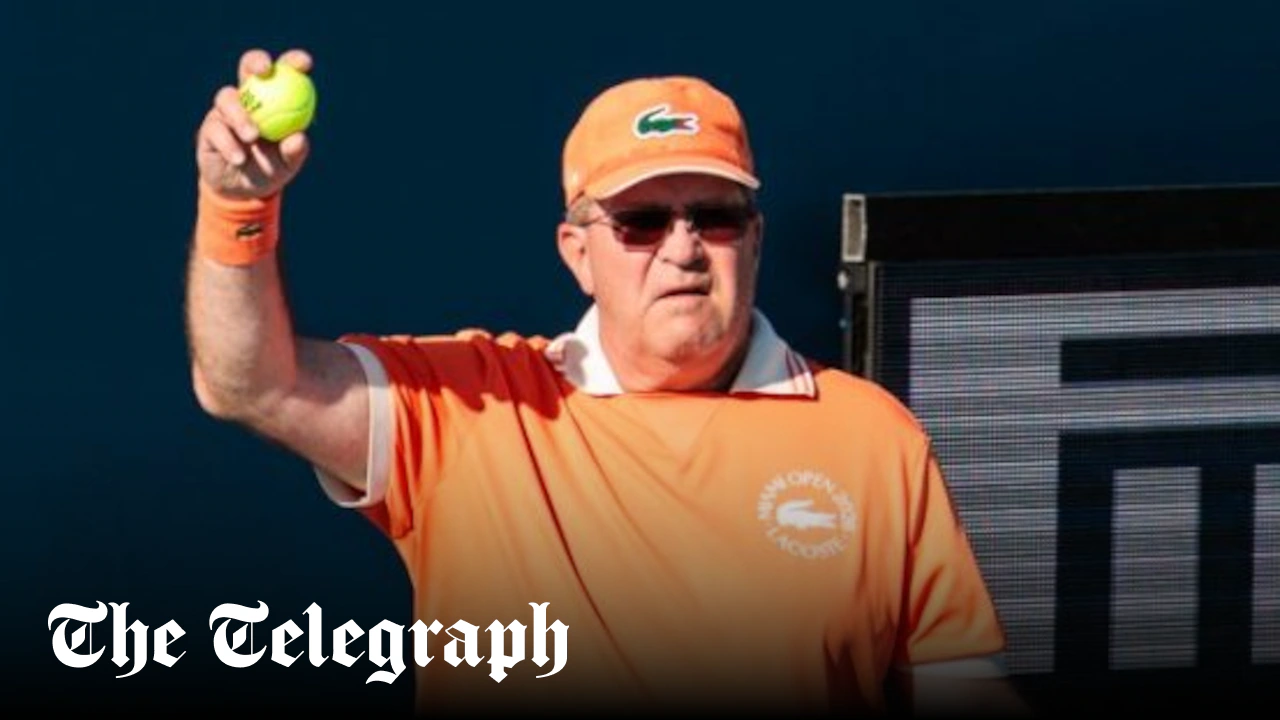
“That’s the initial reaction I got. But now everyone’s like, ‘That’s so much fun, that’s so cool’,” Williams says. “I have friends that will travel and I see them at these tournaments and I think they’re envious now because it’s so much fun; it’s a really great time.”
While ball persons at the US Open are compensated for their time, the Miami operation is entirely voluntary, with 815 people trying out for 421 places.
The youngest ball person is 13 and the oldest 71, although the majority are teenagers. Those aged 55 and over are known as the “silver streak”, and they all appeared on court together for a match this year, including a husband and wife.
At every tournament, the ball boys and girls, or “ball kids” in Australia, are a necessary part of proceedings, even if the desire is that they go as unnoticed as possible by the players themselves.
“I think what’s interesting with an older ball person, and I had this with several players this tournament already, they’re very appreciative of you being out there,” Williams says. “I’ve had more thank yous. There are a number of players that are generally thankful that you’re out there.”
“I outrun some of the kids,” 69-year-old Maureen Olson tells Telegraph Sport, while describing the intense try-out shuttle runs all the applicants are put through before selection.
One of the things that comes through from the older ball persons at the Miami Open is their obvious love for the sport and their duties. There has to be something that keeps them coming back year after year, even if it continues to take many by surprise.
“Even when I’m walking around, I get double looks with the uniform,” Olson, who is in her third year of being a volunteer ball person in Miami, says with a laugh. “I think it’s hysterical. Because I know what they’re thinking.”
Olson works as a Starbucks barista during the months of the year when she is not decked out in the almost-garish Lacoste orange-and-white uniform and traipsing up and down tennis courts in the South Florida heat for up to 10 hours a day.
“I don’t think people realise how detailed and demanding it really is,” she says. “They just see people out there throwing the ball; it’s so much more than that.”
It was Ray Waterhouse’s wife who first alerted him to the volunteer roles on offer at the Miami Open four years ago because she wanted to be an airport greeter for Rafael Nadal.
“The funny thing is, she never got to be an airport greeter,” Waterhouse says, adding that the tournament had too many people and had to make cuts, with his wife one of them.