
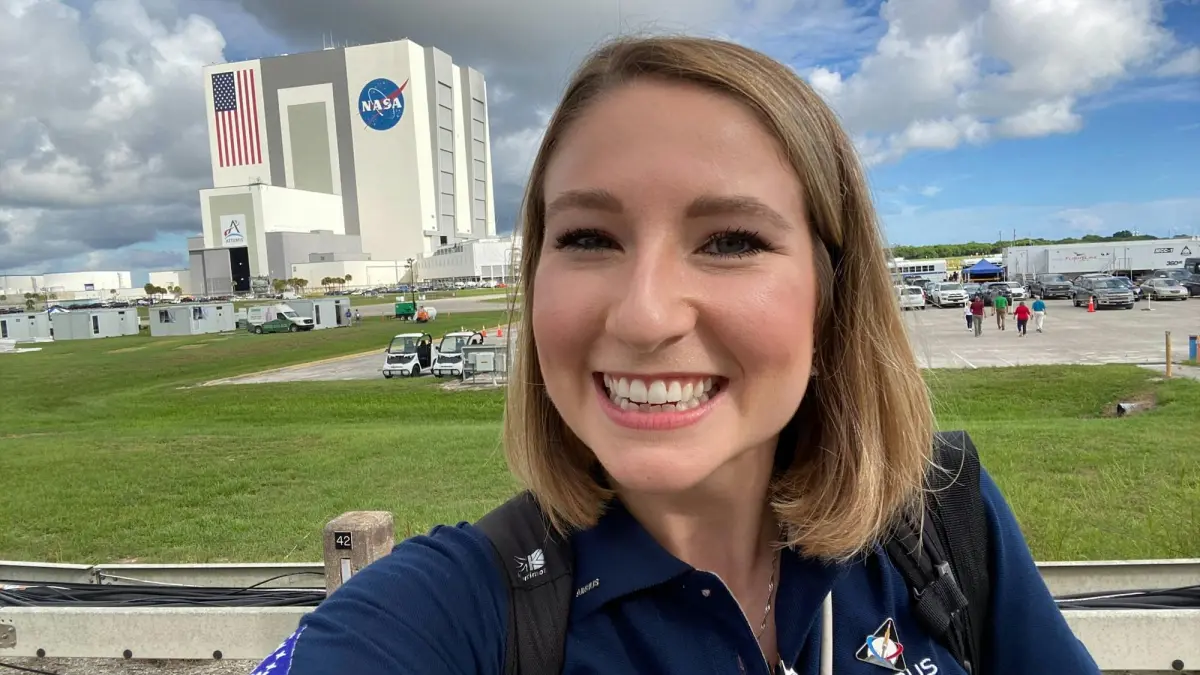
When the Artemis II rocket engines fire on Wednesday night, defying gravity to launch four astronauts on their way around the moon for the first time in half a century, all attention will be on the 140-decibel roar of history being made.
But Siân Cleaver will only be half watching those giant engines become enveloped in flames as they lift the £3 billion rocket off the ground. At Florida’s Kennedy Space Centre for the launch, the British engineer’s attention will be set far higher, nearly at the top of the 322ft spacecraft, just below the Orion crew module housing the astronauts. There sits the European service module (ESM), a crucial part of the rocket which Cleaver, an industrial manager at Airbus, has been working on for the past eight years.
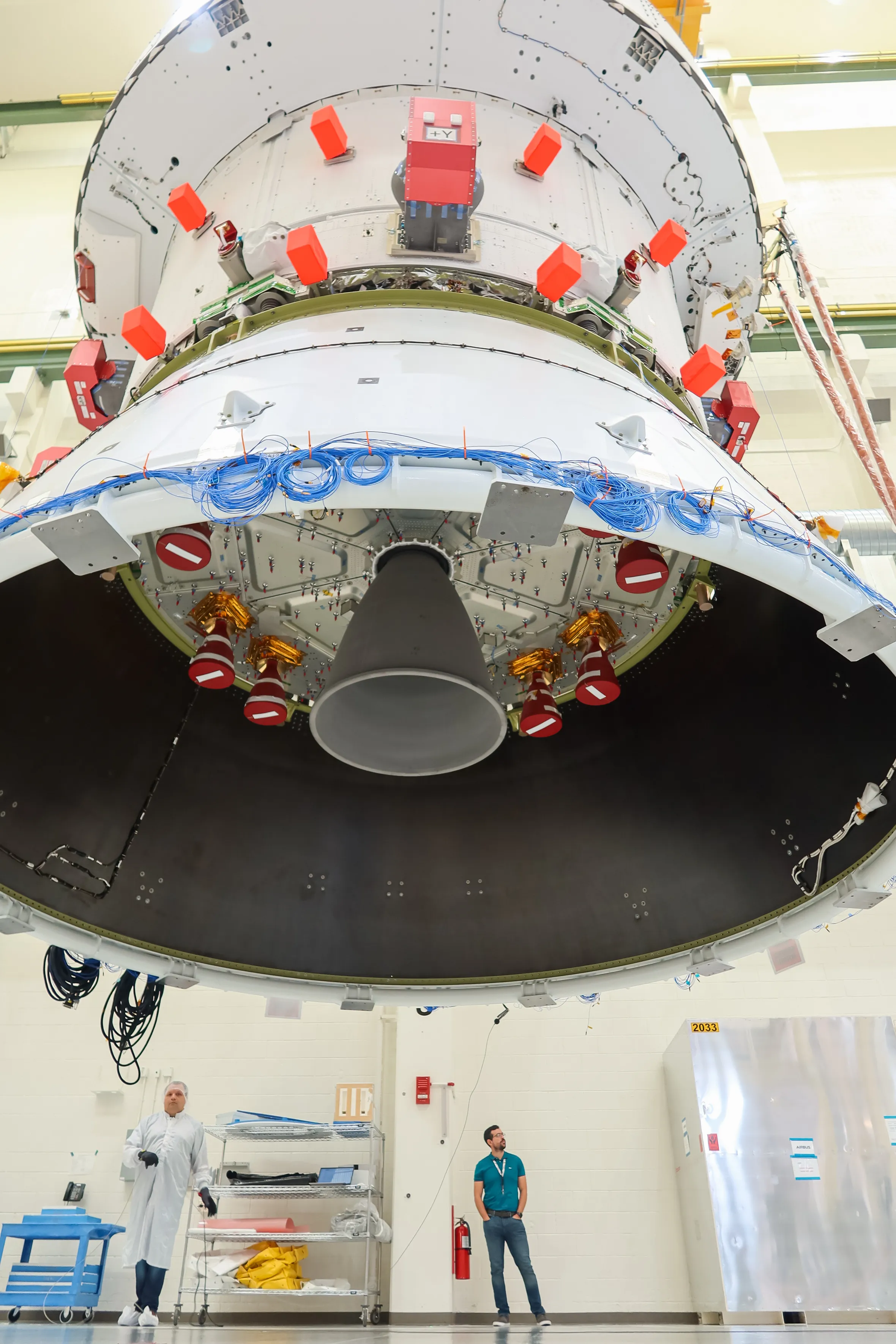 The European service module at Kennedy Space CentreNASA/Amanda Stevenson
“That is the part that provides everything that the astronauts need for their journey to the moon, everything to keep them alive,” said Cleaver, 36, from Chelmsford, Essex. The ESM holds the astronauts’ air and water, the solar panels and batteries to power their equipment, and the thrusters which power them through space.
Once the huge rocket engines have blasted the spacecraft out of Earth’s atmosphere and dropped away, the astronauts’ module and ESM will fly for ten days for 685,000 miles around the moon and back.
Cleaver, who has played a key role running the team which built the module, said the astronauts and their families were constantly on the minds of the engineers she works with. “We’ve got these people’s lives in our hands,” she said. “When you’re sending humans into space, you have to be really sure that what you’re delivering them is perfect.”
The team — 150 scientists in the Airbus factory in Bremen, Germany, along with hundreds of subcontractors based in 11 European countries — first built the module for the Artemis I mission in 2022, a successful unmanned flight around the moon. This second mission is the first time the system will carry humans, increasing the pressure on Cleaver’s team.
They have also already delivered the module for Artemis III, which will go around the Earth next year to practise linking up with the moon lander, as well as for Artemis IV, which will land humans on the moon in 2028 for the first time since 1972.
“We are always thinking a few years ahead and we’re now focusing on the fifth and sixth European service modules. My job is to make sure that we get them delivered on time, that they do the job that they’re supposed to do, that they work perfectly well.” With 4,000 types of parts going into each module, logistics is everything.
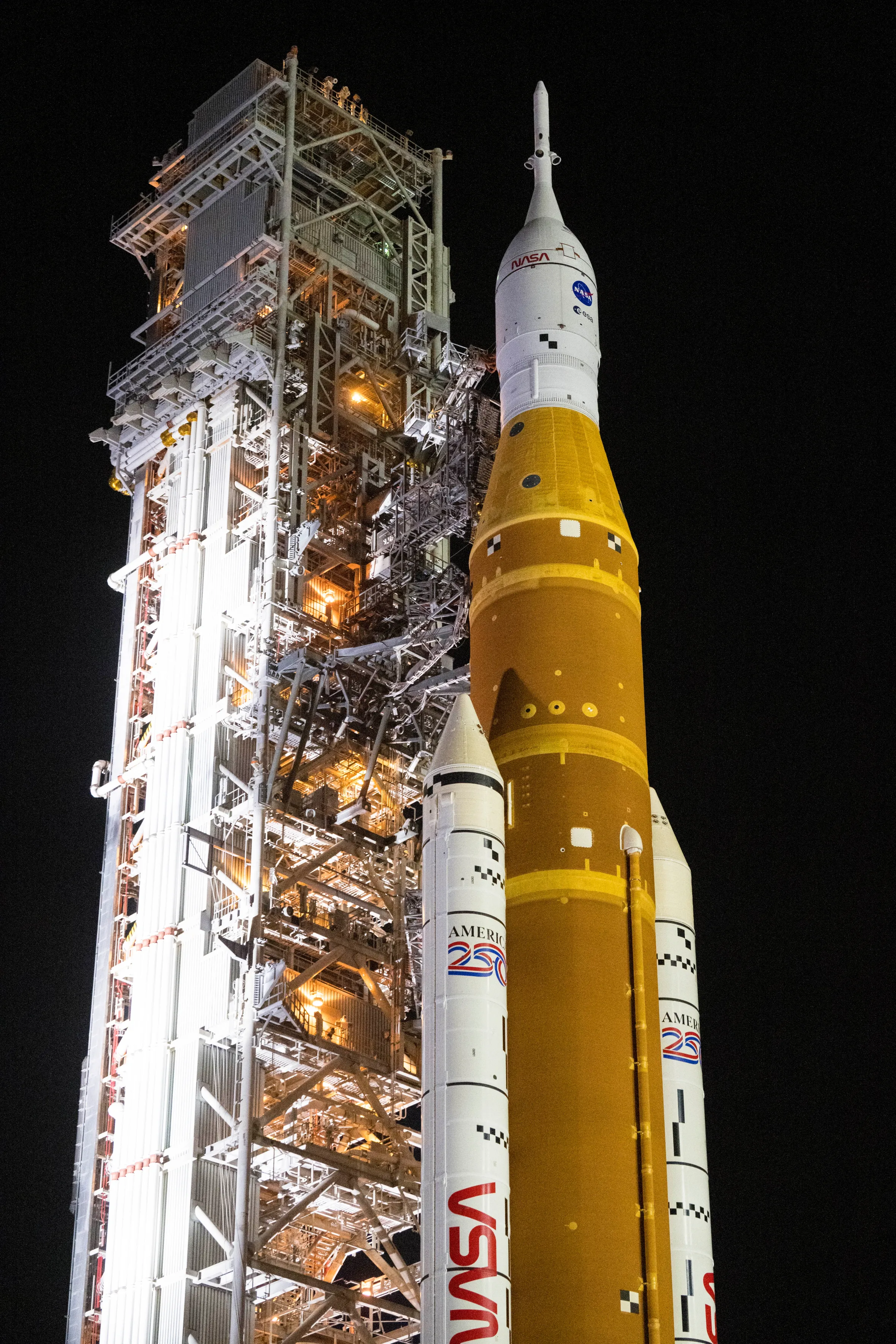 Nasa scientists are preparing for the Artemis II flight this week from FloridaEPA
A team of Cleaver’s colleagues will be at mission control in Houston, Texas, this week, ready to pitch in if anything goes wrong with the module. “They will be sitting at computer screens watching data come in from the spacecraft throughout the mission and hoping for a very boring time.”
Cleaver, who has been based in Bremen since 2018, fell in love with space when she was five years old. Her parents — Joyce, a primary school teacher, and Stephen, a policeman — encouraged her passion. “My dad got really into astronomy because I was interested. They really indulged my interest — they took me to lectures at the Royal Aeronautical Society in London.” At the age of eight they took her to visit the Kennedy Space Centre while on holiday in Florida — and this week they will both be back there with her to celebrate the launch.
 Siân Cleaver, left, visited Florida as a child and is now preparing for the launch of Artemis II, below PA
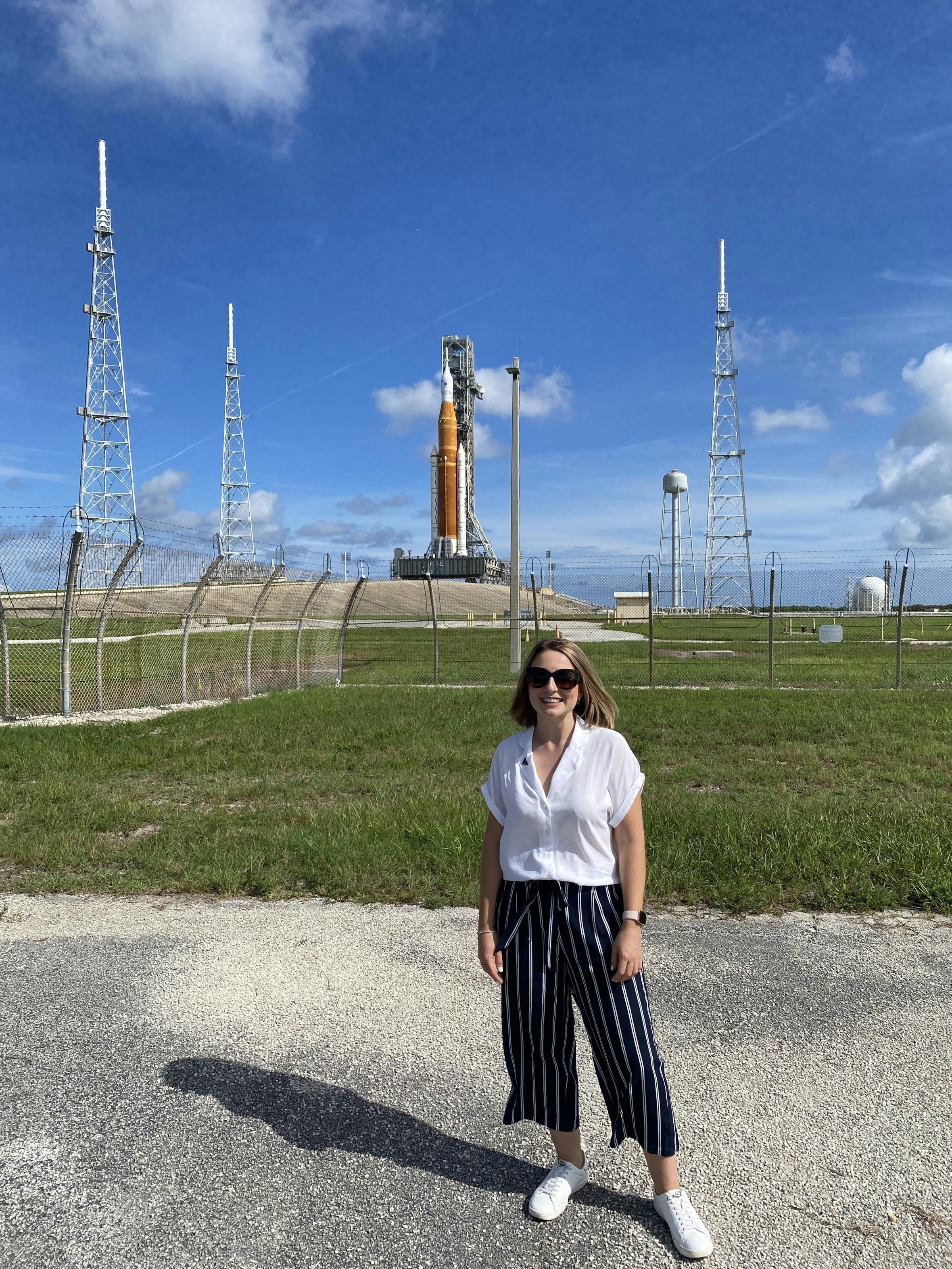 Siân Cleaver
As a grammar school pupil at Chelmsford County High School for Girls, she thrived in her physics classes. “Because I went to an all-girls school, the idea of women being less interested in Stem [science, technology, engineering and maths] just wasn’t a thing for me.” But when she arrived at Durham University to study physics and astronomy, she realised her choice might have been an unusual one.
“I looked around and thought, ‘Where are all the women?’. There weren’t so many of us.”
When she started her career as a graduate systems engineer at Airbus, including spells at Portsmouth and Stevenage, things had improved. There was a “solid group” of female trainees, she said.
But as she has progressed through her career, she has seen that women have tended to disappear from the field. “I don’t see so many inspirational, strong women in leadership positions in some of these aerospace companies. There are some, but not enough. I’m really starting to notice that now I’m mid-career — I’m missing the people to look up to and be inspired by.”
One woman who does meet that brief is the astronaut Christina Koch, 47, who will fly on Artemis II. An electrical engineer who holds the record for the longest continuous space flight by a woman, having spent 328 days aboard the International Space Station in 2019-2020, Koch arrived at Cape Canaveral on Friday having completed pre-flight quarantine in Houston with her fellow American astronauts Reid Wiseman, 50, and Victor Glover, 49, as well as Jeremy Hansen, 50, who is Canadian.
Although she dreamed, as a small girl, of being an astronaut, Cleaver insists the Artemis programme shows that British scientists can play a role. “You don’t need to despair that you’re not American,” she said, “There are plenty of opportunities. I really hope that it inspires people and that maybe that will ignite more involvement from the UK and maybe ultimately British astronauts of the future.”