
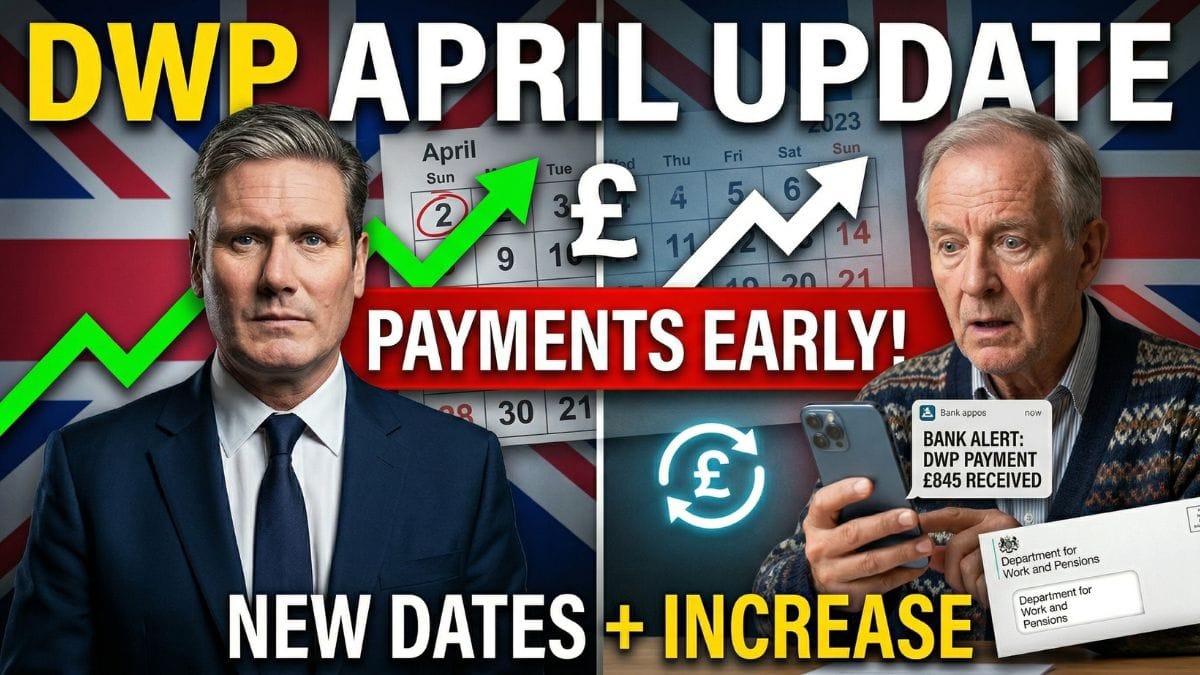
As April approaches, several financial changes are set to affect millions of people across the UK. From revised payment schedules to benefit increases, this period marks the start of a new financial year and brings adjustments that could influence household budgets.
Around 24 million people in the UK currently receive some form of Department for Work and Pensions support, including the State Pension. With Easter bank holidays falling early in April, some payment dates will shift, and benefit rates will also increase in line with inflation and policy updates.
Dates
One of the most immediate changes involves payment timing. Due to the Easter bank holidays, some benefit payments will arrive earlier than usual.
If your payment is due on:
Friday, April 3 (Good Friday)Monday, April 6 (Easter Monday)
You should receive your payment on Thursday, April 2 instead.
This adjustment applies to a wide range of benefits, including:
Benefit TypeAffected by Date ChangeUniversal CreditYesState PensionYesPension CreditYesChild BenefitYesPersonal Independence PaymentYesDisability Living AllowanceYes
Payments are typically made directly into bank, building society, or credit union accounts. When a payment date falls on a weekend or bank holiday, it is standard practice to issue funds on the previous working day.
Pension
State Pension payments will follow the same early payment rule where applicable. Normally, payments are scheduled based on the last two digits of a person’s National Insurance number.
Here is how the standard schedule works:
NI Number EndingPayment Day00 to 19Monday20 to 39Tuesday40 to 59Wednesday60 to 79Thursday80 to 99Friday
If a scheduled payment day falls on a bank holiday, the payment will be issued earlier, in line with the general DWP guidance.
Budget
Receiving payments earlier can be helpful, but it may also require careful budgeting. Since funds arrive sooner, they must last longer until the next payment cycle.
For example, a payment received on April 2 instead of April 6 means an additional four days before the next scheduled payment. For households already managing tight budgets, this timing difference can have a noticeable impact.
Increases
April also brings benefit increases. Many DWP and HMRC-administered benefits are adjusted annually to reflect inflation.
For April 2026, the following changes apply:
BenefitIncreaseInflation-linked benefits3.8%Universal Credit standard allowance2.3%State Pension (basic and new)4.8%
These adjustments are intended to help benefits keep pace with rising living costs, although individual circumstances will determine how much difference this makes in practice.
Policy
A notable policy change is the removal of the two-child limit for Universal Credit. Previously, families could only claim the child element for their first two children in most cases.
From the start of the new tax year, families will be able to claim support for all children in their household.
The government estimates this change could lead to:
450,000 fewer children living in relative poverty by 2030 to 2031150,000 fewer working-age adults in relative poverty
While these projections are long term, the policy change represents a significant shift in how support is distributed to families.
Support
If a payment does not arrive as expected, recipients are advised to contact the DWP. The helpline is available on 0800 328 5644, although it will be closed on bank holidays.
It is generally recommended to wait until the end of the expected payment day before making contact, as processing times can vary.
Outlook
April’s changes combine short-term adjustments with longer-term policy updates. Earlier payment dates due to bank holidays may require temporary budgeting adjustments, while benefit increases and rule changes could affect financial support over a longer period.
For many households, staying aware of these changes can help with planning and managing expenses more effectively during the transition into the new financial year.
FAQsWhen will April benefits be paid early?
Payments due April 3 or 6 arrive on April 2.
Which benefits are affected by date changes?
Most DWP benefits including UC and pensions.
How much are benefits increasing in 2026?
Most rise by 3.8%, pensions by 4.8%.
What is the two-child limit change?
Families can now claim for all children.
What if my payment is late?
Contact DWP after your due date.