
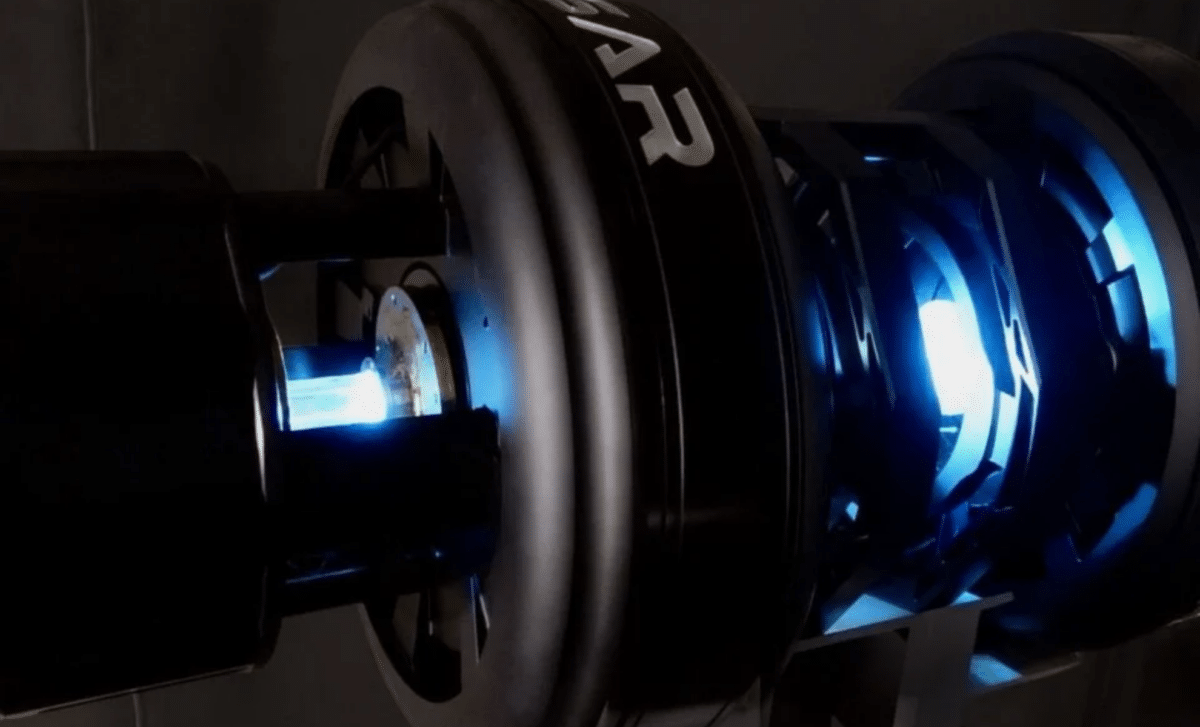
UK-based startup Pulsar Fusion has successfully ignited the world’s first fusion rocket. The ignition of plasma in its Sunbird exhaust system is a critical step towards developing a revolutionary propulsion system that could drastically cut travel time to Mars and beyond. This achievement marks a milestone in space propulsion, opening the door for faster, more efficient interplanetary travel that was once thought to be decades away.
Pulsar Fusion’s Historic Fusion Rocket Test
On March 22, 2026, Pulsar Fusion stunned the space community with the successful demonstration of its Sunbird nuclear fusion rocket system. The demonstration, held at the company’s UK facility, marked the first time a fusion rocket was able to ignite and confine plasma, proving that the theoretical principles behind nuclear fusion propulsion are viable for space travel.
The Sunbird rocket, which will one day be capable of propelling spacecraft to Mars in under six months, utilizes a technology known as the Dual Direct Fusion Drive (DDFD). This engine combines the immense power of nuclear fusion, the process that powers stars, to provide both propulsion and electricity for spacecraft. With a specific impulse much higher than chemical rockets, Sunbird promises to make space travel faster, more fuel-efficient, and capable of traveling farther than ever before.
The test result was live-streamed to a captivated audience at Amazon’s MARS Conference in California, where space experts and enthusiasts witnessed the successful plasma ignition. This event not only demonstrated the technology’s potential but also provided a real-time glimpse into what could be the future of space propulsion.
What Makes the Sunbird Rocket Different?
The Sunbird rocket isn’t your typical spacecraft propulsion system. Unlike chemical rockets, which expel combustion gases to create thrust, the Sunbird uses nuclear fusion reactions to generate intense heat and energy, converting that energy into plasma. This process produces vastly more efficient propulsion, allowing spacecraft to travel faster, use less fuel, and carry more cargo for longer distances.
The most significant feature of Sunbird is its ability to reach Mars in just under six months. Current chemical propulsion technology takes up to 10 months to reach the Red Planet. This breakthrough has the potential to reduce that travel time by more than 40%, revolutionizing interplanetary exploration. But the Sunbird isn’t just about reaching Mars faster, it’s about making sustainable deep-space missions feasible for the first time.
The Future of Space Travel: More Than Just a Dream
Pulsar Fusion’s vision for the Sunbird is bold and forward-thinking. In the long term, the company plans for the Sunbird to act as a “space tug”, a vehicle that would not launch from Earth but instead dock with spacecraft in low-Earth orbit and then propel them to their final destinations. This system would eliminate the need for massive and expensive rocket launches from Earth’s surface, which is one of the biggest barriers to deep-space exploration.
Once fully operational, Sunbird’s fusion propulsion system would allow spacecraft to continuously travel back and forth between low-Earth orbit and distant planets, transforming the way we approach space missions. The technology could ultimately pave the way for space exploration missions to far-off destinations like Europa, Titan, and even beyond the solar system.
Pulsar Fusion’s Long Road to Success
The journey to this achievement hasn’t been easy. The development of space nuclear propulsion technology has been ongoing for decades, with many experts predicting it was still years, if not decades, away. Pulsar Fusion’s success comes as a result of years of tireless work, innovation, and risk-taking. While this is just the first step in a much longer process, it marks a massive leap toward the reality of nuclear-powered space missions.
The company’s plans don’t stop here. In 2027, Pulsar Fusion plans to launch a demonstration of Sunbird’s core components in orbit, proving that the fusion rocket can function in the vacuum of space. This next stage will bring even more challenges, from constructing orbital docking stations to fine-tuning the propulsion system, but the company’s success in plasma ignition provides a solid foundation for the future.