
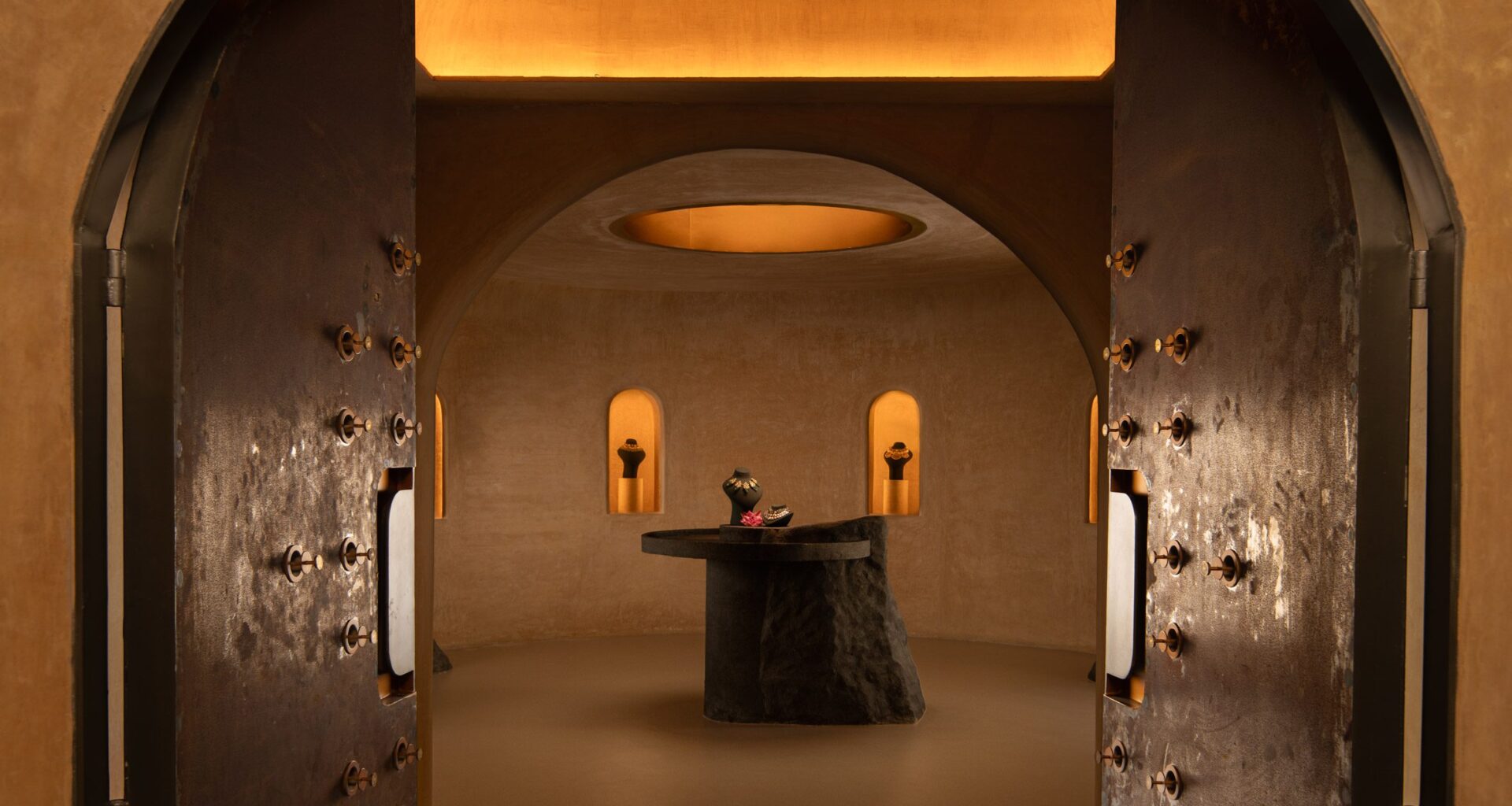
A monumental stone table forms the centrepiece of this jewellery store in Tiruppur, Tamil Nadu, which Parinamah Architects designed as a meditative space informed by religious rituals and symbology.
Parinamah Architects, which is based in the nearby city of Kochi, designed a space that aims to reflect Sabari Gold & Diamonds‘s brand philosophy, while focusing on craftsmanship.
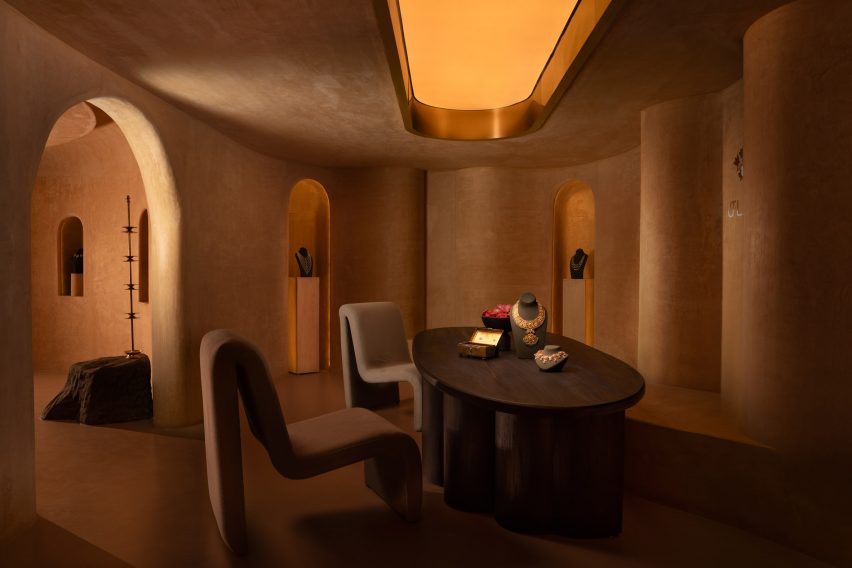 Parinamah Architects designed a shop for Sabari Gold & Diamonds
“The brief was simple yet profound,” said Parinamah Architects principal architects Cyriac Panamkuzha and Thomas K Mathew.
“[Sabari Gold & Diamonds] founders Susmitha and Prashant envisioned an intimate, themed environment where one client could be attended to at a time – with complete focus, comfort and unhurried presence.”
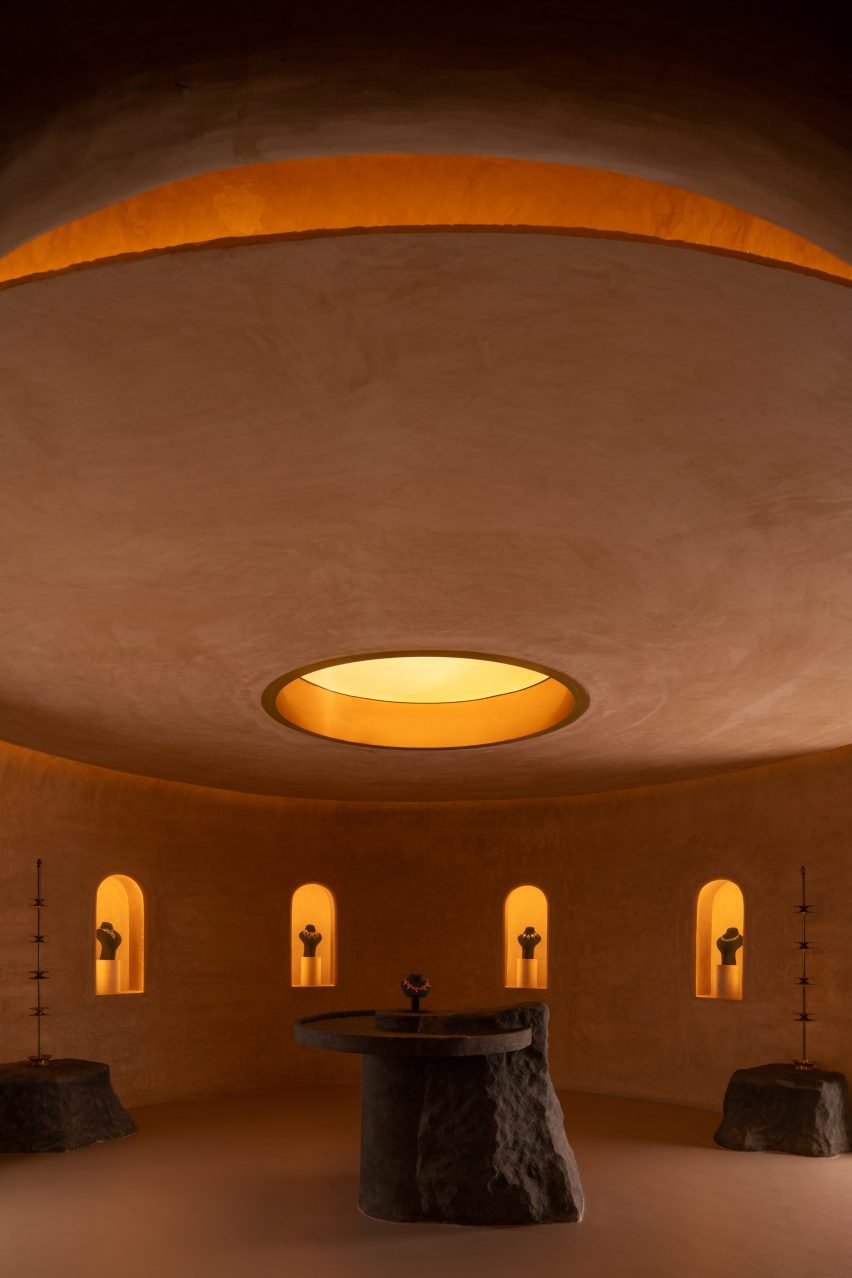 A monumental stone table forms the centrepiece of the store
Parinamah Architects incorporated references to Indian symbology, religion and traditions throughout the space, which displays just 15 pieces at any one time to highlight the exceptional details of the work.
Visitors enter the store through double doors intended to evoke temple gates found in the city of Tanjore. The weathered-steel doors are etched with motifs chosen to reflect the themes of devotion and time.
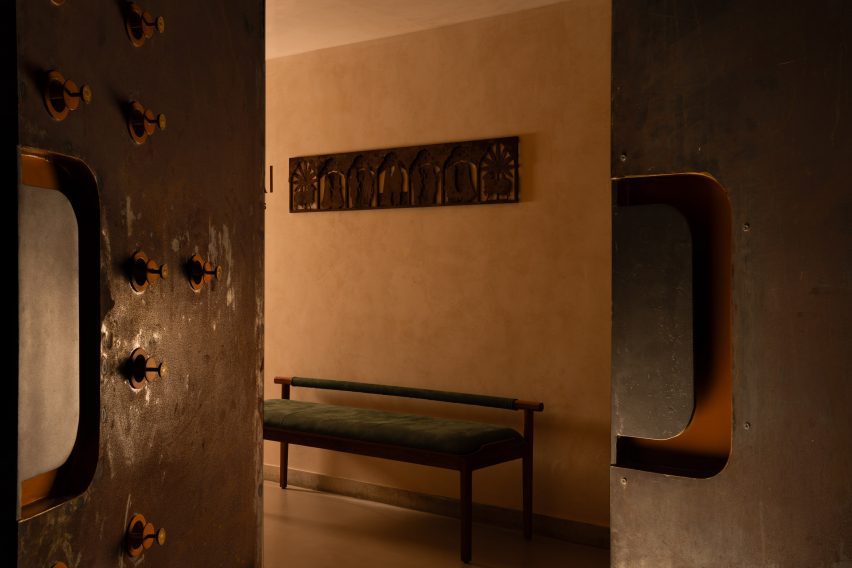 Coins from the client’s personal collection form a relief pattern on the door
Coins from the client’s personal collection form a relief pattern on the door that is based on traditional kolam art and aims to embed their own personal legacy at the first touchpoint of the store.
A short hallway leads through an arched opening into the central display area, where a circular floor plan recalls the sacred circumambulatory path surrounding the main shrine in Indian temples.
“The flow supports our everyday operations, while the ambience invites clients to slow down and connect with our handcrafted gold,” said the clients.
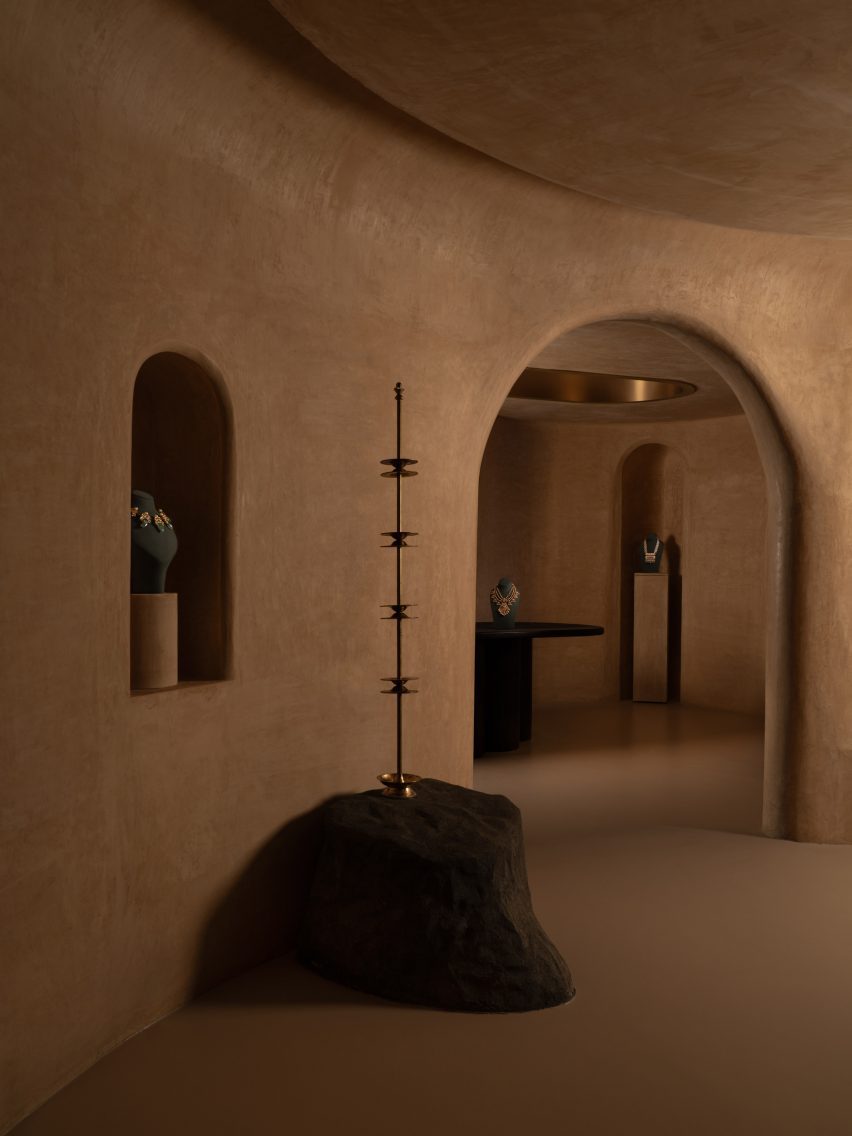 The rooms have curved walls and built-in benches
The intimate salon is centred around a monumental table made from a single stone that anchors the space while providing a surface for presenting jewels.
The room features curved walls and built-in benches, all finished consistently with a lime render in order to create a cohesive environment where nothing distracts from the objects on display.
Arched niches in the walls add a sense of rhythm to the journey around the space, which is made to feel more magical by integrated lighting that automatically illuminates the niches as visitors approach.
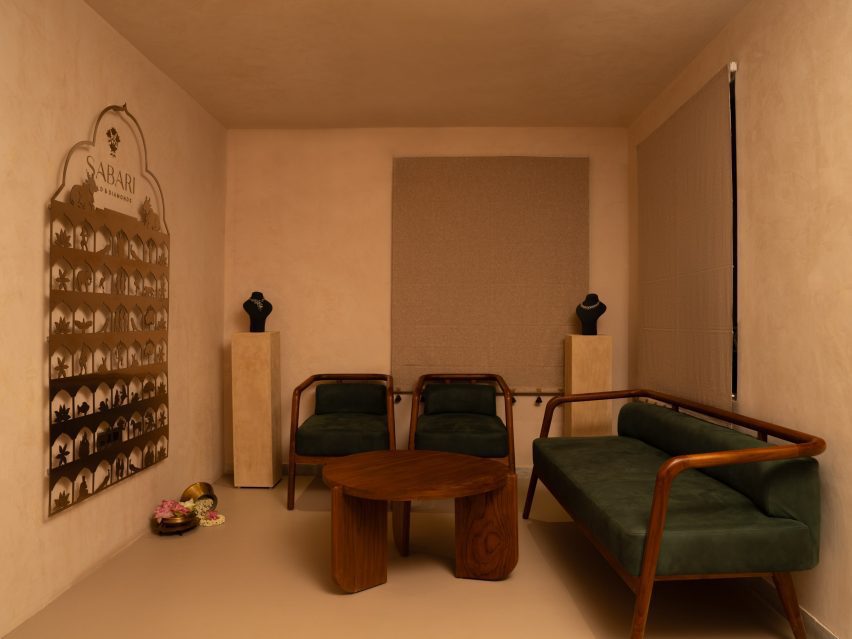 A pared-back material palette features throughout
Custom-made light fixtures crafted using a miniature bronze cymbal called an elathalam reference the rhythm of south Indian culture and provide a soft, focused glow around the room.
A corridor outside the main space features a weathered-steel panel depicting the wedding of Lord Shiva and Goddess Parvati, while a gilded panel in the nearby lounge illustrates the seven books of the Ramayana.

Egyptian heritage and craft infuse London boutique by jewellery designer Azza Fahmy
Throughout the project, curved surfaces, seamless floors and a pared-back material palette embellished with subtle gold details help to create an atmosphere that encourages visitors to take their time exploring the pieces.
“The store is like a quiet sanctum,” the architects added, “meant not to impress instantly but to be observed slowly.”
“You come here to pause, to meditate, to move at a gentler pace, and to recognise, in silence, the piece that belongs to you,” they continued.
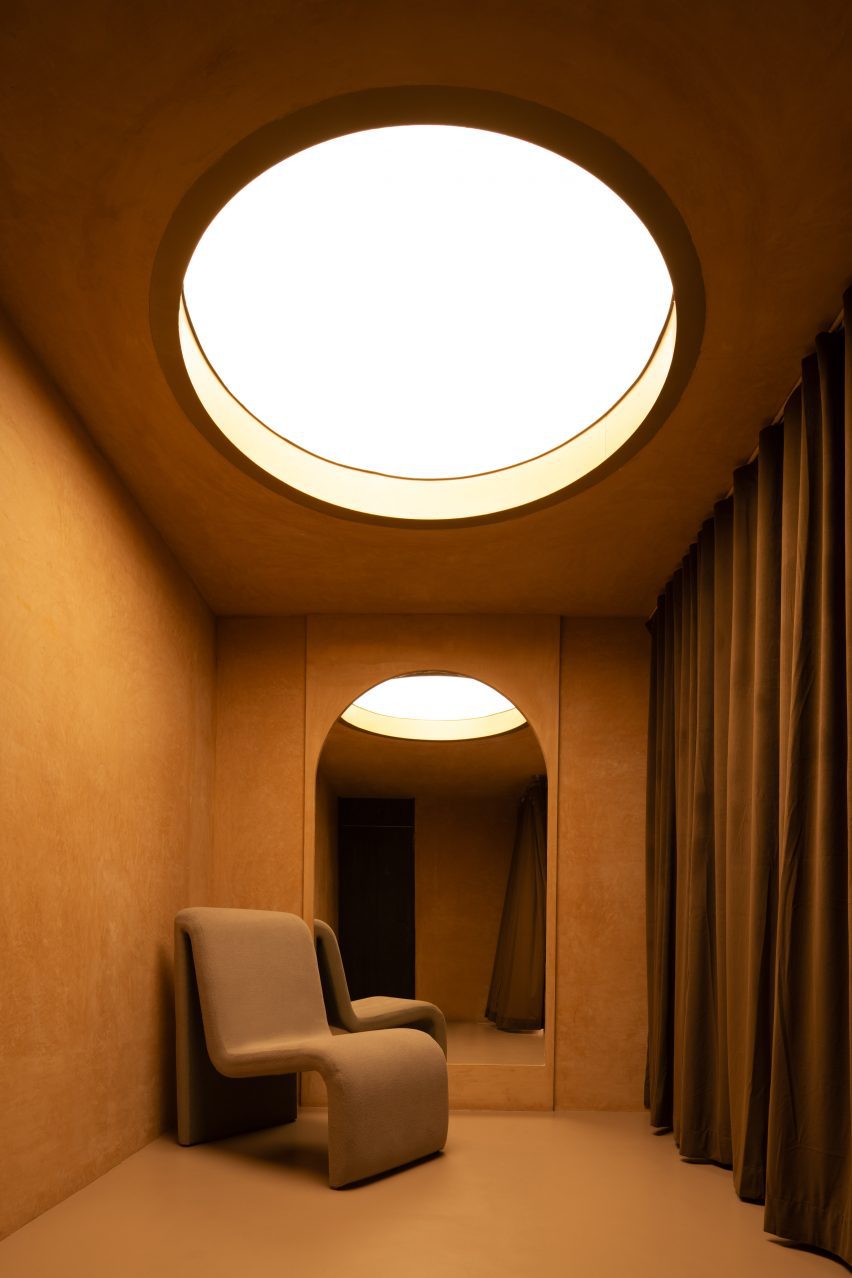 Subtle gold details help to create an atmosphere that encourages visitors to take their time exploring
Elsewhere in India, architecture practice The Melange Studio has suspended a giant shoe from the facade of a sneaker store in New Delhi, while technology brand Nothing has opened a store in Bengaluru that takes its cues from factory assembly lines and workshop spaces.
The photography is by Avesh Gaur.