
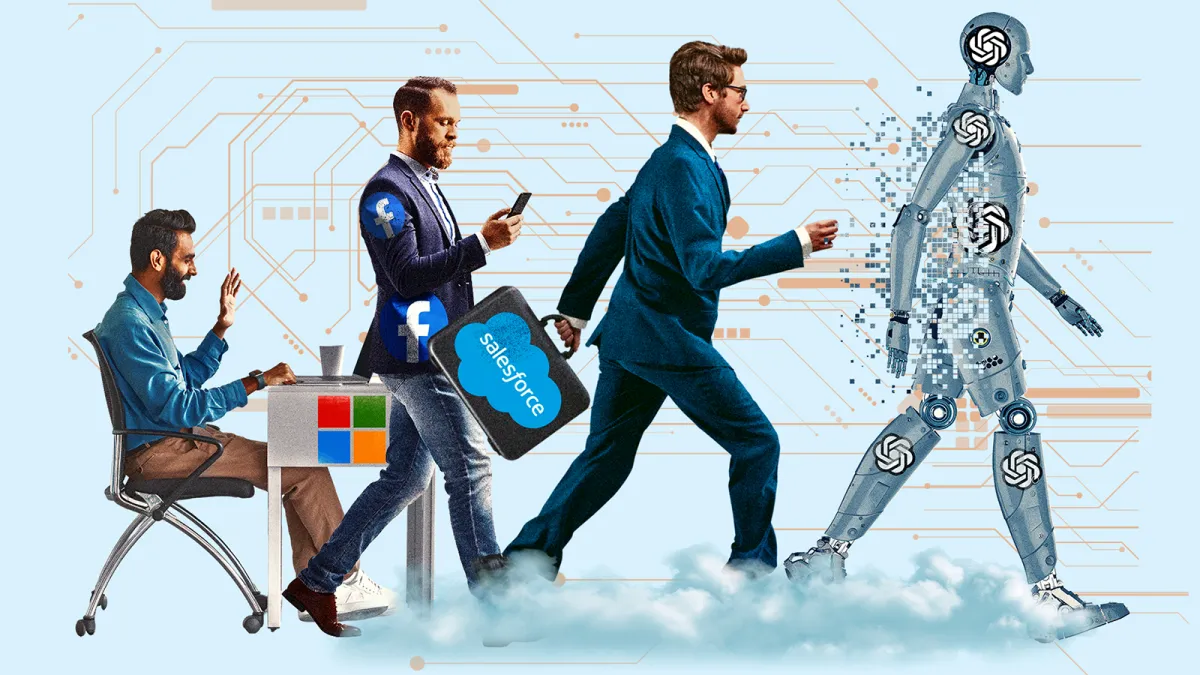
Pat Phelan, co-founder of the Sisu chain of aesthetic clinics, is such a believer in artificial intelligence that he has not just implemented it across his business, he has also invested in an AI company.
In early 2024, before AI became part of the vernacular, Phelan replaced the chief marketing officer role at Sisu with AI. As the company has grown to more than 30 clinics in the US, Ireland and the UK, it now uses AI to do everything from identifying where it should open its new clinics to dealing with customers.
Working with the Dublin-based company Momntum, Sisu produced a tool called Laila to deal directly with customers. Laila can talk to clients — in multiple languages — over the phone, it can message them on WhatsApp or through the company’s website, and is available 24/7.
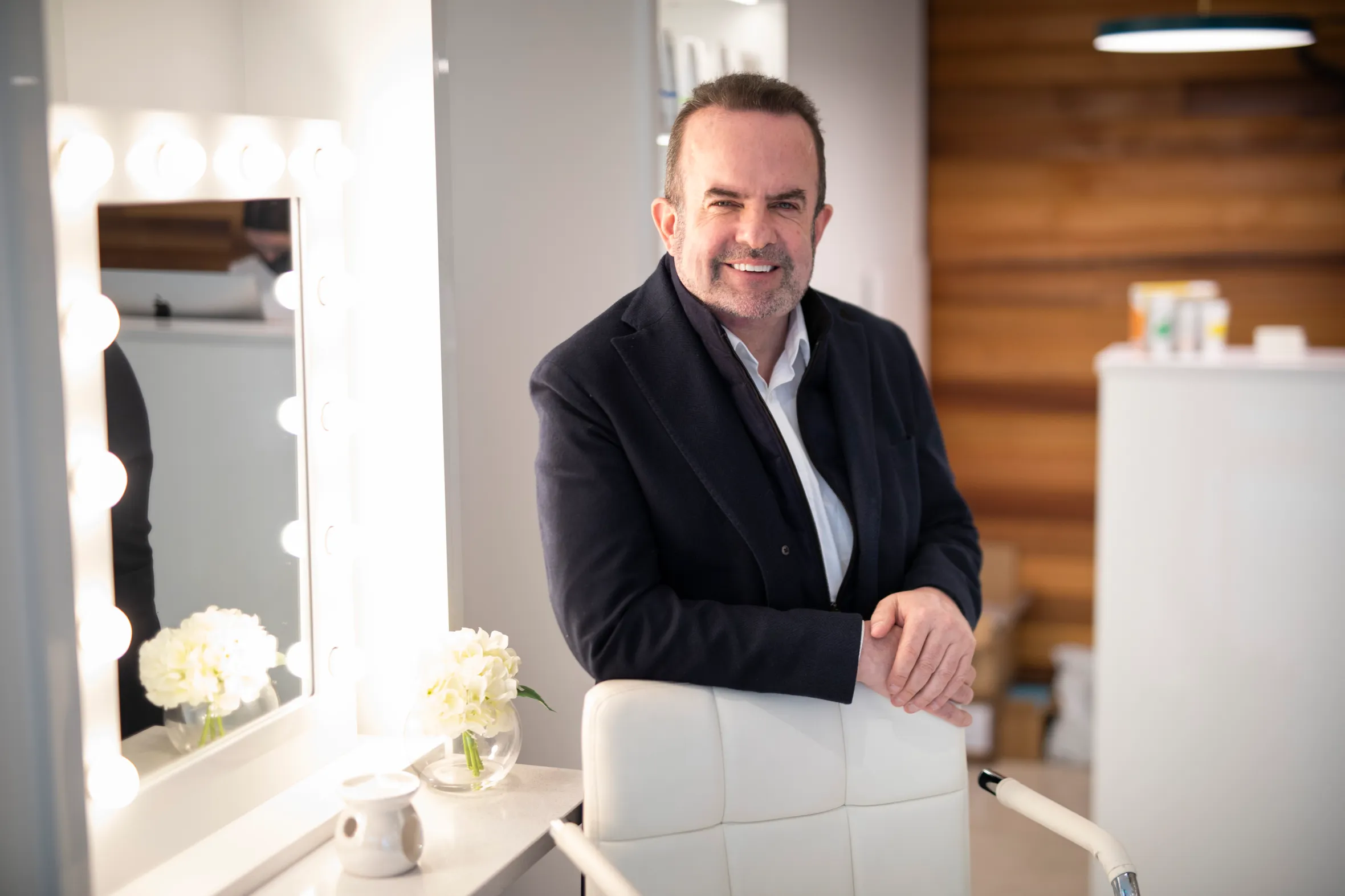 Pat Phelan replaced his chief marketing officer at Sisu with AICathal Noonan
Phelan is now a director and investor in Momntum. “AI is like the Klondike gold rush,” he said. “Bring a pick and a shovel.”
The government appears to be on board. In February it published its digital and AI strategy, which laid out an ambition for Ireland to become a global hub for the rapidly emerging technology.
With attractive corporate tax rates, Ireland has enjoyed enormous success riding the various waves of technological evolution over the past 40 years.
Microsoft was still in its relative infancy when it set up an office in Dublin in 1985. The chipmaker Intel Ireland opened four years later. Wintel — Microsoft Windows and Intel chips — would power the PC revolution and the two corporations’ presence here established the country as a destination for tech investment.
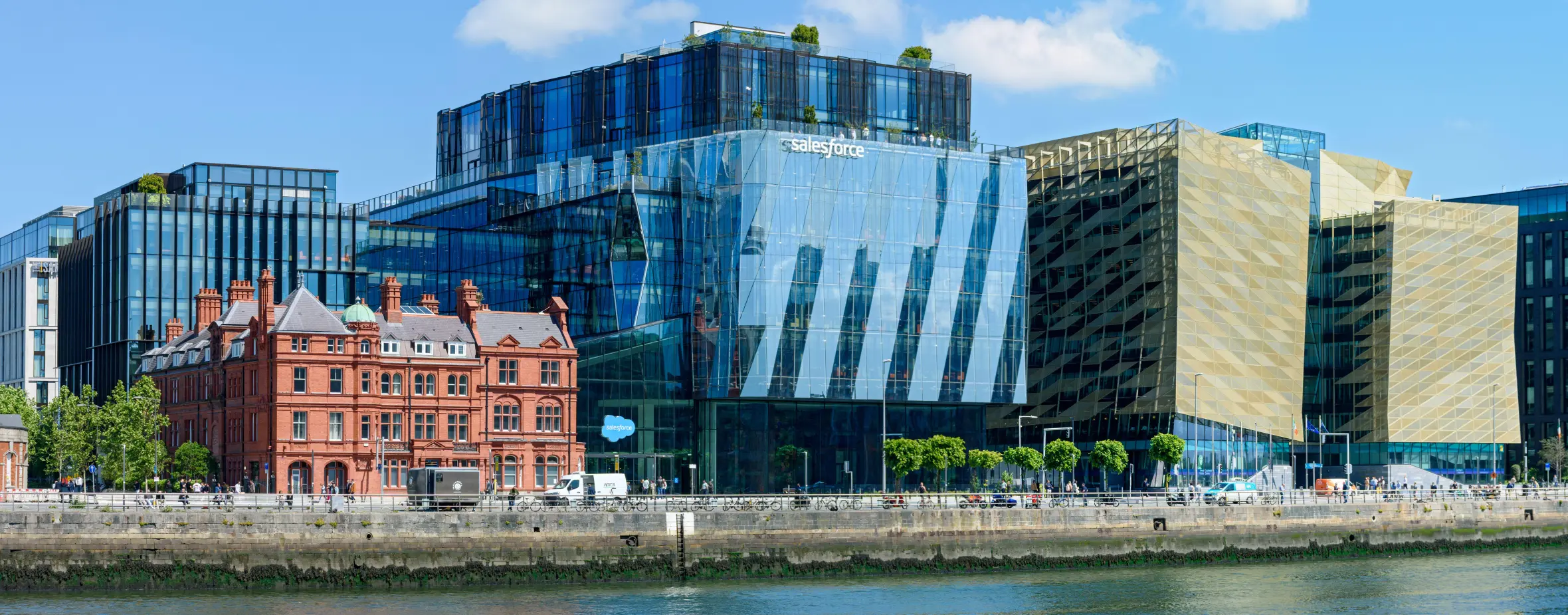 Software-as-a-service in Ireland reached its pinnacle in 2021 courtesy of companies such as Salesforce, based in DublinAlamy
Similarly Google arrived in Ireland in 2003, just five years after it was set up. The social media titan Facebook followed, as did Twitter (now X), LinkedIn and TikTok.
By the time software-as-a-service (SaaS) reached its pinnacle in 2021, the world’s biggest players, including Salesforce, had long had a presence in Ireland, employing thousands of well-paid staff.
It is tempting to believe that AI’s leading lights will join the conveyor belt of job creation, though not all players are so sure.
Strong tech foundations
Last year Partsol, a US-founded specialist in artificial general intelligence, moved its headquarters to Dublin. John Callahan, president and chief technology officer, said that the decision to locate here was based on Ireland’s long-established and stable tech-friendly environment.
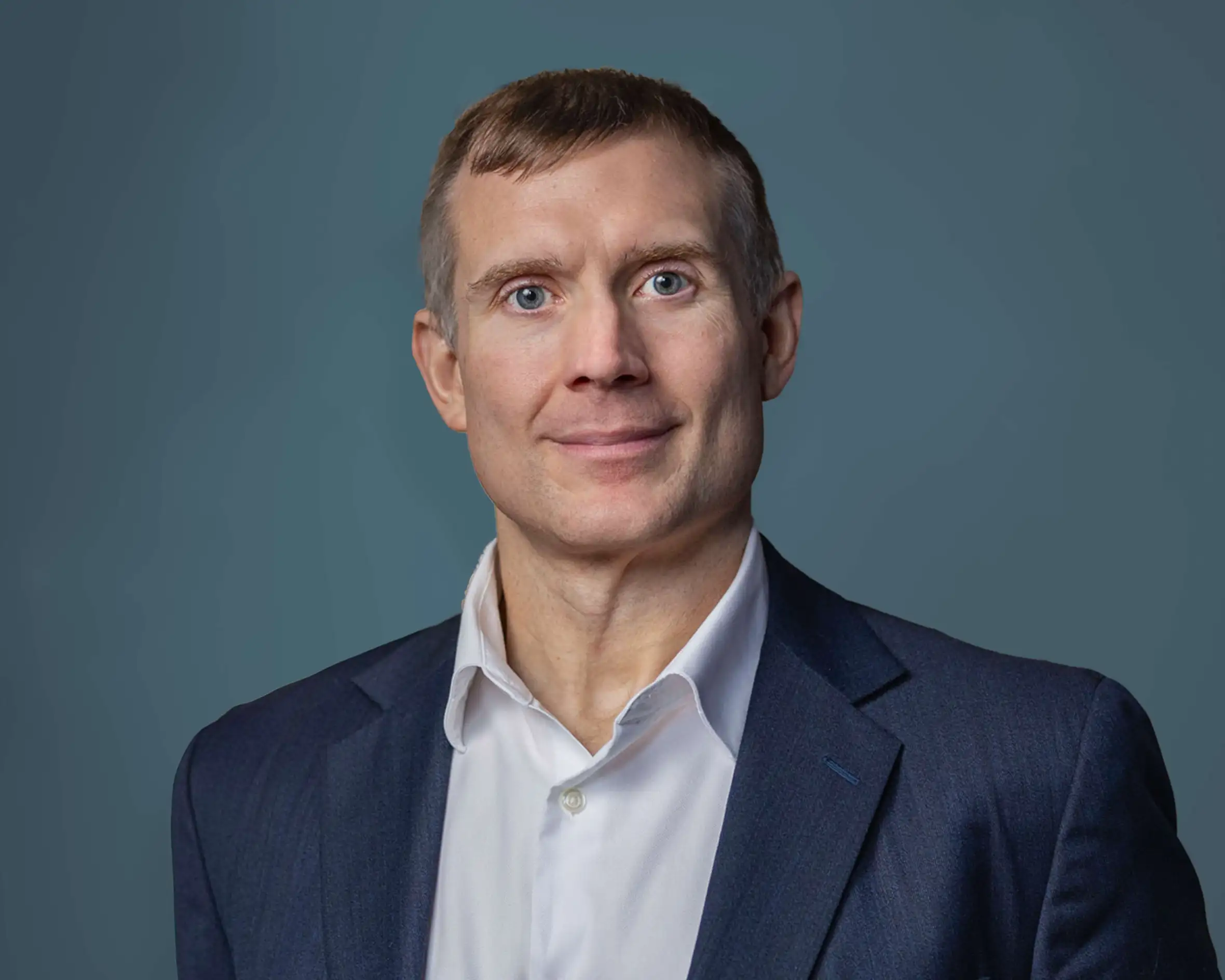 John Callahan, president and chief technology officer of Partsol
“[The country] also has a great workforce — and access to a talent pool not just in Ireland but in Europe,” he said. “It has a commitment to supporting business and technology, and there are lots of other companies here that we can interact with.”
IDA Ireland identified AI as one of the four strategic growth drivers for foreign direct investment by 2030. It believes the country has the foundations for success in attracting investment.
Dónal Travers, executive director at IDA Ireland, said the existing “deep bench” of tech companies was building AI capabilities and using Irish-based talent to do so.
For example, the big four — Microsoft, Alphabet (Google’s parent company), Amazon and Meta — are investing $650 billion in AI this year alone.
“We have the base, we have a legacy of activities that’s been built up over many decades,” Travers said.
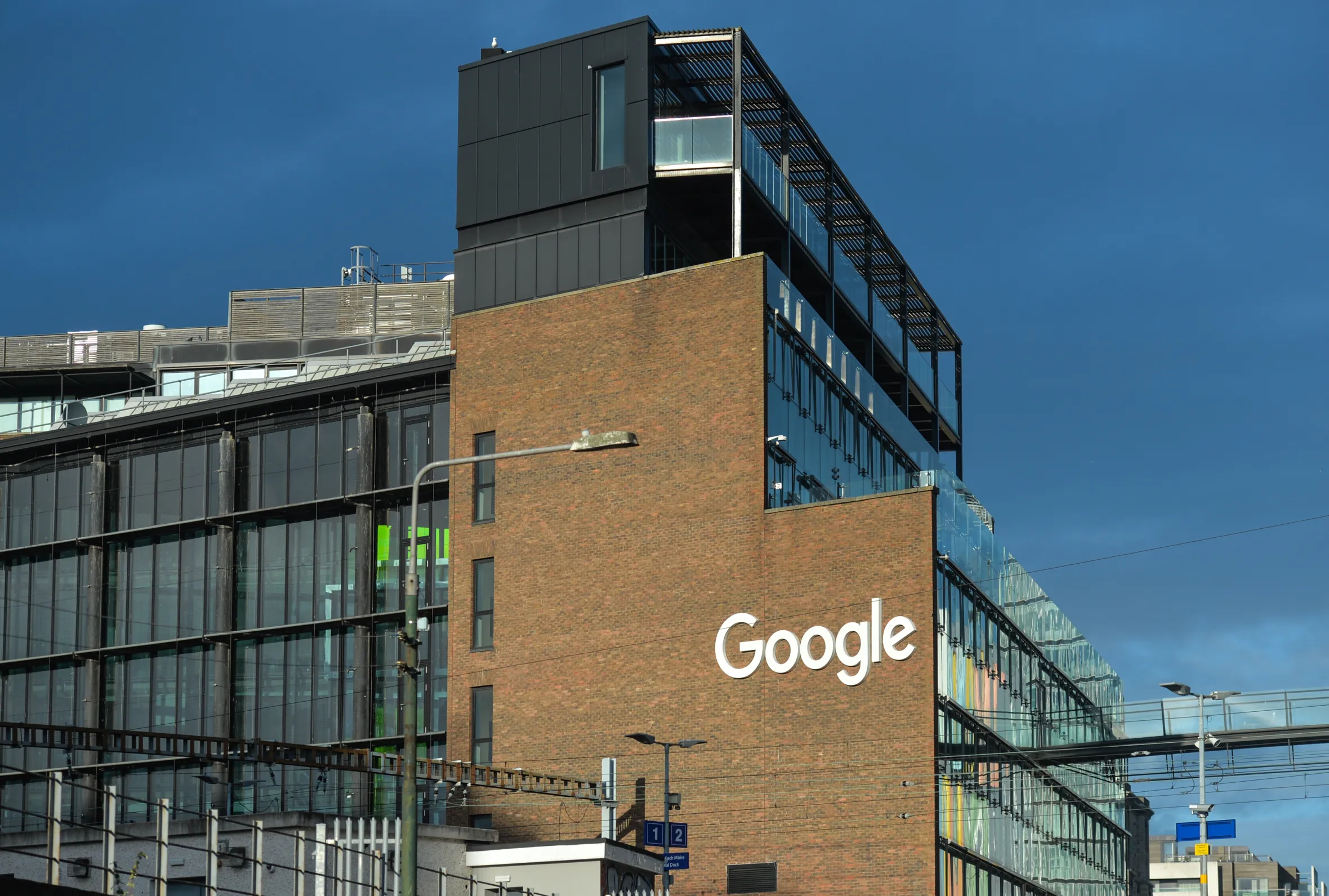 Google’s EMEA offices in the western part of the Grand Canal Docks in DublinArtur Widak/NurPhoto/Getty Images
If anything, Ireland’s previous form in attracting tech companies means the country has a ready and willing workforce to tackle AI.
“I know sometimes we can sound like a broken record, but ultimately nothing happens without the talent, without the people, the skills that are here,” Travers said.
The International Monetary Fund recently ranked Ireland first globally for skills readiness for AI. Sequoia, a Silicon Valley venture capital firm, named Dublin as having the highest density of AI talent in Europe. AI experts made up 17 per cent of all software engineers in the capital, more than double the average of European cities.
AI jobs boom unlikely
However, those operating in the industry have warned that the AI sector will not be the big employer that traditional tech companies have been in the past.
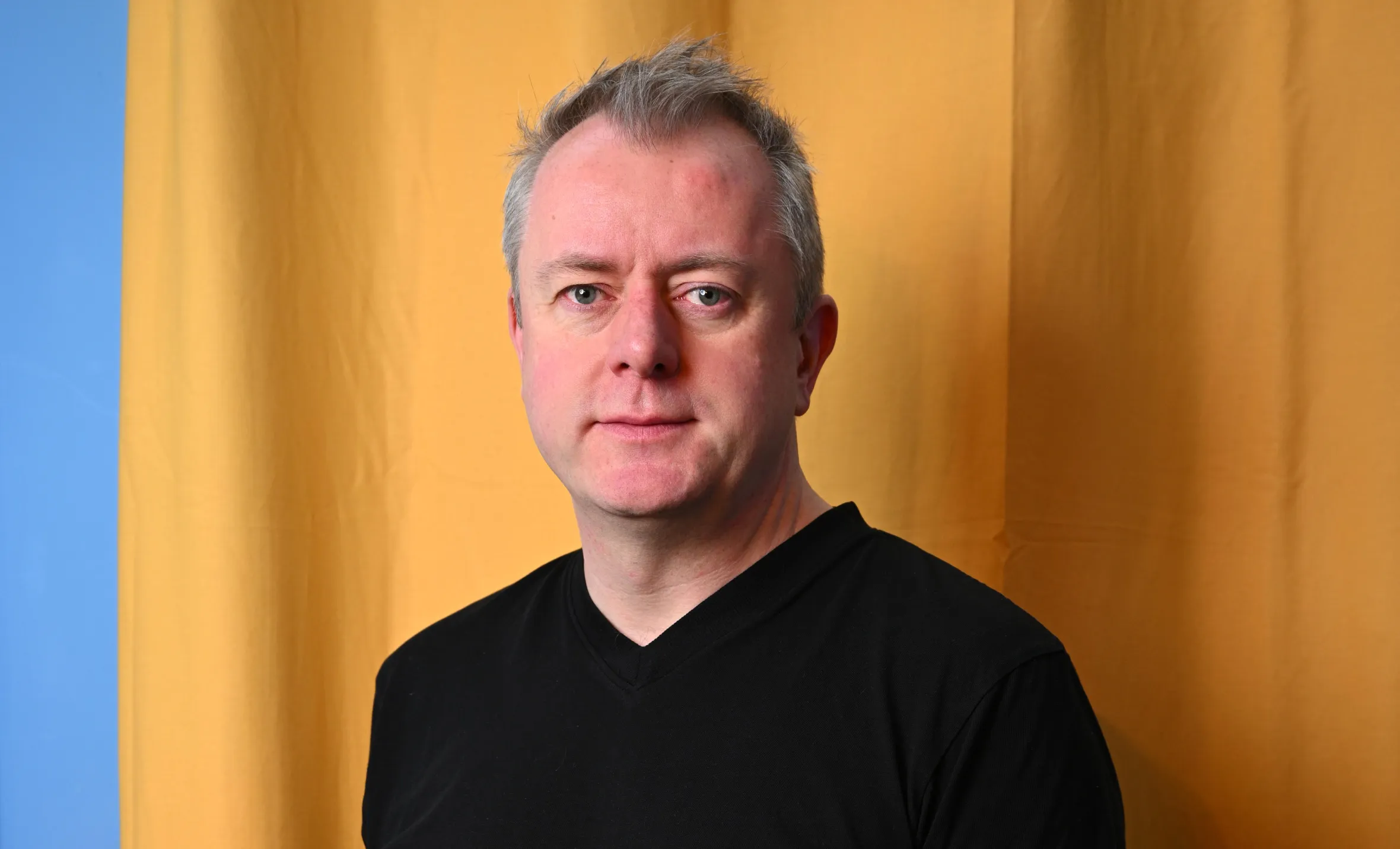 Sean Blanchfield, chief executive of Jentic, warned that AI would not provide the mass of jobs that tech has up to nowBryan Meade
Donnchadh Casey, vice-president of AI security at F5, the app security company, predicts there will be “far fewer jobs” in tech going forward — as indicated by job cuts at multinationals such as Meta and Microsoft.
“You can’t just lift and shift the jobs that exist in Ireland in SaaS companies into other tech companies. You can’t expect one-for-one replacements in AI because AI companies, by their nature, are more efficient,” Casey said.
Sean Blanchfield, serial entrepreneur and a founder of the AI company Jentic, also warned that AI would not be the employer that the Big Tech giants once were.
“We have to be honest about AI: it will lead to automation. It’s naive to think that if we get AI companies here that they are going to be massive employers, because they are trying to automate as much as possible with AI,” he said.
 Anthropic, the company behind Claude AI, plans to create 200 jobs in Ireland by 2027Cheng Xin/Getty Images
Ireland has already attracted some of the newer, flashy AI companies but the businesses have not rushed to hire in big numbers.
This month Anthropic — which is behind the AI tool Claude — announced plans to create 200 jobs here by 2027. The AI research and development company was valued recently at $380 billion but employs just 3,000 people globally.
Meta’s roughly $1.3 trillion valuation is about three times that of Anthropic but it employs about 25 times the number of people, with a workforce of 78,000 last year.
OpenAI, the company behind ChatGPT, is said to be looking for offices that could accommodate 450 to 850 people in Dublin. But the company, which is valued at close to $800 billion, has fewer than 5,000 employees internationally.
Homegrown heroes needed
Casey and Blanchfield said the government should focus more on growing indigenous AI companies than attracting foreign ones.
“This is a once-in-a-multigenerational change that we’re seeing,” Casey said. “In the 1840s we were very dependent on a single crop. When the crop failed, we know what happened. I think we’re in danger of making the same mistake now, because we are very dependent on FDI.”
Blanchfield said it was essential that the government encouraged the establishment of Irish-based AI companies so that it “generates a substantial amount of wealth here … so that in the future we have something to tax”.
That would require ensuring an environment where AI start-ups can thrive. Casey called for improved grants and tax breaks to help businesses get off the ground.
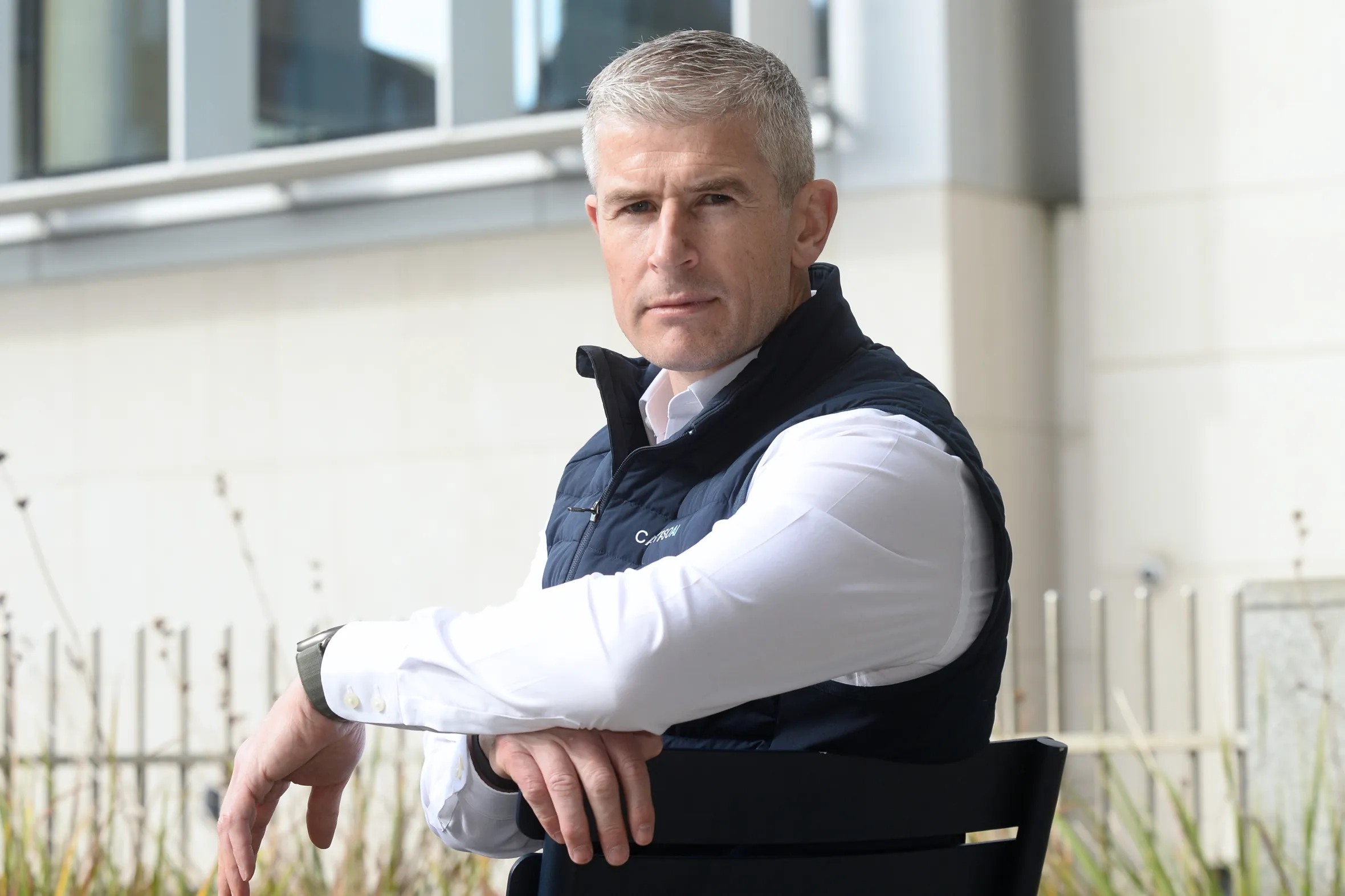 Donnchadh Casey, vice-president of AI security at F5, said tax breaks in Ireland are not comparable to those in the US and the opportunity to scale a company thereJustin Farrelly for the Sunday Times
“The grants that you get from the likes of Enterprise Ireland are good, but not great. The tax breaks for entrepreneurs are OK, but nothing in comparison to what you would get if you founded a company and scaled that company in the US,” Casey said.
Stripe’s John and Patrick Collison noted in their annual letter to stakeholders that the speed at which new companies became revenue-generating increased rapidly last year and their best guess was that this marked “the start of a larger inflection in entrepreneurship and creativity facilitated by advances in large language models”.
“There are new companies being created this year that will be the next Googles, that will be the next Metas, the next Salesforces, and there’s no reason why those companies can’t come out of Ireland now,” Casey said.
It need not be a case of either/or. Mary Rodgers, chief executive of PorterShed, an innovation hub and co-working space in Galway, said that collaboration between indigenous companies, multinationals and academia could “lead to great things”.
PorterShed, which is preparing to host a one-day tech summit at Dexcom Stadium in Galway on April 23, hosts 65 companies, of which about 70 per cent are indigenous and the remainder foreign.
“We need to maximise the opportunity that AI is presenting and make sure that we’re not left behind,” Rodgers said.
Ashish Kumar Jha, associate professor in business analytics at Trinity Business School, completed research last year with Microsoft which found that AI presented a €250 billion opportunity to Ireland over the next ten years.
The government and IDA Ireland should focus on start-ups emerging in Ireland and abroad, he said.
“Ireland has been great at attracting organisations, there is no reason we should not be doing that going forward,” he added.
Ireland newsletter
Our best in-depth reads, exclusive features, news and a note from our editors in Ireland.
Sign up with one click
“What you need is an innovation ecosystem so that small and medium start-ups come here and they innovate and they become the big organisations of the future. It’s almost too late if you’re waiting for a company to scale internationally and then pick Ireland.”
Pat Phelan believes that IDA Ireland should look east for the next big AI company. “There are billions of people using AI [in China and surrounding countries] and the models are as good, if not better, than those in the West,” he said.
He points to Chinese companies that have got it right, such as Baidu, whose AI bot Ernie has more than 200 million monthly users. The TikTok owner ByteDance has created Doubao, an AI assistant with more than 150 million monthly users.
It is not clear how courting Chinese players chimes with the drive toward AI sovereignty — where nations or trading blocs such as the EU seek to control their AI digital infrastructure without the threat of foreign interference. As part of its EU presidency, the government is to host an international AI summit in Dublin in October, called Enabling AI to Power European Growth.
Infrastructure concerns
Whether AI companies arrive or are incubated here, they will need data centre infrastructure to support them.
Speaking at the opening of Version 1’s new headquarters and AI studio in Dublin last week, Peter Burke, the minister for enterprise, spoke about the importance of having the grid infrastructure in place to “power” the AI economy.
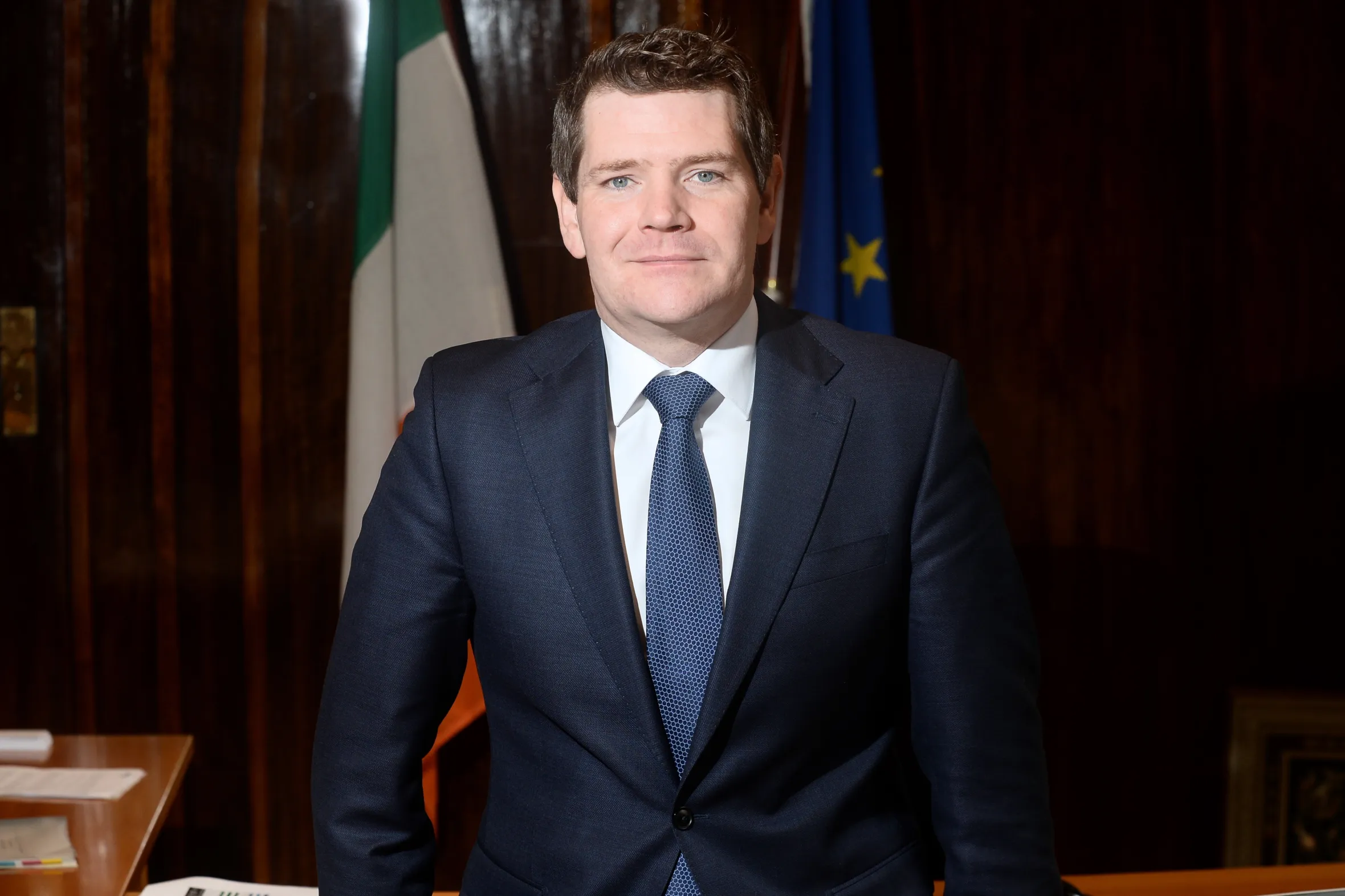 Peter Burke, the minister for enterpriseJustin Farrelly for the Sunday Times
The government has agreed a new capital plan of €19 billion to enhance the national grid.
“It all comes down to energy. Expansion here has been phenomenal in terms of just the energy moving through the grid. But if we can do more, we can attract more AI to the country,” said Blanchfield, who would like to see the discussion around nuclear energy reopened.
Similarly, Travers said there should be a focus on the cost of doing business, adding that incentives would attract companies. The refundable R&D credits are important to IDA’s sales pitch.
“The R&D credits are a huge help in terms of attracting companies to Ireland, because the first thing they look at is, ‘Well, if I pay €100 for R&D in Ireland and the government is going to give me back €3, that’s a really strong starting point.’ And then if you layer on the other incentives from the IDA and so on, and the talent advantage, it becomes a very compelling picture.”
Even as AI grows, policymakers need to be mindful of the new wave, which Jha believes will be quantum computing, where physics and IT combine to untangle complex problems. “In the same way we think of AI sovereignty, we will have to think of quantum sovereignty and start to try to growing the sector here.”