
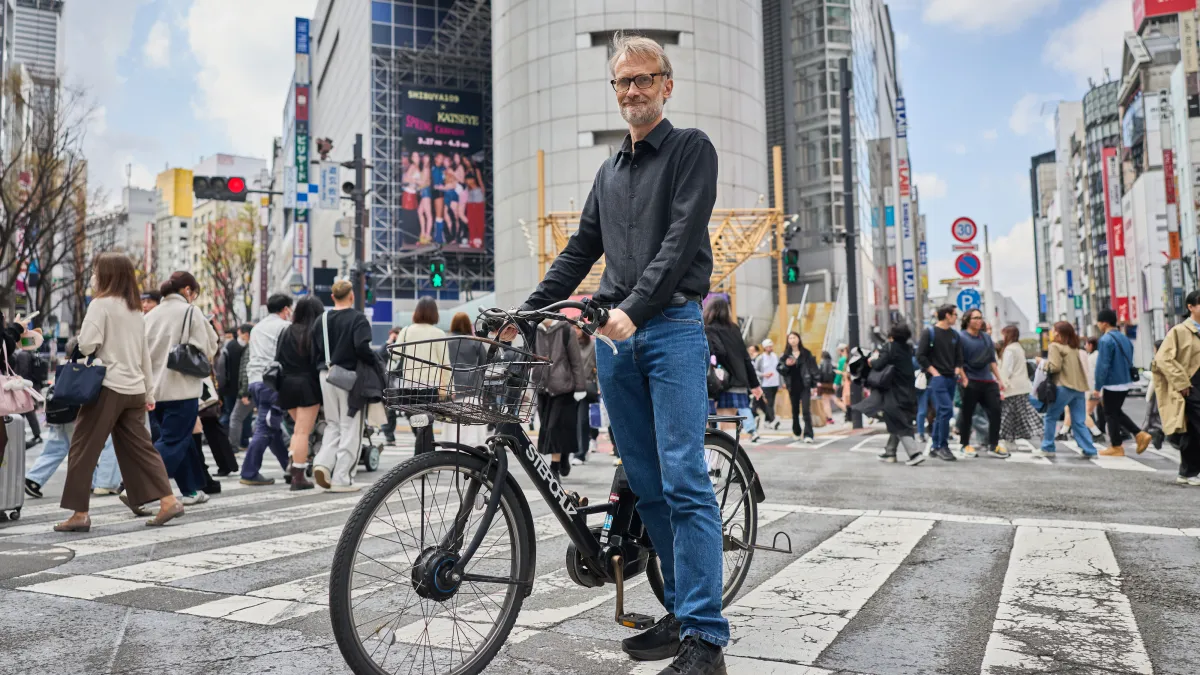
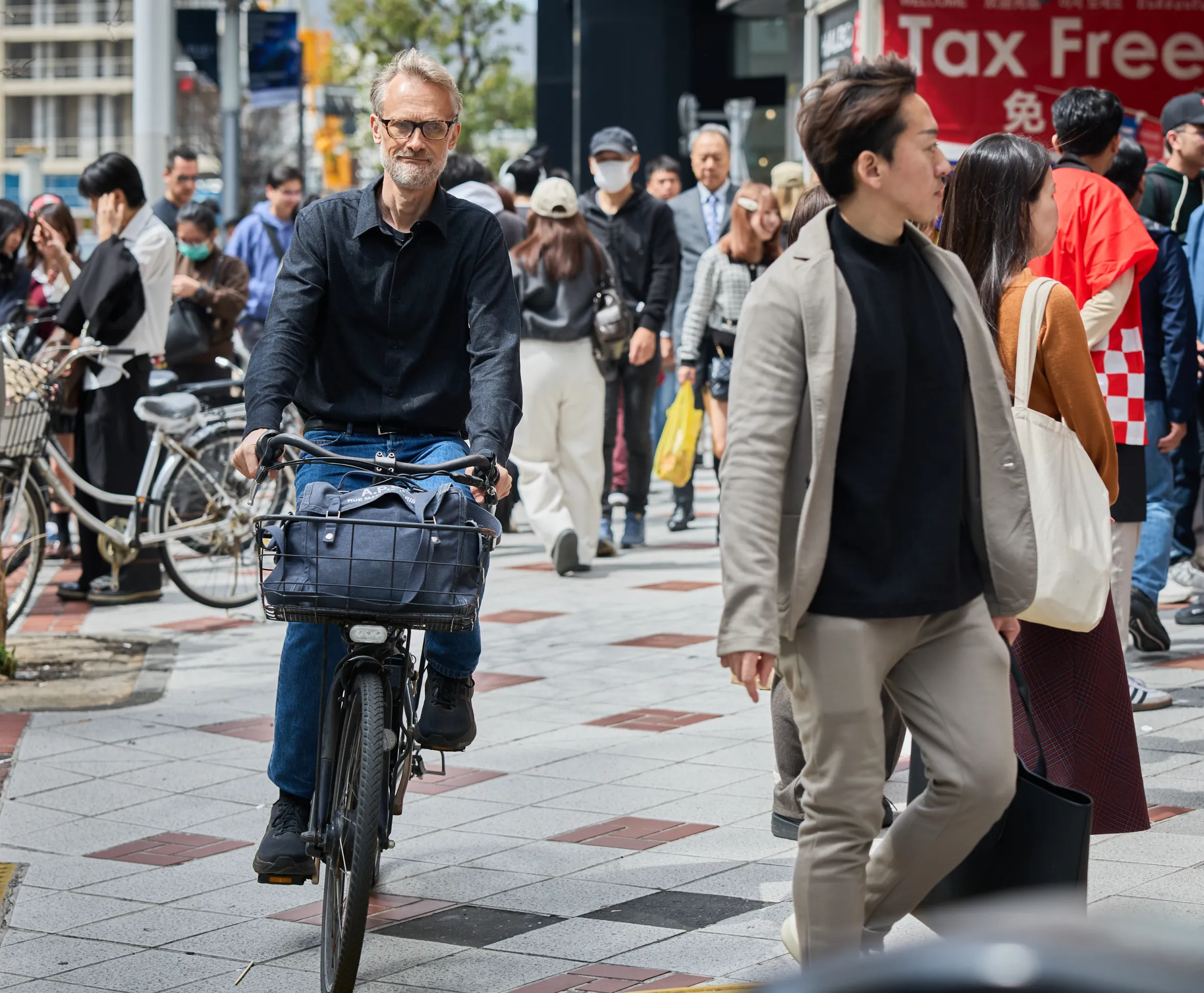
To be a cyclist in Tokyo, until this week at least, was to inhabit a world of giddy freedom in which the rules did not apply and one moved like a wheeled amphibian from the realm of the motorist to pedestrian, and back again. Japanese law says that bicycles must be ridden on the road, but until recently no one took any notice of this.
Even grown men on big serious bikes zip unreproached along the pavement, among the dog walkers and pushchairs. When it gets too crowded, or when the lights change, they sidle into the traffic and take their place among the cars and motorbikes. Helmets are encouraged but optional — until recently, not even the police bothered with them.
It is all in keeping with the peculiar character of Tokyo, a futuristic mega-city that still has the cosy atmosphere of a story by Enid Blyton or an episode of Peppa Pig, policed by a constabulary of gentle teddy bears.
But it is all about to change: this week the police will start cracking down on sloppy cycling. From Wednesday they will be able to impose fines of up to Y12,000 (£56) for obviously dangerous behaviour such as using a smartphone while cycling, running a red light or holding an umbrella.
Are the cyclists of Tokyo about to lose their innocence? Mounted on the Lloyd Parry family bike, with its big lithium battery to take the edge off the city’s gentle hills, I sallied out to investigate.
 Shoko Takayasu FOR The Times
Despite its benign atmosphere, Japan has plenty of social ills, of course, and bicycles are one of them. From 2018 to 2022, nearly 2,000 cyclists were killed in road accidents and 363,000 were injured. Last year there were about 3,300 accidents involving cyclists and pedestrians, most of them on the pavements. It was the highest number in 20 years, hence the pressure on police to get the bikes on the road.
But the habit of riding on the pavement is so ingrained that for many people the idea of jostling with taxis and buses is frightening. Twenty years ago an effort at enforcement was beaten back by protests from one of the country’s most influential groups: mothers.
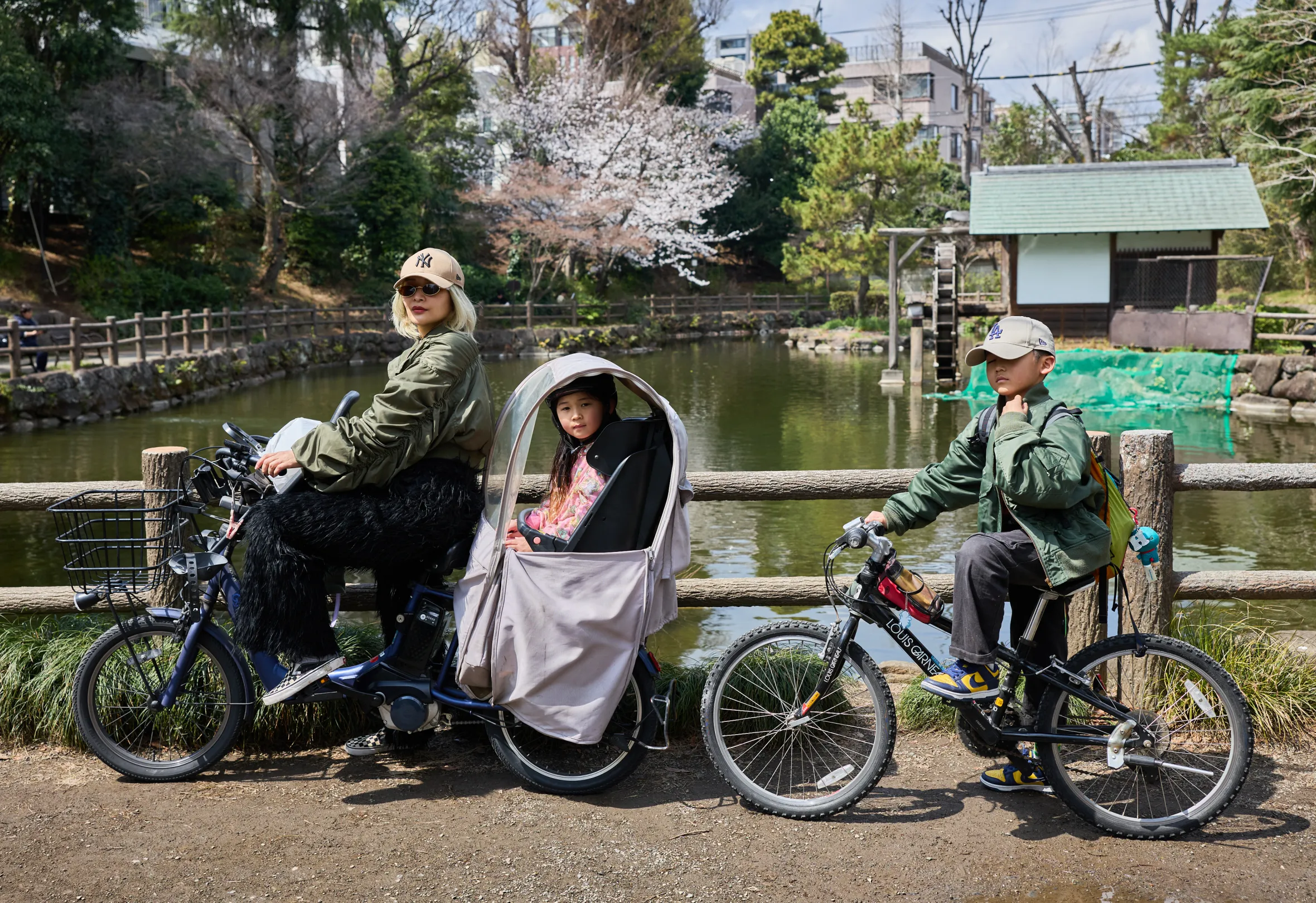
The mamachari — roughly translated as Mummymobile — is a Japanese institution: an electric bike on which one larger and one smaller child can be strapped at front and back. In many Japanese households the mamachari, with its plastic covers for use in all weathers, is what gets children and parents to and from nursery, park and supermarket.
They are sturdy, slow-moving and unstoppable, but not a secure perch for the kind of traffic that dominates Tokyo’s bigger roads. From a mamachari point of view, forcing bikes on to the road might save elderly pedestrians from being mown down by cyclists but only at the expense of young families thrown beneath the wheels of sports utility vehicles.
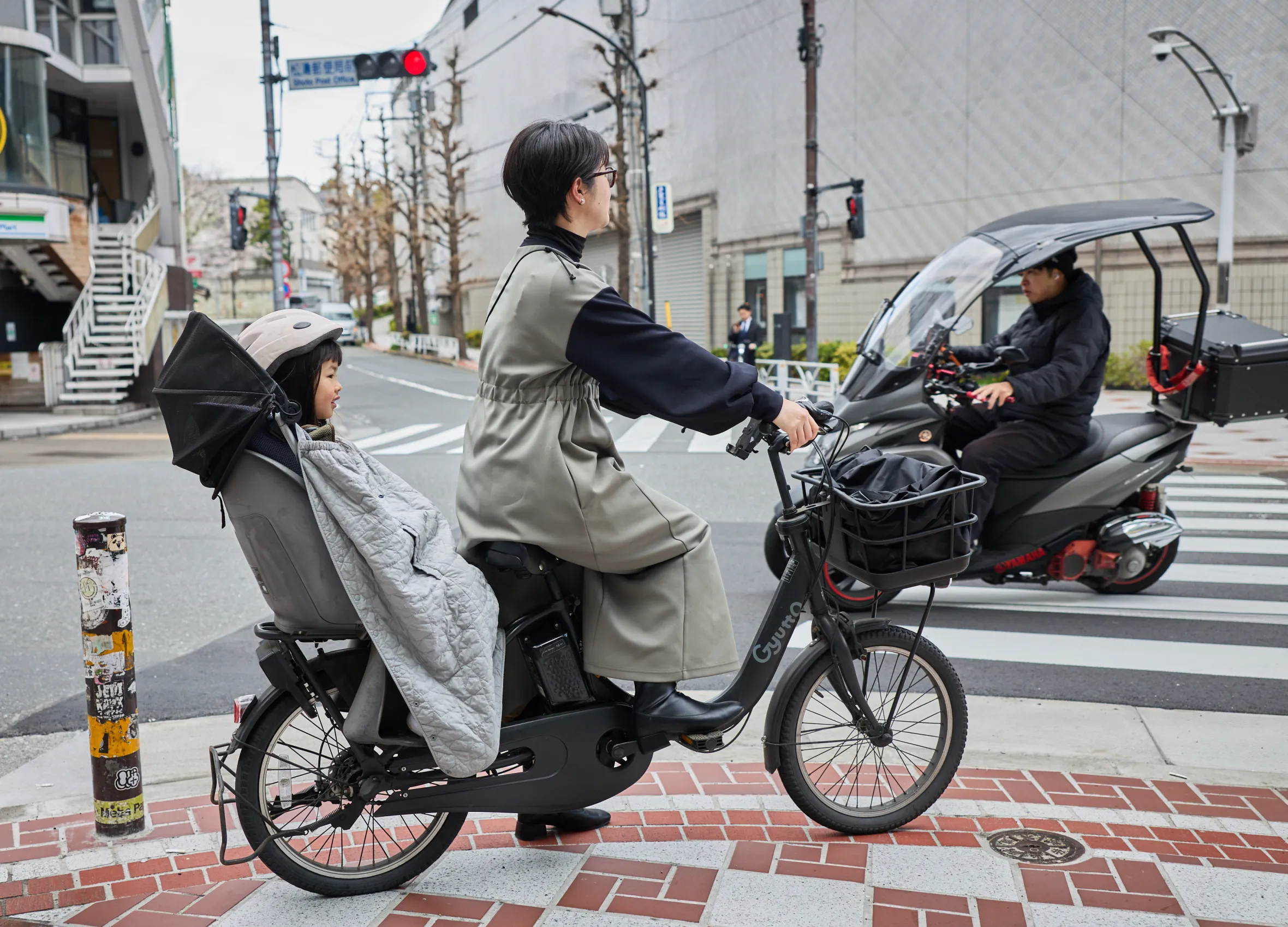 The basket at the front of the mamachari can be replaced with another, smaller child seatShoko Takayasu FOR The Times
 Shoko Takayasu FOR The Times
Anna Sugano, who carries her seven-year-old daughter, Tsubaki, on the back of her mamachari, says: “It’s dangerous. If it’s just me, I can manage, but I worry about my kids.”
Conscious of the strong feelings, the authorities are not going in hard. The under-13s, over-70s and the disabled can ride on the pavement without penalty. Everyone else must “generally” ride on the road, except “when it is dangerous” — and the danger is undefined. “It totally depends on one’s personal feeling,” the officer at my local police box tells me. “If you find it very difficult to ride on the road because the road is narrow, it’s OK.”
A similar agreeable vagueness surrounds helmets. Under the new rules, everyone “has a duty to make an effort” to wear one. How such effort manifests, and how it can be known that the duty has been discharged, is not clear. “It’s between a rule and no rule,” the young police officer explains. “When it comes to transportation-related matters, there are a lot of vague areas.”
To my dry European thinking, this all seems unsatisfactorily vague, but no one else seems to mind. It reminds me of the Covid pandemic, when there was no mandatory lockdown at all in Japan, but everyone stayed at home anyway because it was the responsible thing to do.
“It’s more than ‘should’, but less than ‘must’,” says Keiko Kojima, who is shopping for a helmet in the famous Hands department store, where there is a ¥2,000 (£9) discount subsidised by the council if you buy before Wednesday. I’m going to go back and finally buy one. It’s sensible, it’s reasonable, and it’s what Enid Blyton and Peppa Pig would do.