
Tuesday 31 March 2026 11:55 am
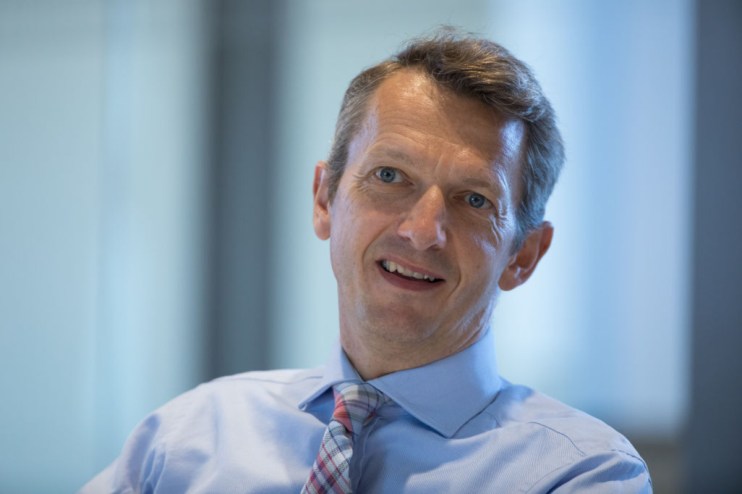 Andy Haldane served on the Bank’s Monetary Policy Committee for seven years
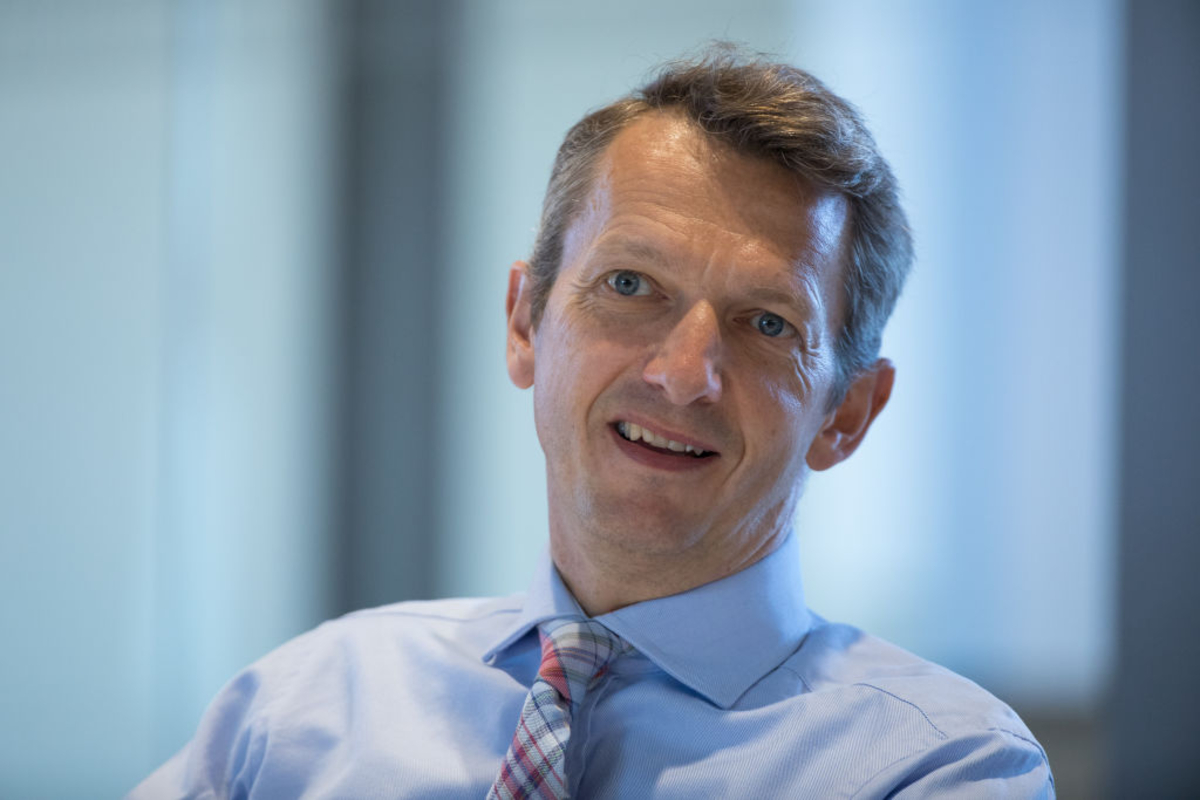
As the Bank of England’s chief economist, Andy Haldane had a front row seat to the maladies of UK’s sluggish economy. After a four-year stint running the RSA, he is back as president of the British Chambers of Commerce, and tells Ali Lyon business is still taxed mindlessly, over regulated, and far too risk averse.
For a man whose every word used to be pored over, hung on and interpreted for hints about the future of monetary policy, ex-rate-setter Andy Haldane now takes a decidedly more relaxed approach to his speech-making.
An hour before we meet, the former chief economist of the Bank of England gave his first public address as president of the British Chambers of Commerce, making a tub-thumping defence of free trade. Attending journalists had generously been given an advance copy of the words he had planned to deliver. Little more than a minute in, it became clear our recording devices would be more useful than the ‘script’.
“Once I prepared an entire speech on one topic, before going on stage and deciding to deliver one on something totally different,” he says, breezily. His press officer looks less breezy.
Part-improvised though it was, the 4,000-word address took its audience on a thoughtful journey down the wrong turns taken by globalisation’s architects, before warning that abandoning it now – while tempting – would only breed more economic hardship.
But as we sit down for what is one of his first interviews as the new figurehead of one of Britain’s largest business lobby groups, I want to drag the feted macroeconomist from his rarefied plain of abstract nouns, and onto bristlier ground; namely, the conflict that has erupted in the Middle East, and the extent of scarring it will leave on the UK’s fragile economy.
It is a debate over which markets and economists are unusually divided. With the price of oil on track for its largest single-month rise on record and fearful of another spiralling cost-of-living crisis, traders are betting the Bank will have to raise interest rates up to four times this year.
 Oil prices have climbed sharply since war in the Middle East broke outInflation should be ‘manageable’
The view of economists, on the other hand, has been more circumspect. Many have argued that central banks’ response should reflect the fact that monetary conditions today are vastly different to those that foreshadowed Russia’s invasion of Ukraine.
In 2022, the UK economy was still flush with central-bank-injected cash from the pandemic. Interest rates, meanwhile, were close to zero, and, in what was one of the tightest labour markets in modern history, workers had enormous bargaining power for wage rises. In the Britain of today, though, there is a rapidly disintegrating jobs outlook afoot, a shrinking of the supply of money, and interest rates stand at a comparatively constrictive 3.75 per cent.
Haldane is in the latter contingent.
“At current levels of energy prices, I think the scarring to the inflation outlook will be uncomfortable but manageable,” he says. “I think the scarring to the growth outlook will be more material but manageable. But I think it’s the scarring to risk sentiment that is most worrying of all – because sentiment is fragile.”
If anyone is qualified to add their two cents to the consensus-lacking debate it is Haldane. Before leaving the Bank of England in 2021, the Sunderland-born economist had spent nearly 32 years at heart of Britain’s economic policymaking, climbing up the central bank’s ranks from humble analyst to become its chief economist in 2014. He was also, if the rumours are true, Dominic Cummings’ pick to replace Mark Carney as the Bank’s governor in 2019, until Chancellor Sajid Javid overruled the No 10 chief of staff to go with the safer Andrew Bailey.
After a four-year sojourn to the arts, he is now relishing being back at the coalface of Britain’s economic and business affairs. The move to the BCC appealed, in part, for all the intel he would glean on the sentiment and behaviours at the front line of Britain’s economy. Speaking to bosses and workers about how they were feeling and behaving was, he says, “the most enjoyable and useful” bit of his old job at the Bank. If recent trips he has already made to Yorkshire, the North East and Greater Manchester are anything to go by, it is one he is re-embracing with vigour.
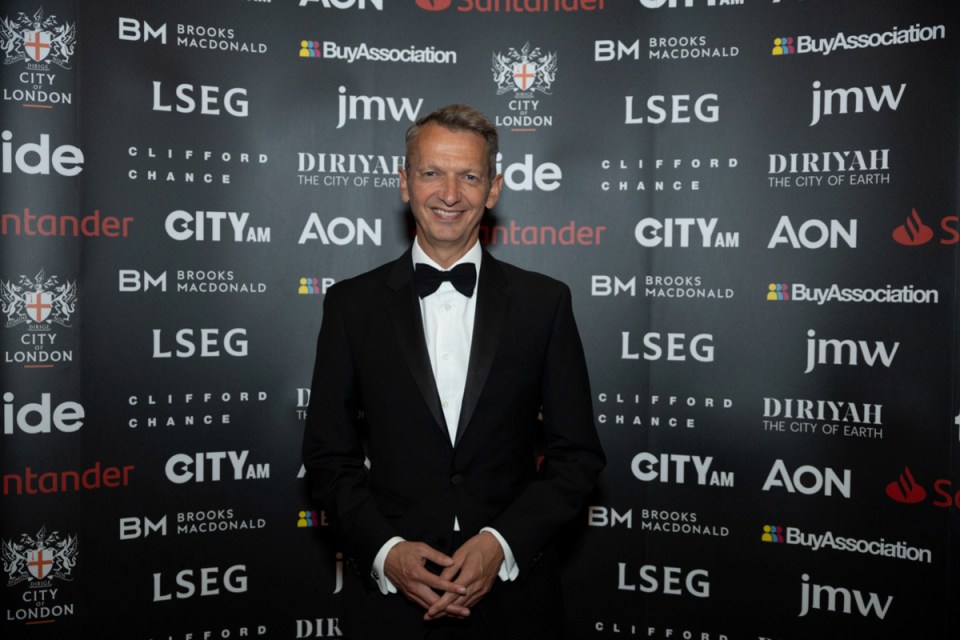 Andy Haldane served on the MPC for seven years Haldane: My mission to refire Britain’s business dynamism
But the predominant reason the gig – one of the most storied in British industry – appealed was the opportunity it gave him to play a role in a national bid to “refire business dynamism” in the UK. The paucity of risk-taking, of entrepreneurialism and of vibrancy in Britain’s private sector is, in his view, one of the core culprits of our sluggish economy, and in his eyes only business, with a tailwind from government, can rectify that.
“It is the single biggest reason, by far, why growth has been subdued for the last 20 years,” he says. “And one of the roles of the BCC is to fire that back up.”
That aim looks all the more challenging in the wake of the past month. A succession of scar-inducing shocks, Haldane says, have left businesses in Britain punch-drunk and risk-averse. Brexit, a pandemic, Russia-Ukraine, a barrage of trade tariffs and, latterly, a hot war in the Middle East – mean that just “small puff of air” will push consumers and businesses to save rather than spend.
And so it is the effect on animal spirits of the unfolding crisis, over and above any material changes, that concerns him most.
“We’ve seen for some time how fragile both consumer and business confidence is,” he says. “This feels like another thing – another reason – for people to keep their powder dry.”
Read more
Globalisation obituaries ‘hopelessly premature’
While it might be tempting for bosses to delay that round of investment or expansion, it is the opposite of what the wider economy needs.
After the pandemic and Liz Truss’s fateful energy bailout, there is “not the fiscal space”, Haldane says, for the state to pump prime its way to a more vibrant economy. Instead, ministers should encourage the private sector to flex its muscles.
In this context, that Haldane believes the government should be commended for its immediate handling of the crisis. With the cost of servicing its swollen debt pile considerably higher than it was four years ago, any unfunded support for households risks making “a bad situation worse”.
“I think that the government is right to constrain expectations to some degree, and indeed not to make a decision until later on,” he says. “I don’t think kitchen sinking this from the government’s purse right now is is a smart idea.”
Instead, ministers should continue to explore ways of introducing targeted, funded support to households where absolutely necessary, as was the case with their recent intervention to support rural households facing a doubling of heating oil costs.
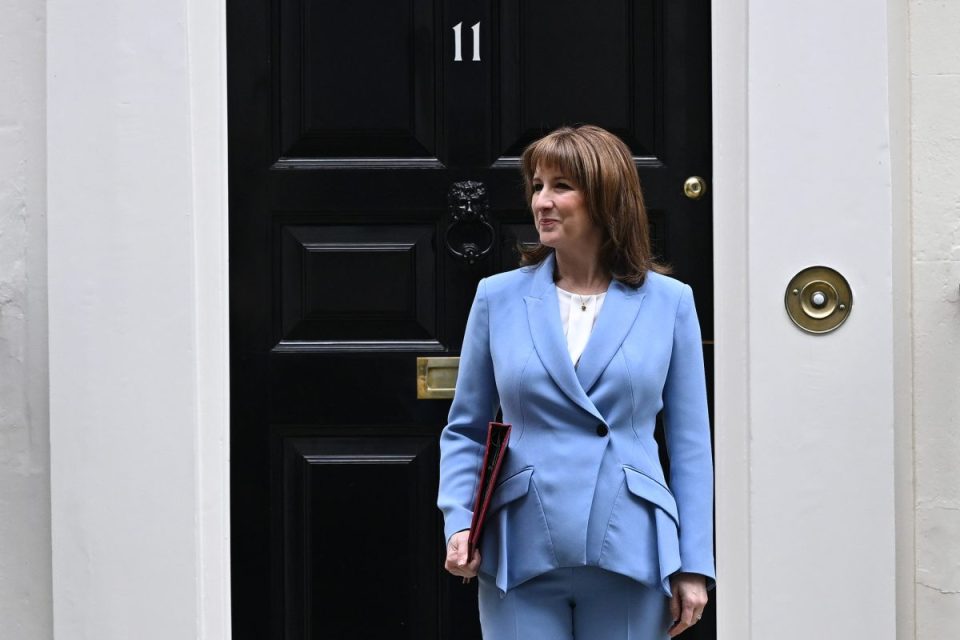 Rachel Reeves has already announced a support package for some householdsNo ‘fiscal firepower’ for large-scale bailout
The situation for businesses, however, is different. Unlike individuals, companies do not benefit from the energy price cap, a piece of regulation aimed to strip out sudden changes to the cost of energy by setting the price over three month horizons. Thanks to this ceiling, households’ energy bill will, perversely, be lower between April and July than they were before the war. Businesses, however, have no such cushion.
Most large firms, and those in energy-intensive industries, will have taken out contracts to help offset any sudden jump in their energy bill. But according the BCC’s own estimates, as many as a third of British businesses source their energy from a fixed or flexible contract, meaning many of them, Haldane says, will be “riding out the storm pretty much immediately”. Compounding to those woes is the swathe of so-called ‘policy costs’ – like those associated with the multibillion-pound upgrades to the grid and the construction the Sizewell C nuclear plant – poised to be added to bills from next month.
The stark cliff edge has led some of Haldane’s new industry body peers to call for state support. The likes of the CBI and UK Hospitality want a holiday on the policy levies hitting bills, with a view, eventually to them being stripped off permanently and moved into general taxation. But, keenly aware of the UK’s perilous fiscal standing, Haldane, is more parsimonious.
Absent a sudden deescalation in tensions, the government should consider two pain-minimising moves. First, it should widen the scope of support for energy intensive industries it announced last year at its industrial strategy. Just 7,000 companies are currently set to benefit from the package that Haldane brands “a bit of a sop”. Simultaneously, officials should channel more resources to helping small and medium-sized firms source the cheapest tariff available to them. “A kind of Money Supermarket for businesses” that “understandably aren’t across the best deals available to them”, he submits.
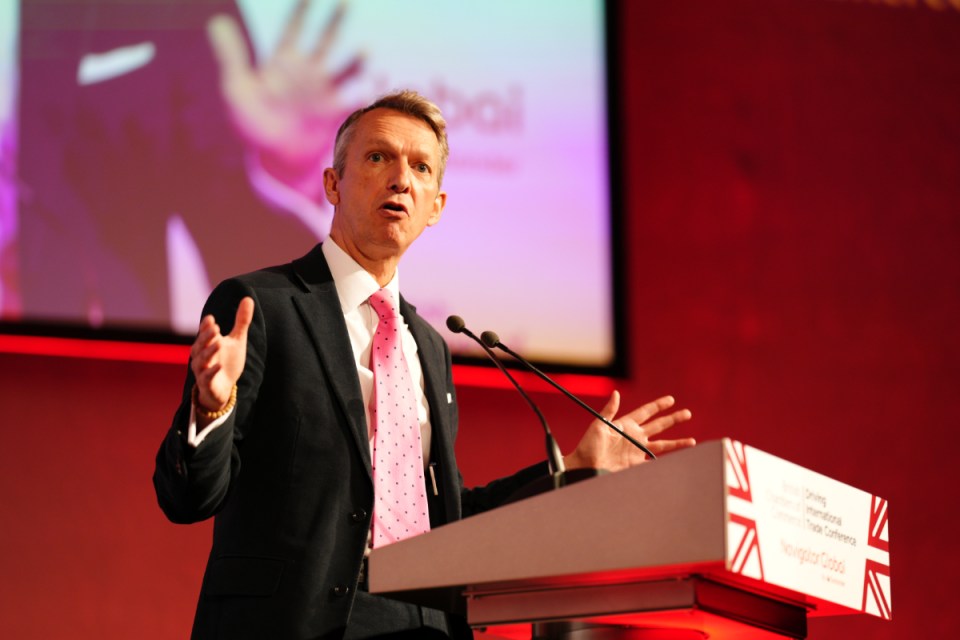 Haldane speaking at last week’s British Chambers of Commerce summitHaldane: Tax system ‘the very definition of madness’
Over and above any of this, the biggest single two thing ministers can do to help businesses is address two truisms of corporate affairs that have plagued bosses for decades. “Businesses are operating in a regulatory quagmire,” Haldane says, addressing the first. “Too much regulators, too much regulation. The government has, frankly, talked tough on that and acted weak.”
He offers an even more withering assessment of the UK’s tax system, which – with its disjointed, illogical cliff edges and iniquities – is “the very definition of madness”.
“What’s true of regulation is true of taxation,” he says. “We’ve got the longest tax code in the world, it does no one any favours. The complexity and inequity in our tax system is ridiculous.”
None of which, in Haldane’s eyes, will really move the needle without a concerted push from government to convince bosses the country over that Britain is the place to invest, grow and hire.
“It’s all about animal spirits, ultimately It’s a psychological thing, rather than a financial thing. And this is where the action of the BCC is so important.
“I want to help with that by deed, I want to demonstrate by deed. Our job is not to lobby, it’s to lead. It’s to do, not just to speak.”
As if to prove the point, Haldane says, wrapping up, that he is due back up north that evening to continue his roadshow of the BCC’s 50 ‘chambers’ of business leaders. Leaders whose animal spirits will surely be stirred if they get a slice of appetite for action with which he has fizzed during his BCC debut. Before any of that, though, he is due downstairs for an appearance on ITV.
It seems, even after his 4,000-word love letter to free-trade and our 40-minute exchange, there is plenty of time for speaking, too.
Read more
Michael Hayman elected chair of British Chambers of Commerce
Similarly tagged content:
Sections
Categories
People & Organisations