

The machines are among us. They decide what we watch, what we listen to, where we travel and, often, how we get there. They dominate our financial, public and private lives, too.
Yet, for all the computing superpower at our disposal, there remains one very simple distinction between man and machine — the machines still tend to look like machines.
Yuhang Hu hopes to change all that. “We are on our way to a robot being able to replace anybody, even those in childcare as AI systems, like Grok, are super-powerful and already so realistic,” said Hu, the chief executive of a startup developing what are described as lifelike humanoid robots.
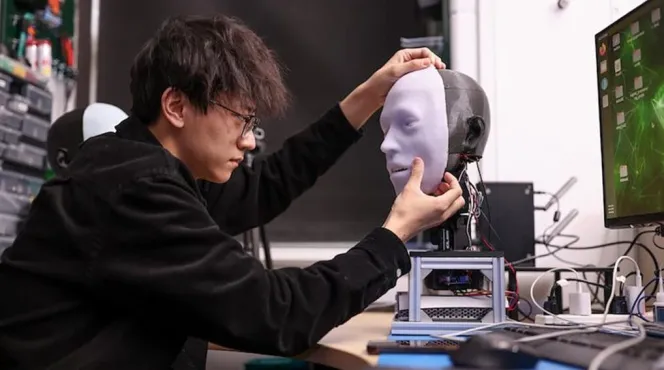 Yuhang HuJohn Abbott/Columbia Engineering
The 28-year-old, who has a PhD in robotics from Columbia University in New York, added that when it comes to situations that “require empathy”, current robots are lacking. They may be able to serve coffee, walk like a dog or patrol traffic, but there would be no mistaking them for humans.
“We are not saying this kind of robot could replace your parents,” said Hu of his creations, “but one pretence in our real lives is that it could be a friend or, for example, it could be used in healthcare, as a companion for a child, as a single companion and even in venues such as theme parks.”
“I wouldn’t be surprised if eventually everyone will have one at home,” he said. “With some having more depending on the size of their house and whether they are using it for cleaning or childcare.”
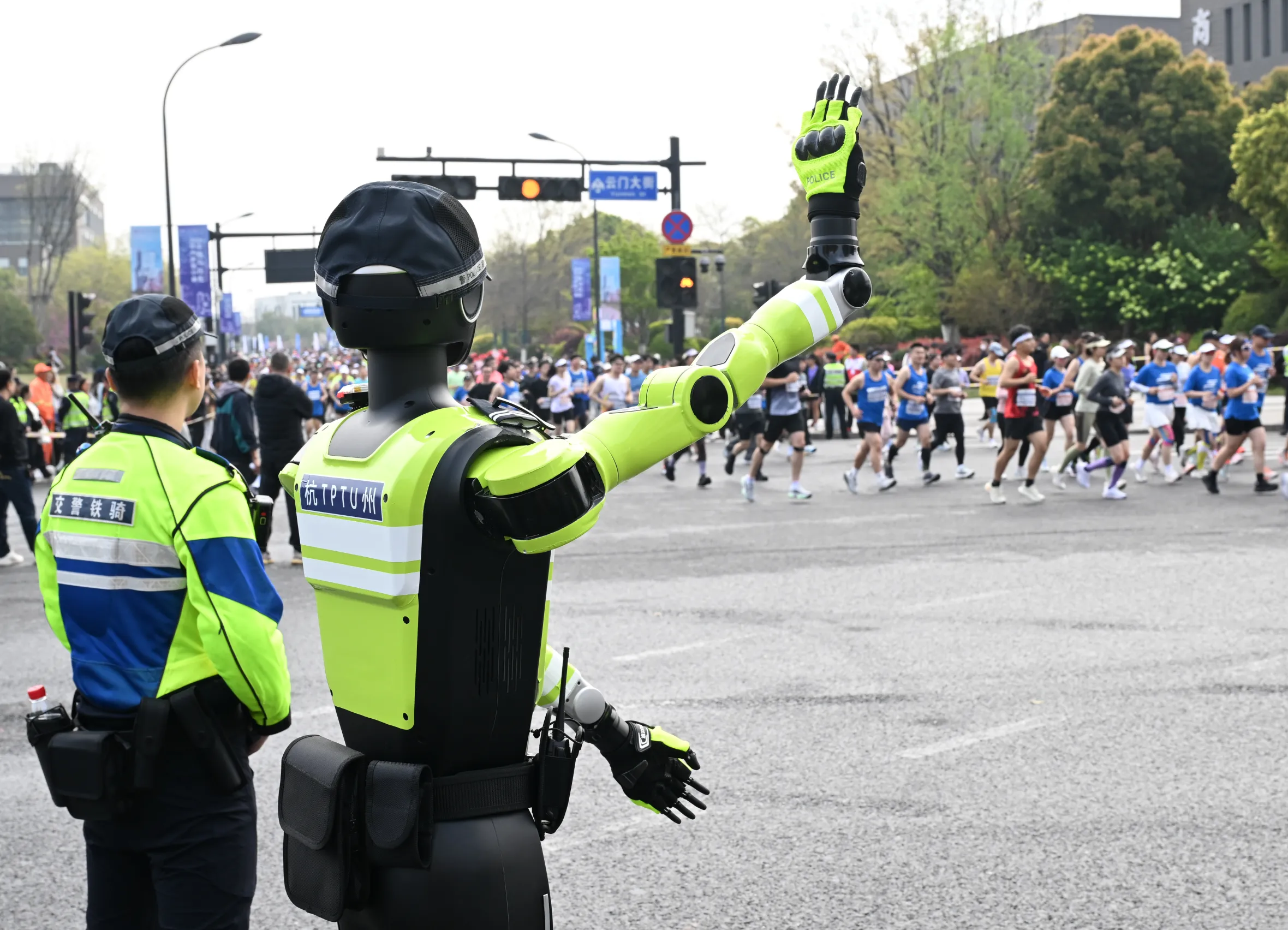 An AI traffic management robot gestures during a half marathon on Sunday in Hangzhou, eastern ChinaWang Gang/China News Service/VCG/Getty Images
Like Henry Ford made motoring affordable to the masses, Hu believes that mass production could potentially reduce the expense of purchasing a robot, meaning they could one day be as cheap as one of Ford’s cars.
However, for all the pace of change, Hu thinks that manufacturers must go beyond celebrating robots being able to walk on their own two feet. Last week, Melania Trump invited the American-made Figure 03 to speak at a White House summit on AI education and safety for children.
Melania Trump arrives with Figure 03
Figure 03’s success at standing upright offered a marked contrast to Aidol, Russia’s first anthropomorphic robot, which fell over moments after being unveiled at a conference in Moscow in November.
 Aidol performed less well at its first public appearance
“Maybe if it had been five years ago, I would have been excited,” said Hu. “But we are done with that type of robot just walking around. That’s too normal, maybe it could have done a backflip or something.”
While hundreds of companies are developing full-body style robots to be able to run, walk and jump, Hu’s company, AheadForm, is focused on “ultra-bionic” robots, each with realistic faces to build trust with humans, he said. Other humanoid robots, such as RoboKind’s Milo and LuxAI’s QTrobot, have been created with a focus on therapeutic use for children with learning disabilities.
Hu added: “Everyone will freak out when new technology comes out so it has to be designed with very strict rules. We will be careful before we deploy an AI system and make sure users are protected. It is another reason to only design the bust at the moment; if something goes really bad, we aren’t designing the rest of the body to take over.”
AheadForm hopes to make use of various AI systems, such as ChatGPT, Gemini and Grok, which already offer an emotional human-like voice. “Whilst the focus has been on how to deploy robots in scenarios such as pressing an elevator button, picking up laundry or cooking, it is very important to consider the human interaction taking place,” Hu said.
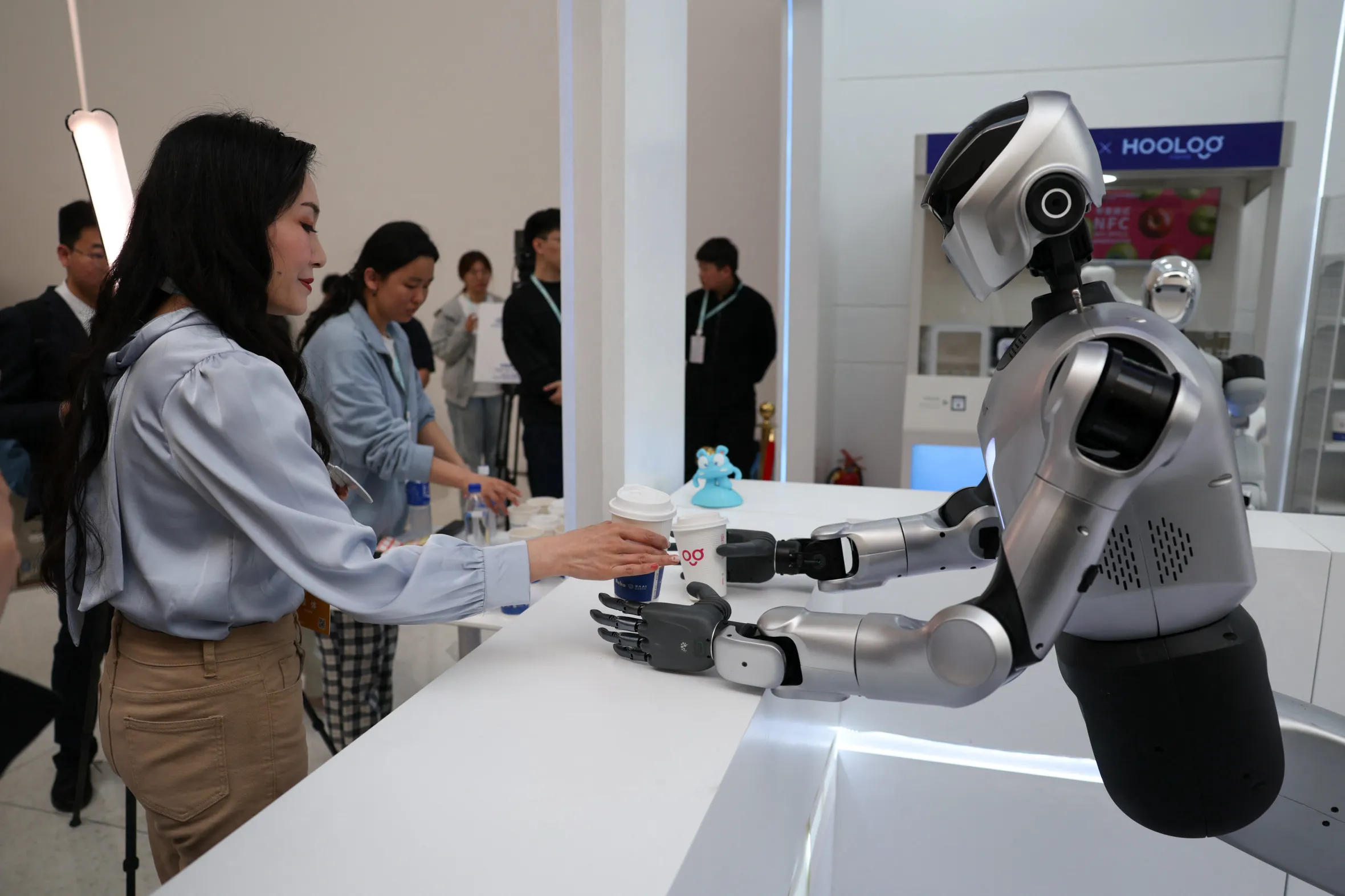 A humanoid robot by Leju Robotics serves coffee to a journalist during a demonstration in ChinaTingshu Wang/Reuters
“We are thinking about whether they can be capable of expressing emotion directly to humans and so building trust is very, very important,” he adds. “If a robot can smile in elderly care then the patient may feel more at ease but if the robot wears a suit and has no face, people do not know its intention and they feel uncertain.”
Some may fear the global takeover of robots, particularly if they now come with friendly faces, and Hu said there will need to be “very strict rules” around their use. He also suggested that focusing on providing emotional companionship from robots offers less risk as adult-sized robots could, in theory, hurt someone if there was a mishap.
“I think it is necessary to first develop super-intelligence and then eventually the two types of models, the full-scale capable of running and the emotive human-like face, could be combined,” said Hu. “Although, you would have to consider the need for this. For instance, you wouldn’t want an emotive robot in a manufacturing setting as it would just sound like a tired human.”
Hu said that although cynics warn that AI could threaten the jobs of those working in the creative industries, instead the technology could complete mundane, administrative roles thereby allowing more people to be creative.
“Humans are doing a fair amount of boring, repetitive work in both factories and in daily life, which we could simply replace with robots.”
Aida Nazari, the co-founder of LuxAI, questioned the ethics of developing a robot just to give it a human appearance.
The 39-year-old said: “We have to think about the ethics as well as the design elements.
“What would justify offering a robot in elderly care being indiscriminable for human beings? Once you develop it to look too human it can become creepy, almost uncanny valley-esque.
“If the objective is to engage children or elderly adults then the priority should be reassuring them and making them feel safe. For children with autism, our robot doesn’t look human and it is more effective as it offers a more controlled environment of defining an emotion with more emphasised features such as the upturned corners of a mouth for a smile.
“The goal of the robot’s specific purpose should lead the design features and how far it goes into looking human-like.”