
(Credits: Far Out / Alamy)
Tue 31 March 2026 21:15, UK
While the Britons may have dubbed their wave of rock music as part of their cultural invasion, the truth is, as it is with most modern songs, all roads lead back to the blues.
The humble sounds of this game-changing genre started way back in the late 19th century, in the Deep South of the United States and the Mississippi Delta, to be turned into something wildly ambitious just under a century later.
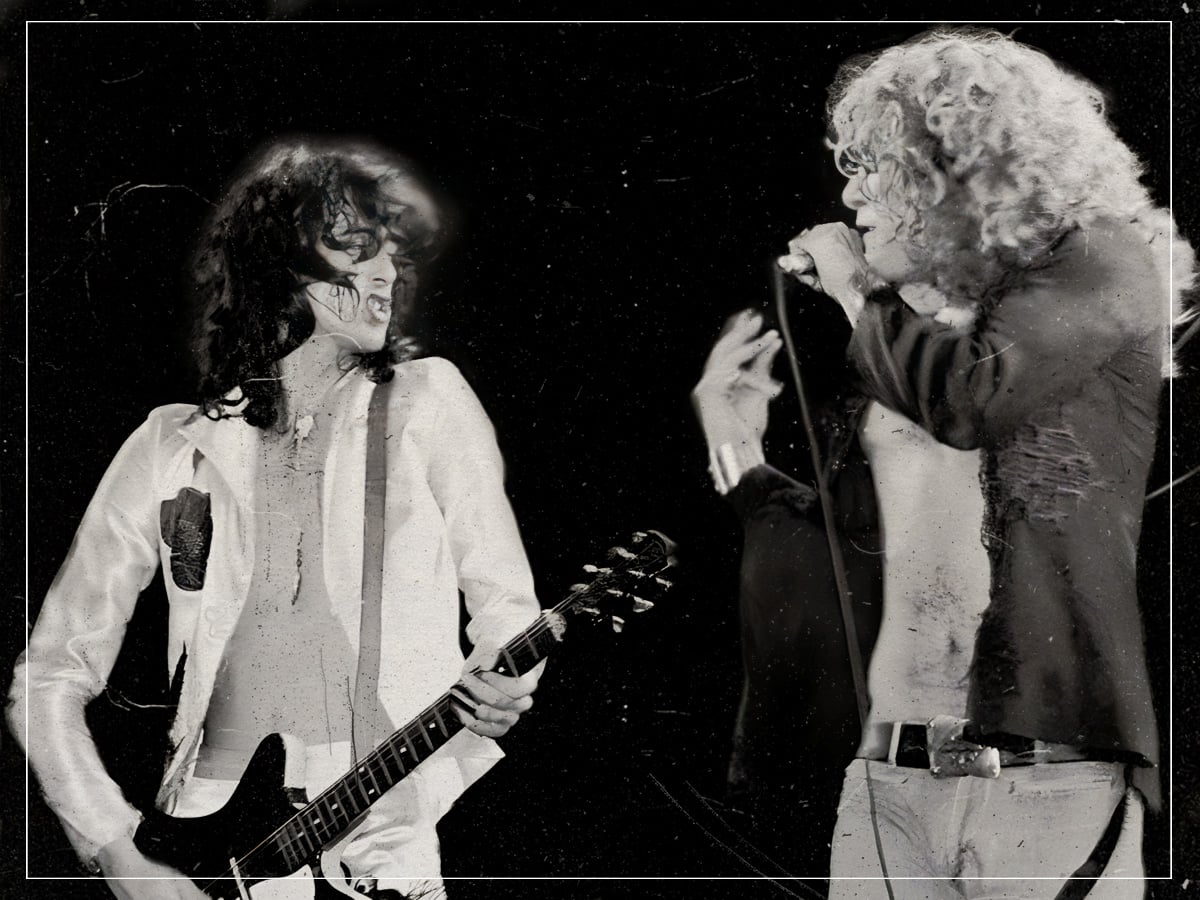
The Rolling Stones, Cream, and an early Fleetwood Mac all took this formula and ran with it, creating a burgeoning era of British blues that centred around our vibrant capital, but one band stood above the rest in the 1970s, serving as true rock pioneers that built on the back of blues rock foundations with unashamed transparency, in the form of Led Zeppelin, as Jimmy Page was a creative leader whose style was deeply faithful to the blues icons from before.
Muddy Waters and BB King were unsurprisingly two legends cited as inspirations for Page, who then developed some of their technical ideas. Like the time he swapped the G string on his acoustic guitar with another B string, providing a lighter finished product, enabling the sort of string bend that garnered the signature blues vibrato.
There’s one song that the band’s frontman, Robert Plant, suggests defines that style that pays homage to the greats before them. “The slide work on ‘In My Time of Dying’, which goes on and on [laughs], but it’s a great ramshackle blues slide. Straight off the top,” Plant explained.
Taken from their 1975 record Physical Graffiti, it’s one of their most faithful tributes to the genre that inspired them to become musicians, but the band didn’t lift the idea from Muddy Waters, rather Blind Willie Johnson, whose original melody was the framework for the Zeppelin track.
However, not everyone saw the respect in the imitation and rather regarded it as a modern blues monster. Atlantic Records co-founder and president Ahmet Ertegun was a faithful supporter of the band, but also a purveyor of the sort of traditional blues sensibilities that Zeppelin were looking to adapt in their own music, so their performance of ‘In My Time of Dying’ had him caught in a rock and a hard place, forced to decide between the two. When Plant sat down with Ertegun, he remembered how that song in particular almost cost them his respect.
He explained, “When we took those songs and screwed with them, ‘Jesus Make Up My Dying Bed’, the Blind Willie Johnson became ‘In My Time of Dying’, which lasted for about 25 minutes on stage, and I went into some amazing turns and twists, as you know. Then we took ‘Nobody’s Fault But Mine’, the Willie Johnson and turned that into a sound that was amazing. And I used to see you sitting thinking, ‘Oh, my god, what have they done to this?’”
The recorded version was cut down to 11 minutes, serving as their longest song on all of their discography. While Ertegun may have had his reservations, the mammoth track became a much-loved part of the band’s live show and helped move blues rock into a more forward-thinking space, while cementing Led Zeppelin’s legacy as one of the biggest bands on the planet.
ADD AS A PREFERRED SOURCE ON GOOGLE  The Far Out Led Zeppelin Newsletter
All the latest stories about Led Zeppelin from the independent voice of culture.
Straight to your inbox.