
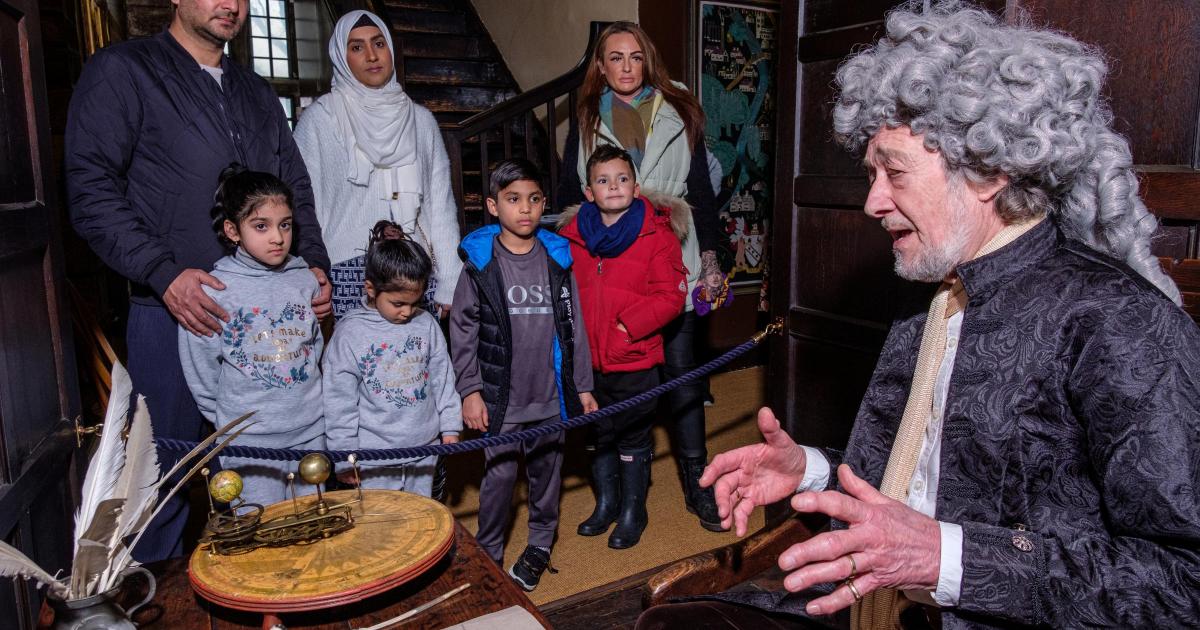
The scheme will also explore a lesser known scientist from the city who contributed to our understanding of the stars.
Bolling Hall is one of 27 small museums across the UK to receive up to £3,500 in funding through the Royal Society’s Places of Science scheme.
The funding supports creative and community-focused science projects.
James Steward, head of service for Bradford District Museums and Galleries, said: “We are delighted that Bradford Museums and Galleries Service has been awarded the Royal Society’s Places of Science grant.”
The Bradford project, titled Describing the Heavens: Astronomy from Islamic Scientists to Bradford’s Abraham Sharp, will highlight scientific heritage related to Bolling Hall and the wider district.
It will focus on Abraham Sharp, a mathematician and astronomer born in Bradford, and the influence of medieval Islamic astronomers on his work and broader scientific developments of the era.
The project will actively engage Bradford’s South Asian communities, inviting them to join a steering group that will help uncover and share this history.
The plans include family events, workshops, and a touring exhibition across the district.
Mr Steward said: “This support allows us to shine a light on Bradford’s unique scientific heritage.
“This project is about connecting communities with stories that are relevant to them and connecting our collections with new perspectives.
“Working alongside our local South Asian communities to co-create and share this history is vital to what our museums stand for in celebrating diversity, curiosity, and shared ownership of our heritage.
“This funding also enables us to bring science to life in a way that is inclusive and deeply rooted in the district’s identity.”
The scheme celebrates projects that make science engaging and relevant to local audiences.
Professor Russell Foster, chair of the Places of Science allocation panel, said: “It has been wonderful to see so many creative ways of sharing scientific stories that are both engaging and accessible.
“I hope these projects allow people of all ages to connect with science in new ways and feel a shared sense of ownership of their local scientific history.”
He said the selection panel’s discussions and the feedback given to applicants made the process both rewarding and enjoyable.