
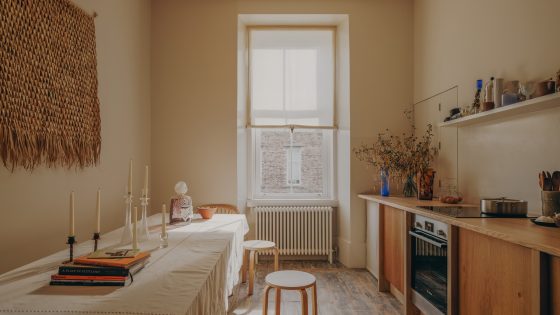
La Casita, translated as ‘the wee house’, is the home of Costa Rican glass artist Juli Bolaños-Durman. Designed in close collaboration with the artist, the project weaves Juli’s creative ethos with the complete restoration of a Victorian flat in Edinburgh. The outcome is a space where creative problem-solving, sustainability and craftsmanship intertwine.
Juli is renowned for her transformative work in glass and her dedication to revitalising waste materials. Her practice celebrates the beauty of imperfection, applying heritage cold-working techniques to discarded objects and giving them renewed purpose and life. We embraced and elevated this methodology, developing architectural interventions that are made almost entirely from reused, reclaimed and off-cut materials – a working expression of Juli’s ethos.
The design process became an exercise in establishing parameters while allowing freedom for material to inform the resolution. The craftsmanship and knowledge of the suppliers and fabricators enabled a material-first approach.
This approach is scalable not in its aesthetic, but in its attitude. It invites a shift in perception, to reconsider the materials around us, to value local surplus and to engage deeply with the potential of reuse.
Alexander Mackison, designer, Architecture Office
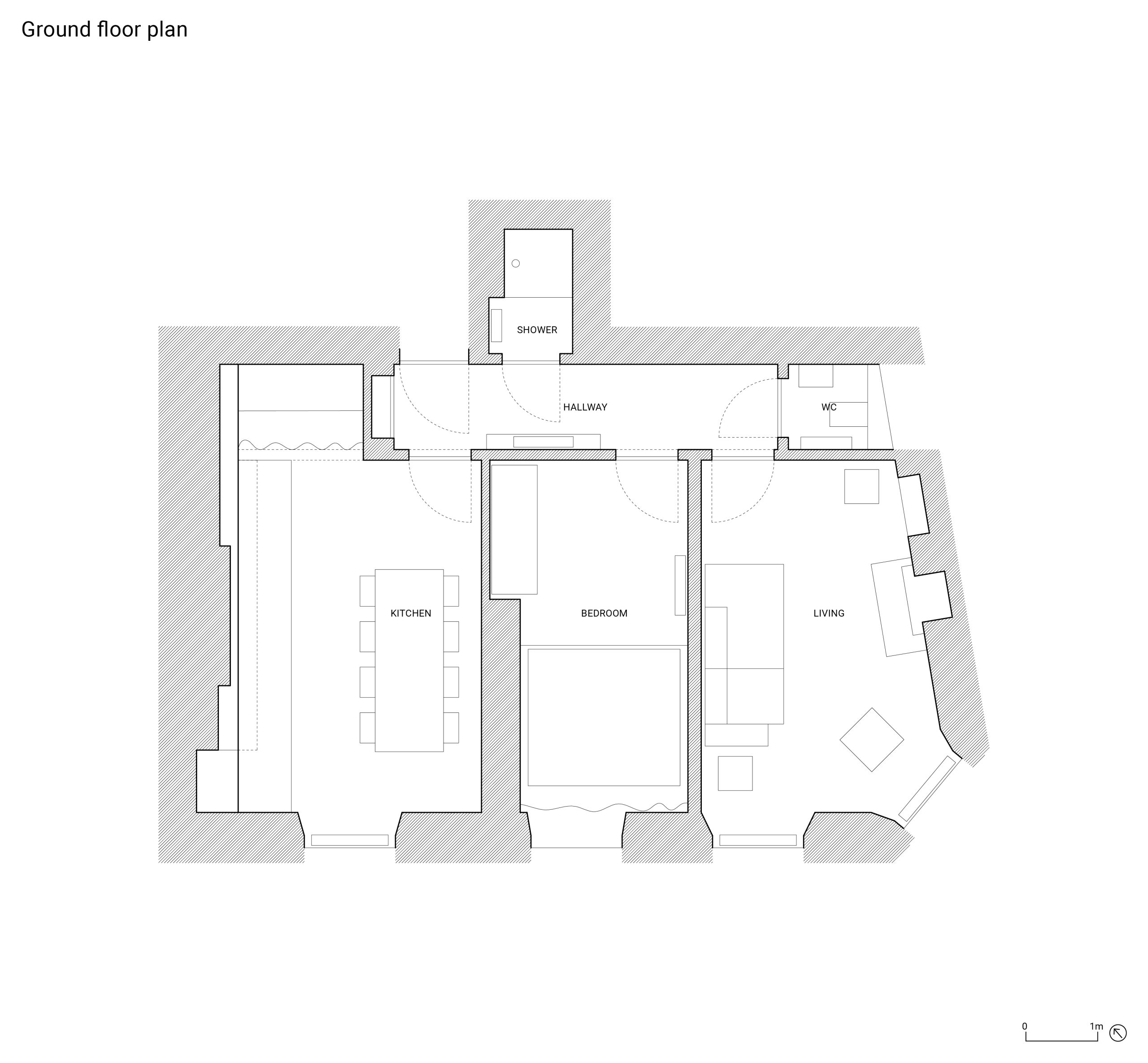
Project data
Start on site July 2024
Completion October 2024
Gross internal floor area 61m2
Construction cost Undisclosed
Designer Architecture Office
Client Juli Bolaños-Durman
Main contractor Marko Linton
CAD software used ArchiCAD
Architect’s choices
Where possible, all materials were designed and fabricated using reclaimed materials. The paint was provided by Little Greene’s Re:mix paint collection, a sustainable line formulated from leftover paints.
Alexander Mackison, designer, Architecture Office
Specification
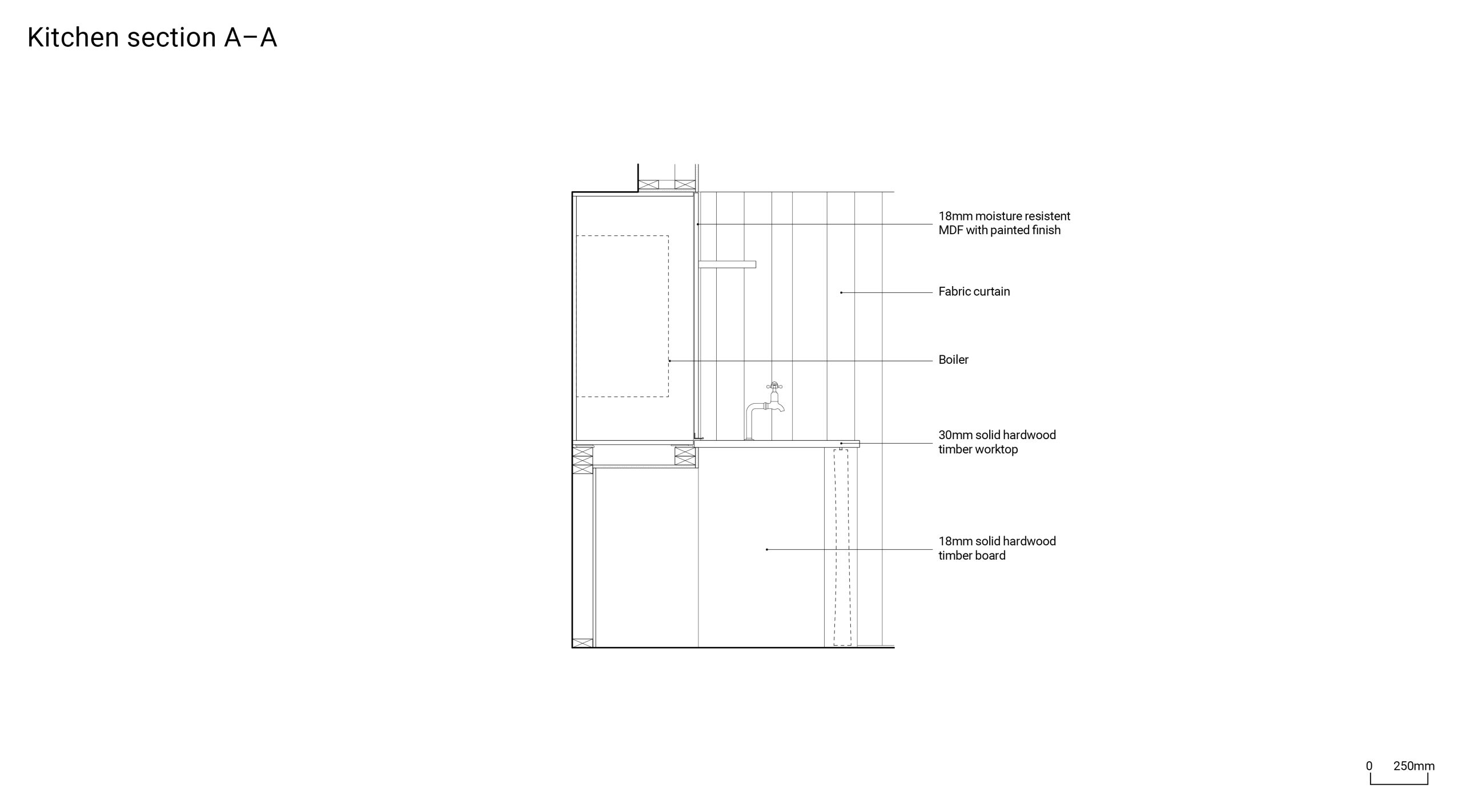
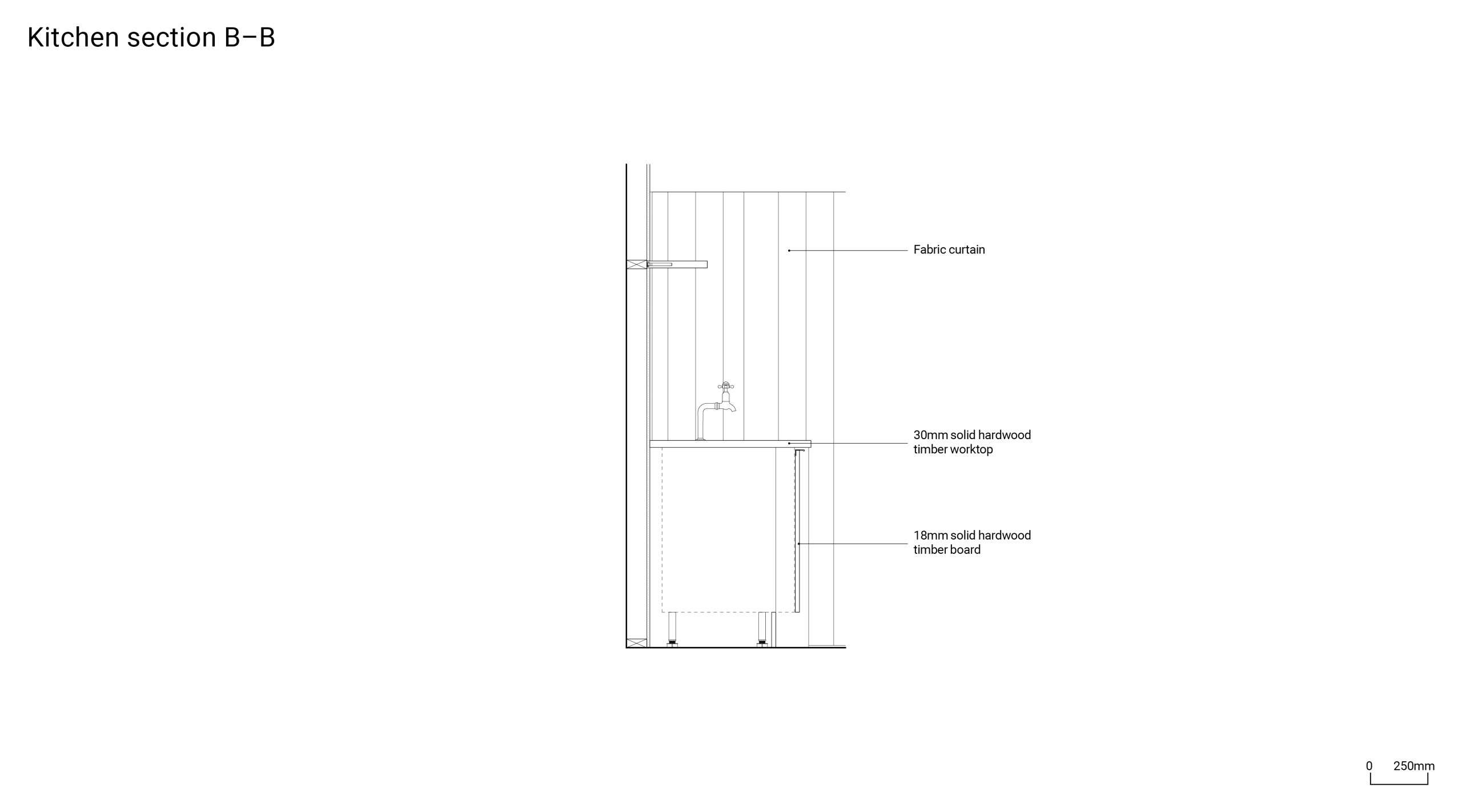
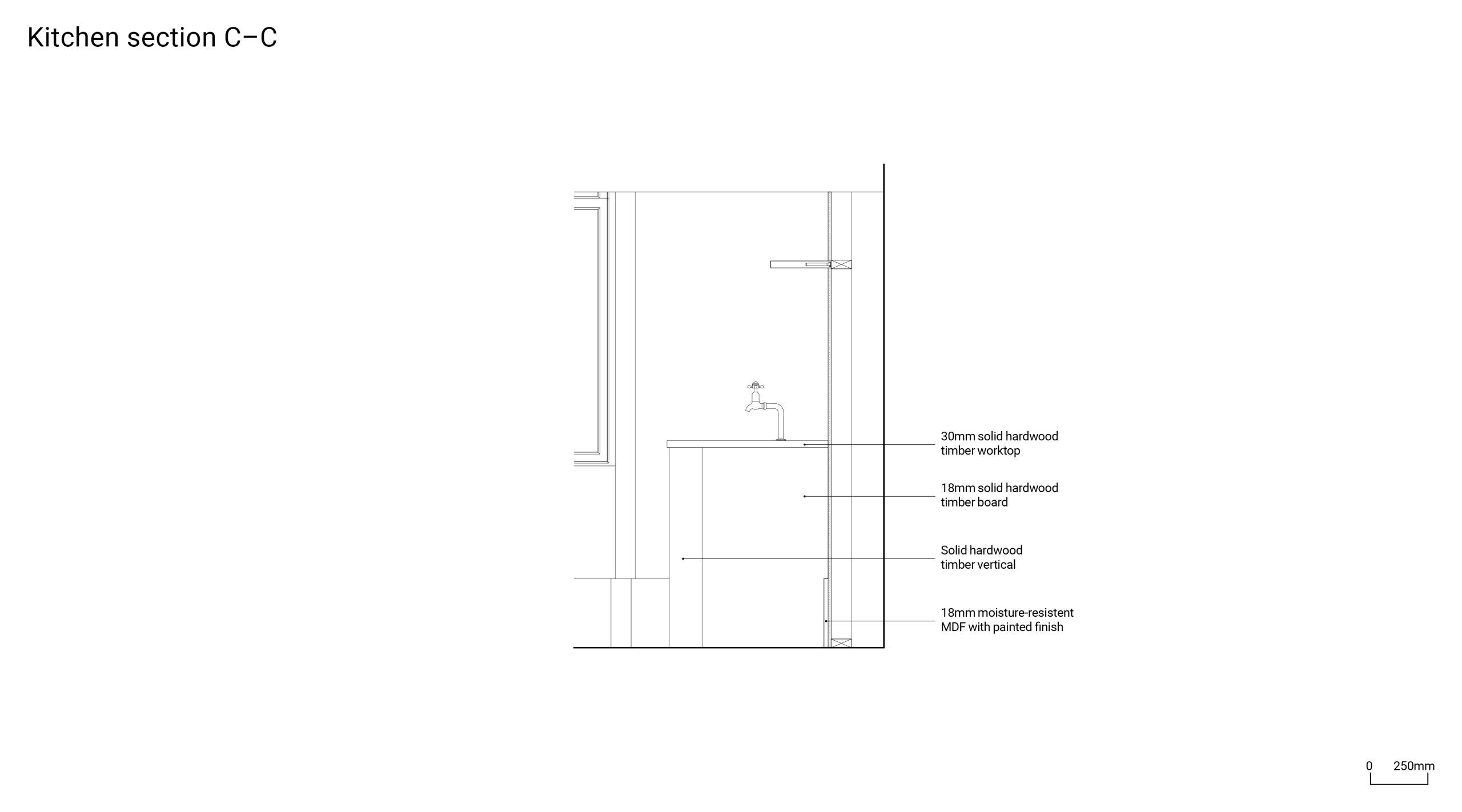
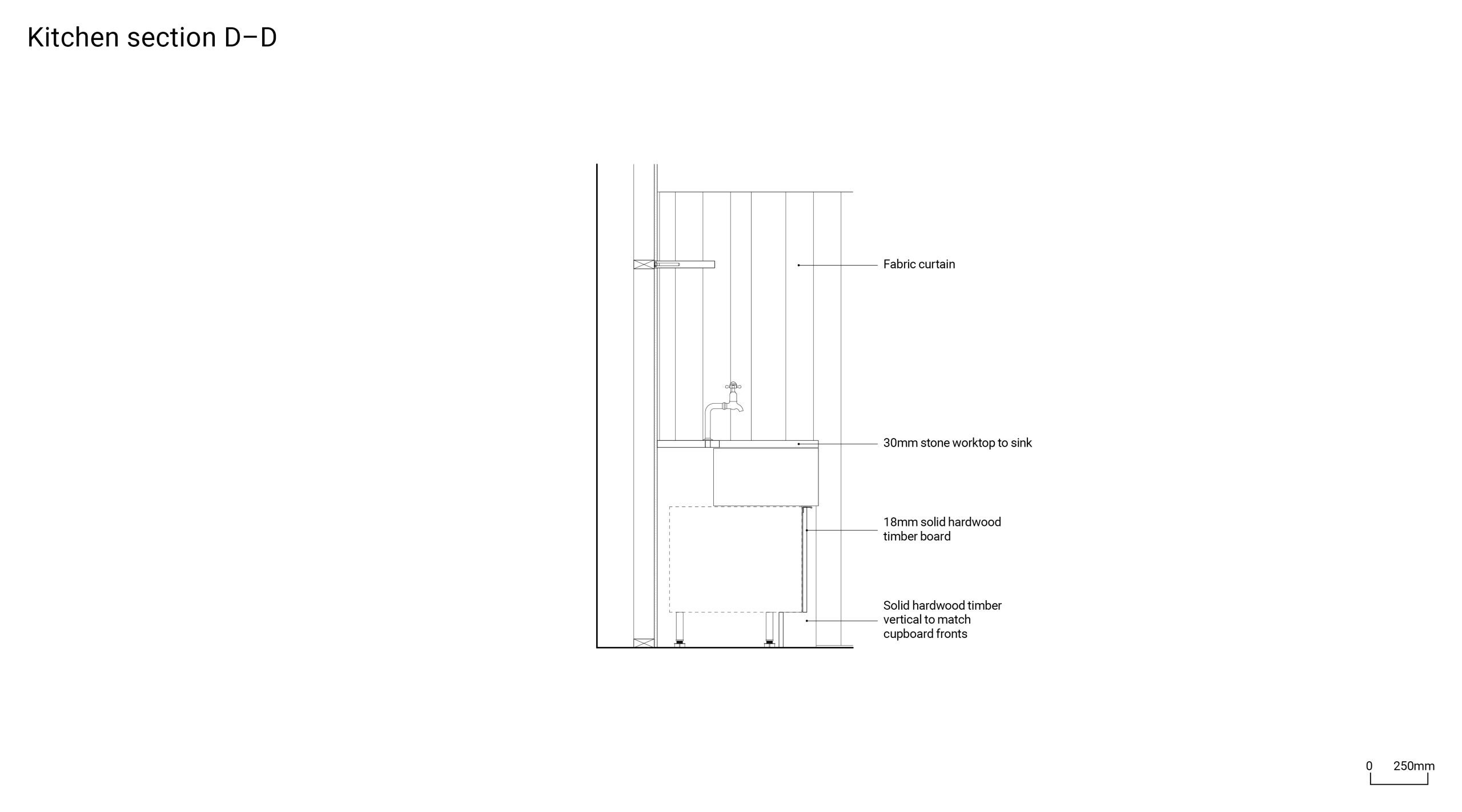
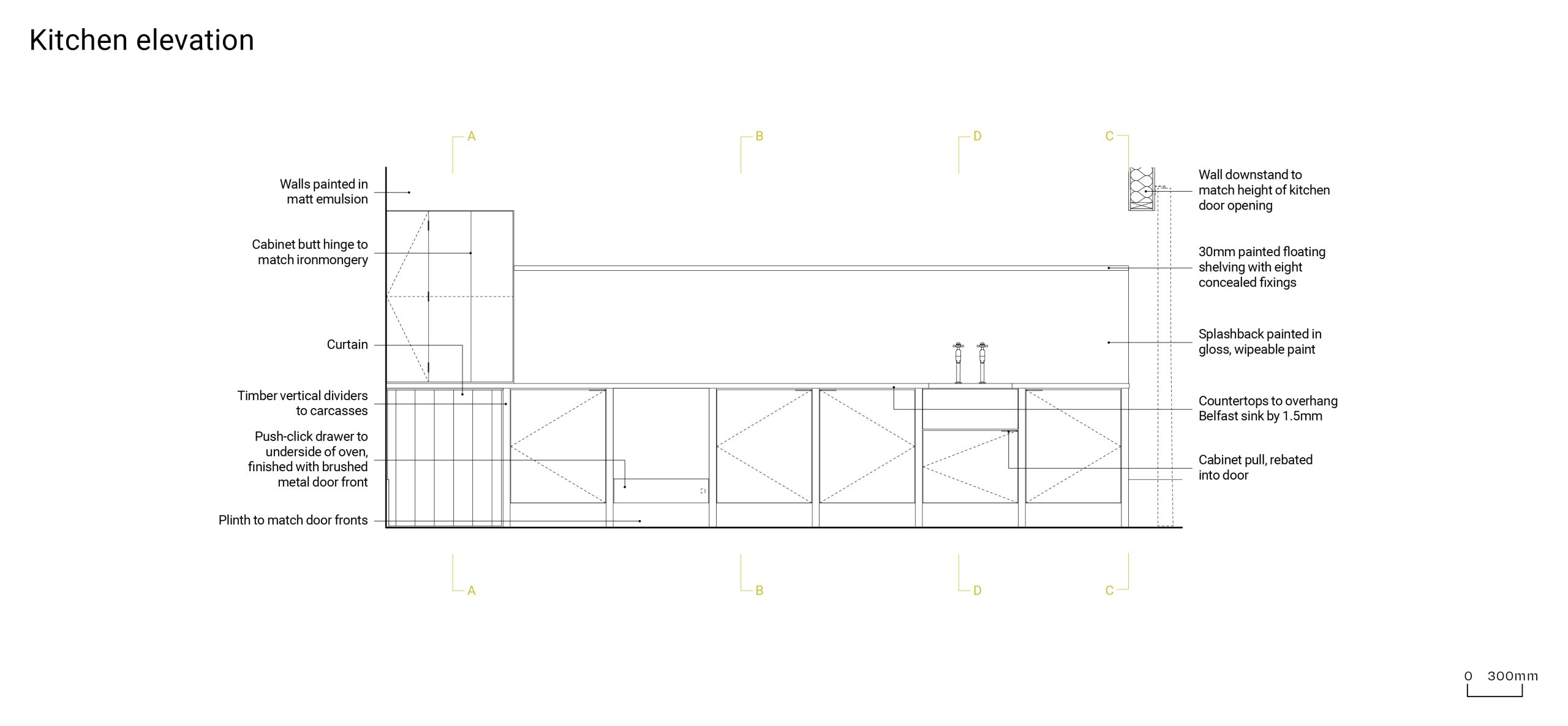
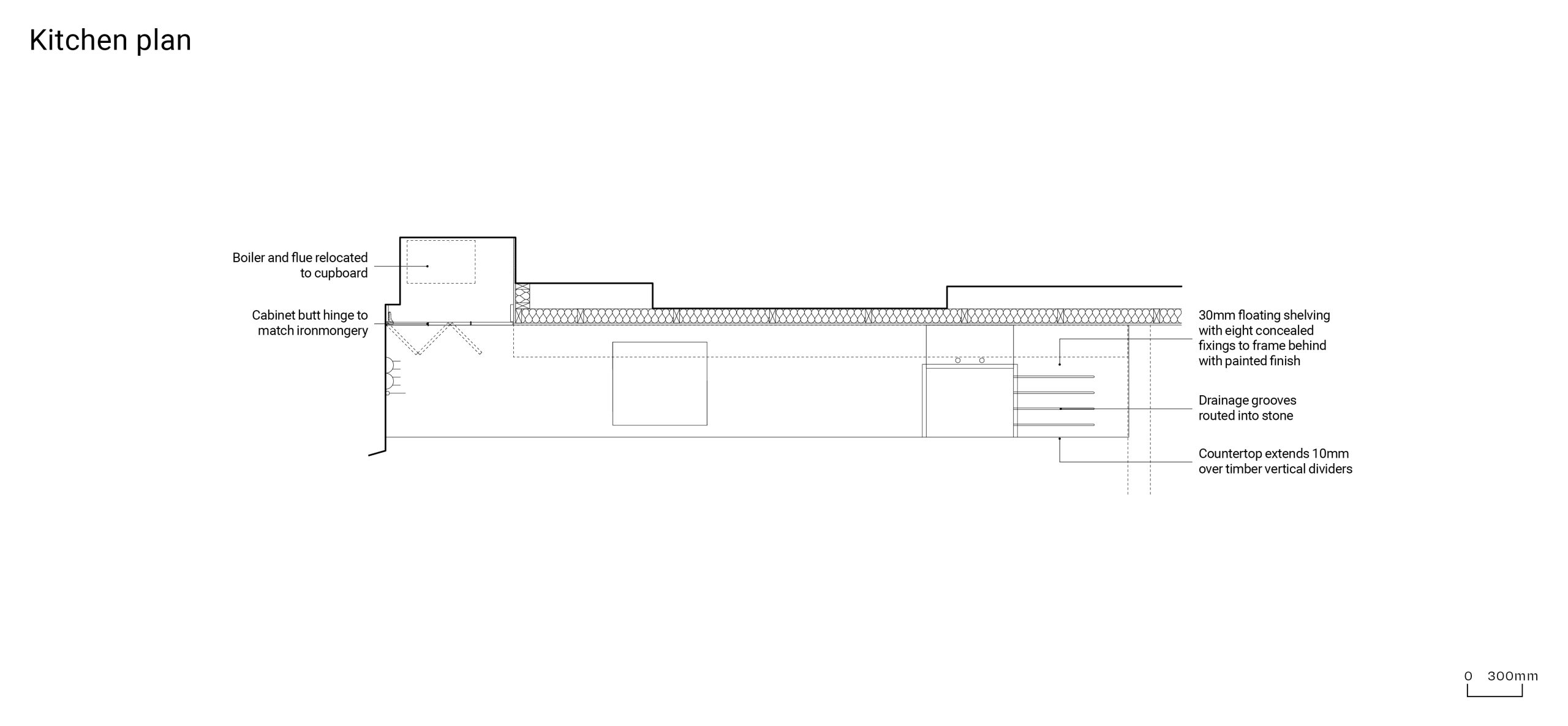
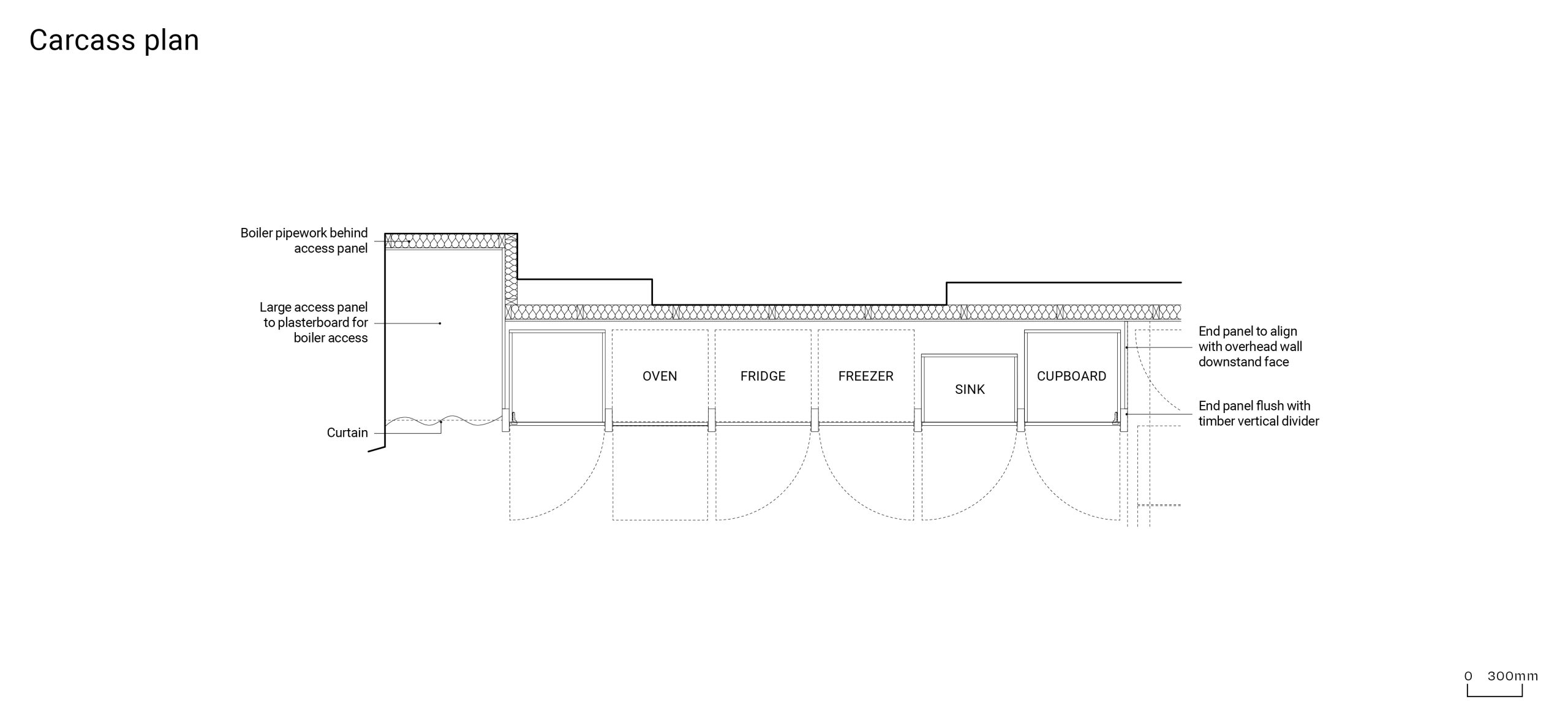
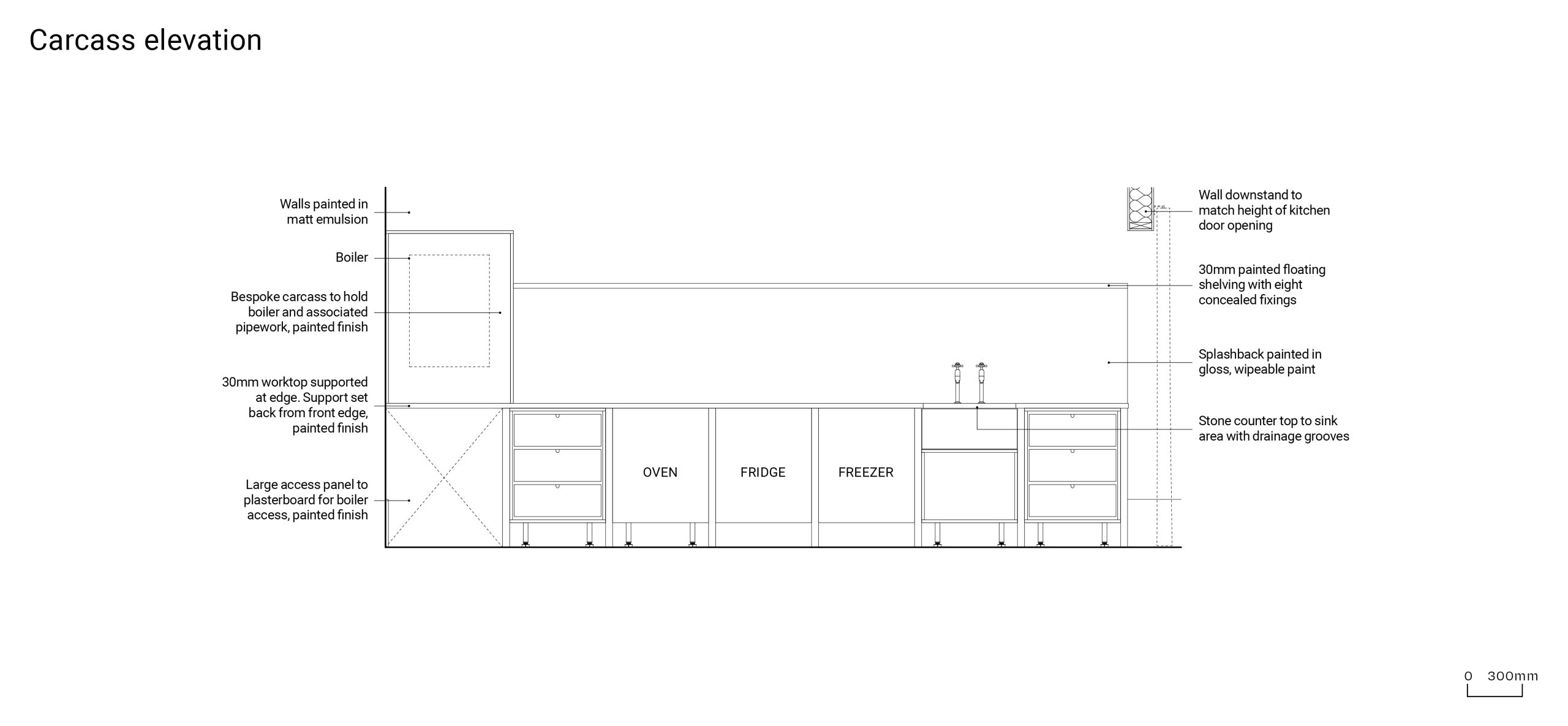
The kitchen, fabricated by Studio Silvan, is formed entirely from surplus timber sourced from previous projects. Brown oak, oak,cherry, Douglas fir and ash are arranged in a subtle gradient that celebrates tonal and textural variation. The internal carcasses are constructed from repurposed Valchromat, introducing moments of colour within an otherwise restrained composition. British-sourced stone, supplied as offcuts by Britannicus Stone, provide a playful, vibrant patchwork of surfaces. Frosterley, Ledmore, Swaledale Fossil and Stoneycombe offcuts are arranged according to the existing slab dimensions. Three stone slabs, salvaged from Leith-based mason AB Mearns, were assembled into a monolithic Stonehenge-like mantel. Raw edges of the stone were left exposed to celebrate the material in its natural state, while a single slab was rotated in contrast. The existing timber flooring was retained to honour its severe character. Oversized, gloss-painted skirting boards were introduced as a counterpoint.
Alexander Mackison, designer, Architecture Office
Selected products
Kitchen cabinetry
Silvan Studio
Reclaimed oak, cherry, Douglas fir and ash
Kitchen
silvan-studio.co.uk
Worktops
Brittanicus
Stone offcuts: Frosterley, Ledmore, Swaledale Fossil and Stoneycombe
Kitchen/bathroom
britannicus-stone.co.uk
Fire surround
AB Mearns
Salvaged material: St Bees and Howley Park
Living
abmearns.com
Paint
Little Greene
Re:mix Collection: Joanna (130), Rolling Fog (143), Yellow Pink (46)
Throughout
littlegreene.com
Floor oil
Osmo
Polyx-Oil, Effect Raw 3044
Throughout
osmouk.com