
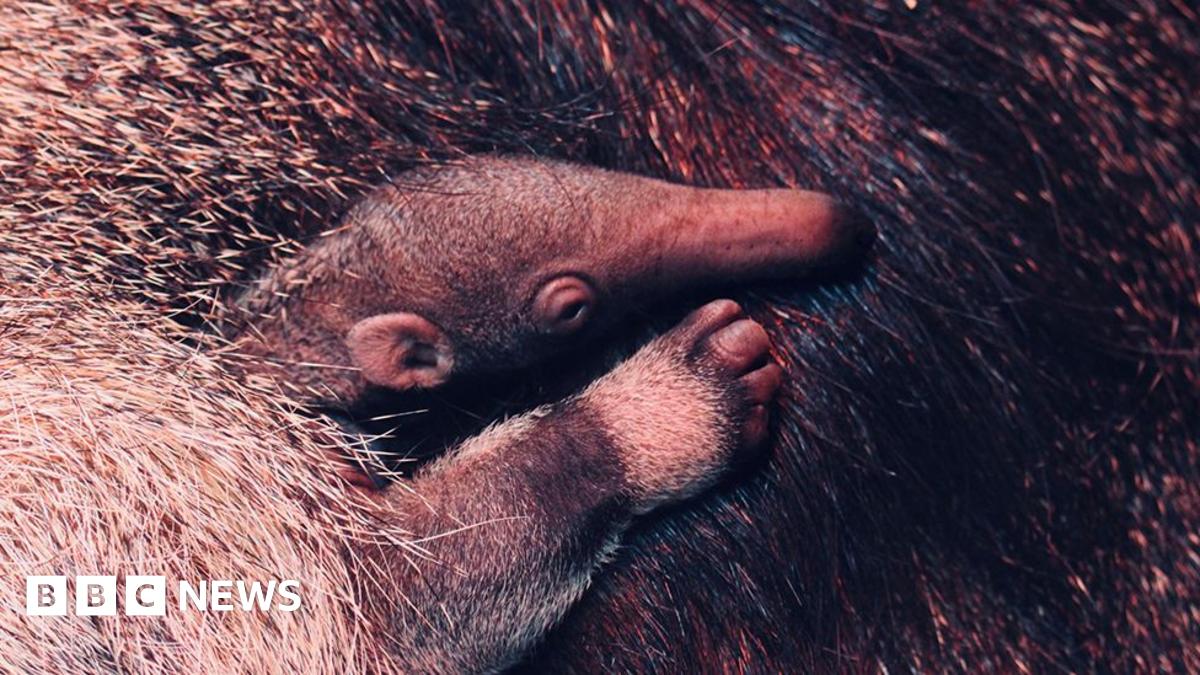
Jason Keller, senior keeper, said: “Giant anteaters are such a unique species and every birth is really important for their conservation.
“They are classified as vulnerable to extinction in the wild and, with populations in continued decline, they are considered the most threatened mammal in Central America.
“The new arrival is already able to walk around on its own but, like all baby anteaters, prefers the safety of mum for now.”
Giant anteaters have black and white diagonal stripes, dense shaggy hair and super-sized snouts.
They have no teeth and instead of biting and chewing, they use their long tongues to lap up thousands of ants or termites a day in the wild.
They hail from the swamps, grasslands and humid forests in areas from Southern Belize to northern Argentina and they are the last living species to have evolved on South America when it was an isolated continent, the zoo said.